






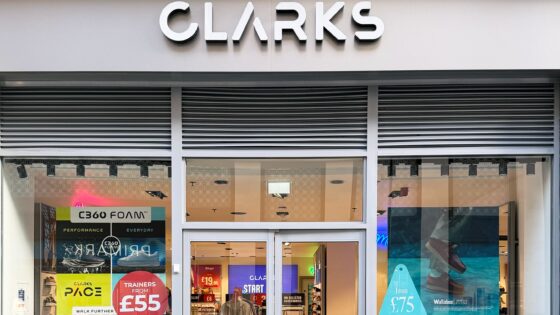
British footwear heritage brand Clarks has officially inaugurated its latest retail destination at Marble Arch, London, marking a significant milestone in the company’s ongoing strategy to revitalize its physical footprint across the United Kingdom. The opening of the Marble Arch location, situated in one of the capital’s most prominent high-traffic corridors, represents more than a mere expansion; it signifies a deliberate shift in how the 201-year-old brand interacts with both domestic shoppers and international tourists. By securing a high-profile site near one of London’s primary transit and shopping hubs, Clarks is signaling a renewed commitment to experiential retail and brand visibility in an era increasingly dominated by e-commerce.
The Strategic Importance of the Marble Arch Location
The choice of Marble Arch is emblematic of Clarks’ broader "Retail Transformation" initiative. For decades, the brand relied on a traditional suburban store model. However, recent shifts in consumer behavior—accelerated by the post-pandemic recovery—have forced retailers to rethink the utility of the "bricks-and-mortar" shop. Marble Arch serves as a gateway to Oxford Street and Edgware Road, placing the store at the epicenter of London’s retail ecosystem.
Industry analysts suggest that this site was selected not just for its sales volume potential, but for its role as a "brand showroom." By placing a premium store in a high-visibility, high-footfall area, Clarks is looking to elevate its brand perception, moving away from its legacy as a functional school-shoe supplier toward a modern, lifestyle-focused footwear label. The store design incorporates contemporary aesthetics, blending the brand’s archival history—often highlighted through subtle nods to its 1825 origins in Street, Somerset—with modern, minimalist interior architecture designed to improve product discoverability.
Chronology of Retail Transformation
Clarks’ recent history has been defined by a turbulent yet transformative period, characterized by structural reorganization and a change in ownership. To understand the significance of the Marble Arch opening, one must look at the timeline of the brand’s recent evolution:
- 2021: LionRock Capital acquires a majority stake in Clarks, marking a new era of private equity involvement aimed at international growth, particularly in the Asian markets.
- 2022: The brand launches a global repositioning strategy, focusing on its "iconic" products, such as the Desert Boot and the Wallabee, to appeal to younger, fashion-forward demographics.
- 2023: Clarks begins a review of its UK estate, closing underperforming sites while simultaneously investing in flagship locations in major city centers, including London, Manchester, and Birmingham.
- 2024: The company integrates "phygital" retail elements into its stores, including mobile-integrated inventory checks and streamlined click-and-collect services.
- 2026 (September): The Marble Arch flagship opens, serving as the latest proof point of the brand’s commitment to premium high-street positioning.
Supporting Data and Market Context
The UK retail sector is currently navigating a complex economic landscape. According to the British Retail Consortium (BRC), footfall across the UK’s retail destinations has shown resilience in 2026, despite inflationary pressures affecting consumer discretionary spending. Data indicates that while online penetration remains high—hovering around 26-28% of total retail sales—the "halo effect" of physical stores on digital sales is becoming increasingly apparent.
For Clarks, internal data suggests that customers who engage with the brand in-store are 30% more likely to become repeat digital purchasers. This synergy between the physical and the digital is the cornerstone of their current model. Furthermore, the Marble Arch store is designed with a smaller, more curated inventory footprint compared to older, larger stores. By carrying fewer units but showcasing them in a premium environment, the brand reduces operational overhead while simultaneously increasing the "sell-through" rate of full-price merchandise.
Official Perspectives and Brand Strategy
While official statements from the company remain focused on the "customer journey," industry insiders close to the firm indicate that the Marble Arch store is a litmus test for a new retail format. A spokesperson for the brand noted that the store is designed to "provide an immersive experience that reflects the heritage and innovation of the Clarks brand."
The move also aligns with the broader regeneration of the Marble Arch and Oxford Street areas. As local authorities continue to push for the pedestrianization and improvement of the Oxford Street district, Clarks’ early entry into the area positions it to benefit from the projected long-term increase in tourist traffic and local professional footfall. The store employs a "service-first" model, where staff are trained not merely as sales associates but as style consultants, reflecting the brand’s pivot toward premiumization.
Broader Economic Implications
The opening of a high-profile store in central London carries significant weight for the UK retail sector. In a climate where many traditional retailers are retreating from the high street, Clarks is bucking the trend. This investment suggests a confidence in the future of "destination shopping"—the idea that consumers will travel to a physical location if the environment is compelling enough.
Moreover, the investment reflects a broader trend among heritage brands to leverage their history to compete with "fast-fashion" footwear competitors. By focusing on quality, comfort, and longevity—the brand’s core pillars—Clarks is positioning itself as an antidote to the "throwaway culture" that has dominated footwear retail for the last decade.
However, the strategy is not without risks. High rents in the Marble Arch vicinity require significant revenue per square foot. If the store fails to convert foot traffic into sales, it could raise questions about the sustainability of high-street physical expansion. Yet, given the brand’s focus on its core product lines and the recent success of its collaborative marketing efforts—including high-profile partnerships with streetwear brands—the momentum appears to be in their favor.
The Future of the Clarks Retail Estate
Looking ahead, the Marble Arch location is expected to serve as the blueprint for future refurbishments. The company has indicated that it plans to review its remaining 300+ UK stores over the next 24 months, with a focus on either upgrading or consolidating sites to match the Marble Arch aesthetic. This strategy of "fewer but better" is likely to define the next phase of the brand’s existence.
As the retail landscape continues to evolve, the success of the Marble Arch store will be measured by its ability to act as a bridge between the digital and physical worlds. The store provides a tangible touchpoint for a brand that has been digitizing its inventory and customer data at an aggressive pace. By creating a physical space that feels modern, efficient, and rooted in heritage, Clarks is betting that the physical store remains the most powerful tool for brand loyalty.
Ultimately, the opening at Marble Arch is a statement of intent. In a digital-first world, Clarks is doubling down on the physical experience, gambling that the human element of retail—trying on a shoe, feeling the materials, and receiving expert service—cannot be replicated by a screen. As the brand enters its third century, the Marble Arch store stands as a testament to its resilience and its ongoing efforts to remain relevant in an increasingly competitive global footwear market. The coming fiscal quarters will reveal whether this bold physical expansion will yield the necessary return on investment, but for now, the brand remains firmly planted on the high street, looking to capture the attention of a new generation of shoppers.