











A Modern Relationship Under the Microscope
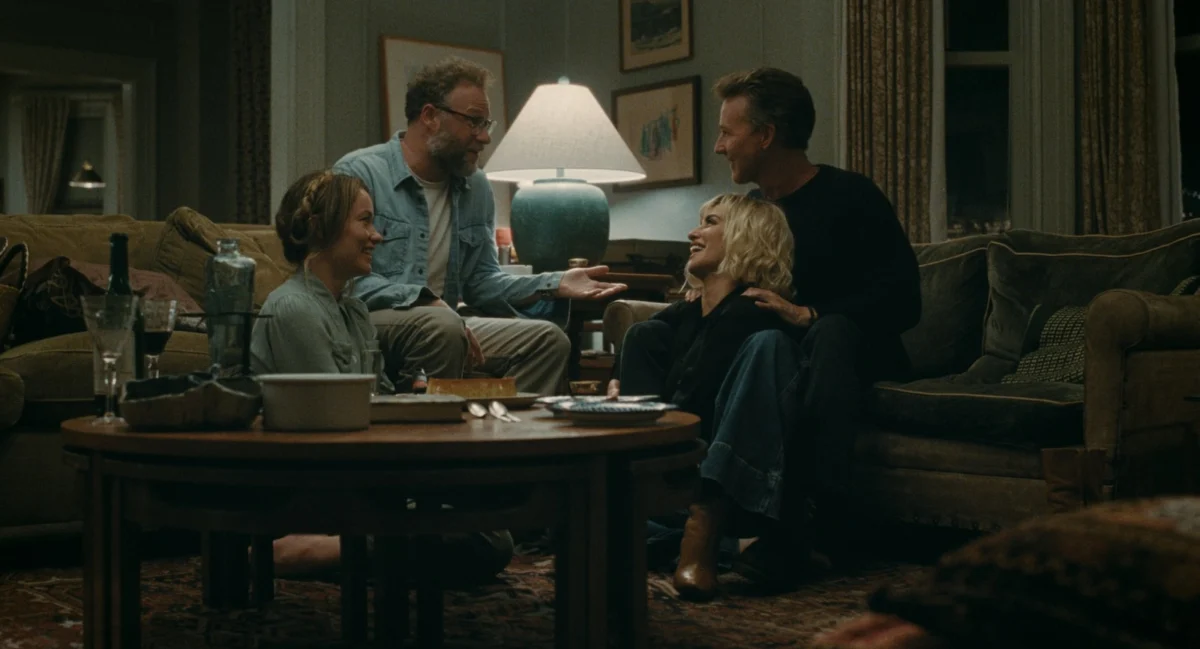
At its core, The Invite introduces San Francisco couple Angela (Olivia Wilde) and Joe (Seth Rogen), whose nightly peace is disturbed by the boisterous sounds emanating from their upstairs neighbors, Piña (Penélope Cruz) and Hawk (Edward Norton). What initially appears to be a source of terror – something "going bump in the night" – quickly reveals itself as the passionate lovemaking of their vibrant neighbors. This auditory intrusion, however, serves a deeper narrative purpose, starkly highlighting the perceived absence of similar passion and excitement in Angela and Joe’s own marriage. Their relationship, it seems, has settled into a comfortable but unfulfilling routine, a stark contrast to the unbridled ardour echoing from above.
The plot thickens when Piña and Hawk extend an invitation for dinner, a seemingly innocuous social gesture that quickly unravels the carefully constructed facades of both couples. During the evening, the upstairs duo reveal a surprising truth: the orgasmic screams are not Piña’s but belong to a friend named Vanessa. Piña and Hawk, it turns out, are swingers, operating under a specific set of rules – typically no more than six participants, with an exception for birthdays, when the guest list can expand to ten. This revelation pivots the narrative from a domestic drama of comparison to a darkly comedic exploration of sexual liberation, societal expectations, and the boundaries of intimacy, forcing Angela and Joe to confront their own inhibitions and preconceptions about love, desire, and fidelity.
Cinematic Craft and Thematic Depth
The Invite stands out not only for its provocative subject matter but also for its meticulous cinematic execution. Shot elegantly on 35mm film, the movie boasts a visual richness that elevates its intimate, single-location setting. The score, crafted by the acclaimed musician Dev Hynes, further contributes to the film’s sophisticated atmosphere, weaving a sonic tapestry that underscores both its comedic beats and its underlying emotional tension. This blend of high-art aesthetics with a "gag-heavy sex comedy" approach creates a unique viewing experience, designed, as Wilde noted, to be "best enjoyed with a large, raucous crowd."
The screenplay, adapted by Rashida Jones and Will McCormack, draws its inspiration from Cesc Gay’s 2020 Spanish-language drama Sentimental (also known as The People Upstairs). While Gay’s original film, itself based on a play, retained a theatrical feel, Wilde’s vision for The Invite was to transform it into a dynamic, "kinetic, cinematic experience." This involved a directorial approach characterized by a constantly moving camera, spinning in "new, inventive ways," and a keen focus on the actors’ physical expressions. Wilde meticulously tracked the evolution and collapse of "body language and demeanour," often to the floor, as the evening’s chaos unfolded. This dynamic visual storytelling ensures that the film, despite its confined setting, feels expansive and engaging, reflecting the internal turmoil and shifting power dynamics between the characters. The narrative remains deeply human, consistently surprising the audience with lines that can be profoundly emotional, hilariously absurd, or, in a memorable sequence involving pegging, both simultaneously.
The Influence of Yorgos Lanthimos and the Art of Editing
A key element in shaping The Invite‘s distinctive tone was the involvement of editor Yorgos Mavropsaridis, known colloquially as "Blackfish," celebrated for his work on Yorgos Lanthimos’s critically acclaimed films such as Dogtooth and The Lobster. Wilde explicitly stated her aspiration to evoke a similar sensibility: "At all times, that’s what I’m going for." She lauded Mavropsaridis for his extraordinary ability to "find the tone of this unsettling dark comedy that has a rhythm unto its own."
The influence of Lanthimos’s style, characterized by its exploration of subtext and a darkly humorous, often unsettling, perspective, is evident throughout The Invite. Wilde emphasized her desire for the film to be deeply rooted in "not only language, but the unspoken language of the characters," a hallmark of Lanthimos’s oeuvre. She described the editing process as a delicate balance: "It was a process of putting the framework of the story together, and then plugging in the comedy-of-errors rhythm that was like a train running off the tracks."
Capturing the raw energy and spontaneity of the shoot was paramount for Wilde. She recounted the intense focus required to transfer the "muscle memory" of the on-set experience into the editing suite, working with Mavropsaridis, Ant Boyce, and a team of editorial assistants. This meticulous process aimed to translate the palpable energy of the performances into a "very specific rhythm," likening it to trying to "sing a song in your head to people." This dedication to rhythm and tone ensures that the film’s comedic timing and dramatic impact are finely tuned, creating an immersive and often disorienting experience for the viewer.
"Art Therapy": The Actor’s Vulnerability and Esther Perel’s Insight
The filmmaking process for The Invite transcended mere performance, becoming a deeply personal and cathartic experience for its cast and director. Both Olivia Wilde and Edward Norton spoke candidly about the profound level of vulnerability required during production. Norton described the collaborative preparation as throwing personal experiences, observations, and stories into a "soup pot," from which they "constructed our own character’s issues, pathologies, and secret history."
Wilde, in particular, found the experience surprisingly therapeutic. "For me, on this film, I think I probably was more vulnerable than I’ve ever been, in a way that actually surprised me," she confessed, jokingly adding, "I didn’t realise how much I needed art therapy." Norton swiftly interjected, calling it "an exorcism," a sentiment Wilde echoed wholeheartedly: "It was an exorcism! It was very cathartic." This shared sentiment underscores the film’s emotional depth, suggesting that the raw, honest performances stem from a place of genuine introspection and self-discovery by the actors themselves.
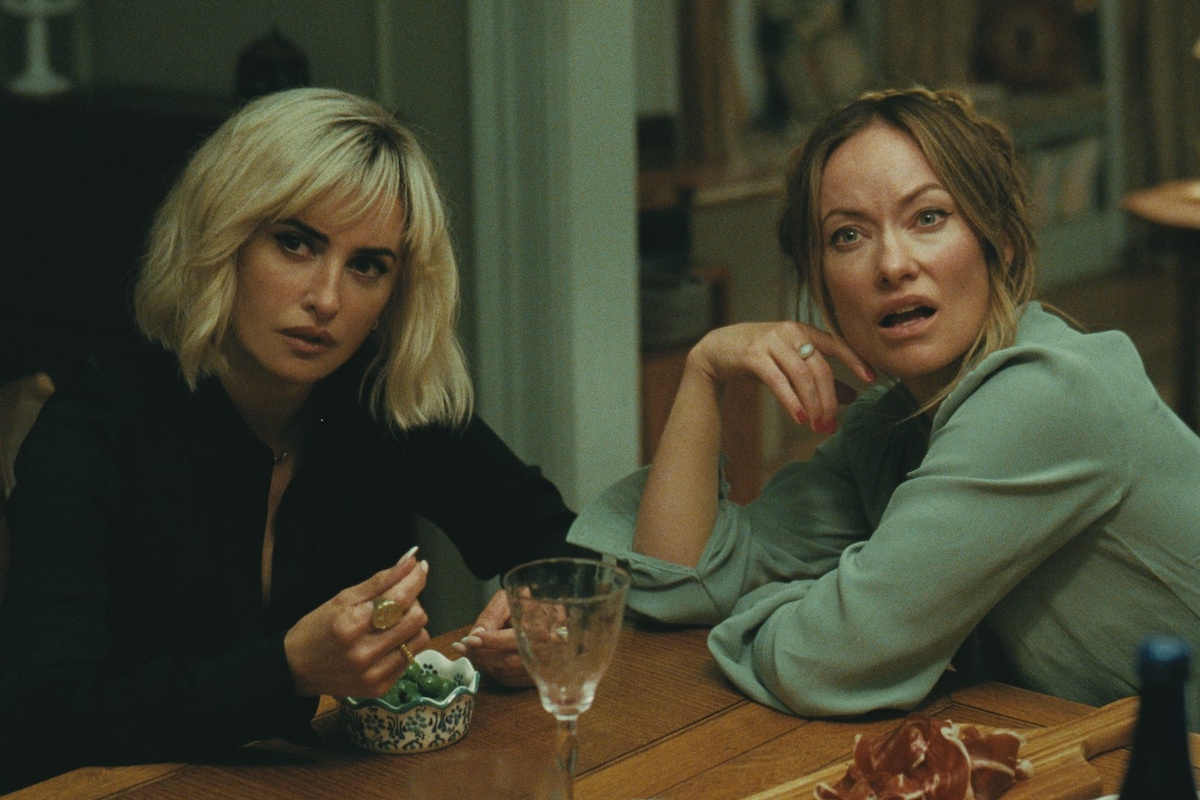
A significant influence on the film’s thematic exploration of relationships was the renowned Belgian-American psychotherapist Esther Perel, who also served as a consultant on the film. Perel is celebrated for her work on long-term relationships, infidelity, and the broader concept of eroticism within committed partnerships. Norton highlighted her impact: "Someone who’s had a big effect on all of us is the great therapist Esther Perel, who writes about long-term relationships, infidelity, and the idea of eroticism generally. A lot of what we took and liked from her work got personified in Penélope as Piña." Perel’s insights provided a robust psychological framework for the characters, particularly Piña, whose liberated approach to sexuality challenges conventional notions of marriage and monogamy.
Wilde further elaborated on the societal context of therapeutic discourse, noting the contemporary phenomenon of "free therapy from podcasts, TikTok, the internet." While acknowledging this as "a great sign that people are more introspective about relationships and trauma," she also cautioned against the risk of such widespread accessibility giving "some of these therapeutic philosophies almost a cheap name." She contrasted this with the rigorous, research-backed work of experts like Perel, who has dedicated "more than 20 years of research into different cultures." This distinction is woven into the film’s narrative, as Wilde’s character, Angela, is depicted "obsessively listening to podcasts to try to find betterment," reflecting a common modern quest for self-improvement and relational understanding.
The Power of Unscripted Moments
One of the film’s most memorable and impactful sequences arose from an unscripted moment, a testament to the trust and spontaneity fostered on set. Edward Norton recounted a scene where Hawk delivers a "sincere, heartbreaking monologue," only for Seth Rogen’s character, Joe, to reduce it all to a "mean comment about pegging." This line, Norton revealed, was entirely improvised by Rogen "on the spot."
The authenticity of this moment was palpable, creating genuine reactions from the other actors. Wilde observed, "When something genuinely surprises the other actors, you can feel that energy. You feel an authentic moment of shock. It’s very hard to fake genuine surprise." She confirmed that she and Penélope Cruz had not heard Norton perform that specific monologue before, making their reactions to Rogen’s sharp, unexpected retort entirely real. Norton recalled, "And Seth’s response was so rude! Honestly, it was so good, I was in shock. Penélope got quite irritated by it." Wilde confirmed the genuine irritation, adding, "I really was like, ‘Oh my God, Seth!’" This incident highlights the film’s commitment to capturing raw, unfiltered human interaction, allowing for moments of profound humor and discomfort that resonate deeply with the audience. It exemplifies the "pretty wild" experience of playing out unscripted moments that genuinely propel the narrative forward.
Gen Z’s Unexpected Embrace and Broader Societal Implications
Perhaps one of the most surprising aspects of The Invite‘s reception has been its enthusiastic embrace by younger audiences, particularly Gen Z. Olivia Wilde expressed her delight, noting, "Younger audiences are loving this movie in a way that makes me so happy. It was not necessarily something I predicted." She reflected on her own youth, recalling how films not necessarily about her age group, like those by Woody Allen, provided a window into adult life.
Edward Norton echoed this sentiment, referencing films like Husbands and Wives, Manhattan, and Who’s Afraid of Virginia Woolf? as cinematic doorways into "adult life, sophistication, and complexity" for his younger self. He theorized that for Gen Z, The Invite offers a similar glimpse: "When you’re young, you’re just thinking about boyfriends, girlfriends, and sex. So when you watch those films, you go, ‘Oh, it gets complicated.’" The film, therefore, expands their understanding of love and sex beyond simplistic notions, presenting a multifaceted view of relationships that includes challenges, compromises, and evolving desires.
Wilde recounted an encounter with college students in Boston, where she screened the film. Despite initial assumptions that "no one was fucking" among Gen Z due to prevailing cultural narratives, these students, including queer individuals and those in diverse relationship structures, found the film "really relevant." One 19-year-old even confessed, "This really brought up some conversations I need to have with my partner." This profound impact suggests that the film’s exploration of communication, boundaries, and the courage to address unspoken desires transcends specific demographics.
Esther Perel offered a compelling sociological explanation for Gen Z’s unexpected connection to The Invite. In an age dominated by social media, where interactions are often curated and filtered, the film’s portrayal of "unplanned social interaction, without any pre-curation," is perceived as "exotic and thrilling." Perel posits that younger generations, accustomed to knowing "where I’m going, who’s going to be there, what their beliefs are, and what will occur," are drawn to the idea of "friction in an unexpected event." The film, with its raw depiction of a "collision with people," unpreparedness, honesty, and genuine presence – where "no one just staring at their phones the whole time" – offers a social experience that is almost "fetishised" by those not typically afforded it. This analysis underscores the film’s relevance as a commentary on contemporary social dynamics and the human craving for authentic, unfiltered connection.
The broader implications of The Invite extend beyond entertainment. While some might jokingly suggest it could lead to a rise in divorces, akin to the impact of Ingmar Bergman’s Scenes from a Marriage on Sweden’s divorce rates, Olivia Wilde firmly believes the opposite. "I think more people will stay together because of this movie. I really believe that," she stated, emphasizing the film’s potential to spark crucial conversations and foster deeper understanding within relationships. Edward Norton’s playful interjection about "Swinger conventions – sign up!" adds a layer of levity, but the underlying message is serious: the film encourages introspection and open dialogue about the complexities of modern love and desire.
The Invite, now playing in UK and Irish cinemas, offers a refreshing and thought-provoking cinematic experience that masterfully blends sophisticated filmmaking with raw, honest storytelling, challenging audiences to reflect on their own relationships and the evolving landscape of human connection.