


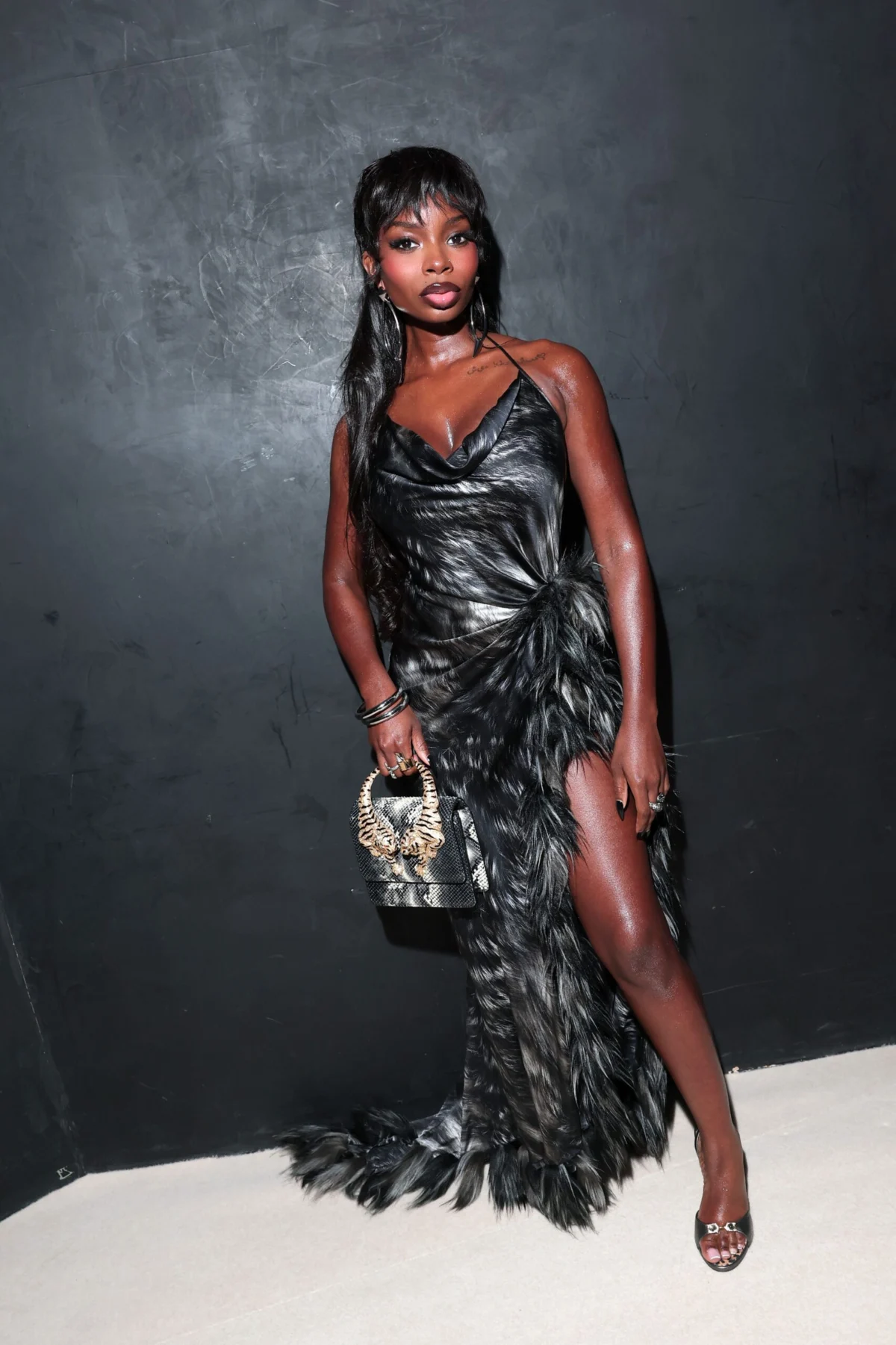
Milan Fashion Week remains the global epicenter for the intersection of high-concept couture and avant-garde beauty. While the runways typically dictate the seasonal trends in textiles and silhouettes, the front row and the street-style circuit provide the necessary contrast to these rigid industry standards. During the most recent iteration of the biannual event, model and style icon Olandria Carthen emerged as the focal point of a shifting paradigm in hair artistry, debuting a high-fashion interpretation of the mullet that defied conventional styling expectations.
The Anatomy of an Editorial Statement
The transition from traditional beauty norms to experimental silhouettes is a hallmark of contemporary runway culture. Carthen’s choice to adopt a mullet—a hairstyle historically relegated to fringe subcultures before its recent resurgence—served as a calculated juxtaposition against the formal, floor-skimming Roberto Cavalli gown she wore to the brand’s show.
The aesthetic, orchestrated by hairstylist Keisha Moore, was defined by a deliberate structural dichotomy. The "business" portion of the cut featured piecey, asymmetrical bangs that framed the forehead, transitioning into a precision-chopped crown and sides. Conversely, the "party" element consisted of voluminous, loose curls that extended to the hips, creating a dramatic visual narrative of texture and length.
According to technical specifications provided by Moore, the creation of this look relied on precise product layering to achieve the necessary editorial lift. Moore utilized K18 AstroLift reparative volume spray to establish the foundational fullness, followed by the K18 HeatBounce Conditioning Heat Protectant to maintain hair integrity during the high-heat curling process. This emphasis on technical hair health, even when executing high-concept, short-lived styles, underscores a growing industry trend toward "conscious editorializing," where the aesthetic result is balanced with hair longevity.
Milan Fashion Week: A Catalyst for Beauty Innovation
Milan Fashion Week is not merely a series of runway shows; it is a meticulously curated environment where image management is paramount. The event attracts the world’s leading fashion houses—including Prada, Fendi, and Versace—and necessitates that attendees present a cohesive visual brand.

For the Roberto Cavalli show, the synergy between Carthen’s styling and the garment was intentional. The gothic-leaning ensemble, characterized by a plunging, draped neckline and a high-slit skirt, featured shaggy feather trim that mimicked the plumage of the dress’s print. This cohesion extended to her manicured, long-pointed black nails, which acted as an extension of the overall monochromatic palette. The mullet, rather than appearing as an incongruous choice, functioned as a structural accessory, balancing the fluid nature of the dress with a sharp, aggressive geometry.
Chronology of the Transformation
The speed at which modern fashion icons shift their personal brand is unprecedented, driven by the demands of social media coverage and the relentless pace of international fashion weeks. Carthen’s transformation occurred within a 24-hour window, illustrating the volatility of modern style.
- Day One (The Roberto Cavalli Show): Carthen appeared with the signature, hip-length, curly-backed mullet. This look dominated industry discourse, drawing immediate comparisons to 1980s rock-and-roll aesthetics re-imagined through a 2020s lens.
- Day Two (The Blumarine Show): In a swift departure from the previous day’s configuration, Carthen appeared at the Blumarine show with the long, cascading curls removed. The style was re-sculpted into a short, structured, bowl-cut-inspired pixie.
This rapid pivot indicates a strategic approach to image maintenance. By effectively "retiring" a signature look within 24 hours, the subject prevents the commodification of a singular style, thereby retaining an air of unpredictability that is highly valued in the luxury fashion market.
Technical Analysis and Product Integration
The role of professional hair stylists at events like Milan Fashion Week has evolved from mere maintenance to collaborative artistry. When stylists like Keisha Moore work with high-profile models, they are often tasked with managing the tension between public perception and the physical capabilities of the hair.
The use of specific restorative treatments during these quick-turnover styling sessions reflects a broader industry shift. As stylists increasingly use chemical-based volume boosters and heat-intensive tools, brands like K18 have become staples in the kits of top-tier artists. The inclusion of heat-protectant conditioning agents is no longer a secondary consideration but a mandatory step to prevent the breakage often associated with constant styling, dyeing, and cutting.
Data from the beauty industry suggests that demand for professional-grade styling products has grown by approximately 12% annually since 2022, largely driven by the visibility of celebrity transformations on platforms like Instagram and TikTok. Consumers are no longer content to observe these trends; they seek to replicate the technical process behind them.

Broader Implications for Hair Trends
The re-emergence of the mullet, specifically within the context of European high fashion, signals a move away from the "quiet luxury" aesthetic that dominated the previous fiscal year. In its place, we are observing a rise in "maximalist grunge"—a style that embraces irony, historical reference, and gender-neutral silhouettes.
The impact of Carthen’s look extends beyond the immediate excitement of the event. It sets a precedent for how stylists might approach "editorial-to-street" transitions. The versatility demonstrated—moving from a long, feminine silhouette to a sharp, boyish pixie—provides a blueprint for how individuals can manipulate hair as a tool of self-expression in a professional capacity.
Furthermore, the response from the fashion media suggests that there is a significant appetite for "risk-taking" beauty. Industry critics have noted that for several seasons, hair trends were largely static, favoring long, natural waves or sleek, low-maintenance bobs. The adoption of a polarizing cut like the mullet by a prominent figure serves to normalize experimentation and challenges the industry to move toward more adventurous styling mandates.
Institutional Response and Public Perception
While official statements from fashion houses typically focus on the garment, the holistic presentation of an attendee is increasingly viewed as an extension of the brand’s image. Observers noted that the confidence with which Carthen carried the look was central to its success. In the realm of high fashion, the "sell-ability" of a look is predicated on the wearer’s commitment to the aesthetic.
As the industry prepares for upcoming seasons in Paris and London, the "Carthen Effect" will likely serve as a case study for styling teams. It emphasizes the importance of versatility in a high-pressure environment. Whether the mullet was a temporary extension-based installation or a permanent cut, the resulting discourse reinforces the idea that hair is the final, and perhaps most potent, frontier of personal branding in the 21st century.
As the industry moves forward, it is clear that the standard for "high-fashion" hair has been adjusted. It is no longer enough to be polished; one must be transformative. The ability to surprise, to pivot, and to defy expectations is now a currency as valuable as the designs themselves. Olandria Carthen’s performance at Milan Fashion Week has successfully codified this new reality, leaving the public and industry professionals alike awaiting her next move with heightened anticipation.