









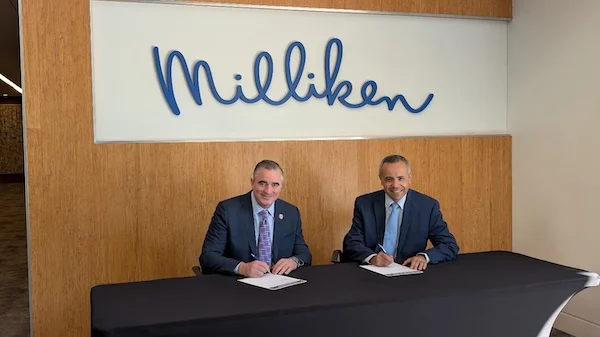
In a significant move for the global fire service and protective textile industries, Milliken & Company officially announced on June 2, 2026, that it has become the first textile manufacturer to sign the International Association of Fire Fighter’s (IAFF) new PPE Manufacturer Code of Conduct for Fire Fighter Protective Clothing and Equipment. This landmark agreement, signed at Milliken’s corporate headquarters in Spartanburg, South Carolina, formalizes a commitment to transparency, safety, and the elimination of hazardous substances in the production of personal protective equipment (PPE).
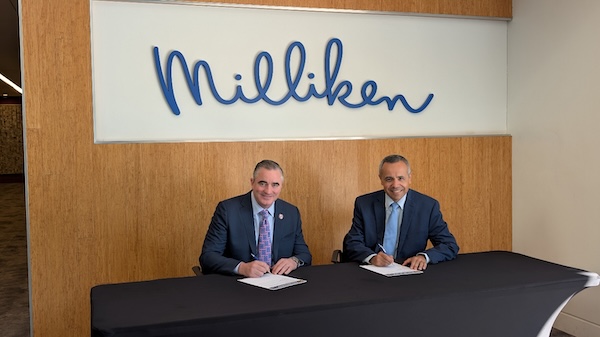
The signing ceremony, which took place on May 20, 2026, featured IAFF General President Edward Kelly and Milliken Apparel Executive Vice President and Managing Director Marcio Manique. The event marks a pivotal shift in the relationship between equipment manufacturers and the frontline workers who rely on their products. By adopting the code, Milliken sets a precedent for the industry, emphasizing that the health and safety of firefighters must take precedence over traditional manufacturing conveniences.
Defining the IAFF PPE Manufacturer Code of Conduct
The IAFF Code of Conduct was developed as a response to growing concerns within the fire service regarding the long-term health impacts of chemicals used in protective gear. For decades, the industry relied on per- and polyfluoroalkyl substances (PFAS)—often referred to as "forever chemicals"—to provide oil and water repellency in turnout gear. However, emerging scientific data has linked these substances to various cancers, which have become the leading cause of line-of-duty deaths among firefighters.
The code establishes a comprehensive framework of expectations for manufacturers. Key pillars of the document include:
- Safe and Compliant Product Design: Ensuring that all gear meets or exceeds rigorous safety standards without introducing secondary hazards.
- Truthful Representation: Requiring manufacturers to be fully transparent about the materials used in their products and the limitations of those materials.
- Proactive Hazard Assessment: Committing to ongoing research to identify and mitigate potential risks associated with textile chemistry.
- Timely Communication: Establishing protocols for the immediate notification of fire departments and the IAFF regarding any potential safety issues or defects.
At the signing, IAFF General President Edward Kelly emphasized the moral weight of the agreement. Kelly noted that the code ensures manufacturers share an ethical commitment to keeping harmful chemicals out of the gear, reinforcing the necessity of clean, non-toxic equipment for the modern fire service.
Milliken’s Multi-Layered Approach to PFAS Elimination
Milliken & Company’s decision to sign the code is the culmination of years of internal research and development. The company’s journey toward PFAS-free textiles began in earnest years ago, leading to a complete phase-out of PFAS in fabrics developed for the fire service industry by 2021. This transition was particularly challenging due to the technical requirements of turnout gear, which must withstand extreme heat, provide breathability, and resist moisture penetration.
Today, Milliken stands as the only manufacturer capable of providing non-PFAS options across all three critical layers of turnout gear:
- The Outer Shell: The first line of defense against heat and abrasion.
- The Moisture Barrier: A critical layer that prevents water and chemicals from reaching the skin while allowing metabolic heat to escape.
- The Thermal Liner: The innermost layer that provides the primary insulation against extreme temperatures.
By offering a "complete system" solution, Milliken has enabled fire departments to transition away from PFAS-laden gear without compromising on performance or durability. This technical breakthrough has already seen adoption by major municipal and regional entities.
A Chronology of Innovation and Safety Milestones
The adoption of the IAFF Code of Conduct is part of a broader timeline of safety-focused milestones for Milliken & Company:
- Pre-2021: Milliken initiates intensive R&D to find alternatives to fluorinated chemistries in high-performance textiles.
- 2021: The company officially achieves a PFAS-free portfolio for all fire service fabrics, removing these chemicals from their production lines four years ahead of many regulatory mandates.
- 2023-2025: Milliken partners with major metropolitan fire departments, including the San Francisco Fire Department and Horry County Fire Rescue, to pilot and implement non-PFAS turnout gear systems.
- May 20, 2026: Leadership from Milliken and the IAFF meet in Spartanburg to sign the Manufacturer Code of Conduct.
- June 2, 2026: The formal public announcement is made, signaling a new era of accountability in the textile manufacturing sector.
Scientific Validation and Third-Party Verification
To ensure the highest levels of trust, Milliken recently underwent voluntary third-party testing through Forever Analytical, a firm specializing in the detection of trace PFAS levels. The results of this testing confirmed that Milliken fabrics used in firefighter turnout gear contain no detectable levels of PFAS.
This third-party validation is crucial in an industry where "PFAS-free" claims can sometimes be ambiguous. By submitting their products to independent analysis, Milliken has provided fire departments with the empirical data necessary to make informed procurement decisions. This transparency aligns directly with the "Truthful Representation" pillar of the IAFF Code of Conduct.
Industry Implications and Market Shift
The move by Milliken is expected to have a ripple effect throughout the global textile and PPE supply chain. As the first fabric manufacturer to sign the code, Milliken has effectively raised the bar for its competitors. Industry analysts suggest that other major players in the protective clothing market will face increasing pressure from labor unions and municipal governments to adopt similar transparency standards.
The fire service industry is currently undergoing a massive shift in procurement priorities. While cost and durability remain important, "health-conscious procurement" has become a dominant trend. Fire chiefs and city managers are increasingly looking at the long-term liability and health costs associated with chemical exposure. By aligning with the IAFF, Milliken positions itself as a preferred partner for departments that are prioritizing the long-term wellness of their personnel.
Case Studies: San Francisco and Horry County
The practical application of Milliken’s non-PFAS solutions is best seen in the successful transitions of the San Francisco Fire Department (SFFD) and Horry County Fire Rescue. These departments were among the first to recognize the risks of PFAS and sought out manufacturers capable of providing high-performance alternatives.
In San Francisco, where the fire department has been vocal about the link between firefighting and cancer, the transition to non-PFAS gear was seen as a vital occupational health measure. Milliken’s ability to provide the technical "unlock"—maintaining the protective qualities of the gear without the toxic additives—was a deciding factor in the department’s gear selection. Similarly, Horry County’s adoption of these materials demonstrates that the demand for safer PPE is not limited to large metropolitan areas but is a priority for departments of all sizes across the country.
Broader Health and Economic Analysis
The health implications of this shift are profound. According to data from the National Institute for Occupational Safety and Health (NIOSH), firefighters have a 9 percent higher risk of being diagnosed with cancer and a 14 percent higher risk of dying from cancer compared to the general U.S. population. The introduction of the IAFF Code of Conduct aims to reduce these statistics by addressing one of the primary vectors of chemical exposure: the gear worn daily by members.
Economically, the shift toward non-PFAS textiles is driving innovation in green chemistry. While the initial costs of developing non-fluorinated alternatives were high, the scaling of production is beginning to normalize prices. Furthermore, the reduction in long-term healthcare costs and disability claims related to occupational cancer represents a significant potential saving for municipalities and taxpayers.
Future Outlook: The New Standard for Protective Gear
As Milliken & Company integrates the IAFF Code of Conduct into its operational framework, the company continues to invest in research and testing. The next frontier in PPE development involves enhancing the breathability of moisture barriers to reduce heat stress—another significant killer in the fire service—while maintaining the PFAS-free integrity of the fabrics.
Marcio Manique of Milliken noted that signing the code is not a one-time event but a reflection of a long-standing corporate culture of integrity. By working with every major turnout gear manufacturer in the United States, Milliken’s influence extends across the entire industry, ensuring that safer materials reach the widest possible range of firefighters.
The adoption of the IAFF PPE Manufacturer Code of Conduct by Milliken & Company serves as a definitive statement that the future of the fire service is one where safety is measured not just by protection from heat and flame, but by the long-term biological safety of the materials themselves. This landmark agreement is expected to serve as a blueprint for the next generation of industrial safety standards, placing human health at the center of manufacturing excellence.