






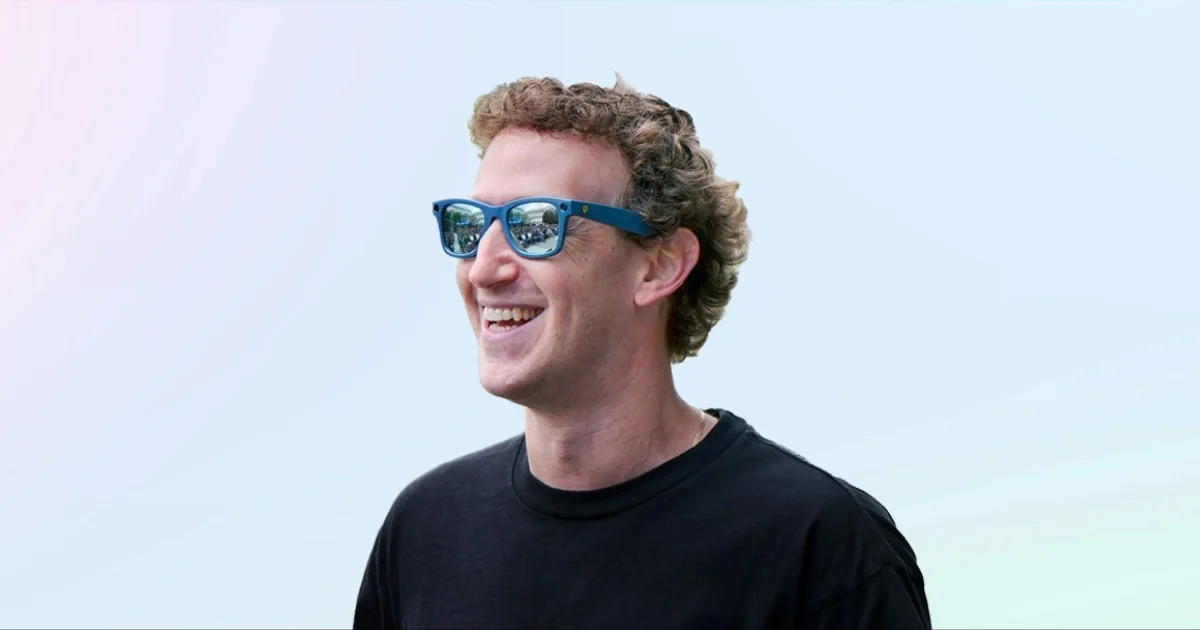
The intersection of high fashion and wearable technology reached a new milestone on Thursday as Meta Platforms Inc. CEO Mark Zuckerberg and his wife, Priscilla Chan, attended the Prada Fall/Winter 2026 Fashion Week show in Milan. Seated in the front row, Zuckerberg was observed in deep conversation with Lorenzo Bertelli, Prada’s Chief Merchandising Officer and the son of head designer Miuccia Prada. This high-profile appearance has intensified industry speculation that Meta is preparing to expand its smart glasses portfolio to include a luxury edition under the Prada brand. While Meta has yet to issue a formal announcement regarding a partnership, the presence of the social media executive at one of the world’s most exclusive fashion events suggests a strategic move to pivot Meta’s AI-powered hardware from a tech-centric accessory to a staple of the luxury market.
The Strategic Pivot: From Silicon Valley to Milan
Mark Zuckerberg’s presence in Milan marks a significant departure from his historically tech-focused public appearances. In recent years, the Meta CEO has undergone a visible image transformation, trading his signature gray t-shirts for tailored apparel and high-fashion pieces. Analysts suggest this "rebrand" is more than a personal aesthetic shift; it is a calculated effort to position Meta as a lifestyle brand capable of competing in the prestige sector.
The potential collaboration with Prada follows Meta’s successful partnership with EssilorLuxottica, the French-Italian eyewear conglomerate that owns Ray-Ban and Oakley. By aligning with Prada, Meta aims to capture a demographic that prioritizes brand heritage and aesthetic sophistication over raw technical specifications. This move reflects a broader trend in the tech industry where hardware must not only be functional but also socially desirable. For Meta, the goal is to make smart glasses "invisible" by integrating them into the existing visual language of high-end fashion.
A Chronology of Meta’s Smart Eyewear Development
Meta’s journey into smart eyewear began in earnest in September 2021 with the launch of "Ray-Ban Stories." Developed in collaboration with EssilorLuxottica, the first-generation glasses allowed users to take photos, record short videos, and answer phone calls. While the initial reception was lukewarm, it provided Meta with critical data on user behavior and the hardware requirements for all-day wearability.
In 2023, the company released the "Ray-Ban Meta" collection, which introduced significant upgrades, including improved camera quality, better audio, and the integration of Meta AI—a multimodal assistant capable of identifying objects and translating text in real-time. This second generation proved to be a breakthrough. By the end of 2024, sales had exceeded expectations, prompting Meta to explore further brand diversifications.
In June 2025, CNBC reported that Meta was actively working on AI-integrated glasses with both Oakley and Prada. Shortly thereafter, Meta unveiled the Oakley Meta line, targeting the athletic and outdoor markets with durable, wrap-around designs. The emergence of Zuckerberg at the Prada show in early 2026 appears to be the final precursor to the formalization of the third pillar of this strategy: the luxury fashion segment.
Supporting Data: The Surge in Wearable AI Adoption
The financial and operational metrics supporting Meta’s hardware ambitions are substantial. According to data released by EssilorLuxottica in February 2026, the company sold over 7 million units of Meta AI-enabled glasses in 2025. This represents a 250% increase from the 2 million units sold in 2024.
The growth is attributed to several factors:
- AI Utility: The integration of Meta’s Llama-based AI models has transformed the glasses from a mere recording device into a proactive personal assistant.
- Form Factor: Unlike bulky VR headsets like the Quest 3 or Apple’s Vision Pro, the Ray-Ban and Oakley models are indistinguishable from standard eyewear.
- Price Accessibility: Starting at approximately $299, the devices sit at a price point accessible to the mass market while maintaining a "premium" feel through the Ray-Ban branding.
The potential Prada collaboration would likely command a significantly higher price point, potentially ranging from $600 to $1,000, aligning with Prada’s existing eyewear pricing. This would allow Meta to improve its margins on hardware, which has historically been a loss-leading segment for the company’s Reality Labs division.
The Role of EssilorLuxottica and Licensing Agreements
The infrastructure for a Prada AI glasses launch is already firmly in place. EssilorLuxottica has held the licensing rights for Prada and Miu Miu eyewear for over two decades. In a strategic move late last year, the two companies renewed their licensing agreement for an additional ten years. The current contract, which was set to expire at the end of 2025, has been extended through December 31, 2030, with a further provision to renew until 2035.
This long-term stability is crucial for Meta. It ensures that the manufacturing expertise and distribution networks of the world’s largest eyewear company remain at Meta’s disposal. During an earnings call earlier this year, EssilorLuxottica executives noted that "smart eyewear is no longer a niche experiment but a core driver of future growth," signaling that the company is fully committed to embedding Meta’s technology across its entire portfolio of licensed brands.
Official Responses and Industry Reactions
While Meta and Prada have remained tight-lipped following the Milan sighting, industry insiders suggest that an announcement could be timed for Meta’s annual "Connect" conference later this year. Lorenzo Bertelli, who has been instrumental in Prada’s digital transformation and sustainability initiatives, has previously spoken about the importance of merging traditional craftsmanship with modern technology.
Market analysts at firms like Gartner and Forrester have noted that a Prada partnership would be a "defensive masterstroke" against Apple. While Apple’s Vision Pro focuses on high-fidelity spatial computing, Meta’s strategy focuses on "ambient AI"—technology that assists the user without obstructing their view of the physical world. By securing Prada, Meta effectively "owns" the face of the fashion-conscious consumer before Apple can miniaturize its technology into a standard glasses frame.
Privacy Concerns and the Social Backlash Against Surveillance
Despite the commercial success of Meta’s eyewear, the expansion into the luxury market comes at a time of heightened public sensitivity regarding privacy and surveillance. The integration of cameras and microphones into everyday fashion has sparked a "tech backlash" in several urban centers.
In early 2026, reports emerged of consumers in major U.S. cities intentionally disabling or destroying public and private surveillance devices. Incidents involving the removal of Ring doorbells and the smashing of Flock license-plate-reading cameras have signaled a growing discomfort with the "always-on" nature of modern technology.
Meta’s smart glasses have been at the center of this controversy. A recent report by The New York Times claimed that Meta is considering adding facial-recognition features to its glasses, which would allow users to identify strangers in real-time by cross-referencing social media profiles. The news drew immediate condemnation from privacy advocacy groups. In response to these concerns, a third-party developer recently launched an app designed to alert users if an AI-enabled wearable device is detected in their immediate vicinity, using Bluetooth and Wi-Fi signal signatures.
Meta has maintained that its glasses include privacy safeguards, such as an LED light that signals when recording is in progress. However, critics argue that these measures are easily bypassed or ignored, and the addition of a luxury brand like Prada may only serve to normalize intrusive technology by masking it as a status symbol.
Broader Impact and Implications for the Future of Wearables
The potential launch of Prada AI glasses represents a pivotal moment for the tech industry. If Meta successfully integrates its AI into a high-fashion product, it will have solved the "social acceptance" problem that has plagued wearables since the failure of Google Glass in 2013.
The implications are twofold:
- The Normalization of Ambient Computing: As AI becomes more deeply embedded in our physical attire, the boundary between the digital and physical worlds will continue to blur. This shifts the focus of the "smartphone era" to the "wearable era," where information is delivered via audio and heads-up displays rather than screens.
- The Bifurcation of the Market: We are likely to see a clear divide between "utility" wearables (like the Oakley Meta) and "luxury" wearables (like the potential Prada Meta). This allows tech companies to segment their audience with the same precision as traditional fashion houses.
As Mark Zuckerberg departs Milan, the tech and fashion worlds remain on high alert. Whether the meeting with Lorenzo Bertelli was a casual social encounter or a final negotiation for a groundbreaking product remains to be seen. However, the data, the existing corporate partnerships, and the current trajectory of Meta’s hardware division all point toward a future where the next must-have Prada accessory is powered by Silicon Valley’s most advanced artificial intelligence. For now, the industry waits for the official confirmation of a deal that could redefine both the runway and the reality of modern communication.