








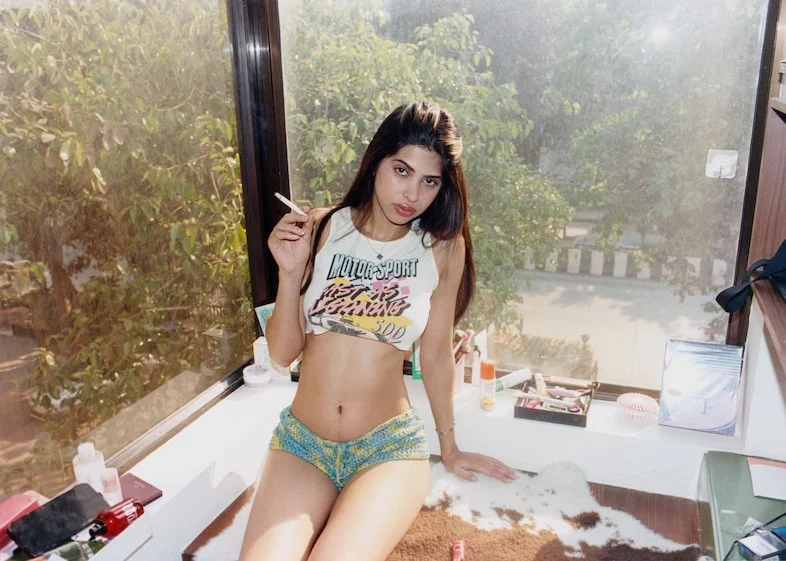
The landscape of contemporary photography has been significantly enriched by Mumbai-based artist Megha Singha’s compelling project, I Love My Friends, But They’re Killing Me. This nuanced series delves into the multifaceted, often paradoxical, pursuit of beauty and fame among young women in India, navigating the treacherous waters of digital self-presentation, globalized aspirations, and entrenched societal expectations. The project, recently shortlisted for the prestigious 2026 Aperture Portfolio Prize, offers a poignant visual commentary on the pressures and performances that define modern youth identity in an increasingly interconnected world.
The Visual Language: Guns, Glamour, and Globalized Desires
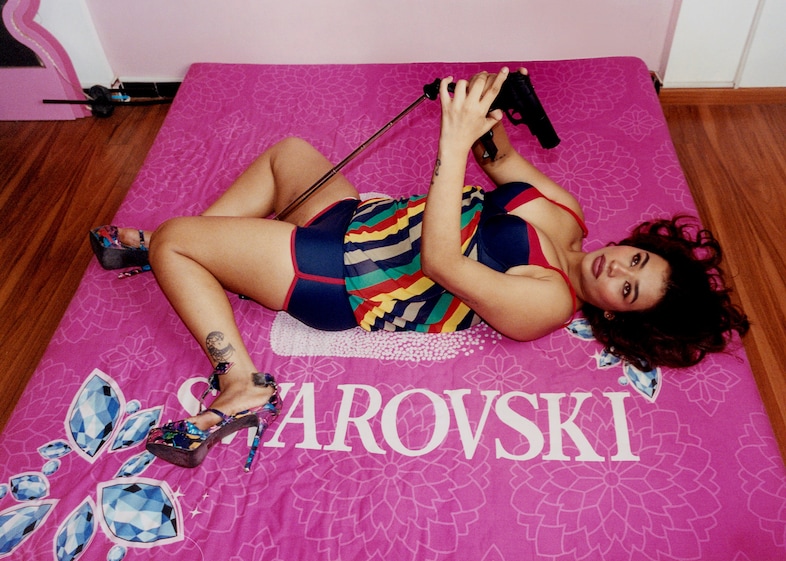
Central to Singha’s arresting collection is an image featuring her subject, Nandini, reclining on vivid pink bedsheets emblazoned with the iconic Swarovski logo. In a striking tableau, Nandini holds a tripod, balancing a plastic gun precariously between her legs, its barrel aimed directly at her head. This deliberate staging, where a weapon replaces the ubiquitous smartphone, encapsulates the project’s core thesis: the potentially destructive allure of self-image and public validation. The image resonates with the themes explored in pop star Addison Rae’s single Fame is a Gun, which candidly addresses the intoxicating yet perilous nature of celebrity, a parallel the original observer drew, highlighting a shared cultural zeitgeist despite the song not being a direct inspiration for Singha. Rae’s lyrics, speaking of fame as the sole remedy for a "broken heart" and confessing an unabashed hunger for stardom, echo the unspoken desires of many young women in Singha’s portraits – micro-celebrities, influencers, reality TV aspirants, and aspiring actresses – who are equally drawn to the dazzling promise of recognition.
Singha’s artistic inspirations for this potent imagery are deeply rooted in art history and cinematic narrative. She cites Rebecca Horn’s installation Room of Mutual Destruction, which features a gun confronting a mirror, as a significant influence. Horn’s work often explores themes of vulnerability, self-reflection, and the potential for violence inherent in human interaction, mirroring Singha’s contemplation of self-inflicted pressure in the pursuit of an idealized image. Equally impactful was the poster for Michelangelo Antonioni’s 1966 film Blow Up, a cinematic masterpiece that dissects the nature of reality, illusion, and the camera’s power to distort or reveal truth. For Singha, guns have been a recurring motif, a prop laden with personal associations from childhood. She recalls early playacting, staging dramatic performances for her family, where toy guns were central to portraying injury and vulnerability. This intersection of childhood performance and the symbolic weight of the weapon informs her photographic narrative, as she explains via email, "These images are inspired by how play and performance can collide into one." This fusion of innocence, theatricality, and latent danger forms the bedrock of the project’s visual rhetoric.
A Deep Dive into the Performance of Beauty: From Jorhat to Global Stages
At the heart of I Love My Friends, But They’re Killing Me lies Singha’s profound interest in the "performance" of beauty, both in the curated digital realm and in everyday life. This fascination was unexpectedly sparked by a personal anecdote involving her mother. Singha recounts, "My mum is extremely cool and has always been interested in new beauty trends, so when Kim Kardashian got her famous vampire facial, she somehow convinced the dermatologists in the town of Jorhat, where she lives, to explore it locally." This seemingly innocuous event became a pivotal moment for Singha, igniting her curiosity about the rapid globalization of beauty culture. "I was so fascinated by how something that originated in celebrity culture seeped into a small town in India, and was constantly thinking of ways I could approach it through photography," she shares.
This anecdote provides a crucial entry point into understanding the broader context of aspirational beauty in contemporary India. The country has witnessed an unprecedented digital revolution in recent years. As of 2023, India boasts over 880 million internet users, with smartphone penetration continuing to surge, making social media platforms an integral part of daily life for millions. Instagram alone has over 300 million users in India, creating fertile ground for influencer culture to flourish. The Indian beauty and personal care market is projected to reach over $30 billion by 2027, driven by rising disposable incomes, urbanization, and, critically, the pervasive influence of global beauty standards disseminated through social media. This confluence of factors means that trends originating in Hollywood or Seoul can quickly find their way to tier-2 and tier-3 cities across India, shaping desires and driving consumption patterns. The "vampire facial," popularized by Kim Kardashian in the early 2010s, is a prime example of how celebrity-driven beauty innovations rapidly transcend geographical boundaries, demonstrating a powerful, almost immediate, cultural seepage into diverse socio-economic landscapes.
Methodology and Authenticity: Exploring Without Judgment
Singha’s commitment to capturing this phenomenon with authenticity and depth is evident in her meticulous research and empathetic approach. She dedicated a significant portion of 2024 to immersing herself in the world of these young women, engaging in extensive conversations and building rapport. "I spent most of 2024 understanding this world, talking to the girls and getting to know them as I didn’t want my own preconceptions, good or bad, to influence the images," she elaborates. This dedication underscores her intent: not to critique or sensationalize, but to explore how the global performance of beauty manifests across varied geographies and socioeconomic strata within India, ultimately shaping contemporary ideas of femininity and desire.
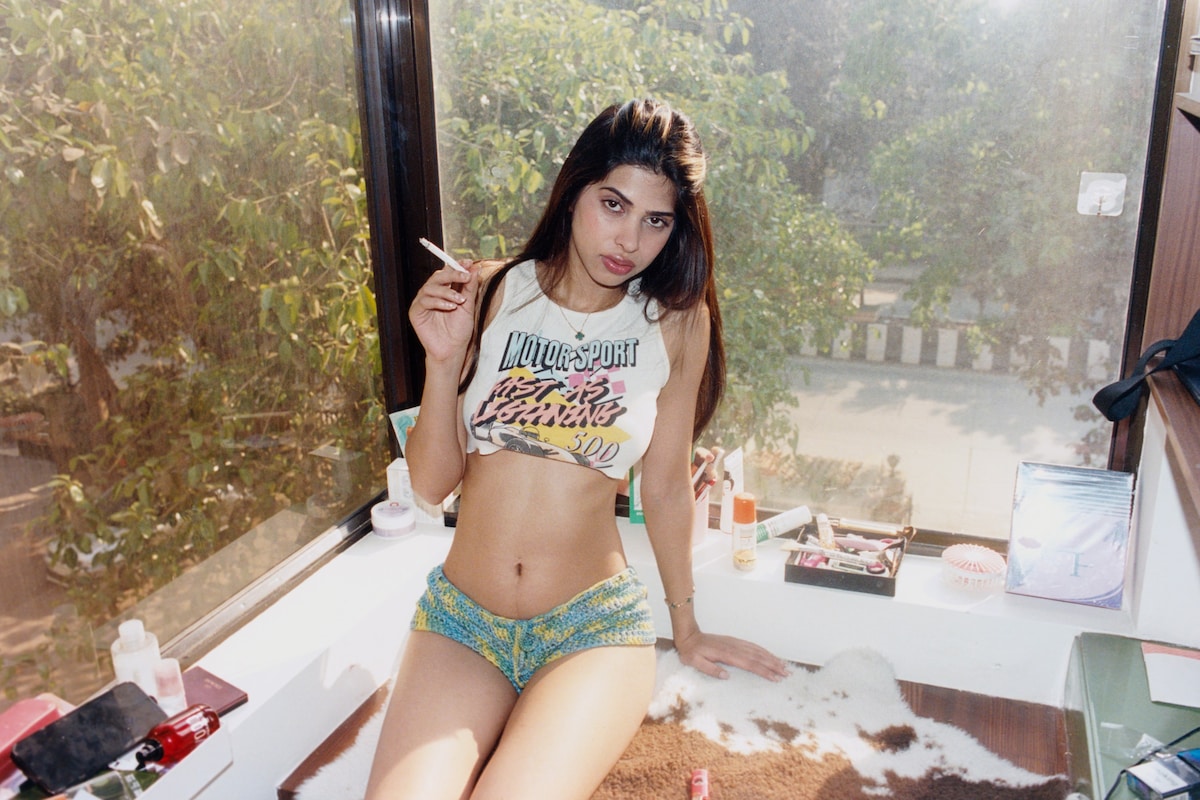
The aesthetic choices in the series further reinforce this commitment to intimacy and nuanced portrayal. Shot on 35mm film with a direct flash, the portraits capture Singha’s subjects in their most personal spaces – bedrooms and living rooms. They are depicted lounging on velvet armchairs or posing amidst cluttered desks, creating a sense of unvarnished reality. The use of domestic settings was a deliberate choice, crucial for fostering an atmosphere of intimacy and allowing the subjects to express themselves within their own environments. Singha was particularly drawn to these interiors because they offered a "different side of the country," one that resonated more truthfully with her own reality and was visibly shaped by global visual culture and consumerism. She consciously sought to "move away from certain narratives and tropes that people expect of a photograph shot in India," challenging stereotypical depictions. Instead, she foregrounded the objects found within these private spaces – Playboy posters, Swarovski-branded bedsheets, and red-light therapy machines – as potent symbols reflecting the symbiotic, global economy of images and aspiration that pervades contemporary Indian youth culture. These seemingly mundane items become powerful signifiers of a generation navigating a complex tapestry of global trends and local realities.
The Art of Styling: Weaving Narratives of Femininity
The project’s visual richness is further amplified by the collaborative efforts of stylist Rupangi Grover, whose approach mirrored Singha’s emphasis on intimacy and authentic expression. Grover’s styling methodology was deeply personal, involving "fostering intimacy through playing dress up, conversation and spending time together in their domestic spaces." This hands-on, relational approach allowed for a natural integration of the subjects’ individual stories and identities into their visual representation.
Grover recounts her process, revealing how the final looks were a tapestry woven from diverse sources: "I found myself pulling pieces from their mothers’ wardrobes, looking through childhood photographs pinned to bedroom walls, and rummaging through jewellery boxes and beauty drawers." This blend of inherited items, nostalgic mementos, and personal adornments speaks volumes about the layered identities of these young women. The styling further incorporated pieces from Grover’s own collection and selections from contemporary Indian designers, creating a sophisticated yet accessible aesthetic. Conceptually, Grover leaned into elements of "softness, sheerness, lace, lingerie, and hand-crocheted elements," which not only introduced a "DIY sensibility" but also added "a layer of complexity to familiar ideas of femininity and sexiness." This nuanced approach to styling eschewed overt glamour in favor of a more introspective and authentic portrayal, reflecting the intricate ways these women navigate their self-image, public personas, and private realities. The choice of fabrics and textures subtly hints at vulnerability, sensuality, and the handcrafted nature of identity in an age of mass-produced ideals.
Navigating Dualities: Fame, Family, and Feminine Expectations
Beneath the veneer of online freedom and self-expression, Singha’s project powerfully illuminates the persistent tensions these young women face as they negotiate familial and gendered expectations within their conservative society. Despite their burgeoning online fame and micro-celebrity status, traditional norms continue to exert significant influence, often creating a poignant duality in their lives. Singha shares compelling anecdotes that underscore this struggle. One subject, hailing from a conservative background, granted permission for her photographs to be taken but insisted the shoot occur when her father was absent. This stark contrast highlights the pervasive societal pressures: while the father proudly displayed a framed selfie of his daughter in the living room, celebrating her online presence, he would likely disapprove of the more artistic, perhaps boundary-pushing, nature of Singha’s photographs. This reveals a selective acceptance of digital self-expression, where familial approval hinges on adherence to unspoken codes of modesty and tradition, even as the daughters embrace globalized notions of femininity.
Another instance, without delving into specifics, involves a girl who faced punishment as a teenager for challenging rules of femininity tied to modesty and tradition. These narratives are not isolated incidents but reflect a broader societal dynamic in India, where young women, particularly in non-metropolitan areas, are often caught between the allure of modern self-actualization and the weight of cultural expectations. The internet and social media offer unprecedented avenues for self-expression, identity exploration, and even economic independence through influencing. However, these freedoms often collide with deeply ingrained patriarchal structures and community norms that dictate appropriate female behavior, dress, and public presentation. The concept of "modesty" (or sharam in many Indian languages) remains a significant cultural currency, often policed by family and community, creating a challenging tightrope walk for young women seeking to define their own identities. Singha’s photographs subtly capture this internal and external conflict, revealing the silent negotiations and quiet rebellions that define a generation.
Recognition and Future Horizons: A Lens on Evolving Indian Identity
The recognition of I Love My Friends, But They’re Killing Me with a shortlisting for the 2026 Aperture Portfolio Prize is a testament to its artistic merit and profound cultural relevance. The Aperture Foundation, a highly esteemed organization in the photography world, awards this prize annually to highlight emerging and established photographers whose work demonstrates originality and excellence. This acknowledgment places Singha’s project on an international stage, validating its exploration of contemporary identity and the complexities of beauty culture.
Looking ahead, Singha expresses an eagerness to delve further into these compelling tensions. Her future plans include venturing beyond Mumbai, perhaps to her hometown in northeast India or other smaller towns, to explore the narrative through a fresh lens. This expansion promises to "reveal new ways of looking at femininity and aspiration in the country," offering a more comprehensive and geographically diverse understanding of these phenomena. Such an undertaking could provide invaluable insights into how global influences interact with regional traditions and varying socioeconomic realities, further enriching the discourse on modern Indian identity. Singha’s work thus stands as a significant contribution to contemporary photography, not merely documenting a moment but critically reflecting on the profound socio-cultural shifts occurring across India, particularly within its youth.
Conclusion: A Candid Reflection of a Digital Age
Megha Singha’s I Love My Friends, But They’re Killing Me is more than just a photography series; it is a vital sociological document rendered with artistic precision. Through its striking imagery and empathetic lens, the project unpacks the intricate relationship between self-image, social media, and societal expectations in contemporary India. It reveals the seductive yet sometimes perilous dance between aspiration and reality, where the pursuit of an idealized self can lead to both empowerment and profound internal conflict. By highlighting the paradoxes of online freedom against the backdrop of enduring traditions, Singha offers a candid and compelling reflection of a digital age where the boundaries between play, performance, and the very real pressures of identity are constantly blurred, leaving young women to navigate a complex, beautiful, and sometimes "killing" world.