






The 2026 American Music Awards (AMAs) red carpet served as a significant barometer for the evolving intersection of the music industry, reality television, and high-fashion marketing. Held in late May, the event’s arrivals highlighted a growing trend in the entertainment industry: the increasing presence of digital creators and reality television personalities at ceremonies historically reserved for recording artists. This demographic shift, while broadening the event’s social media reach, has prompted a deeper analysis of the AMAs’ current identity within the global awards circuit. Despite the absence of several high-profile recording artists, the red carpet remained a platform for major fashion houses, including Balenciaga, Valentino, Mugler, and Alexander McQueen, to showcase upcoming collections and custom designs.

The Changing Landscape of the American Music Awards
Since its inception in 1973 as a fan-voted alternative to the Grammy Awards, the American Music Awards has traditionally focused on commercial success and popular appeal. However, the 2026 iteration faced scrutiny regarding its attendee list. Industry analysts noted that the carpet featured a disproportionate number of personalities from reality television and social media platforms compared to traditional musicians. This trend reflects a broader shift in the "attention economy," where award show producers prioritize individuals with high digital engagement to bolster live viewership numbers, which have seen a steady decline across all major networks over the last decade.
The 2026 event took place during an uncharacteristic late-spring heatwave, adding a layer of logistical complexity to the fashion choices presented. The discrepancy between the outdoor temperatures and the heavy, autumnal fabrics favored by several designers became a focal point for fashion critics and attendees alike.
Architectural Drapery and Seasonal Contrasts: Teyana Taylor and Ejae
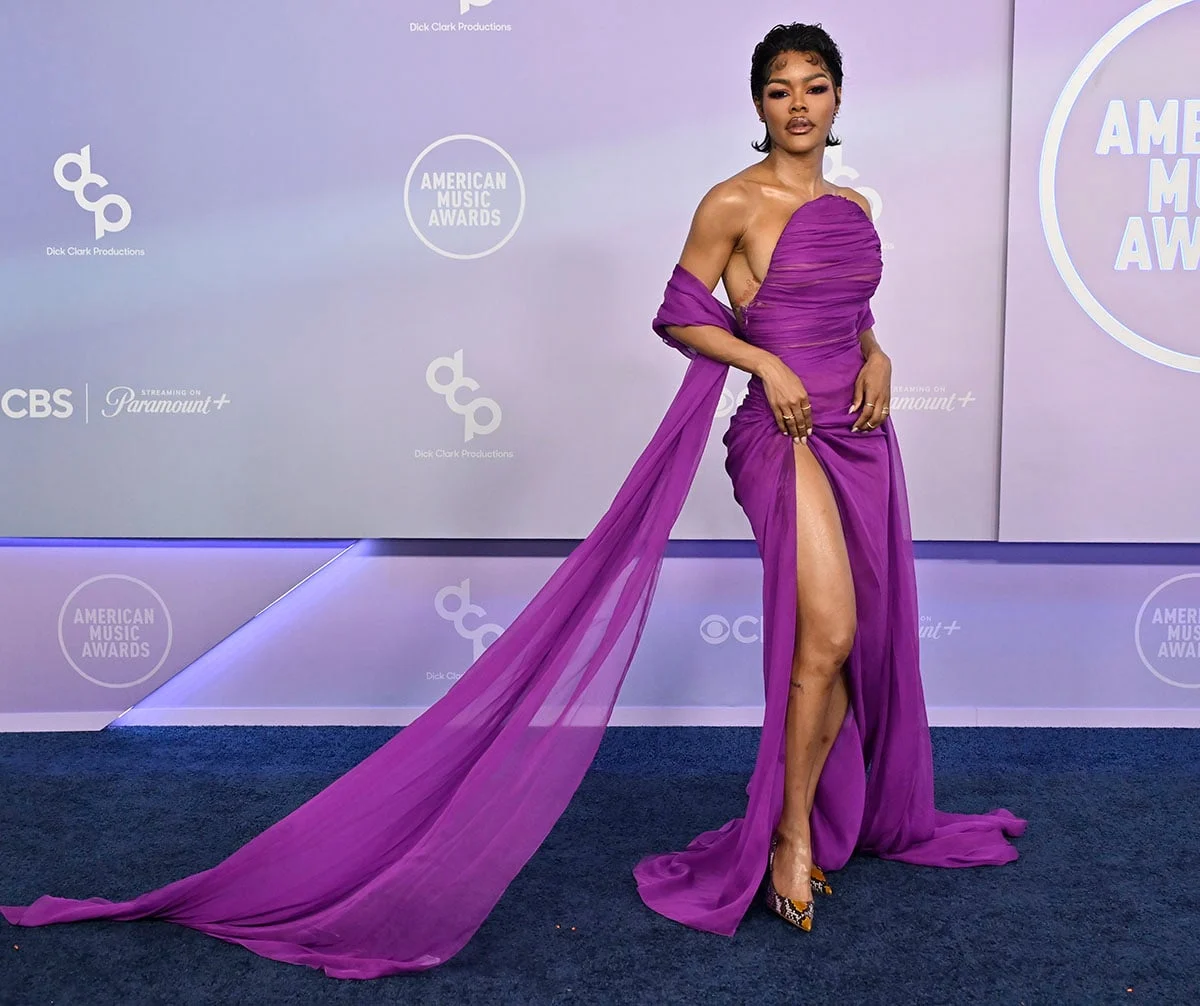
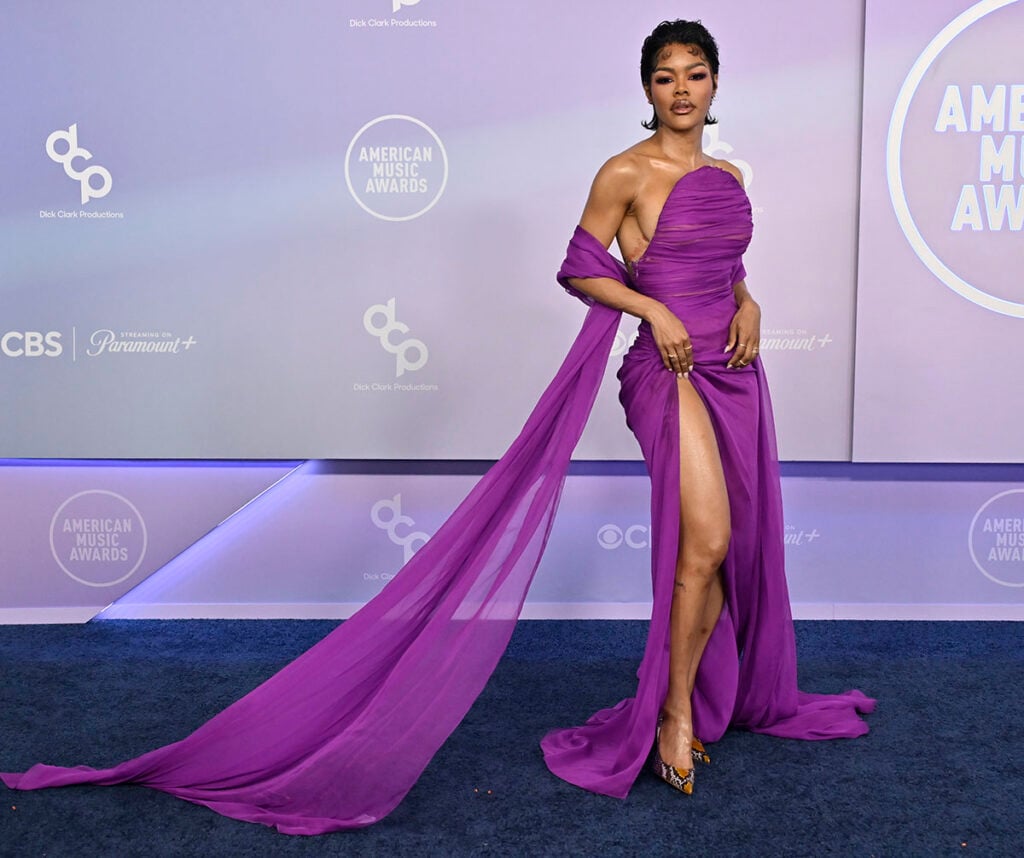
Teyana Taylor, a perennial figure in fashion-forward circles, arrived in a Balenciaga Pre-Fall 2026 gown that signaled a departure from her typically sharp, avant-garde aesthetic. The garment, constructed from saturated purple chiffon, featured a draped one-shoulder silhouette and trailing panels. Fashion historians noted that the look leaned toward a romanticism rarely associated with Taylor’s public persona, which often favors structured, directional pieces. The ensemble was anchored by snakeskin pumps, providing a textural contrast to the softness of the chiffon. This appearance underscored Balenciaga’s continued push toward "wearable couture" within their Pre-Fall collections, balancing brand-specific edge with classic silhouettes.
In contrast, the artist Ejae opted for a look from Mugler’s Fall 2026 collection. The olive-green draped dress featured the house’s signature strong shoulders and a long, integrated scarf detail. While the craftsmanship of the Mugler piece was evident, the choice of heavy fabric and a dark, autumnal color palette—including midnight-blue opera gloves—drew comments regarding its suitability for a late-May event. The ensemble was accessorized with Lapis lazuli crystal silver earrings and a matching bracelet from Mugler, paired with white Le Silla pumps. Analysts suggested that Ejae’s choice reflected a broader industry movement where "Runway to Red Carpet" timelines often disregard local climates in favor of debuting the latest seasonal collections.

Redefining Masculinity: Valentino and BOSS Tailoring
The 2026 AMAs also highlighted shifting standards in menswear, moving further away from traditional black-tie conventions. Sombr, representing a new generation of rock-adjacent stylists, appeared in a custom Valentino look that challenged traditional gendered silhouettes. The outfit featured intricate floral embellishments, a plunging neckline, and pleated trousers. This design is part of a larger trend within luxury houses like Valentino to integrate haute couture elements—such as embroidery and delicate fabrications—into masculine wardrobes, catering to a demographic that values individual expression over corporate uniformity.
Maluma, typically known for vibrant and daring fashion choices, surprised observers with a more subdued, albeit technically complex, ensemble from BOSS’s Fall 2026 collection. The look centered on a grey, 1980s-inspired double-breasted suit with a relaxed cut. The inclusion of a paisley-print tie and a dark accent at the lapel added a layer of personality to the traditional tailoring. Industry experts pointed to this as an example of "stealth wealth" or "quiet luxury" influencing even the high-energy environment of music awards, where sophisticated tailoring is used to signal a transition from "pop idol" to "established mogul."

The Gothic Influence and Material Exploration: Karol G and Natalia Fedner
Karol G’s appearance in Natalia Fedner marked a shift toward a moodier, more textural aesthetic. The ensemble consisted of a gothic-leaning knitted top designed to expose the torso, paired with a voluminous black skirt. Fedner, known for her "stretch metal" and intricate knit techniques, provided a look that felt raw and deconstructed. This aesthetic choice aligns with the resurgence of "subculture fashion" on mainstream red carpets, where elements of punk, goth, and grunge are elevated through high-end construction. The choice was praised by fashion commentators for its departure from the more predictable, brightly colored "tropical" aesthetics often associated with Latin pop stars during the spring season.
Seasonal Misalignments: The Case of Christian Siriano and Queen Latifah
One of the more debated looks of the evening was worn by Queen Latifah, who arrived in a Christian Siriano Fall 2026 full-length shearling coat. While the coat was a testament to Siriano’s skill in luxury outerwear, its presence at a spring event in a warm climate was cited as a prime example of the disconnect between fashion cycles and practical utility. The tonal look underneath the coat maintained a sense of regal formality, but the sheer volume and insulating properties of the shearling were viewed as an architectural statement that may have been better suited for a winter premiere or an indoor event in a cooler climate.

The McQueen Spring 2026 Presentation: KATSEYE and the Challenge of Cohesion
The group KATSEYE—comprising Lara Raj, Sophia, Megan, Daniela, and Yoonchae—presented a collective showcase of Alexander McQueen’s Spring 2026 collection. While individual members wore pieces that highlighted the brand’s diverse range—including romantic ruffles, sharp tailoring, distressed ivory textures, and saturated red prints—critics noted a lack of visual cohesion.
In the context of group styling, there is often a tension between showcasing a brand’s breadth and maintaining a unified group identity. The McQueen presentation at the AMAs was an experiment in "harmonious discord," where the common thread was the designer rather than a specific color palette or silhouette. The members completed their looks with TACORI jewelry. This approach reflects a modern strategy in celebrity dressing where groups are treated as a canvas for an entire collection, even if it results in a "jumble" of competing ideas on the red carpet.

Economic and Cultural Impacts of Red Carpet Fashion
The 2026 AMAs red carpet serves as more than just a pre-show spectacle; it is a high-stakes marketing event. According to data from Media Impact Value (MIV) reports, a single high-profile red carpet appearance can generate millions of dollars in earned media for a fashion brand. For designers like Natalia Fedner or labels like BOSS, these events are essential for maintaining brand relevance in a crowded luxury market.
Furthermore, the "influencer-ification" of the carpet, while criticized by some purists, is a calculated business move. By inviting reality stars and digital creators, the AMAs ensure that the event is "clipped" and shared across TikTok, Instagram, and X (formerly Twitter) by accounts with massive, highly engaged followings. This strategy compensates for the dwindling traditional television audience and keeps the AMAs relevant in a digital-first world.

Conclusion: A Reflective Moment for Music Awards
The 2026 American Music Awards red carpet highlighted a period of transition for the industry. The event demonstrated that while the music may be the stated focus, the "visual economy" of fashion and celebrity often takes center stage. The mix of seasonal misalignments, the rise of reality TV presence, and the bold experimentation by luxury houses suggest an awards show in the midst of an identity crisis.
However, the technical artistry on display—from Balenciaga’s chiffon work to Valentino’s custom embroidery—proves that the red carpet remains one of the world’s most influential runways. As the industry moves toward 2027, the challenge for the AMAs will be to re-establish a clear connection between the artists being honored and the fashion being showcased, ensuring that the event remains a celebration of musical achievement rather than just a high-profile photo opportunity for the broader entertainment complex.