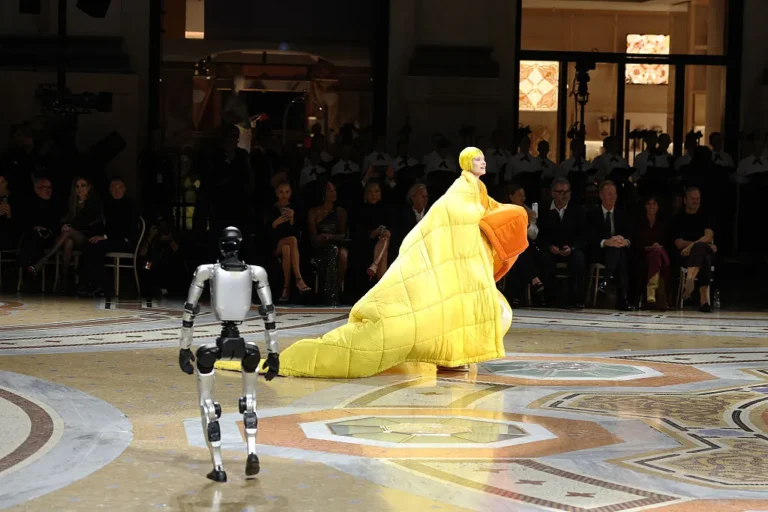









The landscape of New York Fashion Week (NYFW) is undergoing a digital transformation as designer Kate Barton prepares to unveil her latest collection with a sophisticated technological integration that moves beyond traditional runway aesthetics. In a strategic collaboration with Fiducia AI, Barton has introduced a multilingual AI agent powered by IBM watsonx on IBM Cloud, designed to bridge the gap between high-fashion presentation and consumer engagement. This initiative marks a significant milestone in the integration of generative artificial intelligence within the luxury fashion sector, offering attendees a "portal" into the creative process through real-time identification of garments and photorealistic virtual try-on experiences.
The presentation, which serves as a centerpiece of the Saturday schedule at NYFW, represents a shift from experimental tech-showcases to production-grade utility. By utilizing the IBM watsonx platform, the collaboration has produced a visual AI lens capable of detecting specific silhouettes, textiles, and intricate design details from Barton’s new collection. This system is not merely a passive display; it functions as an interactive concierge, answering queries in multiple languages through both voice and text interfaces, thereby democratizing the high-fashion experience for a global audience.
The Technical Architecture of Modern Couture
The backend of this activation relies on a robust stack of enterprise-grade technology. Ganesh Harinath, the founder and CEO of Fiducia AI, noted that the project utilized IBM watsonx, IBM Cloud, and IBM Cloud Object Storage to manage the immense data requirements of photorealistic virtual reality. According to Harinath, the primary challenge was not the refinement of the AI models themselves, but the complex "orchestration" required to synchronize visual recognition, natural language processing, and high-fidelity rendering in a live environment.
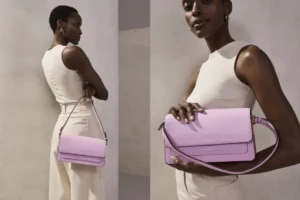
The visual AI lens is trained to recognize the unique geometry of Barton’s designs. Unlike standard retail AI, which often categorizes items into broad buckets like "dress" or "jacket," this system understands the specific architectural nuances of Barton’s work. The integration of IBM Cloud Object Storage allows the system to pull high-resolution assets instantly, enabling a virtual try-on feature that maintains the integrity of the fabric’s movement and lighting. This level of detail is critical for a designer like Barton, whose work often plays with the boundaries of the "real and the unreal."
A Chronology of Innovation: Barton’s Digital Journey
This is not Kate Barton’s first foray into the world of artificial intelligence. The designer has consistently positioned herself at the vanguard of the "Fashion-Tech" movement.
- The Experimental Phase (Previous Season): In her earlier collections, Barton experimented with AI-generated models and digital avatars in collaboration with Fiducia AI. These early tests were primarily focused on visual storytelling and the creation of surreal marketing imagery.
- The Utility Phase (Current Season): The current NYFW presentation moves into the realm of "functional AI." By shifting from static imagery to an interactive AI agent, the focus has moved toward enhancing the guest experience and providing a deeper level of garment intelligence.
- The Operational Integration (Future): Barton anticipates a shift where AI moves from the front-facing "show" elements into the foundational aspects of design, including smarter production decisions and advanced prototyping.
Barton describes technology as a "tool for expanding the world around the clothes," rather than a replacement for the tactile nature of fashion. Her philosophy centers on the idea of the "double take"—creating a moment where the viewer questions the boundary between the physical garment and its digital representation.
Market Context and the "Quiet" Adoption of AI
The fashion industry currently finds itself at a crossroads regarding the public adoption of AI. While the technology is increasingly ubiquitous in supply chain management and back-office operations, many luxury houses remain hesitant to brand their creative output as "AI-driven." Barton suggests that this hesitation stems from "potential reputational risk," as brands fear being perceived as devaluing human craftsmanship or infringing on intellectual property.
Industry data supports this observation. According to recent McKinsey reports, generative AI could add between $150 billion to $275 billion to the apparel, fashion, and luxury sectors’ profits over the next five years. However, much of this value is currently being captured in "invisible" areas:
- Supply Chain Optimization: Predictive analytics for inventory management.
- Customer Support: Basic chatbots for order tracking.
- Marketing: Personalized email campaigns and content generation.
Barton’s public-facing use of AI is a departure from this trend. She compares the current industry anxiety to the early days of e-commerce. In the late 1990s and early 2000s, major fashion houses were skeptical of the internet, fearing that selling online would "cheapen" their brand. Eventually, the digital presence became a mandatory standard, shifting the conversation from "should we be online" to "is our online experience excellent?" Barton posits that AI is following an identical trajectory.

Official Responses and Strategic Perspectives
The collaboration has drawn attention from technology leaders who view fashion as a vital testing ground for real-time AI applications. Dee Waddell, Global Head of Consumer, Travel, and Transportation Industries at IBM Consulting, emphasized the strategic value of this integration. "When inspiration, product intelligence, and engagement are connected in real time, AI moves from being a feature to becoming a growth engine that drives measurable competitive advantage," Waddell stated.
From the perspective of IBM, the Barton-Fiducia partnership serves as a case study for how "watsonx" can be applied to creative industries that require high levels of precision and brand-specific customization. The goal is to move AI beyond generic outputs toward a system that understands a specific brand’s "DNA."
Ganesh Harinath of Fiducia AI believes that the industry is rapidly approaching a tipping point. He predicts that by 2028, the use of AI in fashion presentations will be entirely normalized. By 2030, he expects these technologies to be embedded into the operational core of the retail experience, moving from the runway to the local boutique and the home wardrobe.
Addressing the Human Element and Ethical Concerns
A central theme in Barton’s discourse is the preservation of human craft. She is vocal about the risks of using technology to "erase" people. "If the technology is used to erase people, I am not into it," she told TechCrunch. She argues that audiences are sophisticated enough to distinguish between "invention"—using AI to create new experiences—and "avoidance"—using AI to cut corners or replace human labor.
The designer advocates for a future built on:
- Clear Discourse: Open conversations about how AI is being used in the studio.
- Licensing and Credit: Ensuring that the data used to train models respects the intellectual property of human creators.
- Shared Understanding: Recognizing that human creativity is the primary value driver, not an "overhead cost" to be minimized.
By framing AI as a tool to "heighten craft and deepen storytelling," Barton seeks to mitigate the fear that automation will lead to a "flattening" of the fashion industry.
Implications for the Future of Retail
The success of Barton’s AI agent at NYFW has broader implications for the future of the retail sector. As photorealistic virtual try-ons become more accurate, the industry may see a significant reduction in return rates—a major logistical and environmental challenge for modern fashion. Furthermore, the multilingual capabilities of such AI agents allow brands to provide a personalized, high-touch experience to customers in emerging markets without the need for massive physical infrastructure.
The "visual AI lens" also offers a glimpse into a future where physical and digital commerce are seamlessly integrated. Imagine a consumer walking down a street, pointing their phone at a garment they admire, and having an AI agent instantly identify the piece, explain its provenance, and allow the user to see how it would look on their own body.
As the show concludes, the industry will likely look to the Barton-Fiducia-IBM partnership as a blueprint. The project demonstrates that when technology is implemented with a clear creative vision and a robust technical foundation, it does not distract from the clothes; rather, it provides a more profound way for the world to interact with them. In Barton’s view, the most exciting future for fashion is not one that is "automated," but one that uses every available tool to bring more people into the experience without losing the human soul that makes fashion worth wearing in the first place.