





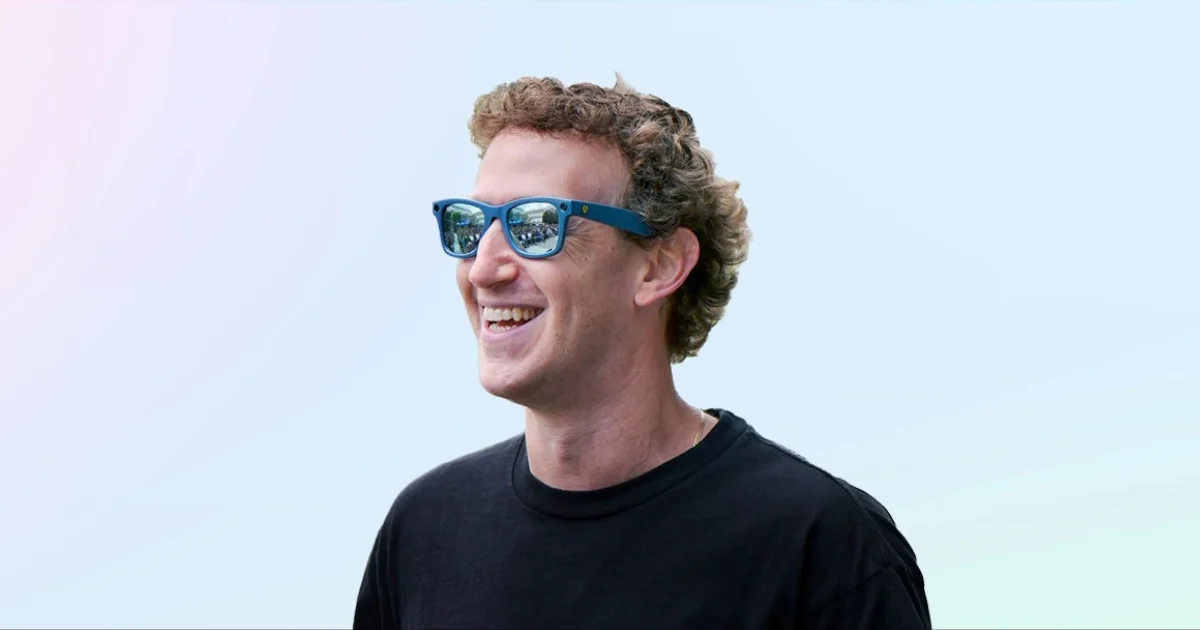
The presence of Meta Platforms Inc. Chief Executive Officer Mark Zuckerberg at the Prada Fall/Winter 2026 Fashion Week show in Milan has ignited intense industry speculation regarding an upcoming luxury collaboration for the company’s burgeoning smart glasses division. Zuckerberg, accompanied by his wife, Priscilla Chan, was observed in the front row of the prestigious event on Thursday, engaging in extended conversation with Lorenzo Bertelli, Prada’s Chief Merchandising Officer and the son of the house’s lead designer, Miuccia Prada. While the appearance coincided with Zuckerberg’s recent personal style evolution, industry analysts suggest the visit was less about fashion appreciation and more a strategic move to solidify a partnership between the Silicon Valley giant and the Italian luxury house.
The Strategic Intersection of High Fashion and Wearable AI
The potential for a "Prada Edition" of Meta’s AI-integrated eyewear follows a trajectory established by the social media conglomerate over the past several years. Meta has aggressively pursued a strategy of normalizing wearable technology by embedding it within established, fashionable silhouettes. The appearance in Milan is widely viewed as a precursor to a formal announcement that would see Meta’s AI technology integrated into Prada’s iconic eyewear lines.
Meta’s hardware ambitions have transitioned from niche VR headsets to more socially acceptable smart glasses, primarily through its partnership with EssilorLuxottica, the French-Italian conglomerate that dominates the global eyewear market. Having already successfully launched collaborations under the Ray-Ban and Oakley banners, a move into the high-luxury tier via Prada represents the next logical step in Meta’s market penetration strategy.
Chronology of the Meta and EssilorLuxottica Partnership
The relationship between Meta and EssilorLuxottica has evolved rapidly since its inception, moving from experimental hardware to a significant revenue driver for both companies.
- September 2021: Meta (then Facebook) launched "Ray-Ban Stories," its first generation of smart glasses. While the product received mixed reviews regarding battery life and camera quality, it established the framework for future collaborations.
- October 2023: The launch of the "Ray-Ban Meta" smart glasses marked a significant leap forward, introducing integrated Meta AI, improved audio, and higher-resolution imaging. This version saw much higher consumer adoption.
- June 2025: CNBC and other outlets reported that Meta was in active discussions with several luxury brands, including Prada, to expand the AI glasses portfolio. Shortly thereafter, Meta unveiled its Oakley-branded smart glasses, targeting the performance and athletic demographic.
- February 2026: Reports surfaced indicating that EssilorLuxottica had tripled its sales of Meta AI glasses over the previous year, moving over 7 million units in 2025.
- February 2026 (Present): Mark Zuckerberg’s high-profile attendance at the Prada show in Milan suggests that the long-rumored partnership is nearing fruition.
Supporting Data: Sales Growth and Licensing Agreements
The financial and contractual foundation for a Prada-Meta collaboration is already firmly in place. According to recent financial disclosures from EssilorLuxottica, the demand for AI-integrated eyewear has surpassed initial market projections. The company reported selling 7 million units in 2025, a substantial increase from the 2 million units sold in 2024. This growth trajectory indicates a maturing market where consumers are increasingly comfortable with "always-on" wearable assistants.
Furthermore, the legal infrastructure for a Prada collaboration was solidified through a licensing renewal between the Prada Group and EssilorLuxottica. The two entities recently extended their agreement for the design, production, and distribution of eyewear under the Prada and Miu Miu brands. The previous agreement, which was set to expire at the end of 2025, has been extended through December 31, 2030, with a further provision for renewal until 2035. This long-term stability provides a ten-year window for Meta to iterate on luxury-branded smart hardware.
Market Analysis: Why Prada Matters for Meta
For Meta, a partnership with Prada serves two primary functions: market diversification and brand elevation. While Ray-Ban appeals to a broad, mid-market demographic and Oakley captures the "athleisure" and sports sectors, Prada provides access to the "ultra-luxury" segment.
The luxury market is traditionally resistant to bulky or "geeky" technology. However, the success of the Ray-Ban Meta glasses proved that if the technology is invisible—relying on the aesthetic of the frame rather than the prominence of the hardware—high-end consumers are willing to adopt it. By aligning with Prada, Meta can position its AI as a "lifestyle accessory" rather than a computer peripheral.
Lorenzo Bertelli, whom Zuckerberg was seen consulting with in Milan, has been a key driver of Prada’s digital transformation. Under his leadership, Prada has embraced e-commerce, blockchain for product authenticity, and now, potentially, integrated AI. His involvement suggests that any collaboration would not merely be a branding exercise but a deep integration of Meta’s software into Prada’s design language.
Privacy Concerns and the Surveillance Backlash
Despite the commercial success of Meta’s eyewear, the prospect of Prada AI glasses arrives amidst a growing social and ethical debate regarding public surveillance. As the devices become more indistinguishable from traditional glasses, public anxiety regarding unauthorized recording and data collection has intensified.
Recent reports from The New York Times suggest that Meta has considered adding facial-recognition capabilities to its smart glasses. Such a feature would theoretically allow a wearer to identify strangers in real-time by cross-referencing their images with social media profiles. This news has been met with significant criticism from privacy advocates and has even sparked a grassroots "anti-surveillance" movement.
In early 2026, several high-profile incidents of consumers destroying surveillance infrastructure—including Ring doorbells and Flock license-plate cameras—highlighted a shifting public mood. In response to these concerns, developers have begun releasing "counter-tech" solutions. One such application warns users via their smartphones if someone wearing smart glasses is in their immediate vicinity, using Bluetooth or Wi-Fi signal detection to identify the hardware.
Official Responses and Industry Sentiment
As of late February 2026, Meta has declined to provide an official comment regarding Zuckerberg’s presence in Milan or the specifics of a Prada collaboration. A spokesperson for the company reiterated Meta’s commitment to "exploring new form factors and partnerships in the wearable space" but offered no further details.
Prada has similarly remained tight-lipped, though Bertelli has previously stated in interviews that the brand is interested in "the intersection of heritage and the future." Analysts at major investment firms have noted that the silence is typical for high-stakes luxury deals, which are often announced with significant fanfare during major tech conferences like Meta Connect or during future fashion weeks.
The Broader Impact on the Tech Landscape
The move toward luxury AI wearables represents a significant shift in the "post-smartphone" era. As companies like Apple and Google continue to experiment with Mixed Reality (MR) and Augmented Reality (AR), Meta’s strategy focuses on the "AI-first" approach. By prioritizing a lightweight, stylish frame over a heavy visual display, Meta is betting that consumers prefer an invisible assistant over an immersive screen.
The success or failure of a Prada-branded device will likely determine the future of this category. If Meta can prove that luxury consumers will pay a premium for AI integrated into high-fashion frames, it will likely trigger a wave of similar partnerships across the industry. Brands like LVMH and Kering may be forced to seek their own tech partners to compete in the burgeoning "smart luxury" sector.
Conclusion: A New Era of Wearable Intelligence
Mark Zuckerberg’s appearance at Milan Fashion Week is more than a public relations exercise; it is a signal of Meta’s intent to dominate the next generation of personal computing. By bridging the gap between Menlo Park and Milan, Meta is attempting to solve the "fashion problem" that has plagued wearable tech since the days of Google Glass.
Should the Prada collaboration come to fruition, it will represent the most significant merger of high fashion and artificial intelligence to date. However, the path forward is fraught with challenges. Meta must balance its desire for technological advancement, such as facial recognition, with a public that is increasingly wary of the "surveillance state." Whether the allure of the Prada logo is enough to overcome these privacy concerns remains the billion-dollar question for the future of Meta’s hardware division.