




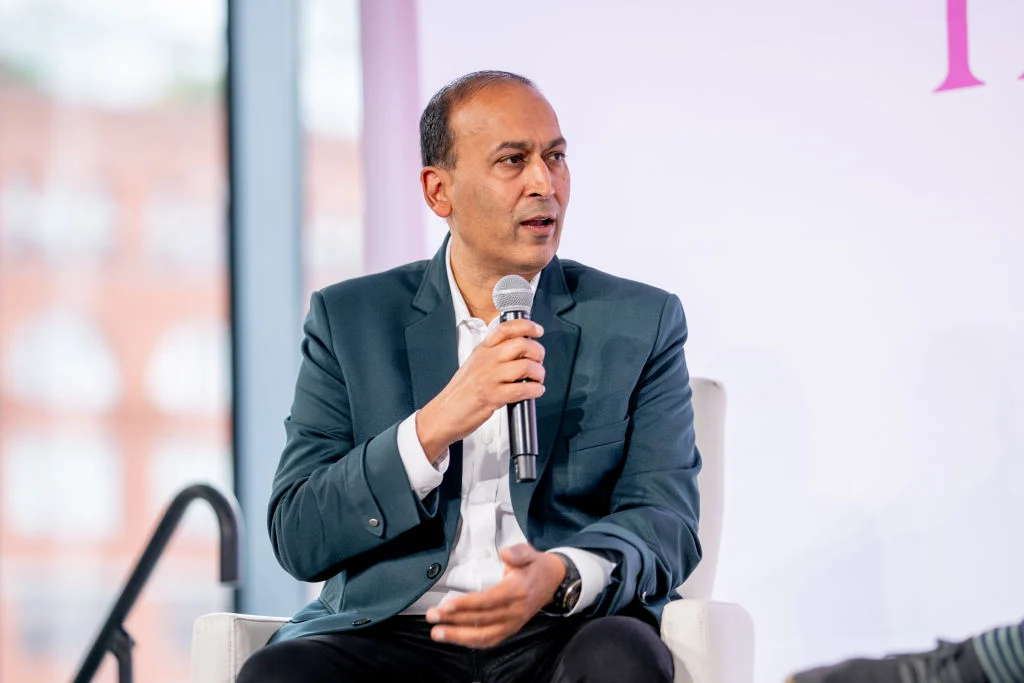
In a significant leadership transition for the fashion resale industry, Poshmark founder Manish Chandra has announced his departure from the role of Chief Executive Officer, effective immediately. The company confirmed on Monday that Namsun Kim, who has served as Poshmark’s executive chairman since April 2024, will take the helm as the new CEO. Chandra, who has led the company since its inception in 2011, will remain involved with the organization as a member of the board of directors, ensuring a level of continuity as the platform enters its next phase of growth under the ownership of South Korean internet giant Naver.
The transition marks the end of a nearly 15-year tenure for Chandra, who is widely credited with pioneering the "social commerce" model that blended elements of social media with peer-to-peer e-commerce. Under his guidance, Poshmark evolved from a small startup operating out of a Silicon Valley garage into a global marketplace with a community of over 150 million users. The appointment of Namsun Kim, a seasoned executive with deep ties to Naver’s investment and strategic operations, signals a shift toward tighter integration with the parent company’s technological infrastructure and global investment strategy.
The Evolution of Poshmark: From Startup to Global Marketplace
The story of Poshmark is often cited as a cornerstone of the modern "re-commerce" movement. Founded in 2011 by Manish Chandra, Gautam Golani, Chetan Pungaliya, and Tracy Sun, the platform was built on the premise that shopping is inherently social. Unlike traditional e-commerce sites like eBay or Amazon, Poshmark encouraged users to follow each other, "share" listings to their own networks, and participate in virtual "Posh Parties."
This community-centric approach allowed Poshmark to scale rapidly without the inventory overhead traditional retailers face. By 2021, the company reached a major milestone by going public on the Nasdaq, where it was initially valued at over $7 billion during the height of the e-commerce boom. However, as the post-pandemic market cooled and competition from rivals like Depop, Vinted, and ThredUp intensified, Poshmark navigated a series of strategic shifts.
In late 2022, the company reached a definitive agreement to be acquired by Naver, South Korea’s leading internet search and e-commerce provider, in a deal valued at approximately $1.2 billion. The acquisition, completed in early 2023, took Poshmark private and aligned it with Naver’s long-term vision of creating a global "C2C" (consumer-to-consumer) ecosystem powered by advanced search and AI technology.
Leadership Transition and the Role of Namsun Kim
The appointment of Namsun Kim as CEO is a strategic move that reflects Naver’s desire to leverage its internal expertise to drive Poshmark’s future. Kim currently serves as the President of Investments at Naver and has been a central figure in the parent company’s global expansion efforts. Since being named executive chairman of Poshmark in April, Kim has been working closely with Chandra to understand the nuances of the platform’s unique user base.
According to internal communications, the transition has been planned for several months to ensure operational stability. Chandra noted that he and Kim have collaborated since the beginning of 2025 to facilitate a "smooth as possible" handover. Kim’s background in finance and large-scale tech investments suggests that Poshmark may focus more heavily on operational efficiency, data monetization, and the integration of Naver’s proprietary AI technologies into the Poshmark app.
In an emotional farewell email to the Poshmark community, Chandra expressed his gratitude to the millions of "Poshers" who built the platform. "Leading this company has been the greatest honor of my professional life," Chandra wrote. "Every success we’ve achieved, every challenge we’ve overcome, has been because of you. It’s been the privilege of a lifetime witnessing each of you grow."
A Chronology of Poshmark’s Milestone Events
To understand the weight of this leadership change, it is essential to look at the timeline of Poshmark’s trajectory:
- 2011: Poshmark is founded in Menlo Park, California, focusing on a mobile-first social shopping experience for women’s fashion.
- 2017: The company raises $87.5 million in Series E funding, signaling its dominance in the US resale market.
- 2019: Expansion begins into international markets, starting with Canada, followed later by Australia and India.
- January 2021: Poshmark goes public on the Nasdaq (POSH) at $42 per share, with shares doubling on the first day of trading.
- October 2022: Naver announces its intent to acquire Poshmark for $17.90 per share in cash, a move intended to combine Poshmark’s community with Naver’s technological stack.
- January 2023: The acquisition is finalized, and Poshmark officially becomes a subsidiary of Naver.
- April 2025: Namsun Kim is appointed Executive Chairman, beginning the formal transition period.
- August 2025: Manish Chandra steps down as CEO; Namsun Kim assumes full leadership responsibilities.
Supporting Data: The State of the Resale Market
The leadership change comes at a critical juncture for the fashion resale industry. According to industry reports from ThredUp and GlobalData, the global second-hand apparel market is projected to reach $350 billion by 2027, growing three times faster than the overall global apparel market. This growth is driven by a combination of economic factors—consumers seeking value amid inflation—and a growing cultural emphasis on sustainability and circular fashion.
Poshmark’s 150 million users represent a significant portion of this market, but the platform faces headwinds. The rise of "ultra-fast fashion" entities like Shein and Temu has created a price-sensitive environment that challenges the margins of high-end resale. Furthermore, the integration of AI in search and discovery has become a "must-have" feature. Naver’s expertise in these areas is likely the primary reason for Kim’s appointment. Naver’s "SmartLens" technology and AI-driven recommendation engines are expected to be more deeply embedded into Poshmark to help users find specific items more efficiently.
Implications for the Poshmark Community and Stakeholders
For the millions of independent sellers who rely on Poshmark for income, the transition raises questions about the platform’s future direction. Under Chandra, Poshmark was known for its "community-first" ethos, often hosting "Poshfest" events where sellers could network and learn business strategies.
Industry analysts suggest that under Namsun Kim, Poshmark may lean more heavily into the "platform-as-a-service" model. This could include:
- Enhanced Logistics: Leveraging Naver’s logistics expertise to streamline shipping and authentication.
- Global Synergy: Creating more fluid cross-border selling opportunities between Poshmark’s North American base and Naver’s Asian markets.
- Monetization of Tools: Introducing more sophisticated analytics tools for professional sellers to manage their "closets" like traditional retail businesses.
While Chandra’s departure marks the end of an era, his move to the board of directors suggests that the "soul" of the company—its focus on social connection—will not be immediately discarded. However, the shift in leadership to an executive from the parent company indicates that Naver is ready to take a more direct hand in the platform’s operational evolution.
Official Responses and Market Reaction
The announcement has been met with a mixture of praise for Chandra’s legacy and curiosity regarding Kim’s vision. Naver representatives have emphasized that the transition is a natural progression. A spokesperson for Naver stated that the company remains "fully committed to Poshmark’s mission of making shopping social and sustainable" while noting that Kim’s leadership will "accelerate the technical innovations necessary to compete in a rapidly changing global e-commerce landscape."
Former colleagues and industry peers have taken to social media to congratulate Chandra on his 14-year run. Many credited him with creating a "new category of entrepreneurship" for the millions of people who turned their closets into businesses.
Broader Impact on the Circular Economy
The leadership change at Poshmark is also a barometer for the broader circular economy. As resale platforms mature, they are moving away from their "scrappy startup" roots and becoming integral parts of the global retail supply chain. The involvement of a conglomerate like Naver suggests that the next decade of resale will be defined by scale, technological sophistication, and international consolidation.
Poshmark’s ability to maintain its community-centric identity while adopting the corporate discipline and technological prowess of Naver will be the ultimate test for Namsun Kim. As the fashion industry continues to grapple with its environmental impact, platforms like Poshmark are no longer just "alternative" ways to shop; they are becoming central to how modern consumers interact with brands and products.
In conclusion, Manish Chandra’s exit as CEO represents more than just a change in personnel; it is a signal of Poshmark’s graduation into a fully integrated global entity. With 150 million users and the backing of one of Asia’s tech titans, the company is well-positioned to navigate the complexities of the 2025 retail environment, even as it bids farewell to the visionary who started it all in a Silicon Valley garage.