






The convergence of generative artificial intelligence and high-end fashion has reached a significant milestone with the official launch of Alta, a personal styling platform founded by 28-year-old Harvard-trained engineer Jenny Wang. Announced alongside a successful $11 million seed funding round led by Menlo Ventures, Alta seeks to solve a decades-old technological challenge: creating a truly intelligent, automated wardrobe assistant that mimics the intuition of a professional human stylist. The platform utilizes advanced computer vision and large language models to offer users tailored outfit recommendations based on their existing wardrobe, personal budget, lifestyle requirements, local weather patterns, and individual social calendars.
The concept of a digital closet assistant has been a staple of pop culture since the 1990s, most notably depicted in the film "Clueless," where the protagonist uses a desktop computer to coordinate her outfits. While various startups have attempted to monetize this concept over the last twenty years, Wang noted that the underlying technology was historically insufficient to handle the nuance of fabric drape, color theory, and personal context. With the recent breakthroughs in generative AI, Alta aims to move beyond simple "mix-and-match" interfaces toward a sophisticated agentic system capable of understanding why certain garments work together.
The Technical Architecture of Digital Wardrobes
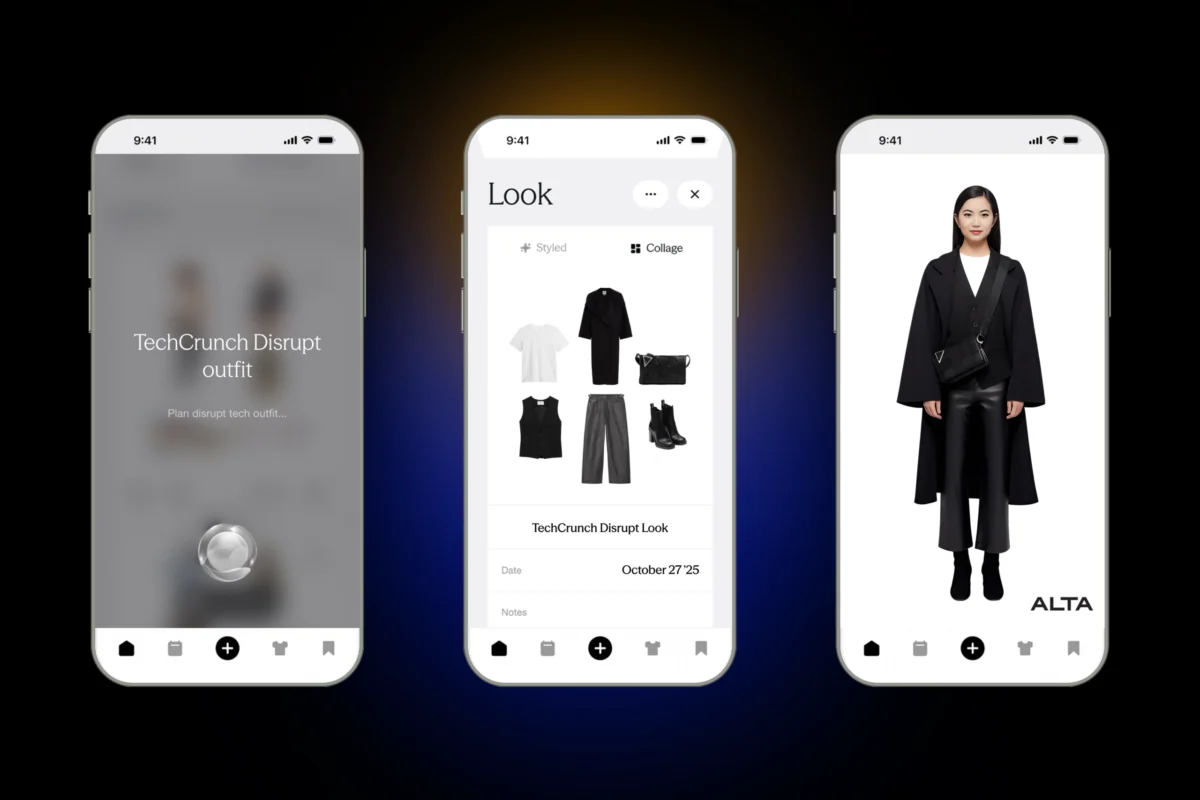
Alta’s core functionality centers on a personalized virtual avatar, allowing users to visualize outfits on a digital twin of themselves before committing to a look or a purchase. The onboarding process is designed to be frictionless; users can populate their digital closets by uploading photographs of their garments, forwarding digital purchase receipts, or selecting items from Alta’s extensive existing database of retail products. This multi-modal approach to data entry addresses a primary pain point in previous fashion-tech iterations—the labor-intensive nature of manual cataloging.
Once a closet is digitized, the AI serves as both a stylist and a personal shopper. For instance, a user preparing for a high-profile industry event, such as TechCrunch Disrupt, can prompt the AI for specific recommendations. The system then generates a lookbook that combines pieces the user already owns with suggested new purchases that fit their established aesthetic and budget. This integration of "closet-mining" and "e-commerce" creates a closed-loop ecosystem intended to increase the utility of existing clothes while reducing the likelihood of impulse purchases that do not fit the user’s current inventory.
To ensure the AI’s recommendations maintain a high standard of taste, Wang collaborated with Meredith Koop, the renowned stylist who managed Michelle Obama’s wardrobe during and after her time in the White House. Koop’s involvement was instrumental in training the AI models on the nuances of professional styling, ensuring the suggestions go beyond basic color coordination to include considerations of silhouette, occasion-appropriateness, and seasonal trends.
A Strategic Seed Round and Industry Backing
The $11 million seed round represents a significant vote of confidence from both the venture capital community and the fashion elite. Led by Menlo Ventures, the round saw participation from a diverse array of institutional and angel investors. Notably, the cap table includes Aglaé Ventures, the investment firm backed by the Arnault family, the owners of the LVMH luxury conglomerate. This connection provides Alta with a direct line to the pinnacle of the global fashion industry.
Other institutional participants include Benchstrength, Phenomenal Ventures (founded by Meena Harris), and Anthology Fund, the venture arm of the AI research company Anthropic. The round was further bolstered by high-profile angel investors from the worlds of technology and modeling, including DoorDash co-founder and CEO Tony Xu, supermodels Karlie Kloss and Jasmine Tookes, Rent the Runway co-founder Jenny Fleiss, and Poshmark co-founder Manish Chandra.
The diversity of this investor group reflects the multifaceted nature of Alta’s business model. While Menlo Ventures and Anthology Fund provide the technical and AI-specific backing, the inclusion of leaders from DoorDash and Poshmark suggests a focus on logistics and the circular economy. Meanwhile, the presence of LVMH-backed capital and professional models ensures the product remains grounded in the aspirational and aesthetic requirements of the fashion world.
The Evolution of Fashion Technology
The launch of Alta occurs within a broader context of digital transformation in the retail sector. For years, the "AI in fashion" market has been dominated by back-end applications, such as supply chain optimization and inventory management. However, consumer-facing AI is seeing a resurgence. According to market research, the global AI in fashion market was valued at approximately $650 million in 2022 and is projected to grow at a compound annual growth rate (CAGR) of over 35% through 2030.
Alta enters a competitive landscape that includes established players like Google Shopping and Pinterest, both of which have recently introduced AI-powered "virtual try-on" features. Additionally, niche apps such as Whering and Cladwell have built loyal user bases around digital wardrobe organization. Wang argues, however, that Alta’s competitive advantage lies in its technical architecture. Unlike legacy platforms that added AI features to existing frameworks, Alta is built from the ground up on modern AI models, allowing for a more conversational and agentic user interface.
"The experiences that consumers will crave and use in the future will need to be built with new technical architectures and new user interfaces," Wang stated. This philosophy suggests a shift away from the traditional search-grid layout of e-commerce toward a more personalized, chat-based or assistant-led discovery process.
Chronology and Strategic Relocation
Jenny Wang’s journey to founding Alta is rooted in a career that spans engineering, investment, and strategic advisory. A Harvard-trained engineer, Wang previously served as an intern at DoorDash and volunteered for "Kode With Klossy," the coding initiative founded by investor Karlie Kloss. Her background as a technical advisor to various brands allowed her to identify the gap between what fashion consumers wanted—personalization—and what the technology of the time could provide.
A pivotal moment in the company’s development was Wang’s decision to relocate the headquarters from San Francisco to New York City. This move was strategic, placing the company at the intersection of the American fashion industry and a burgeoning "Silicon Alley" AI scene. Wang noted that New York City has become a primary hub for consumer-facing AI startups, offering access to a talent pool that is equally proficient in software engineering and creative direction. Furthermore, the proximity to Europe—and specifically Paris—facilitates the company’s expansion plans through its LVMH connections.
Global Expansion and Partnerships
Even in its early stages, Alta has secured high-level partnerships that signal its intent to become a global standard in digital styling. The company has partnered with the Council of Fashion Designers of America (CFDA) to offer its platform to the organization’s extensive membership base. This partnership is expected to provide Alta with a wealth of data on designer inventories and styling trends, further refining the AI’s capabilities.
Beyond the United States, Alta is looking toward the European and Pacific markets. The company is working with Zita d’Hauteville, a tech influencer and angel investor, to spearhead its expansion into Europe. Simultaneously, Alta has engaged Marie Kondo, the world-renowned organizing consultant, as it expands into parts of Oceania and the Pacific. The collaboration with Kondo is particularly synergistic, as both Alta and Kondo’s "KonMari" method emphasize the organization and intentional use of one’s personal belongings.
Implications for the Retail Industry
The broader implications of Alta’s success could be transformative for the retail industry, particularly regarding the "return crisis" in e-commerce. Currently, the average return rate for online apparel purchases hovers between 20% and 30%, largely due to issues with fit and styling. By providing users with a personalized virtual avatar and showing how new items integrate with their existing wardrobe, Alta has the potential to significantly reduce "bracket shopping" (purchasing multiple sizes or colors with the intent to return most).
From a sustainability perspective, Alta encourages the "circular wardrobe." By reminding users of what they already own and suggesting new ways to wear older items, the platform could slow the cycle of fast fashion consumption. This aligns with a growing consumer trend toward "slow fashion" and investment in high-quality, versatile pieces.
Future Outlook
With the fresh injection of $11 million in capital, Wang plans to focus on research and development, specifically updating in-house models to handle increasingly complex styling requests. The company’s roadmap includes deepening its integration with global retailers, allowing for a seamless transition from the "styling" phase to the "acquisition" phase.
As Alta continues to refine its technology, the company stands as a case study for the "new wave" of consumer AI—startups that move beyond the novelty of chatbots to provide specific, high-utility services that were previously the exclusive domain of the wealthy. By democratizing the personal styling experience, Alta is not just recreating a scene from a movie; it is attempting to redefine the relationship between individuals and their wardrobes in the digital age.
The success of the platform will ultimately depend on the accuracy of its recommendations and the ease of its user experience. However, with the backing of industry titans from both the tech and fashion sectors, Alta is positioned to be a dominant force in the next generation of retail technology. Wang remains deeply involved in the technical execution, stating that she continues to code daily, ensuring that the "dream company" she envisioned years ago remains grounded in rigorous engineering.