





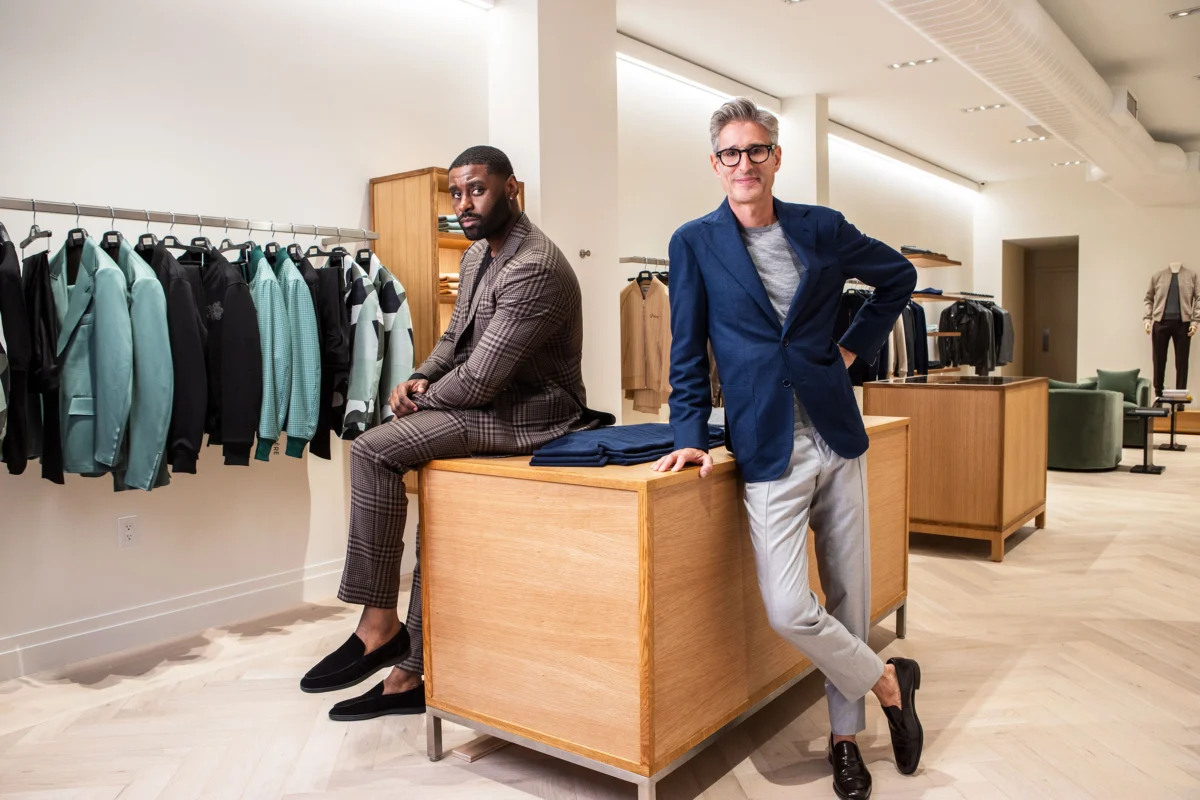
The intersection of high-technology leadership and high-fashion tailoring has found a new focal point in the heart of Manhattan’s SoHo district. Frère, a luxury menswear brand that has rapidly ascended to become the preferred label for some of the world’s most influential tech figures, has officially inaugurated its first physical boutique. Founded by industry veteran François Kress and acclaimed designer Davidson Petit-Frère, the brand represents a significant shift in the aesthetic preferences of the global elite. By securing an investor list that includes Apple CEO Tim Cook, Coinbase co-founder Fred Ehrsam, and entertainment mogul Jay Z, Frère is positioning itself as the definitive architect of the "quiet luxury" movement for the technological age.
The brand’s debut retail location arrives just months after its initial launch in March, marking an uncommonly swift expansion into the competitive New York luxury market. Frère’s arrival in SoHo is not merely a retail opening but a strategic statement on the evolving nature of executive presence. While the brand is rooted in the traditions of bespoke tailoring, its ready-to-wear collections—featuring items such as $3,490 wool knit tracksuits and $5,990 cashmere overcoats—cater to a demographic that prioritizes exceptional materials and subtle branding over ostentatious displays of wealth.
The Architectural Partnership: Kress and Petit-Frère
The foundation of Frère rests on the complementary expertise of its two founders. François Kress, who serves as the company’s CEO, brings a storied pedigree from the highest echelons of European luxury. His career includes tenures as the president of Fendi in North and South America, managing director of Bulgari in North and South America, and president and CEO of Prada Group for the United States. Kress’s operational background provides the brand with the institutional knowledge necessary to navigate global supply chains and high-end retail logistics.
Conversely, Davidson Petit-Frère, the creative director, represents the modern face of American tailoring. Petit-Frère’s trajectory began not in the fashion ateliers of Paris, but in the competitive world of luxury real estate. This background provided him with an early understanding of the wardrobe requirements of high-net-worth individuals. After pivoting to fashion through a series of internships, he launched Musika Frère, a brand that gained international recognition for its bespoke suits and high-profile clientele, including Beyoncé and Stephen Curry.
The partnership between Kress and Petit-Frère was born from a shared vision to modernize menswear. According to Petit-Frère, the brand’s mission is to achieve a delicate balance of innovation, artistry, and cultural relevance. Kress echoed this sentiment, noting that the duo identified a gap in the market for timeless elegance and exceptional craftsmanship that speaks to the contemporary leader’s desire for understated sophistication.
The Evolution of the "Tech Bro" Aesthetic
For decades, the fashion choices of the technology sector were defined by a deliberate rejection of formality. The "tech bro" uniform—consisting of Patagonia fleece vests, branded hoodies, ill-fitting denim, and functional sneakers—became a symbol of the industry’s disruptive nature. This utilitarian approach to dressing was famously championed by figures like Steve Jobs and Mark Zuckerberg, who utilized sartorial consistency to minimize decision fatigue.
However, as the technology sector has matured and its leaders have moved into the highest strata of global power, a refinement of this aesthetic has occurred. The shift toward "quiet luxury"—a trend characterized by extremely high-quality materials and a lack of visible logos—has seen CEOs swap their cotton hoodies for Loro Piana knitwear and Brunello Cucinelli jackets.
Frère has entered this landscape by offering a "subtle tech look" that aligns with this new power dynamic. The brand’s aesthetic allows leaders to stand out through the quality of their tailoring rather than the boldness of their branding. This "stealth wealth" approach is particularly resonant in professional environments where influence is often measured by what is unsaid. By blending classic tailoring with contemporary elements, Frère provides a wardrobe that transitions seamlessly from the boardroom to a private jet, maintaining a professional silhouette without the rigidity of traditional corporate attire.
Strategic Investment and Financial Backing
The rapid growth of Frère is supported by a robust financial foundation and a unique roster of investors. The company is currently in the process of raising a seed round, a move that highlights its startup-like trajectory within the traditional fashion industry. The lead investor for the brand is Robert Nelsen, a prominent angel investor and the co-founder of ARCH Venture Partners. Nelsen, primarily known for his high-stakes investments in the biotechnology sector, represents the bridge between the venture capital world and the luxury market.

Nelsen’s involvement is a testament to the brand’s appeal among those who value precision and craftsmanship in all sectors. In a statement to the press, Nelsen emphasized that Frère’s ability to blend timeless craftsmanship with a fresh perspective is what differentiates it from established European houses. He noted that for individuals in tech, style is increasingly seen as a personal reflection of professional trajectory—a tool for self-expression that remains grounded in professionalism.
The investment round also features a diverse array of figures from finance and entertainment. Joining Nelsen are Robert Hamwee of New Mountain Capital and Shawn "Jay Z" Carter. The inclusion of Jay Z, a figure synonymous with the intersection of cultural influence and business acumen, further solidifies Frère’s status as a brand with significant cultural capital. This backing has allowed the company to hire a specialized team and develop a comprehensive ready-to-wear collection that incorporates Petit-Frère’s Haitian heritage, adding a layer of personal narrative and cultural depth to the luxury offerings.
The Physicality of Luxury: The SoHo Flagship
In an era where retail is increasingly dominated by digital commerce, Frère’s decision to prioritize a physical flagship store is a calculated move. Luxury fashion was historically slow to adopt e-commerce, and for high-end brands, the in-person experience remains paramount. The SoHo store serves as an immersive environment where customers can interact with the tactile qualities of the products—feeling the weight of the cashmere and the precision of the stitching.
Kress has maintained that beautiful products must be experienced firsthand to be fully appreciated. The physical location allows the brand to build a direct relationship with its clientele, offering the level of service expected at these price points. While Frère plans to launch its e-commerce platform later this month, the SoHo boutique will remain the primary touchpoint for the brand’s narrative.
The boutique’s design reflects the brand’s ethos of "Innovation, Artistry, and Cultural Relevance." By establishing a presence in SoHo, Frère joins a neighborhood that has transitioned from an artist’s enclave to a global hub for luxury retail, standing alongside established giants like Louis Vuitton and Dior. This placement ensures that the brand is visible to both its core tech-executive demographic and the broader luxury consumer base.
Broader Implications for the Luxury Market
The rise of Frère signals a broader shift in the luxury market’s geographic and cultural focus. While European heritage houses have long dominated the menswear sector, Frère represents a new wave of American luxury that is deeply intertwined with the tech-driven economy of the 21st century.
The success of the brand also highlights the growing importance of "personal branding" for executives. In a world where public-facing CEOs are increasingly scrutinized, the wardrobe has become a strategic tool. Frère’s ability to attract names like Tim Cook and Fred Ehrsam suggests that the next generation of global leaders is seeking a look that is both aspirational and accessible—sophisticated enough for a diplomatic summit, yet relaxed enough for a casual meeting in Palo Alto.
Furthermore, the brand’s focus on "Quiet Luxury" reflects a broader economic and social trend. During periods of economic uncertainty, consumers often gravitate away from ostentatious displays of wealth toward items that offer longevity and "intrinsic value." The use of high-quality materials like cashmere and wool in silhouettes that do not go out of style ensures that a Frère garment is viewed as an investment rather than a fleeting trend.
As Frère prepares to launch its digital presence and close its seed round, the fashion and tech industries alike will be watching closely. The brand has successfully identified a niche where the precision of technology meets the artistry of tailoring. By dressing the architects of the digital age, Frère is not just selling clothing; it is defining the visual language of modern power. With the opening of its SoHo flagship, the brand has firmly planted its flag at the crossroads of Silicon Valley and the world of high fashion, signaling that the future of luxury may very well be understated, bespoke, and deeply connected to the world of innovation.