











Fibre Extrusion Technology (FET), a leading developer of bespoke extrusion equipment based in Leeds, United Kingdom, has been officially named the recipient of the Techtextil 2026 New Production Technology Innovation Award. The announcement comes ahead of the upcoming Techtextil exhibition in Frankfurt, Germany, scheduled to take place from April 21 to April 24, 2026. The award recognizes FET’s groundbreaking development of the FET-500, a small-scale gel spinning system designed for the production of ultra-high-molecular-weight polyethylene (UHMWPE) that entirely eliminates the need for toxic solvents. This technological milestone marks a significant shift in the manufacturing of high-performance technical textiles, offering a sustainable alternative to a process that has historically been one of the most chemically intensive in the industry.
The Evolution of High-Performance Fibers: The UHMWPE Context
Ultra-high-molecular-weight polyethylene (UHMWPE) is widely regarded as one of the most important materials in the technical textile sector. Often referred to as a "super-fiber," UHMWPE is characterized by its extraordinary strength-to-weight ratio, boasting a tensile strength up to 15 times greater than that of quality steel. Beyond its strength, the material is prized for its high impact resistance, chemical inertness, and low friction coefficient. These properties have made it indispensable across a diverse range of critical sectors.
In the medical field, UHMWPE is the gold standard for high-strength surgical sutures and orthopedic implants. In the defense and security sectors, it is a primary component in the manufacturing of lightweight body armor, ballistic shields, and cut-resistant gloves. Furthermore, the marine and offshore industries rely on UHMWPE for heavy-duty ropes and cables that must withstand extreme tension and corrosive environments without succumbing to moisture or UV degradation.
Despite its utility, the production of UHMWPE has long been plagued by environmental and safety concerns. The traditional manufacturing method, known as gel spinning, requires the polymer to be dissolved in a solvent—typically mineral oil or paraffin—to create a gel-like substance that can be extruded through a spinneret. To solidify the fiber and achieve the desired molecular orientation, the oil must be extracted. This extraction process has traditionally relied on hazardous volatile organic compounds (VOCs) such as hexane or dichloromethane (DCM).
Addressing the Environmental Deficit of Traditional Gel Spinning
The environmental footprint of traditional UHMWPE production is staggering. Industrial data indicates that for every kilogram of yarn produced, approximately 100 kilograms of toxic solvents are required for the washing and extraction phases. Dichloromethane, one of the primary solvents used, is classified as a hazardous air pollutant and a potential carcinogen, requiring rigorous and expensive containment and recovery systems to prevent environmental contamination and protect worker health.
FET’s development of the FET-500 system addresses this ecological imbalance by replacing these harmful solvents with supercritical carbon dioxide (scCO2). When carbon dioxide is subjected to specific temperatures and pressures above its critical point, it enters a "supercritical" state where it exhibits the properties of both a gas and a liquid. In this state, scCO2 acts as a highly efficient, non-toxic solvent capable of extracting oils from the polyethylene gel.
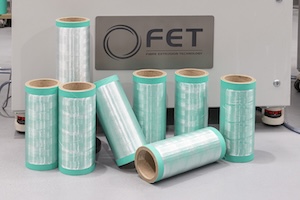
The use of scCO2 is not entirely new to the textile world—it has been utilized for several years in waterless dyeing processes—but its application in the production of UHMWPE represents a major leap in production technology. Because the CO2 used is often captured as a by-product of other industrial processes and can be recycled within the FET-500 system, the process is significantly more sustainable and aligns with global moves toward a circular economy and reduced chemical waste.
The FET-500: Technical Specifications and Development Chronology
The FET-500 is the culmination of years of research and development at FET’s facility in Leeds. Unlike the massive, inflexible production lines that dominate the current UHMWPE market, the FET-500 is designed as a lab and small-scale system. This focus on scale is a strategic move intended to break down the barriers to entry for new product development.
"The current systems for manufacturing UHMWPE filament yarns are on a huge scale, with very complex processing routes," explained Jonny Hunter, FET Research and Development Manager. "This means the supply chain is currently very inflexible with minimal opportunity for new product development. These disadvantages have been fully addressed in the development of our new FET-500 series."
The development timeline for the FET-500 followed a rigorous path:
- Phase I: Conceptual Engineering: FET identified the need for a cleaner extraction method for medical-grade fibers.
- Phase II: Pilot Testing: Successful integration of supercritical CO2 extraction modules into small-scale extrusion lines.
- Phase III: Commercial Refinement: Optimization of the system for bespoke sizes and specialized applications, particularly for the biomedical market.
- Phase IV: Global Debut: The system is now entering its first commercial phase, with Techtextil 2026 serving as its international launchpad.
By providing a system that can produce smaller, customized batches of high-performance fiber, FET is enabling manufacturers to experiment with new fiber diameters, strengths, and applications without the prohibitive costs and waste associated with large-scale industrial runs.
Industry Leadership and Official Responses
The recognition by the Techtextil Innovation Award jury underscores FET’s position as a leader in the UK’s textile machinery sector. As a prominent member of the British Textile Machinery Association (BTMA), FET represents a broader trend of innovation within the British engineering landscape.
Managing Director of FET, Richard Slack, expressed pride in the achievement, noting the specific market needs that drove the innovation. "We have supplied many extrusion systems to the biomedical market, most notably for the production of both resorbable and non-absorbable sutures. In exploring what else we could do to assist these customers, it became clear that there was a need for smaller quantities of UHMWPE fibres in bespoke sizes. We are proud that the Techtextil Innovation Award has recognised our intensive work ahead of the exhibition."
The BTMA has also lauded the success, viewing it as a testament to the health of the UK’s manufacturing sector. Jason Kent, CEO of the BTMA, highlighted the collective contribution of British firms to the global market. "This award illustrates the current vibrancy of the UK’s textile technology sector. From the careful handling of ultra-high value yarns to the forensic inspection of finished fabrics, the BTMA members at Techtextil and Texprocess this year collectively represent a complete chain of innovation spanning processing, monitoring and quality assurance."
Contextualizing Techtextil Frankfurt 2026
Techtextil is the world’s leading trade fair for technical textiles and nonwovens. Held biennially in Frankfurt, the event serves as the primary meeting point for engineers, product developers, and manufacturers from around the globe. The 2026 edition is expected to host over 1,600 exhibitors from more than 60 countries, showcasing advancements in areas ranging from "Agrotech" to "Sportcheck."
The Techtextil Innovation Award is a centerpiece of the event, judged by an international jury of experts who evaluate entries based on their level of innovation, technical quality, and potential for industrial application. For FET, winning the "New Production Technology" category provides a significant competitive advantage as the company seeks to expand its footprint in the global biomedical and high-performance fiber markets.
Broader Implications for the Global Technical Textile Industry
The introduction of the FET-500 and its solvent-free process has implications that extend far beyond the immediate commercial success of a single company. The textile industry is currently under intense pressure from regulators and consumers to reduce its environmental impact. The European Union’s Strategy for Sustainable and Circular Textiles, for instance, aims to ensure that by 2030, textile products placed on the EU market are long-lived, recyclable, and largely free of hazardous substances.
FET’s innovation aligns perfectly with these regulatory trends. By proving that high-performance fibers can be produced without a 100-to-1 solvent-to-yarn ratio, FET is setting a new benchmark for the industry. This could lead to:
- Reduced Operational Costs: While the initial investment in scCO2 technology may be significant, the long-term savings from eliminating solvent purchase, containment, and disposal are substantial.
- Localized Manufacturing: The small-scale nature of the FET-500 allows for "micro-factories" located closer to the end-users (such as medical device manufacturers), reducing transport-related carbon emissions.
- Accelerated R&D: Research institutions and specialized manufacturers can now develop proprietary UHMWPE variants that were previously impossible due to the scale requirements of traditional machinery.
As the industry gathers in Frankfurt next week, the FET-500 will likely be a focal point for discussions on how the technical textile sector can balance the demand for extreme performance with the necessity of environmental stewardship. The award serves as a formal acknowledgement that the future of high-performance textiles lies not just in the strength of the fibers produced, but in the cleanliness and efficiency of the machines that create them.