











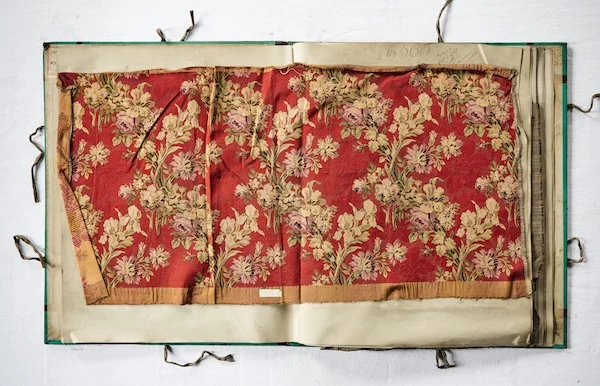
The storied American design institution F. Schumacher & Co. (FS&CO) has officially announced the acquisition of the overwhelming majority of the Vanoutryve textile archive, a monumental collection representing over 150 years of European weaving history. This strategic acquisition, finalized in September 2026, secures more than 75,000 individual textile samples, along with a comprehensive repository of original drawings and fabric records dating from 1870 to 1960. The move marks a significant expansion of the Schumacher corporate archives and reinforces the company’s commitment to preserving the lineage of international textile design.
For FS&CO, the acquisition is as much a homecoming as it is a historical preservation effort. Frederic Schumacher, the founder of the New York-based firm, began his professional career as a textile agent for the Vanoutryve mill in both France and the United States. It was through this foundational experience in the late 19th century that Schumacher gained the technical expertise and design sensibility required to establish his namesake company in 1889. By bringing the Vanoutryve archive into its possession, the company has effectively reclaimed a missing chapter of its own corporate origin story.
A Historical Timeline of the Vanoutryve Legacy
To understand the magnitude of this acquisition, one must examine the trajectory of the Vanoutryve mill, which served as a pillar of the French and Belgian textile industries for over a century.
- 1860: Felix Vanoutryve establishes the mill in Roubaix, France, a city that would become a global epicenter for textile production.
- Late 1800s: The mill expands rapidly, eventually employing over 4,500 workers. Its reach becomes international, with 60 percent of its total production destined for foreign markets.
- 1889: Frederic Schumacher founds F. Schumacher & Co. in New York City, having previously worked as a direct representative for the Vanoutryve output.
- 1912: Both Felix Vanoutryve and Frederic Schumacher pass away, marking the end of an era for both the mill and the design house.
- 1920s–1930s: The mill becomes a key partner for design icons, including Paul Poiret, who leveraged the mill’s technical capabilities to pioneer the concept of the "lifestyle brand" through home fabrics.
- 2013: After more than 150 years of continuous family ownership, the mill undergoes a change in structure.
- 2019: The Vanoutryve mill officially ceases operations.
- 2026: F. Schumacher & Co. acquires the archival collection, including 1,500 swatch books, to prevent the loss of this historical data and to integrate it into their ongoing design practice.
The Scope of the Collection
The sheer volume of the Vanoutryve archive provides an unparalleled look into the evolution of Western interior design. The 75,000 samples span a transformative era of decorative arts, capturing the shift from late Victorian sensibilities to the streamlined aesthetic of the mid-20th century.
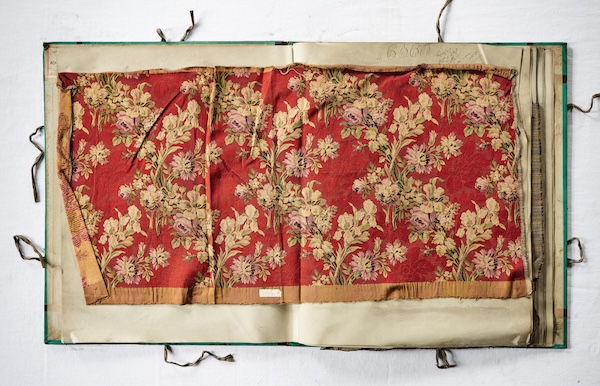
The materials are remarkably diverse, encompassing delicate silks and intricate brocades alongside robust, heavy-duty tapestries and complex jacquards. The archive serves as a physical record of shifting cultural tastes, featuring everything from traditional Persian-inspired motifs to the radical, geometric precision of the Art Deco movement. According to archival staff, the collection represents a "broad range of aesthetics," providing a clear window into how the mill managed to balance the production of traditional luxury goods with the fast-evolving demands of the modernist era.
Corporate Vision and Strategic Preservation
The acquisition was driven by the current leadership at FS&CO, who view the archive as a vital tool for future innovation. Timur Yumusaklar, President and CEO of FS&CO, emphasized that the decision to purchase the archive was a "natural extension" of the company’s dedication to craftsmanship.
"We have always and will always continue to work with the finest mills in the world," Yumusaklar stated. "We firmly believe that quality craftsmanship and great design can withstand the test of time. I’m honored to continue preserving and reimagining the artistry of these timeless pieces by introducing them to the U.S., just as Frederic Schumacher did 150 years ago."
The integration of these materials into the company’s workflow is being managed by a specialized team of in-house archivists. Currently, the entire collection is housed in a climate-controlled facility, where each swatch, book, and technical drawing is undergoing professional cleaning, conservation, and digital cataloging. This ensures that the material—much of which is over a century old—remains stable for future study.
Implications for the Textile Industry and Education
The impact of this acquisition extends beyond the internal operations of F. Schumacher & Co. By centralizing this archive, the company is effectively safeguarding a piece of global industrial history that might otherwise have been scattered or lost following the closure of the Roubaix mill.

Dara Caponigro, Chief Creative Officer at FS&CO, noted that the archive is already serving as a resource for the company’s internal design teams. "What struck me most was the mix of patterns that were produced within a specific time period," Caponigro observed. "It reflected the broad range of aesthetics and varied appetite for design during that era, with modernist Art Deco designs existing right alongside traditional brocades."
Educational experts in the decorative arts suggest that the accessibility of such a large, documented archive provides significant value to historians and students. By studying the technical evolution of the Vanoutryve textiles—such as the still-produced "Parrots Moderne" fabric—researchers can gain a clearer understanding of how manufacturing techniques evolved to accommodate the artistic trends of the early 20th century.
A Legacy Reimagined
The acquisition underscores a broader trend in the luxury home goods sector: the increasing value placed on "brand provenance." In an era of mass-produced, transient home decor, companies like FS&CO are finding that the narrative behind a product is as valuable as the product itself. By connecting the current product line back to the specific loom-ready drawings and swatch books of the 19th-century Vanoutryve mill, the company is reinforcing its status as a custodian of history.
Kristen Robinson, the company’s lead archivist, noted that the acquisition offers a unique opportunity to map the history of textile manufacturing more precisely. "This acquisition adds not only to our understanding of Schumacher’s own story, but also to the history of manufacturing and textile design," she said. "For more than a century, Vanoutryve was one of the most revered weaving houses in France and Belgium, and now its impact will still be felt in homes around the world."
As the cataloging process continues, the company plans to integrate elements of the archive into future design collections. By bridging the gap between the 19th-century weaving expertise of Roubaix and the 21st-century digital capabilities of New York, F. Schumacher & Co. is setting a precedent for how heritage brands can remain relevant while honoring their foundational roots. The archive serves as a permanent, living record—a "lesson in the decorative arts"—that will undoubtedly influence the trajectory of interior design for decades to come.