








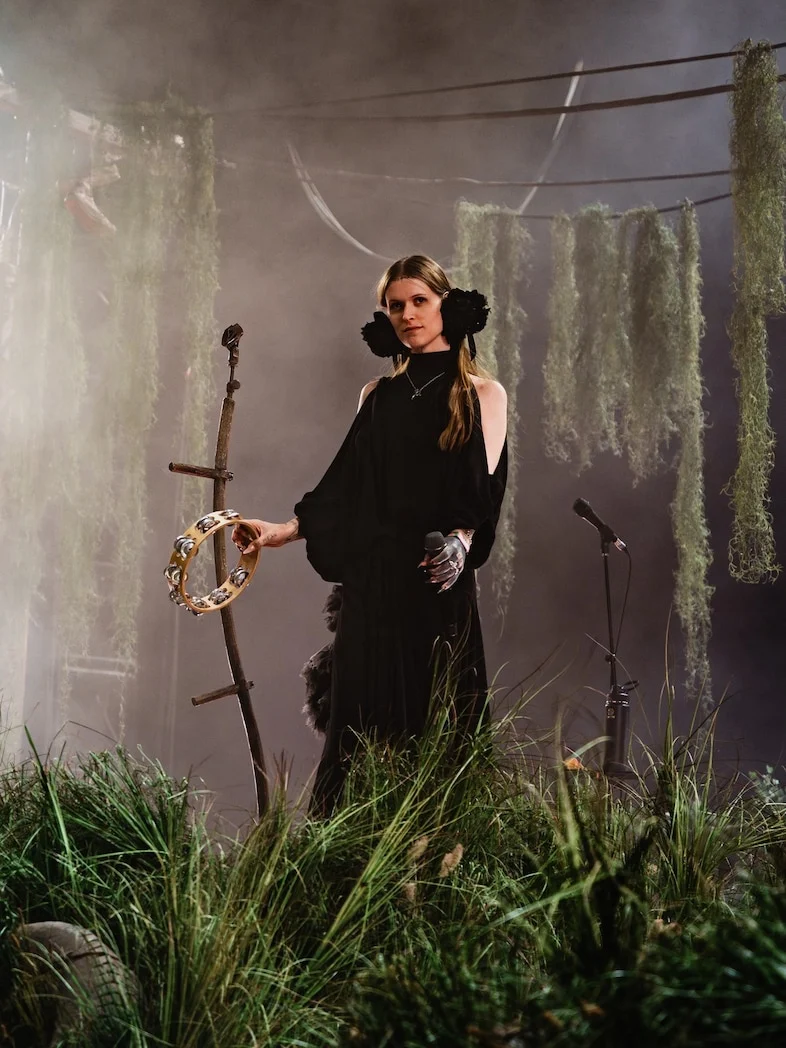
The upcoming Coachella Valley Music and Arts Festival in 2026 is set to feature a groundbreaking stage design for alternative pop artist Ethel Cain, a creation that subtly yet significantly links her deeply atmospheric Southern Gothic universe to the grand spectacle of a Super Bowl halftime show. This intriguing connection stems from the resourceful acquisition of surplus turf from Bad Bunny’s monumental Super Bowl performance earlier this year, a detail revealed by the visionary architect-turned-stage designer, Oli Colman. Colman, who was integral to the production team for Bad Bunny’s Super Bowl showcase, has crafted an immersive, Southern Gothic-inspired environment for Cain’s highly anticipated Coachella debut in 2026, a set that will subsequently accompany her on the global leg of her "Here Lies Ethel Cain" tour.
The revelation that the very same grass gracing Bad Bunny’s record-breaking Super Bowl stage will become a central, albeit transformed, element of Ethel Cain’s haunting landscape underscores a growing trend in live event production towards sustainability and creative reuse. Colman’s design for Cain transcends mere aesthetics, delving into a meticulous deconstruction of Americana, mirroring the complex narratives woven throughout her discography. This "graveyard of industry," as Colman describes it, is not just a backdrop but an extension of Cain’s intricate lore, featuring custom-fabricated elements like a scythe-cum-microphone stand and a plethora of hidden "Easter eggs" for her devoted fanbase.
The Genesis of a "Graveyard of Industry"
Oli Colman’s journey to designing Ethel Cain’s Coachella 2026 stage began with a profound admiration for the artist born Hayden Silas Anhedönia. A London-born architect by training, Colman’s expertise in spatial design and structural integrity proved invaluable in translating Cain’s evocative musical narratives into a tangible, performative space. His initial conceptualizations for the stage drew heavily on the architectural vernacular of the American South, proposing a traditional Southern chapel. However, Anhedönia, known for her penchant for the unexpected and her deliberate subversion of conventional themes, steered the vision towards a more profound, deconstructed aesthetic.
"Hayden wants to do the unexpected, so that religious stuff was too on the nose for Ethel Cain," Colman explained, detailing the collaborative process. This directive led to a radical reimagining: "It became something more deconstructed, like, ‘What if we were to pull all that apart?’" The result is a stage that eschews overt religiosity for a starker, more industrial tableau, aligning closely with the sonic palette of Cain’s ambient industrial album, Perverts, rather than the more mainstream alt-pop leanings of her acclaimed Preacher’s Daughter or Willoughby Tucker, I’ll Always Love You. The set, therefore, functions as a visual metaphor for the decay and inherent complexities of modern American society, a central theme in Cain’s music.
Colman elaborates on this aesthetic, describing it as "a little graveyard of industry." This vision is brought to life through elements such as rust-covered car parts, twisted metal, and overgrown vines, creating an environment that feels simultaneously abandoned and alive. The inspiration further extended to Anhedönia’s intriguing interest in nuclear power stations – symbols of immense, controlled power and potential desolation – which served to "offset the lushness of the old American South," injecting an unsettling, modern industrial edge into the otherwise pastoral desolation. This meticulous approach ensures that the design resonates deeply with the thematic undercurrents of Cain’s work, carefully avoiding any aesthetic that might veer into "Halloween-y" cliché, a specific boundary Hayden herself was keen to maintain.
A Tapestry of Southern Gothic Details
The essence of Ethel Cain’s artistry lies in her ability to craft a deeply immersive world, and her Coachella 2026 stage is no exception. Every detail, from the flora to the fabricated structures, is imbued with geographical and symbolic significance, rooting the performance firmly within the fictional yet vivid landscape of her narratives. The stage design team, under Colman’s direction, undertook extensive research to ensure botanical accuracy, reflecting the specific environments central to Cain’s lore.
"It’s a play of the two: where Hayden is from, which is the panhandle of Florida, and then the fictional character of Ethel Cain, who’s from 90s Alabama," Colman clarified. This duality guided the selection of plant life that would authentically evoke the humid, swampy atmosphere of the American South. The stage features cattails, common in wetlands and marshes, alongside wire grass, which contributes to the dried, untamed look. Crucially, kudzu vines—an invasive species often seen smothering landscapes across the South—are depicted growing aggressively up a chain-link fence, symbolizing both pervasive decay and an unstoppable natural force. Spanish moss, iconic to the region, drapes from power lines, adding another layer of visual authenticity and melancholic beauty. These specific elements are not merely decorative; they serve as living props that underscore the narrative of a landscape consumed by both nature and industrial abandonment, a hallmark of the Southern Gothic genre.
The decision to feature power lines was an early and consistent element in Colman’s conceptual decks, driven by Anhedönia’s known fascination with these conduits of modern energy that scar and connect the rural landscape. This attention to detail extends beyond the natural elements, integrating man-made structures that speak volumes. The presence of these power lines, intertwined with natural growth, paints a picture of a region where infrastructure struggles against the relentless reclamation by nature, a poignant reflection of the themes of decline and resilience explored in Cain’s music.
Weaving the Lore into the Landscape
Ethel Cain’s fanbase, affectionately known as "Daughters of Cain," are renowned for their deep engagement with the elaborate lore that underpins her music. Hayden Silas Anhedönia has meticulously constructed a multi-generational saga, rich with characters, locations, and thematic motifs, making the integration of these elements into her live performances paramount. Oli Colman’s challenge was to translate this intricate narrative into a physical space, an undertaking that required his own immersion into the depths of Cain’s universe.
"She actually didn’t [share much lore]; it was a lot of me reading it myself," Colman revealed, highlighting the artist’s trust in his interpretative abilities. Despite this independent research, key elements from Cain’s mythology organically found their way into the design. The power lines, for instance, were a foundational concept that predated Colman’s work on the current stage, having previously inspired the microphone stand for the Willoughby Tucker tour. To avoid repetition, and to push the narrative forward, Anhedönia herself proposed a new iconic element: the scythe.
The scythe, a powerful symbol of harvest, death, and the passage of time, became the centerpiece of Cain’s stage presence. Its design was carefully considered to reflect the desired aesthetic. "When you type ‘scythe’ into Google, there’s a wide variety in what they can look like," Colman noted, distinguishing their choice from more fantastical or menacing depictions. "We were going for something that’s more of a farming implement, a weathered, old scythe." This choice reinforced the rural, deconstructed Americana theme. Functionally, Hayden specifically requested the blade at the bottom and the microphone at the top, allowing her to wield it dramatically and carry it around the stage—a "Freddy Mercury moment," as Colman described it, empowering her performance with a potent visual and practical tool. This scythe also subtly nodded to a Coachella billboard for Ethel Cain, which ominously declared: "Go see Ethel Cain or the devil will get you!"
Beyond these prominent features, the stage is peppered with subtle "Easter eggs" designed to delight and reward the most dedicated fans. Among the overgrown grass, a car bumper plate bears an Alabama license plate, a direct reference to the fictional home state of Ethel Cain. Hidden near the electricity pylons are Hayden’s shoes, the very pair she wore during her previous Coachella appearance, creating a sense of continuity and personal history. Furthermore, her iconic red jacket, emblazoned with "Cain," is also secreted within the dense foliage, inviting fans to discover these intimate fragments of her artistic journey. These details transform the stage from a mere set into an interactive diorama of Ethel Cain’s world, fostering a deeper connection with her audience.
From Super Bowl Spectacle to Southern Swamp: The Journey of the Grass
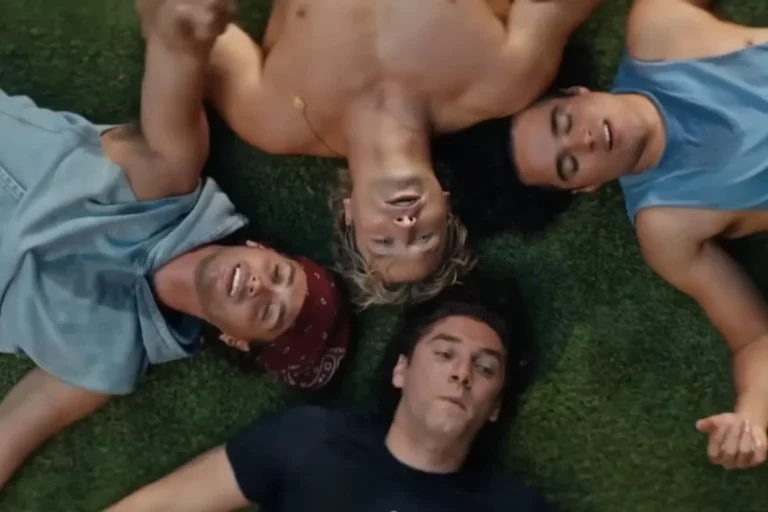
Perhaps the most unexpected and emblematic detail of Ethel Cain’s Coachella 2026 stage is the origin of its verdant, albeit dried, ground cover. The grass that will carpet her "graveyard of industry" is not new, but rather a meticulously repurposed remnant from one of the largest live events in the world: Bad Bunny’s Super Bowl halftime performance earlier this year. This innovative reuse highlights both the logistical complexities of mega-productions and a growing, albeit nascent, commitment to sustainability within the entertainment industry.
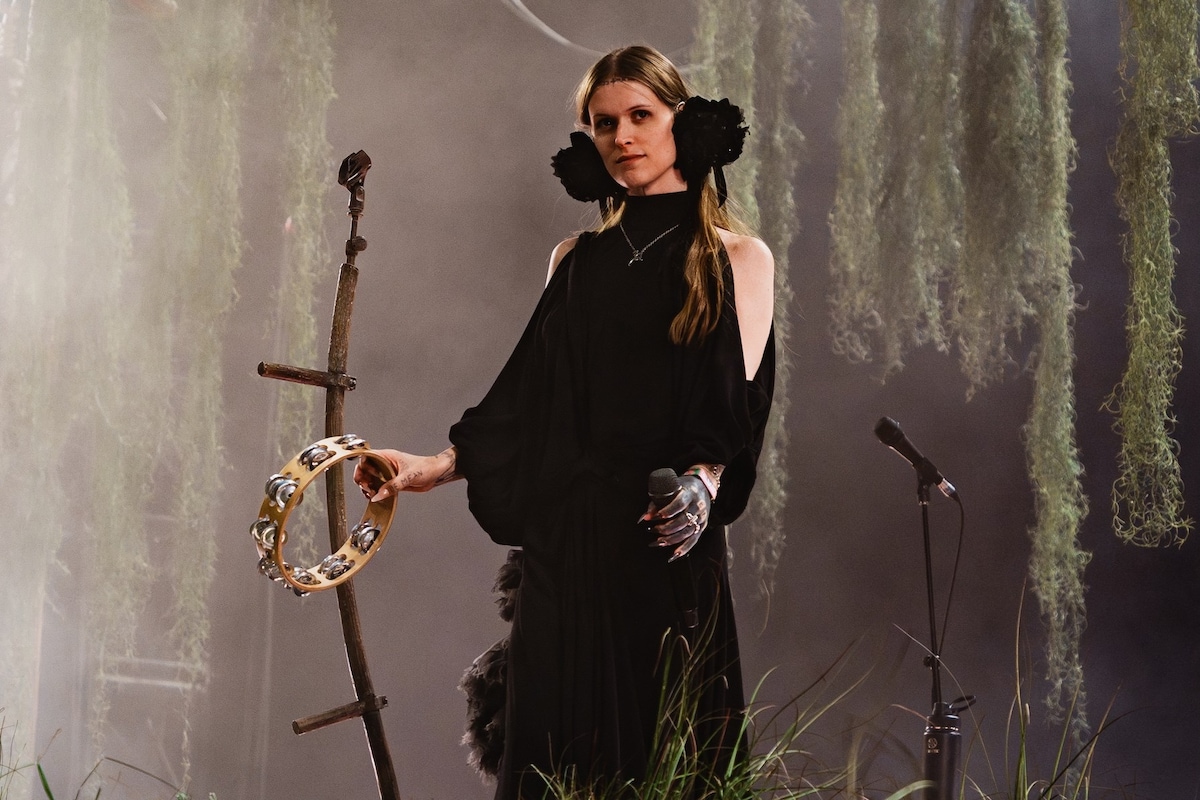
Oli Colman’s dual involvement proved pivotal in this unique transfer. Having been part of the Super Bowl’s production design team, he was intimately familiar with its sprawling logistics and resource management. He knew Cory Lennon, the individual responsible for sourcing and managing the immense quantity of grass required for Bad Bunny’s stadium-spanning spectacle. "He had a huge stock of it," Colman explained. The prohibitive cost of acquiring new, fire-retardant plants—a non-negotiable safety requirement for large public events—made Lennon’s surplus an ideal solution. "I just hit him up like, ‘Would you be willing to sell us a big batch of your grass?’" Colman recounted, emphasizing the mutual benefit: "Everyone’s a winner because we’re being more economical, reusing stuff that was potentially going to waste."
The journey of the grass from a vibrant, lush Super Bowl stage, designed to evoke the tropical richness of Puerto Rico, to Ethel Cain’s desolate Southern landscape required a significant transformation. "For Ethel’s stage, though, it couldn’t be the lush, tropical green of Puerto Rico," Colman stated. To achieve Cain’s specific aesthetic of arid decay, the grass underwent a deliberate process: "We burnt the edges and painted it yellow so it looked a little more dried out." This modification ensured that the repurposed material seamlessly integrated into the "graveyard of industry" theme, symbolizing neglect and the slow creep of desolation.
The Super Bowl itself is a masterclass in rapid-fire stage assembly and disassembly, a logistical "Rubik’s Cube," as Colman aptly described it. The immense scale and strict time constraints often necessitate unconventional solutions. Colman shared an amusing anecdote from the Super Bowl production: "There’s a limited number of carts that could come out [to set up Bad Bunny’s stage], but we needed more grass, so we turned people into grass." This detail, though lighthearted, underscores the extreme pressure and ingenuity required to execute such monumental live performances, making the subsequent, more deliberate repurposing for Ethel Cain’s stage all the more significant.
Coachella’s Canvas: Stage Design as Artistic Statement
Coachella stands as a global beacon for musical innovation and visual artistry, where stage design transcends mere decoration to become an integral component of an artist’s statement. For Ethel Cain’s highly anticipated 2026 appearance, the meticulously crafted "graveyard of industry" stage is poised to join a lineage of iconic Coachella productions, further solidifying the festival’s reputation as a premier platform for immersive performance art. The festival’s sprawling desert landscape provides an unparalleled canvas for artists and designers to realize ambitious visions, fostering an environment where stagecraft can elevate a musical performance into a holistic, sensory experience.
The broader conversation surrounding stage design often oscillates between the poles of minimalism and maximalism, a debate that gained particular traction following recent performances. Justin Bieber’s relatively minimalist stage, contrasted with Sabrina Carpenter’s maximalist, elaborate production, sparked significant discussion across social media and music publications. Oli Colman, having navigated both large-scale, intricate productions and artist-specific visions, offered a nuanced perspective on this discourse.
"I think there’s a place for both," Colman stated, acknowledging the validity of diverse artistic approaches. He expressed admiration for elaborate productions, citing a friend’s design for Karol G’s stage, which featured an "out of this world" Flintstones-esque cave, as an example of maximalist brilliance. Yet, he also recognized the inherent power in simplicity: "But then I also think it takes a certain kind of person to stand on a minimal stage, like the Kanye West-style blob which Justin Bieber did. It’s just a different approach, right?" This highlights that the effectiveness of a stage design is often dictated by the artist’s persona, the genre of music, and the intended connection with the audience.
Colman also touched upon the underlying societal biases that can influence the reception of these artistic choices. While refraining from direct commentary, he raised a pertinent question: "I don’t want to comment on the misogyny of, you know, if a female artist were to do the same, would she have gotten away with it? That’s a good question." This acknowledges the often-gendered critiques artists face, where male artists might be lauded for minimalism as an act of raw authenticity, while female artists might be criticized for a lack of effort or spectacle in similar circumstances. For Ethel Cain, her detailed, narrative-driven stage design, deeply rooted in her lore, positions her firmly in the camp of artists who prioritize immersive world-building as an extension of their musical identity.
Implications and Future of Immersive Performance
Ethel Cain’s Coachella 2026 stage design, particularly its innovative reuse of materials from Bad Bunny’s Super Bowl performance, carries significant implications for the future of live event production and artistic expression. This collaboration between seemingly disparate musical universes, facilitated by a visionary designer like Oli Colman, underscores a growing emphasis on sustainability, artistic integrity, and immersive storytelling within the music industry.
Sustainability in Live Events: The repurposing of the Super Bowl grass serves as a powerful case study for environmental responsibility in large-scale productions. The live entertainment industry has a substantial environmental footprint, from energy consumption to waste generation. By demonstrating that high-profile events can reuse expensive, specialized materials, Colman and Cain are setting a precedent. This move could inspire wider adoption of circular economy principles, encouraging designers and producers to consider the full lifecycle of their materials, reducing waste, and mitigating environmental impact. The logistical challenges of such initiatives, including fire-retardant requirements and aesthetic transformations, highlight the need for creative problem-solving and industry-wide collaboration to make sustainable practices more commonplace.
Deepening Artist-Fan Connection: For artists like Ethel Cain, whose work is built upon rich, intricate narratives and deeply personal lore, the stage is not merely a platform but an extension of their artistic universe. The "graveyard of industry" set, with its meticulously chosen plants, salvaged car parts, and hidden Easter eggs, offers fans an unparalleled opportunity to step directly into Cain’s world. This level of detail and immersion fosters a profound connection, rewarding dedicated followers who engage with the lore and offering newcomers a compelling entry point into her unique artistic vision. In an era where digital engagement is paramount, physical stage design provides a tangible, shared experience that strengthens community and reinforces the artist’s identity.
The Architect’s Role in Performance Art: Oli Colman’s background as an architect brings a unique lens to stage design. His understanding of space, structure, and user experience (or in this case, audience experience) is evident in the thoughtful construction of Cain’s set. This cross-disciplinary approach highlights the increasing demand for designers who can bridge the gap between traditional architectural principles and the dynamic requirements of live performance. As artists push the boundaries of visual storytelling, the role of such designers becomes crucial in translating abstract concepts into concrete, impactful environments.
Ethel Cain’s Evolving Narrative: The "graveyard of industry" stage marks a significant chapter in Ethel Cain’s ongoing artistic evolution. By moving away from a more overtly religious aesthetic towards a deconstructed, industrial landscape, Hayden Silas Anhedönia signals a deepening exploration of decay, societal critique, and personal narrative. This stage visually articulates the themes of her Perverts album, suggesting a trajectory towards even darker, more complex sonic and visual storytelling. It reinforces her commitment to challenging audience expectations and consistently developing her narrative universe.
In conclusion, Ethel Cain’s Coachella 2026 stage, with its Bad Bunny grass and meticulous Southern Gothic details, is more than just a performance set; it is a profound artistic statement. It champions sustainability, exemplifies innovative collaboration, and reinforces the power of immersive design to deepen the connection between artist and audience. As the live music industry continues to evolve, such thoughtful and impactful stagecraft will undoubtedly play an increasingly vital role in shaping the future of performance art.