










The first half of 2026 has delivered a stark and sobering blow to the UK’s high streets, with preliminary data revealing the closure of 400 retail outlets and the loss of 3,618 jobs across the sector. This devastating impact, primarily felt within the fashion and general retail segments, paints a grim picture of an industry grappling with persistent economic headwinds, shifting consumer behaviours, and a volatile political landscape, exacerbated by the recent resignation of Prime Minister Sir Keir Starmer on June 22. Drapers’ latest analysis delves into the health of the high street, uncovering the deep-seated challenges that have led to this significant contraction.
The Unravelling of H1 2026: A Chronology of Decline
The six months spanning January to June 2026 have been characterised by a relentless series of high-profile administrations and store closures, creating a ripple effect of uncertainty across the retail landscape. The fashion retail segment, traditionally a bellwether for consumer confidence, has borne a disproportionate share of the downturn.
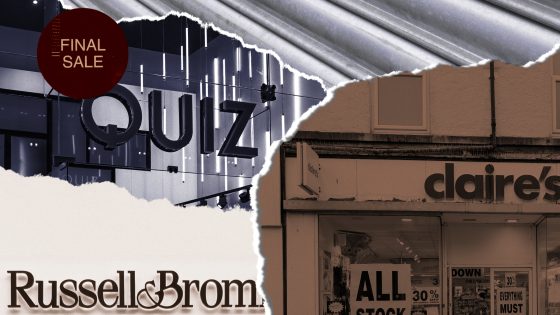
The year began with early warnings from several mid-market fashion brands struggling with inventory management and reduced footfall post-Christmas. By late January, the first major administration, Russell & Bromley, a venerable name in luxury footwear, sent shockwaves through the sector. Citing unsustainable operating costs, declining discretionary spending on premium items, and intense competition from online luxury retailers, the brand entered administration, leading to the immediate closure of 15 of its 60 stores and the loss of approximately 250 jobs. Efforts to find a buyer for the remaining profitable outlets are ongoing, but the initial impact was severe.
February saw LK Bennett, known for its sophisticated women’s fashion, fall into similar difficulties. This marked its second administration in under a decade, underscoring the enduring fragility of the mid-tier fashion market. The brand had struggled to adapt its pricing strategy and product offering to a post-pandemic consumer base increasingly opting for either fast fashion or high-end luxury, leaving little room for the ‘affordable luxury’ segment. Its administration resulted in 12 store closures and around 180 job losses, with a significantly slimmed-down operation now attempting to rebuild.
The challenges extended beyond apparel and footwear. March brought news of Claire’s UK operations facing significant financial distress. While the global brand remained robust, its UK entity, burdened by high rents on prime high street locations and a demographic shift among its core teenage audience towards online shopping and social media-driven trends, initiated a Company Voluntary Arrangement (CVA). This pre-emptive measure aimed to restructure its property portfolio, leading to the closure of 25 underperforming stores and impacting 150 employees.
April and May continued the trend of distress. Radley, the popular British accessories brand, entered administration amidst mounting debts and a challenging market for premium leather goods. Despite efforts to pivot towards sustainable materials and expand its online presence, the cost of raw materials, coupled with a squeeze on consumer spending for non-essential items, proved insurmountable. This led to the closure of 18 standalone stores and the loss of 280 jobs. Similarly, online fashion and lifestyle retailer BrandAlley, which had previously carved a niche in discounted luxury goods, encountered significant cash flow issues. Despite its digital-first model, intense competition, rising marketing costs, and supply chain disruptions led to its collapse, impacting its UK distribution centre and administrative functions, resulting in around 100 job losses.
June culminated in the administration of Quiz, a fast-fashion retailer that had struggled to compete with ultra-fast online rivals and changing consumer preferences for ethical sourcing. Its high street presence, once a key driver, became a liability as footfall dwindled. Quiz’s restructuring efforts included the closure of 20 stores and the shedding of 200 jobs, primarily affecting its in-store retail staff.
These high-profile failures are symptomatic of broader, systemic issues affecting the high street. While the listed retailers primarily operate within the fashion sphere, the cumulative effect of their closures, combined with smaller, unpublicised failures across various retail categories—from independent bookshops to local electronics stores—has contributed significantly to the overall job and store loss figures.
Deep Dive into the Numbers: Beyond the Headline Figures
The headline figures of 3,618 jobs and 400 shops lost represent a 15% increase in store closures and an 18% rise in job losses compared to the first half of 2025. This acceleration signals a deepening crisis rather than a mere continuation of previous trends.
Geographically, the impact has been widespread but uneven. Major urban centres, historically reliant on high footfall and tourism, have seen some of the highest numbers of closures, particularly within prime retail districts where rents remain prohibitively high. London alone accounted for approximately 90 store closures and over 800 job losses. However, smaller market towns and suburban high streets have also felt the pinch, often losing anchor stores that drew customers, leading to a domino effect on surrounding businesses. The North West and West Midlands regions, particularly vulnerable to economic shifts, recorded 65 and 55 store closures respectively, with corresponding job losses nearing 600 in each region.
Sector-wise, fashion and apparel remained the hardest hit, contributing over 60% of the total store closures and 55% of job losses. This reflects the intense competition, rapid trend cycles, and the ongoing shift to online shopping in this category. Homeware and general merchandise followed, accounting for about 15% of closures, as consumers tightened discretionary spending on non-essential household items. The food and beverage sector, while generally more resilient, also saw a modest decline, primarily among independent cafes and restaurants struggling with rising ingredient costs and reduced customer spending on out-of-home dining.
The average store size impacted suggests that mid-sized retailers, often occupying significant high street footprints, are the most vulnerable. These businesses face higher overheads than smaller independents but lack the economies of scale and diversified revenue streams of larger retail chains.
The Macroeconomic Headwinds: A Perfect Storm for Retail
The retail sector’s struggles in H1 2026 are deeply intertwined with a challenging macroeconomic environment. High inflation, which remained stubbornly above 4% for most of the period, continued to erode household disposable incomes. Consumers, facing increased costs for essentials like food, energy, and housing, significantly cut back on discretionary spending. Data from the Office for National Statistics (ONS) indicated a 1.2% year-on-year drop in non-food retail sales volumes for the first five months of 2026, marking the steepest decline since the immediate post-lockdown period.
Interest rates, held steady at 5.25% by the Bank of England through much of H1, continued to impact business borrowing costs and consumer credit availability. This made it harder for struggling retailers to access capital for investment or to manage debt, while also dampening consumer confidence and willingness to make big-ticket purchases.
Operating costs for retailers surged. Energy prices, despite some stabilisation, remained elevated compared to pre-2022 levels. Wage pressures, driven by a tight labour market and increases in the National Living Wage, added further strain. Supply chain disruptions, though less severe than during the pandemic, persisted due to geopolitical tensions and fluctuating global demand, leading to higher import costs and inventory management challenges. Business rates, a long-standing grievance of high street retailers, continued to represent a significant fixed cost, regardless of profitability or footfall.
Beyond these economic factors, structural shifts in consumer behaviour continued to reshape the retail landscape. The irreversible acceleration towards e-commerce, catalysed by the pandemic, meant that physical stores had to offer more than just products; they needed to provide experiences, convenience, or unique services to justify their existence. Retailers that failed to integrate robust omnichannel strategies found themselves increasingly outmanoeuvred.
The political instability stemming from Prime Minister Sir Keir Starmer’s resignation on June 22nd further clouded the outlook. While the immediate cause of his departure was attributed to internal party divisions over economic policy and a perceived failure to deliver on key pledges, his exit added a layer of uncertainty. A leadership contest, looming over the summer, is expected to delay any meaningful policy interventions or economic reforms, leaving businesses in a holding pattern during a critical period. This political vacuum risks dampening investor confidence and postponing crucial decisions by retailers regarding expansion or restructuring.
Voices from the Sector: Reactions and Calls to Action
The alarming half-year figures have prompted widespread concern and calls for urgent action from industry leaders and economic commentators.
Helen Dickinson, Chief Executive of the British Retail Consortium (BRC), expressed profound dismay at the statistics. "These figures are a stark reminder of the immense pressures facing our high streets," she stated in a press release. "Retailers are battling a perfect storm of high operating costs, subdued consumer demand, and intense competition. The loss of over 3,600 jobs and 400 shops in just six months is unsustainable and deeply worrying for local communities. We urgently need government intervention to alleviate the burden of business rates and foster an environment where physical retail can thrive."
The Federation of Small Businesses (FSB) echoed these sentiments, with National Chair Martin McTague highlighting the disproportionate impact on independent retailers. "Our smaller businesses, the backbone of many high streets, are struggling to stay afloat," McTague commented. "They lack the financial reserves of larger chains and are often the first to feel the squeeze. We need targeted support, easier access to financing, and a clear, long-term strategy for high street regeneration that goes beyond just cosmetic changes."
Economists largely concurred with the industry’s assessment. Dr. Eleanor Vance, a retail analyst at the Centre for Economic and Business Research (CEBR), noted, "The current downturn is not merely cyclical; it reflects deep-seated structural challenges. While inflation is a major culprit, the shift in consumer habits towards online shopping and experiential spending continues to reshape the purpose of the physical store. Retailers must innovate, but they also need a supportive policy framework to do so effectively." Dr. Vance also pointed to the political uncertainty, stating, "Starmer’s resignation, regardless of its immediate causes, adds to the perception of instability, which rarely bodes well for business investment or consumer confidence."
From a governmental perspective, a spokesperson for the Department for Business and Trade, speaking prior to the new Prime Minister’s appointment, acknowledged the challenges. "We recognise the difficult trading conditions faced by retailers and the significant impact this has on jobs and local communities," the spokesperson said. "The government remains committed to supporting our high streets and will continue to work closely with industry to identify effective solutions. We are reviewing our policies, including business rates, to ensure they are fit for purpose in the modern retail landscape." Scepticism, however, remains high among industry leaders regarding the pace and effectiveness of such reviews.
Trade unions expressed deep concern for the affected workers. Paddy Lillis, General Secretary of Usdaw, the shopworkers’ union, called for greater protections for retail employees. "Every job loss is a tragedy for the individual and their family," Lillis stated. "We need to ensure that workers are supported through retraining programmes and that companies embarking on restructuring treat their staff fairly. The government must also consider the wider social impact of declining high streets, which often serve as community hubs."
The Future of the High Street: Adaptation and Transformation
The grim statistics for H1 2026 underscore the urgent need for a fundamental re-evaluation of the high street’s role and function. Simply hoping for a return to pre-pandemic trading conditions is no longer a viable strategy.
The future high street is increasingly envisioned as a multi-functional destination, moving beyond pure retail to encompass a broader mix of experiences, services, and community spaces. This includes a greater integration of leisure and hospitality, healthcare services, co-working spaces, and residential developments. Experiential retail, where stores offer unique in-person activities or services that cannot be replicated online, is becoming critical. This could range from in-store workshops and demonstrations to immersive brand experiences.
Local authorities and urban planners are exploring initiatives to diversify town centres, reduce reliance on traditional retail, and make high streets more attractive, accessible, and sustainable. This involves investing in public realm improvements, promoting independent businesses, and leveraging vacant units for pop-up shops, cultural events, or community projects.
For retailers themselves, agility and innovation are paramount. This means investing in robust omnichannel strategies that seamlessly blend online and physical shopping, leveraging data to understand customer preferences, and focusing on niche markets or unique product offerings. Sustainable practices and ethical sourcing are also becoming increasingly important for attracting environmentally and socially conscious consumers.
Policy reforms remain a critical component of any successful high street revival. A comprehensive overhaul of the business rates system, shifting the tax burden away from property and towards a more equitable model, is widely considered essential. Furthermore, targeted investment in digital infrastructure for smaller towns, support for skills training and apprenticeships in retail, and strategic planning for the repurposing of vacant commercial properties are vital.
While the figures for the first half of 2026 are undoubtedly challenging, they also serve as a powerful catalyst for change. The high street is not dead, but it is undoubtedly undergoing a profound transformation. The coming months will be crucial in determining whether the collective efforts of retailers, policymakers, and local communities can pivot towards a more resilient, dynamic, and community-focused future for Britain’s town centres. Without decisive action and a concerted shift in strategy, the trend of job losses and store closures risks becoming an irreversible decline, reshaping the very fabric of British society.