








British luxury fashion house Burberry has officially announced a comprehensive transformation of its iconic Regent Street flagship store, marking a strategic pivot toward a holistic brand experience titled "Burberry House." This ambitious renovation represents more than a mere aesthetic update; it is a fundamental shift in the company’s retail philosophy, designed to integrate its extensive heritage, diverse seasonal collections, cultural initiatives, and premium hospitality offerings into a single, cohesive ecosystem. Located in the heart of London’s premier shopping district, the flagship will cease to function as a traditional retail outlet and instead operate as an immersive brand destination, reflecting a broader trend among global luxury houses to prioritize experiential physical environments over high-volume transactions.
The Strategic Evolution of Burberry’s Retail Footprint
The decision to transition the Regent Street location into Burberry House comes at a pivotal time for the luxury sector. As digital penetration continues to reshape how consumers interact with high-end brands, physical retail spaces are increasingly tasked with justifying their existence through service, storytelling, and community engagement. Burberry, under its ongoing turnaround strategy, has identified its London presence as a critical pillar for reinforcing its status as a quintessentially British house.
The transformation is expected to align with the brand’s efforts to elevate its positioning, shifting from a focus on pure fashion retail to becoming a lifestyle authority. By incorporating hospitality—a sector that has seen significant success for luxury conglomerates like LVMH and Gucci—Burberry aims to extend the dwell time of its customers, fostering deeper emotional connections with the brand. This move is consistent with the firm’s broader objective of reclaiming its heritage roots while maintaining relevance in a digitally-native luxury market.
A Chronology of the Regent Street Transformation
The Regent Street flagship has long served as a landmark for Burberry. Opened in 2012, the 27,000-square-foot space was initially hailed as a technological marvel, featuring digital walls, projection mapping, and seamless integration between the online and offline experience. Over the subsequent decade, the store underwent several refreshes to accommodate changing creative directions, from the Christopher Bailey era to the more recent shifts under Daniel Lee.
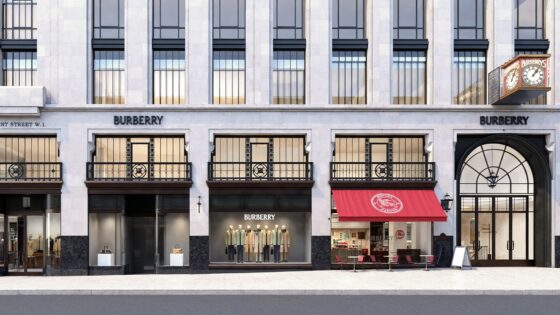
- 2012: Burberry opens its flagship at 121 Regent Street, introducing the "Burberry World Live" concept, which utilized advanced technology to merge digital content with physical architecture.
- 2018–2020: The store served as a primary testing ground for limited-edition "B Series" drops, which popularized the scarcity-driven retail model within the luxury space.
- 2023: Following the appointment of Daniel Lee as Chief Creative Officer, the store underwent a subtle interior redesign to reflect the brand’s new visual identity, focusing on a more rugged, British-inspired aesthetic.
- October 2026: The official announcement of the "Burberry House" concept signifies the final stage of this transition, moving away from the retail-centric model toward a hybrid destination.
Market Data and the Shift to Experiential Luxury
Industry data suggests that the "Burberry House" concept is a calculated response to shifting consumer behavior. According to recent reports from the luxury retail consultancy space, physical stores that offer hospitality and cultural experiences see an average increase in dwell time of approximately 40% compared to traditional retail-only formats.
Furthermore, the luxury market has faced headwinds in 2026, with global demand softening in key regions such as Asia and parts of North America. In this environment, brands are increasingly looking to their flagship stores to perform as "brand museums" rather than just distribution centers. By converting the Regent Street space into a cultural hub, Burberry is positioning itself to capture high-net-worth individuals who prioritize exclusivity and experience over transactional efficiency.
Market analysts at firms such as Bain & Company have noted that the "total luxury experience"—which includes dining, exhibitions, and personalized concierge services—is becoming a non-negotiable requirement for heritage brands seeking to maintain their premium status. With this transformation, Burberry is effectively following the lead of competitors who have successfully launched branded cafes, restaurants, and art galleries to maintain consumer engagement during market volatility.
Industry Perspectives and Official Commentary
While the company has been measured in its public statements, the move has been welcomed by retail analysts as a necessary evolution. Industry experts suggest that the "House" model allows Burberry to leverage its historical archives—a deep repository of trench coat evolution and British craftsmanship—to educate younger consumers, thereby justifying higher price points and fostering long-term brand loyalty.
"The transformation of the Regent Street location is a clear signal that Burberry is no longer content with being a product manufacturer," says an independent retail consultant familiar with the project. "They are curating an identity. By integrating hospitality and culture, they are moving into the realm of a ‘lifestyle gatekeeper.’ This creates a barrier to entry that pure-play e-commerce brands simply cannot replicate."
Internally, the project is seen as a synthesis of the brand’s past and future. By anchoring the customer journey in a physical environment that highlights the brand’s provenance, the company hopes to insulate itself from the price-sensitivity currently plaguing the entry-level luxury market.
Implications for the Luxury Retail Landscape
The implications of the Burberry House concept are significant, both for the brand’s bottom line and for the wider retail real estate market in London.
- Real Estate Value: By creating a destination, Burberry ensures that its flagship remains a "must-visit" location, potentially driving foot traffic that benefits the wider Regent Street ecosystem. This serves as a hedge against the decline of traditional department store models.
- Brand Equity: The shift toward a "House" model allows for more flexible storytelling. It allows the brand to host exclusive events, art installations, and curated dining experiences that reinforce the "Britishness" of the label, which has been a core component of its marketing strategy since its inception in 1856.
- Customer Retention: In an era of digital noise, physical hospitality provides a tactile connection that is increasingly rare. If successful, this model could be rolled out to other global flagships in Paris, Milan, and New York, creating a network of "Burberry Houses" that serve as exclusive clubs for the brand’s top-tier clientele.
Future Outlook
As Burberry moves forward with the renovation, the retail industry will be watching closely to see how effectively the company can balance its traditional commercial interests with its new cultural objectives. The success of the project will likely be measured not just by quarterly sales, but by engagement metrics, social media reach, and the ability of the flagship to serve as an anchor for the brand’s global marketing campaigns.
The transformation is expected to be completed in phases over the coming eighteen months, with the company promising that the "Burberry House" will eventually offer a full suite of services, including private shopping suites, rotating exhibitions from the brand’s extensive archive, and a curated dining experience that draws on traditional British culinary heritage.
In conclusion, the reimagining of the Regent Street flagship is a definitive step in Burberry’s attempt to redefine itself for the latter half of the 2020s. It acknowledges the limitations of conventional luxury retail and embraces a future where the store is not merely a place to buy a garment, but a place to inhabit the brand’s values. Whether this "House" can serve as the catalyst for a broader financial recovery for the house of Burberry remains to be seen, but the intent is clear: to prioritize long-term brand equity over short-term retail volume.