










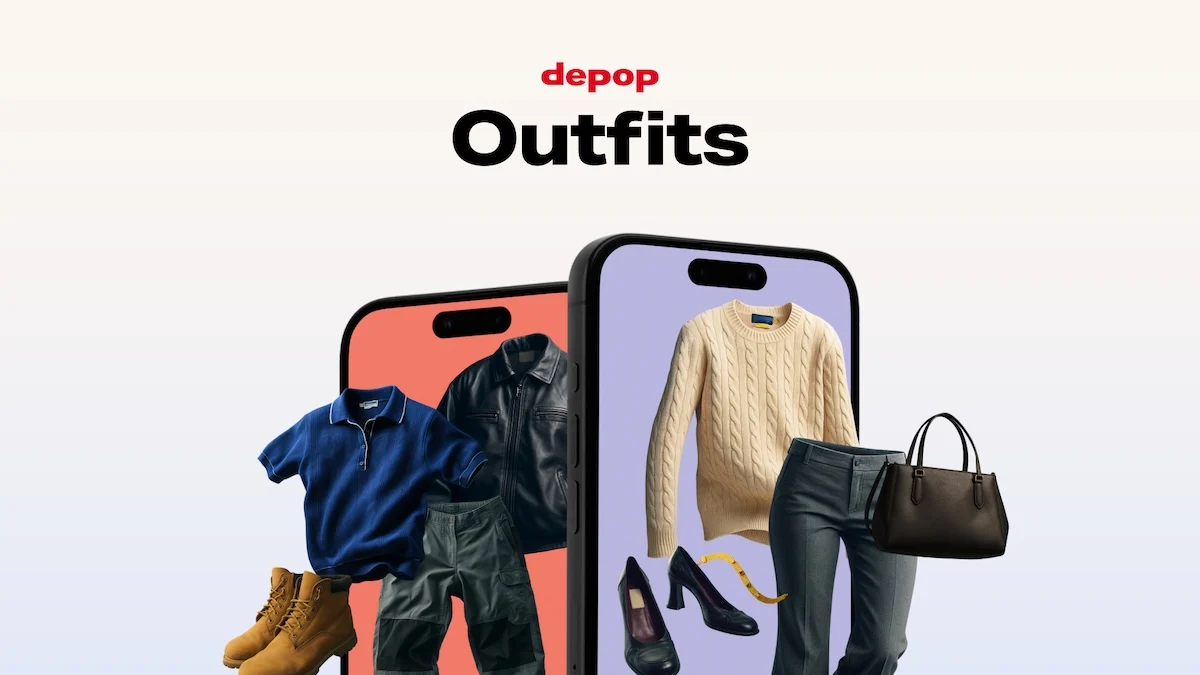
Fashion resale marketplace Depop has officially rolled out a dynamic new creative feature aimed at bridging the gap between social media content creation and e-commerce. Dubbed “Outfits,” the newly launched tool provides a mood-board-like interface within the application, enabling users and sellers to design, curate, and share comprehensive fashion looks. The feature arrives at a time of remarkable financial growth for the platform, offering a strategic push to capture the attention of digital-native Gen Z consumers who view styling as an extension of their personal identity.
Mechanics of the Outfits Tool
The Outfits feature has been engineered to integrate seamlessly into the existing browsing and selling experience on the Depop application. To initiate a collage, a user selects any individual listing they wish to style and activates the tool by clicking a dedicated scissors icon located on the right side of the screen. This action opens a versatile editing suite equipped with customizable templates designed to act as layout guides.
Within this interface, creators can experiment with colorful backdrops, as well as precise adjustments to the sizing, rotation, and placement of multiple garment and accessory images. The result is a cohesive, editorial-style mood board that can serve either as artistic inspiration for followers or as a promotional asset for sellers looking to move inventory.
Crucially, the feature is anchored directly in commerce. Every individual item featured within a user-generated collage is fully shoppable. If a specific component of an outfit sells out or is no longer available on the platform, Depop’s algorithmic backend automatically steps in to offer users direct suggestions for similar alternative items currently listed by other sellers. This ensures that the aesthetic inspiration generated by the tool continuously funnels back into transactional opportunities across the marketplace.
Bridging Social Media Culture and Marketplace Dynamics
For independent sellers operating on Depop, the Outfits tool represents an elevated merchandising capability. Traditionally, secondhand sellers have relied on flat-lay photography, hanger shots, or modeled photos to showcase individual garments. By introducing a digital collage format, sellers can now present a holistic vision—pairing a vintage leather jacket with specific trousers, boots, and accessories—thereby helping potential buyers visualize how disparate pieces can be integrated into a complete wardrobe.
Furthermore, Depop has designed the feature with cross-platform distribution in mind. Users are not restricted to keeping their creations within the ecosystem of the application; they can easily export and share static images of their curated outfits across external social media networks, most notably Instagram and Pinterest.
This strategic emphasis on visual mood boards taps into a broader cultural shift among younger consumers. Digital collaging has experienced a massive resurgence in popularity, largely driven by Gen Z’s fascination with aesthetics, digital scrapbooking, and micro-trends. Industry competitors have successfully courted this demographic through similar avenues. Most notably, Pinterest launched its dedicated collage-making application, Shuffles, in 2022, eventually integrating the popular functionality directly into its core platform to satisfy rising demand for interactive, visual-first content. By introducing Outfits, Depop is positioning itself at the intersection of social networking and resale, acknowledging that modern fashion discovery is inherently collaborative and visual.
Financial Momentum and Upward Trajectory
The rollout of the Outfits feature does not occur in a vacuum; it follows a period of exceptional financial and operational expansion for the London-headquartered marketplace. Depop, which was acquired by e-commerce giant Etsy in July 2021 for $1.62 billion, has increasingly become a standout performer within Etsy’s portfolio of specialized brands.
According to Etsy’s Q2 2025 financial disclosures, Depop demonstrated staggering momentum, with its Gross Merchandise Sales (GMS) surging by 34.7% year-over-year on a currency-neutral basis. This robust growth trajectory places the platform firmly on a path toward a $1 billion annual GMS run rate.

To contextualize this performance within the broader global resale landscape, rival platforms are navigating a fiercely competitive macroeconomic environment. For instance, Japanese e-commerce titan Mercari reported a Gross Merchandise Value (GMV) of $728 million for the final quarter of 2024. Depop’s ability to accelerate its growth rate underscores the enduring appeal of recommerce, particularly among younger demographics motivated by both economic considerations and sustainability concerns.
Background and Evolution of Depop
Founded in Milan in 2011 by Simon Beckerman before relocating its headquarters to London, Depop was built from the ground up to mimic the look and feel of a social media feed rather than a traditional, sterile e-commerce catalog. Users could follow favorite curators, like items, leave comments, and curate digital storefronts that reflected their personal aesthetic tastes.
Over the years, the platform evolved from a niche European app into a global cultural phenomenon, capturing a dominant share of the secondhand apparel market in the United Kingdom and making significant inroads into the United States. The platform’s community-driven ethos made it a natural home for vintage dealers, upcyclers, streetwear enthusiasts, and independent designers.
Following its acquisition by Etsy, Depop retained its distinct brand identity and leadership structure while gaining access to Etsy’s vast technological infrastructure, trust and safety frameworks, and marketing resources. Management credits much of the platform’s recent acceleration to targeted product enhancements designed to improve searchability, buyer trust, and seller productivity. The introduction of the Outfits feature is the latest iteration of this product strategy, merging the app’s foundational social DNA with advanced merchandising tools.
Broader Implications for the Recommerce Sector
The intersection of fashion resale and social curation is reshaping how digital marketplaces retain user attention. As online retail becomes increasingly saturated, platforms can no longer rely solely on transactional efficiency; they must provide engaging experiences that keep users returning even when they are not actively looking to make a purchase.
By empowering users to act as virtual stylists, Depop is gamifying the shopping experience. Users who might log onto the app simply to browse or seek inspiration can now spend time constructing, refining, and sharing outfits. This increases "dwell time"—the duration users spend actively engaged with the app—which historically correlates with higher conversion rates and stronger platform loyalty.
Moreover, the Outfits feature aligns with broader sustainability goals within the fashion industry. By demonstrating how vintage and secondhand pieces can be styled into contemporary looks, the platform encourages circular fashion consumption. Consumers are nudged away from fast-fashion purchases and toward creative remixing of existing garments already in circulation.
Future Outlook and Availability
Depop has confirmed that the Outfits feature is fully operational and currently accessible to all users globally within the standard iOS and Android applications. As the platform moves deeper into the second half of the year, industry analysts will be watching closely to see how adoption rates among sellers translate into average order values and overall marketplace liquidity.
With its parent company Etsy continuing to prioritize strategic investments in high-growth subsidiaries, Depop’s leadership team appears well-positioned to capitalize on the booming recommerce market. Whether the Outfits tool will spark a new wave of viral fashion micro-trends across Instagram and Pinterest remains to be seen, but the strategic intent is clear: Depop is cementing its status not just as a place to buy and sell pre-loved clothing, but as the premier digital playground for modern fashion culture.