








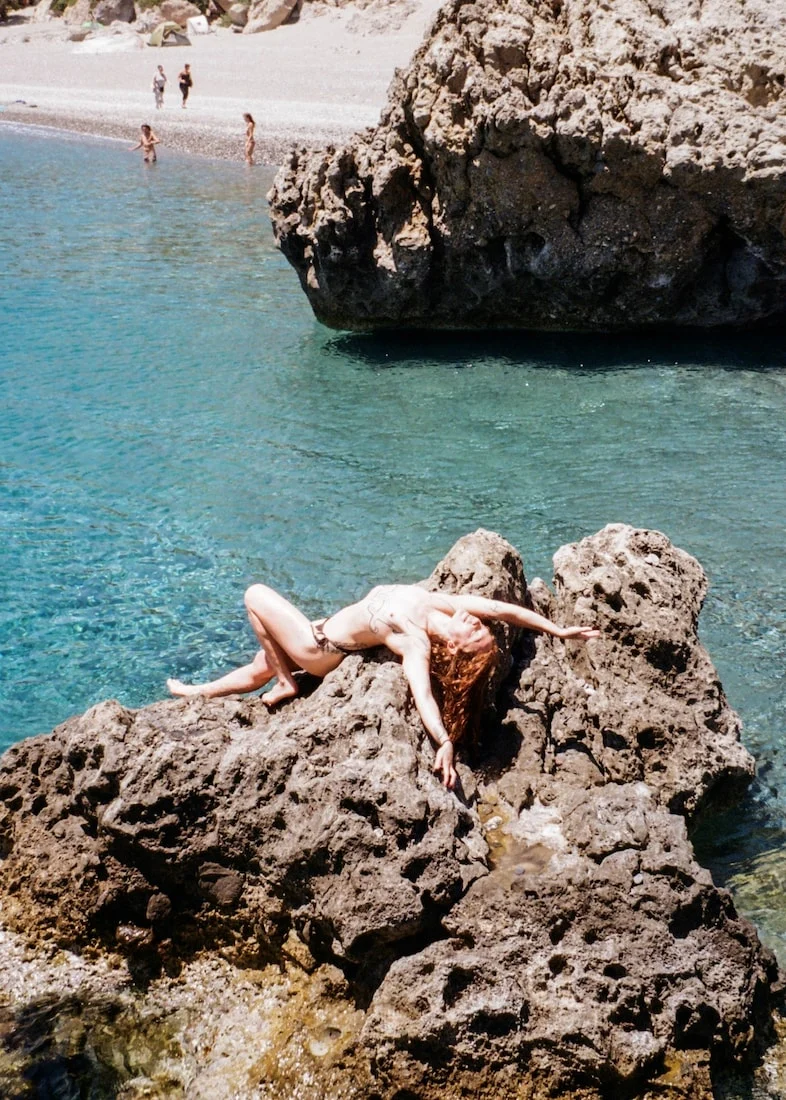
Last summer, an accidental visit to a naturist resort outside the M25 revealed a surprising counter-narrative to the pervasive self-image crisis plaguing contemporary society. What began as an unexpected encounter with social nudity quickly evolved into an observation of a community seemingly immune to the widespread epidemic of body dissatisfaction. This experience, marked by the need to master the art of holding eye contact with individuals whose bodies were unadorned and unapologetically present, underscored a profound insight: naturism, defined as non-sexual social nudity in private and public settings, could offer a potent antidote to a culture obsessed with curated appearances and physical perfection.
Residents of the resort articulated how shedding clothes transcended a mere physical act, becoming a liberating alternative to the relentless pressure to primp, preen, or internalize self-hatred. In this environment, stretch marks, surgical scars, and body hair were not blemishes to conceal but natural facets of the human form, presented without shame or judgment. The collective realization was that many insecurities are, in essence, mental constructs enforced by a pervasive patriarchal, capitalist, and often exploitative beauty industry. While the global demographic for naturism has historically skewed towards older individuals, often of state pension-receiving age, the radical simplicity of their lifestyle prompted a critical question: is this philosophy resonating with younger generations, and could it be a potential remedy for the collective chronic insecurity of the digital age? The increasing visibility of events like "Nature Loves Courage 2025," spearheaded by figures such as Dani d’Ingeo, suggests a growing recognition of the therapeutic power of naturism and its potential for broader societal impact.
The Resurgence of Naturism: A Historical and Modern Perspective
Naturism, often misunderstood and laden with societal stigmas, is not a recent phenomenon. Its roots trace back to the late 19th and early 20th centuries in Europe, particularly Germany and France, where it emerged as part of broader "life reform" movements advocating for healthier, more natural lifestyles. Pioneers of naturism promoted outdoor living, vegetarianism, and physical culture, seeing nudity as a means to connect with nature, foster physical and mental well-being, and cultivate a sense of community. The core tenets have always emphasized non-sexual social nudity, body acceptance, and environmental harmony. Over the decades, naturist communities and resorts have flourished globally, offering havens for those seeking refuge from conventional societal pressures.
However, the prevailing image of naturism has often been confined to an older, predominantly white demographic, leading to widespread misconceptions about its relevance in modern times. This perception is slowly but demonstrably shifting. The digital era, paradoxically, has amplified both body image anxieties and the search for authentic self-expression. Young people, often at the forefront of cultural shifts, are now exploring naturism as a radical act of self-acceptance and defiance against the highly curated and often unrealistic standards propagated online. This burgeoning interest among Gen Z marks a significant evolution in the movement, challenging stereotypes and broadening its appeal.
Gen Z’s Embrace: Voices of a New Generation
The notion that naturism is solely a pursuit for older generations is being actively dismantled by a wave of young adherents. Twenty-year-old Chris*, who began his journey into naturism during the pandemic, initially harbored similar preconceptions. "I initially thought nudism was just a thing that old white people did," he recounts. His experience, however, quickly disabused him of this stereotype. "Now I’ve found that it knows no boundaries." Chris highlights a key benefit: "All expectations seem to go out the door once the clothes come off; no need to worry about any superficial details." This sentiment resonates deeply with a generation constantly bombarded by images of unattainable perfection.
Leah, 21, views her experimentation with naturism as a form of "exposure therapy" in her ongoing battle with insecurities. "It’s the most extreme form of self-acceptance, like shaving your head," she tells Dazed, emphasizing the profound psychological impact. Her journey began with visits to nude beaches during holidays, gradually evolving into spending significant time naked at home. "There’s nothing to hide behind. No ‘flattering’ clothes, make-up or photo editing. It’s just you, which is scary at first but then so liberating." This stripping away of external artifices forces an encounter with the authentic self, fostering a level of acceptance often elusive in a superficial world.
Hugo*, 24, from a conservative region of Italy, vividly recalls the pervasive cultural fear surrounding naturism. "I thought that people who practised nudism were almost disgusting and that nudist beaches were full of old, perverted people. Ending up in one of them by accident was a real fear we all had," he admits. His personal experience, however, shattered these deeply ingrained prejudices. Now, he regularly frequents local nude beaches and naturist campsites. "I was surprised to realise how much nudity was treated in the most non-sexual way possible. I could easily talk with a stranger without paying attention to the fact that we were both naked, and it took no effort at all." This testimony underscores the non-sexual nature of naturism, a fundamental principle often obscured by societal misinterpretations.
Leo*, 29, whose interest was sparked by college skinny-dipping, didn’t fully grasp the extent of his "body shame" until his first full immersion into naturism. He now practices mainly at nude beaches and sunny resorts in his home state of Florida. "When your entire body is exposed, including the parts you’re insecure about, and no one seems to care or judge you, it’s really therapeutic. You see a full spectrum of bodies and realise that your body is part of that spectrum." This observation is crucial, as it highlights the normalizing effect of diverse bodies, directly countering the narrow, idealized portrayals prevalent in media.
Similarly, Ryan, 24, once believed that only "super attractive" individuals could confidently be nude in public. "But since visiting a nudist beach myself, I’ve realised it’s quite the opposite," he states. "Everyone there was of different shapes and sizes, and there was absolutely no judgment at all. People were simply there to enjoy the freedom." Ryan’s personal transformation is particularly poignant: "In all honesty, I used to hate how I looked. I was overweight and insecure. Since discovering naturism, I realise that everyone has a body, and that you should genuinely appreciate your own and take care of it." These narratives collectively paint a picture of naturism as a powerful tool for personal growth, self-acceptance, and liberation from societal pressures.
The Psychological Imperative: Body Image and Mental Wellness in the Digital Age
The link between body image and mental health is well-established and increasingly critical in today’s digital landscape. Dissatisfaction with one’s body is robustly correlated with poorer quality of life, heightened psychological distress, and unhealthy eating behaviors. A 2022 report by the Mental Health Foundation found that one in five UK adults felt shame about their body, and 19% felt disgusted. Among teenagers, these figures are often higher, with social media cited as a primary driver of comparison and insecurity.
Dr. David Crepaz-Keay, public mental health information lead at the Mental Health Foundation, offers an expert perspective on the potential benefits of naturism. He notes that "there is emerging evidence that naturism is associated with more positive body image, higher self-esteem and, therefore, greater life satisfaction." He further explains, "Exposure to diverse, non-idealised bodies may help reduce social physique anxiety and improve body appreciation, and early studies suggest these benefits can reflect real change over time." While Dr. Crepaz-Keay prudently cautions that the evidence is still limited and further research is needed, his observations provide a credible scientific foundation for the anecdotal experiences of young naturists.
The mechanism behind these benefits appears to be multi-faceted. By consistently exposing oneself to a range of natural, unfiltered bodies, individuals gradually desensitize themselves to the unrealistic beauty standards perpetuated by mainstream media and social platforms. This repeated exposure challenges cognitive distortions related to one’s own body, fostering a more realistic and compassionate self-perception. The communal aspect of naturism also plays a vital role, creating a supportive environment where vulnerability is normalized, and judgment is actively discouraged. In such spaces, the focus shifts from physical appearance to shared human experience, fostering a sense of belonging and reducing social anxiety.
Beyond Consumerism: A Radical Rejection of Societal Pressures
In an era where personal value is often inextricably linked to consumer choices and adherence to manufactured ideals, the simple act of getting naked can be seen as an almost anarchic rejection of capitalist society. The beauty industry, a multi-billion-dollar enterprise, thrives on cultivating insecurity, constantly marketing new products and procedures designed to "fix" perceived flaws. Terms like "mogging" (the act of looking superior to someone else) and "mewing" (a supposed technique to redefine jawlines) gain traction, fueled by post-incel streamers and millionaire plastic surgeons who capitalize on widespread self-doubt.
Nudity strips away this commercial veneer, eschewing the constant marketing noise that dictates how bodies "should" look and what must be purchased to achieve that ideal. It represents a potent counter-cultural statement, advocating for inherent self-worth independent of external validation or material acquisition. For those who grew up immersed in social media, where curated feeds present an endless stream of airbrushed and filtered perfection, naturism offers a profound opportunity to face and untangle a deeply embedded dislike of themselves. It forces an confrontation with the authentic body, free from the digital manipulations that often create a chasm between self-perception and reality. This radical honesty can be immensely powerful in reclaiming agency over one’s self-image.
Reconnecting with Nature and Self: A Core Ethos
One of naturism’s foundational ethos is to forge a deeper connection with nature, an increasingly enticing feature in a world grappling with digital overload and a collective yearning to "touch more grass." While other wellness trends like saunas and winter bathing offer similar benefits and have been enthusiastically adopted by the wellness industry and urban professionals, naturism stands apart. It is inherently difficult to monetize, making it less susceptible to commodification and trend cycles. To participate, one quite literally needs nothing, making it an accessible and unpretentious pathway to well-being.
This connection extends beyond the physical environment, fostering a reconnection with one’s own natural state. Modern life often alienates individuals from their basic instincts, constantly pushing them towards artificial constructs of beauty and success. Naturism encourages a return to a more primal, unadorned existence, where the body is viewed not as an object to be molded or perfected to appease others, but as a dynamic vessel through which to experience and enjoy the world. This philosophy underscores a fundamental shift from external validation to internal appreciation, fostering a sustainable sense of self-worth.
Challenges and the Path Forward
Despite its growing appeal among younger demographics and its clear mental health benefits, naturism still faces significant challenges, primarily rooted in enduring societal stigma and widespread misconceptions. The persistent association of nudity with sexuality, even in non-sexual contexts, remains a major barrier to broader acceptance and participation. Fear of judgment, ridicule, or misinterpretation prevents many from exploring its potential benefits.
However, initiatives like "Dani d’Ingeo, Nature Loves Courage 2025" signify a concerted effort to destigmatize naturism and highlight its positive contributions to mental health and body positivity. By framing it as an act of courage and self-love, such events aim to re-educate the public and create more inclusive spaces. As discussions around mental health, body image, and the pressures of digital life continue to intensify, the non-commercial, inherently liberating philosophy of naturism offers a compelling alternative. Its potential to foster genuine self-acceptance, reduce social physique anxiety, and deepen connection with both self and nature makes it a powerful, albeit unconventional, tool for navigating the complexities of modern existence. As more young people discover and embrace its tenets, naturism may well move from the fringes to a recognized pathway for holistic well-being, proving that sometimes, the most radical act of self-care is simply to be yourself, completely unadorned.
*Name changed for privacy.