







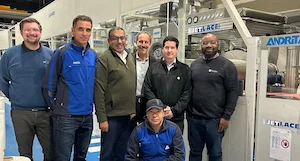
In a landmark move for the North American textile and paper industries, the international technology group ANDRITZ has announced the receipt of a significant order from the newly established Kruger Nonwovens. This agreement entails the delivery of a complete Wetlace™ hybrid production line to be installed at the historic Wayagamack mill in Trois-Rivières, Quebec, Canada. This strategic investment marks the official entry of Kruger Inc., a long-standing titan in the pulp and paper sector, into the rapidly expanding nonwovens market. The project is centered on the production of a new generation of plastic-free and chemical-free materials specifically engineered for the sustainable wipes market.
The collaboration represents a significant technological milestone for Canada, as the installation will be the first of its kind in the country. By leveraging ANDRITZ’s proprietary Wetlace™ technology, Kruger Nonwovens aims to address the growing global demand for environmentally responsible consumer products. The line is scheduled to commence commercial production in 2028, positioning Kruger as a frontrunner in the transition toward biodegradable and sustainable personal care solutions.
Strategic Diversification and the Wayagamack Mill
Kruger Inc., founded in Montreal in 1904, has spent over a century establishing itself as a diversified leader in the manufacturing of tissue products, recycled containerboard, corrugated packaging, and renewable energy. With a workforce of 6,000 employees and operations spanning across Quebec, Ontario, British Columbia, Newfoundland and Labrador, and several U.S. states, the company has a deep-rooted history of industrial excellence.
The decision to install the new nonwovens line at the Wayagamack mill is particularly symbolic. Located in Trois-Rivières, the mill has been a cornerstone of the regional economy for decades. By integrating cutting-edge nonwovens technology into this facility, Kruger is not only diversifying its product portfolio but also ensuring the long-term viability and modernization of its existing industrial infrastructure. This move aligns with the company’s broader mission to transform renewable resources into high-quality essentials while adhering to rigorous sustainability standards.
The financial specifics of the order remain confidential, per the agreement between the two parties. However, ANDRITZ has confirmed that the value will be accounted for in its order intake for the second quarter of 2026. This investment highlights a significant capital commitment from Kruger, reflecting confidence in the long-term growth of the sustainable wipes sector.
Technical Specifications of the Wetlace™ Hybrid Line
The ANDRITZ Wetlace™ hybrid technology is a sophisticated manufacturing process that combines wetlaid and hydroentanglement technologies. This hybrid approach is specifically designed for the production of high-quality nonwovens using natural fibers, such as wood pulp, viscose, and lyocell, without the need for chemical binders or synthetic plastics.
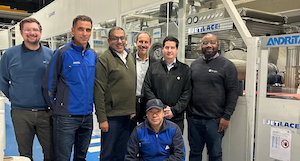
The comprehensive scope of supply from ANDRITZ for the Wayagamack mill includes:
- Stock Preparation and Approach Flow: Systems designed to handle and refine raw fibers to ensure optimal consistency for the production process.
- Inclined Wire Former: A critical component that allows for the efficient formation of a web from a liquid suspension of fibers, a technique borrowed and adapted from advanced papermaking.
- Hydroentanglement System with Filtration: This stage uses high-pressure water jets to mechanically entangle the fibers, providing the material with strength and texture without the use of adhesives.
- Through-Air Dryers (TAD): Two high-efficiency dryers that use hot air to bond and dry the web, ensuring the final product maintains bulk and absorbency.
- Quality Control System (QCS): Integrated sensors and software to monitor the production in real-time, ensuring every roll meets strict industry standards.
- Full Engineering and Supervision: ANDRITZ will provide end-to-end engineering support, supervising the physical erection of the line and the subsequent commissioning phase.
Beyond the hardware, ANDRITZ is committed to a robust knowledge transfer program. This includes targeted operator training sessions conducted both during the start-up phase in Quebec and at ANDRITZ’s specialized technical centers in Europe. This ensures that the Kruger Nonwovens team is fully equipped to maximize the efficiency and output of the new line from day one.
Addressing the Global Demand for Sustainable Wipes
The timing of this investment coincides with a massive shift in consumer behavior and regulatory landscapes regarding single-use plastics. In recent years, the "flushable" and "biodegradable" wipes market has come under intense scrutiny. Traditional wipes often contain polyester or polypropylene fibers, which contribute to microplastic pollution and create significant issues in municipal wastewater systems—often referred to as "fatbergs."
Legislative actions, such as the European Union’s Single-Use Plastics Directive (SUPD), have set a global precedent by requiring clear labeling and encouraging the development of plastic-free alternatives. While North American regulations are still evolving, consumer demand in Canada and the United States has already pivoted sharply toward "green" labels.
The ANDRITZ Wetlace™ technology is uniquely positioned to meet these demands. Because the process uses mechanical entanglement rather than chemical resins to hold fibers together, the resulting wipes are fully biodegradable and compostable. Furthermore, the hybrid nature of the line allows for the production of "flushable" wipes that meet the rigorous industry standards for dispersibility, meaning they break down quickly in sewer systems, unlike their synthetic counterparts.
Leadership Perspectives and Operational Excellence
The partnership between Kruger and ANDRITZ is the result of extensive research and development trials. Before finalizing the order, teams from both companies conducted successful pilot runs at ANDRITZ’s technical facility in France. These trials were crucial in proving that the specific fiber blends envisioned by Kruger could be processed into high-performance materials that meet consumer expectations for strength, softness, and absorbency.
Mansoor Parvaiz, Senior Vice President and Chief Operating Officer of Kruger Nonwovens, emphasized the strategic importance of this partnership. "At Kruger Nonwovens, we are deeply committed to operational excellence, sustainable development, and the responsible use of resources. This investment clearly reflects our commitment," Parvaiz stated. He further noted that ANDRITZ’s track record as a reliable partner was a deciding factor in the selection process, providing Kruger with the confidence necessary to venture into a new market segment.

For ANDRITZ, this order reinforces its position as a global leader in the nonwovens machinery market. The Graz-based technology group has been at the forefront of developing "green" technologies for the textile industry, and the Quebec project serves as a flagship installation for their Wetlace™ brand in North America.
Chronology of the Project and Implementation Timeline
The journey toward the 2028 production start follows a structured timeline designed to ensure industrial precision:
- Pre-Project Phase (2024–2025): Initial feasibility studies and pilot trials at ANDRITZ’s French technical center to refine the product specifications and fiber blends.
- Contractual Agreement (May 2026): Official signing of the order and inclusion in ANDRITZ’s Q2 financial reporting.
- Engineering and Manufacturing (2026–2027): ANDRITZ begins the custom engineering and fabrication of the line components in Europe and other specialized facilities.
- Site Preparation (2027): Kruger Nonwovens prepares the Wayagamack mill infrastructure in Trois-Rivières to receive the massive machinery.
- Installation and Commissioning (Late 2027 – Early 2028): Physical assembly of the line under ANDRITZ supervision, followed by rigorous testing and calibration.
- Commercial Launch (2028): Commencement of full-scale production and entry into the North American retail and industrial wipes markets.
Broader Economic and Industrial Implications
The establishment of Kruger Nonwovens and the subsequent investment in the Wayagamack mill are expected to have a ripple effect across the Quebec economy. As a major provider of pulp, Kruger is vertically integrated, meaning the new nonwovens line can potentially utilize fibers produced within the company’s own supply chain. This vertical integration reduces transportation emissions and enhances the overall sustainability profile of the final product.
Furthermore, the project supports Quebec’s "Green Economy" initiatives. By focusing on plastic-free alternatives, Kruger is aligning itself with provincial and federal goals to reduce plastic waste and promote the bio-economy. The project is also expected to create specialized technical jobs in Trois-Rivières, ranging from high-tech machinery operators to quality control scientists and logistics experts.
Industry analysts suggest that this move could trigger further investments in sustainable textile technologies across North America. As Kruger demonstrates the viability of large-scale, plastic-free nonwoven production, other legacy paper manufacturers may look to similar hybrid technologies to pivot away from declining traditional paper markets—such as newsprint—and toward high-growth hygiene and medical sectors.
In conclusion, the partnership between ANDRITZ and Kruger Nonwovens represents a forward-thinking response to the dual challenges of industrial modernization and environmental stewardship. When the Wayagamack mill begins its new chapter in 2028, it will stand as a testament to the possibility of reconciling large-scale manufacturing with the urgent need for sustainable, plastic-free consumer solutions.