










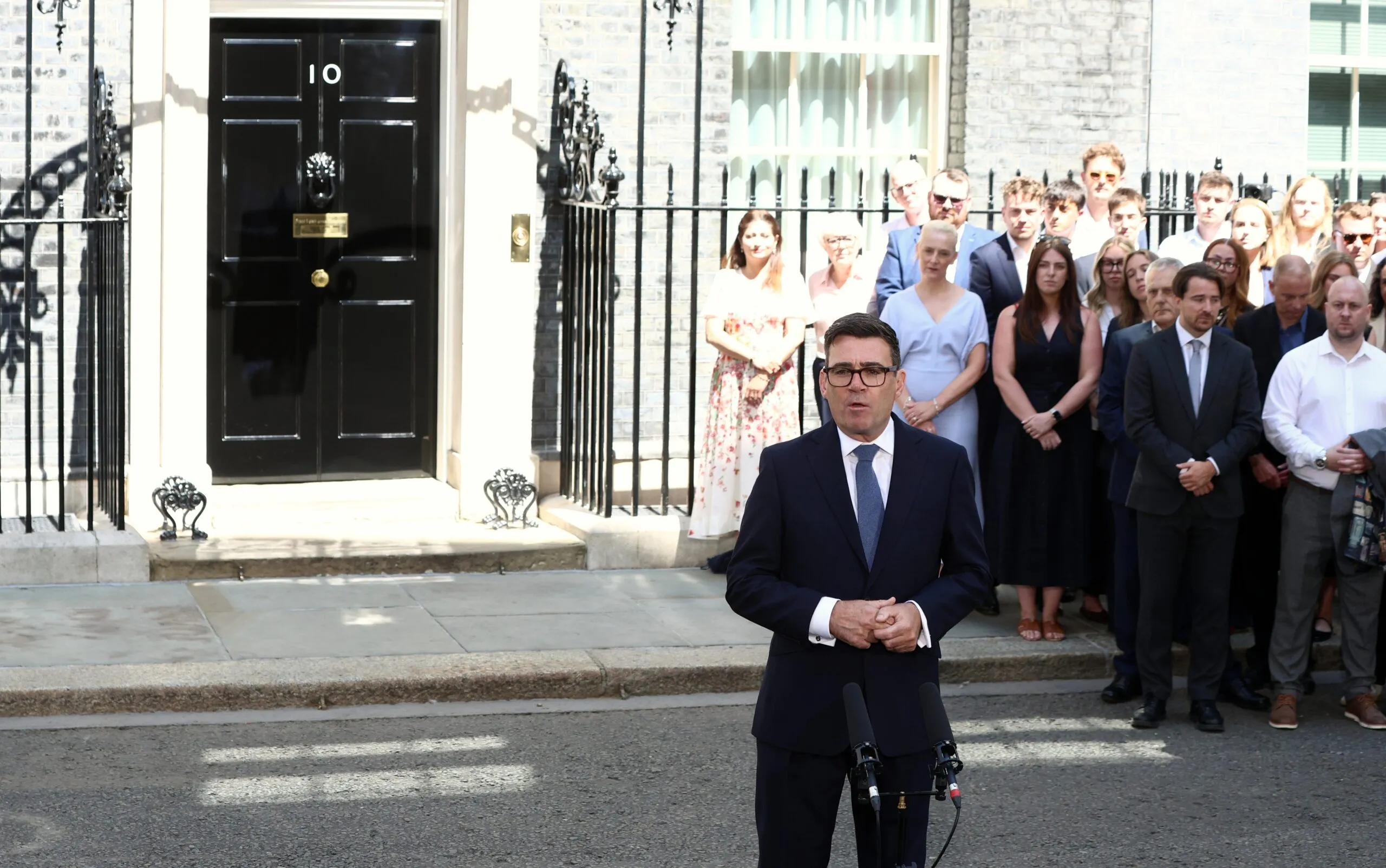
The United Kingdom’s retail sector experienced a meaningful uptick in August 2026, with official data from the Office for National Statistics (ONS) revealing a 0.5% growth in sales volumes. This performance serves as a critical indicator of economic health following a volatile summer characterized by unpredictable weather patterns and a shifting political landscape. Market analysts and retail experts have increasingly pointed toward a phenomenon dubbed the “Burnham bounce,” a term reflecting the potential impact of renewed consumer optimism following the first full month of Prime Minister Andy Burnham’s administration.
The Statistical Breakdown of August Performance
The 0.5% increase in August sales volumes provides a welcome relief to a retail industry that has navigated significant fluctuations throughout the year. This growth follows a 0.5% contraction in July, which had prompted concerns regarding a potential mid-summer slump in household spending. However, the rebound in August effectively offset those losses, building on a modest 0.6% gain observed in June.
The recovery was broad-based, with several key sectors leading the charge. Department stores saw a notable resurgence, reporting a 1.8% increase in sales. This is particularly significant given that these retailers struggled in July due to supply chain constraints and stock availability issues. With inventory levels stabilizing, consumers returned to physical stores to capitalize on late-summer inventory.
Non-store retailing, which includes online platforms and mail-order services, also saw robust growth, rising by 1.7%. Furthermore, the fashion industry enjoyed a successful month, with clothing and footwear sales growing by 1.1%. When aggregated, non-food store sales volumes rose by 0.6% for the month, suggesting that the “back-to-school” shopping season provided a necessary stimulus to the broader retail economy.
A Three-Month Perspective: Trends and Volatility
When viewing the data through the lens of a three-month rolling average, the picture remains one of cautious growth. Retail sales volumes rose 0.9% in the period from June to August 2026, when compared with the preceding three-month period ending in May. This suggests that while individual months have been subject to volatility, the underlying trend is one of slow, steady recovery.
Online sales have been a primary driver of this trend. Over the three-month period, digital transactions spiked by 1.9%. This growth in the e-commerce sector reflects a long-term shift in consumer habits that persists despite the reopening of physical retail environments. Compared to August 2025, online sales were up by a significant 8.9%, indicating that the digital channel has become an increasingly entrenched component of the British retail landscape.
Chronology of a Turbulent Summer
The trajectory of retail sales in 2026 has been inextricably linked to external factors, most notably the weather and the political transition.
- June 2026: Warm weather acted as an initial catalyst for growth. Increased demand for seasonal goods—specifically sports merchandise and summer clothing—helped drive a 0.6% rise in retail volumes.
- July 2026: The momentum stalled as the retail sector faced a 0.5% contraction. Retailers reported logistical hurdles, with many department stores struggling to maintain adequate stock levels, which dampened consumer enthusiasm.
- August 2026: The “Burnham bounce” began to take shape. As the new government settled into office, consumer sentiment appeared to shift. This, combined with the return of school-related spending and improved stock availability, fueled the 0.5% recovery.
The “Burnham Bounce”: Sentiment vs. Reality
The term “Burnham bounce” has entered the lexicon of financial analysts as a way to describe the potential correlation between political change and economic behavior. Erin Brookes, the European retail and consumer lead at management consultancy Alvarez & Marsal, noted that while extreme weather made the summer difficult to navigate, there is clear evidence that consumer confidence is beginning to translate into tangible spending.
“The figures suggest that an improvement in consumer sentiment is feeding through into spending, particularly after the Prime Minister’s first full month in office,” Brookes observed. This sentiment-driven spending is often characterized by a willingness to engage in discretionary purchases that consumers might otherwise defer during periods of political uncertainty.
However, economists warn against attributing the entirety of the retail growth to political factors. The “back-to-school” effect is a well-documented seasonal trend that consistently boosts sales in late August. Retailers often time their promotions and inventory replenishments to capture this specific window of demand. The fact that department stores and non-store retailers were able to capitalize on this timing suggests that operational efficiency—rather than just sentiment—played a major role in the positive August outcome.
Broader Economic Implications
The implications of the August retail data extend beyond the high street. Retail sales are a primary component of household consumption, which makes up a significant portion of the UK’s Gross Domestic Product (GDP). A sustained rise in retail volumes suggests that household budgets may be under less pressure than they were in the first half of the year, or that consumers are feeling more confident about their future financial stability.
Inflationary pressures, which have plagued the sector for the past two years, appear to be cooling, allowing for more predictable pricing strategies. However, retailers remain cautious. The unpredictability of the summer weather—ranging from unseasonable heat to sudden, intense rainfall—has made inventory planning difficult. Many retailers have had to adopt more agile supply chain models to ensure they are not left with unsold seasonal stock or empty shelves when demand peaks.
Industry Outlook for the Remainder of 2026
As the UK transitions into the autumn and winter seasons, the retail sector will face new challenges. The focus will shift from summer goods to home improvement, knitwear, and eventually, the critical Golden Quarter, which includes Black Friday and the Christmas shopping period.
Industry bodies have expressed a cautious optimism. While the 0.5% growth in August is a positive signal, it is not a guarantee of a seamless fourth quarter. The cost of labor, business rates, and energy costs remain primary concerns for large and small retailers alike. If the “Burnham bounce” is to be sustained, it will likely require the government to address these structural issues, providing the business environment with the stability necessary for long-term investment.
Furthermore, the strength of the online sector, which continues to outperform the long-term trend, suggests that the “omnichannel” approach remains the winning strategy. Retailers that can successfully integrate their digital platforms with an engaging, well-stocked physical store experience are expected to lead the market in the coming months.
Conclusion: A Foundation for Stability
The August retail sales report from the ONS provides a necessary snapshot of a sector in transition. While the “Burnham bounce” provides a compelling narrative for the recent uptick, the data confirms that a combination of improved stock management, seasonal demand, and a stabilization of consumer confidence were the actual levers behind the growth.
As the government continues to define its economic agenda, the retail sector will remain a bellwether for the success of these policies. If the current momentum is maintained, the UK economy may find itself on a firmer footing as it heads into the final quarter of the year. For now, retailers are breathing a sigh of relief, having successfully navigated a summer of extremes to emerge on a path of modest, but meaningful, growth.