











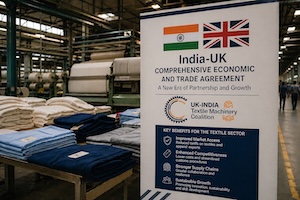
The British Textile Machinery Association (BTMA) has officially announced the formation of the UK-India Textile Machinery Coalition, a landmark initiative designed to capitalize on the evolving trade landscape between the two nations. This strategic move, spearheaded by BTMA CEO Jason Kent, follows the implementation of the UK-India Free Trade Agreement (FTA) signed in July 2025. The coalition aims to bridge the gap between British technological innovation and India’s rapidly modernizing textile manufacturing sector. As part of a broader organizational refresh, the BTMA is simultaneously rolling out a suite of domestic programs—including the Future Leaders Committee, an Industry Placement Bursary Scheme, and specialized training courses—to ensure the long-term viability and competitiveness of the United Kingdom’s textile machinery industry on both a local and global scale.
The UK-India Textile Machinery Coalition: A Strategic Gateway
The official launch of the UK-India Textile Machinery Coalition is scheduled for May 8, 2026, at the India ITME Centre in Mumbai. This location is significant, as Mumbai serves as the financial and industrial heart of India’s textile trade. The coalition is envisioned as a collaborative platform where British machinery manufacturers can engage directly with Indian textile producers, policymakers, and industry stakeholders.
According to Jason Kent, the primary driver behind this initiative is the transformative impact of the 2025 UK-India FTA. Prior to this agreement, Indian textile exports to the UK faced significant tariff barriers, often ranging between 8% and 12%. The elimination of these duties has provided Indian manufacturers with an immediate competitive advantage in the British consumer market, particularly in the segments of apparel and home textiles. In turn, this surge in demand for Indian goods has necessitated a massive technological upgrade within Indian factories to meet international quality and sustainability standards.
"The FTA is not merely about moving finished goods; it is about creating a symbiotic ecosystem for industrial growth," Kent stated. "India is currently one of the world’s most prolific textile producers, but to maintain its trajectory, it must transition from legacy systems to high-efficiency, automated, and sustainable machinery. This is where British engineering excels. By reducing tariffs and clarifying market access, the FTA allows our members to offer their world-class solutions at more competitive price points, facilitating a new era of industrial partnership."
Economic Context: The Impact of the 2025 Free Trade Agreement
The signing of the UK-India Free Trade Agreement in July 2025 marked a pivotal moment in post-Brexit British trade policy. For the textile sector, the deal was particularly consequential. India’s textile industry contributes approximately 2% to the country’s GDP and employs over 45 million people. Under the terms of the FTA, the UK committed to phasing out tariffs on 95% of Indian textile products over a short transition period, while India agreed to reciprocal reductions on high-tech machinery and specialized chemicals.
Data from the first three quarters following the FTA signing suggests a 15% increase in bilateral trade volume within the textile sector. British machinery suppliers, known for their expertise in spinning, weaving, and advanced finishing technologies, have reported a surge in inquiries from Indian conglomerates looking to establish "smart factories." The coalition will serve as the formal mechanism to manage these inquiries, providing UK firms with market intelligence, legal guidance, and networking opportunities in Mumbai and other textile hubs like Coimbatore and Ahmedabad.
Chronology of BTMA’s 2025-2026 Strategic Expansion
The launch of the UK-India Coalition is the culmination of a year-long series of strategic maneuvers by the BTMA.
- July 2025: The UK-India FTA is signed, prompting the BTMA to begin internal consultations on market entry strategies for its members.
- October 2025: The BTMA unveils its new corporate identity and logo, symbolizing a modernized approach to industry representation.
- January 2026: CEO Jason Kent initiates a series of high-level meetings with the India ITME Society and the Confederation of Indian Textile Industry (CITI) to lay the groundwork for the coalition.
- March 2026: The BTMA announces the Future Leaders Committee (FLC) to address the aging demographic within the UK manufacturing sector.
- May 1, 2026: Formal announcement of the UK-India Textile Machinery Coalition and the Mumbai launch event.
- June 2026 (Upcoming): The pilot program for the "Curious about Textiles" course is set to begin in Manchester.
- Autumn 2026 (Projected): Broad rollout of the Industry Placement Bursary Scheme and the full curriculum of the "Curious about Textiles" course.
Cultivating the Next Generation: Domestic Initiatives in the UK
While the international focus remains on the Indian market, the BTMA has recognized that domestic strength is a prerequisite for global success. To this end, the association has launched the Future Leaders Committee (FLC). This program targets mid-career professionals within member companies who have demonstrated high leadership potential.
The FLC is designed to provide these professionals with formal training in governance, strategic capability, and industry-wide advocacy. By acting as an advisory body to the main BTMA board, the FLC ensures that the organization remains attuned to fresh perspectives and the technological shifts—such as digitalization and AI integration—that younger professionals are often quicker to embrace.
Furthermore, the BTMA Industry Placement Bursary Scheme has been introduced to address the "skills gap" that has plagued the UK engineering sector for decades. The scheme provides financial support to member companies that take on student graduates and apprentices. By subsidizing these placements, the BTMA reduces the financial risk for SMEs (Small and Medium Enterprises) to invest in raw talent, thereby strengthening the future pipeline of technicians and engineers specialized in textile machinery.
Education and Onboarding: "Curious about Textiles"
To support new entrants into the industry, the BTMA has developed a short course titled "Curious about Textiles." This program serves two functions: as an intensive onboarding tool for those new to the sector and as a refresher for seasoned professionals who need to stay updated on the latest technological advancements.
The curriculum was curated directly from the collective expertise of BTMA’s membership, ensuring that the content is practical, industry-relevant, and grounded in real-world application. A two-day pilot of the course will be hosted at the BTMA headquarters in Manchester in early June 2026. Following the pilot, the course will be offered to the broader membership in the autumn, with significant subsidies from the BTMA to ensure affordability.
"We cannot focus solely on commercial transactions," Jason Kent emphasized. "The future of the industry depends on people. Whether it is a young apprentice in Manchester or a senior engineer in Mumbai, the transfer of knowledge and the development of leadership skills are what will ultimately sustain our sector."
Broader Impact and Industry Analysis
The dual strategy of the BTMA—expanding into the Indian market while fortifying the domestic workforce—reflects a sophisticated understanding of modern industrial dynamics. Analysts suggest that the UK textile machinery sector is positioning itself as a "high-value" partner rather than a "high-volume" competitor. By focusing on specialized, sustainable technologies, British firms can differentiate themselves from lower-cost competitors in East Asia.
The emphasis on sustainability is particularly relevant to the Indian market. The Indian government’s "PM MITRA" (Mega Integrated Textile Region and Apparel) parks scheme aims to create world-class industrial infrastructure. These parks are mandated to adhere to strict environmental standards, creating a natural market for British machinery that offers reduced water consumption, energy efficiency, and lower carbon footprints.
In the UK, the success of the FLC and the Bursary Scheme could serve as a blueprint for other manufacturing trade bodies. As the UK seeks to redefine its industrial identity post-Brexit, the BTMA’s proactive approach to trade agreements and workforce development offers a case study in resilience and strategic foresight.
Conclusion and Future Outlook
The launch of the UK-India Textile Machinery Coalition on May 8th marks the beginning of a new chapter in bilateral relations. For the BTMA, the coming months will be defined by the execution of its domestic educational programs and the facilitation of new trade partnerships in Mumbai.
Businesses and media representatives interested in the Mumbai launch are encouraged to coordinate with the BTMA’s administrative offices. As the industry gathers at the India ITME Centre, the focus will remain on how British innovation can fuel India’s manufacturing ambitions, creating a global textile supply chain that is more efficient, more sustainable, and more integrated than ever before. With the backing of the 2025 FTA and a renewed focus on human capital, the British textile machinery sector appears well-positioned to navigate the complexities of the mid-21st-century global economy.