








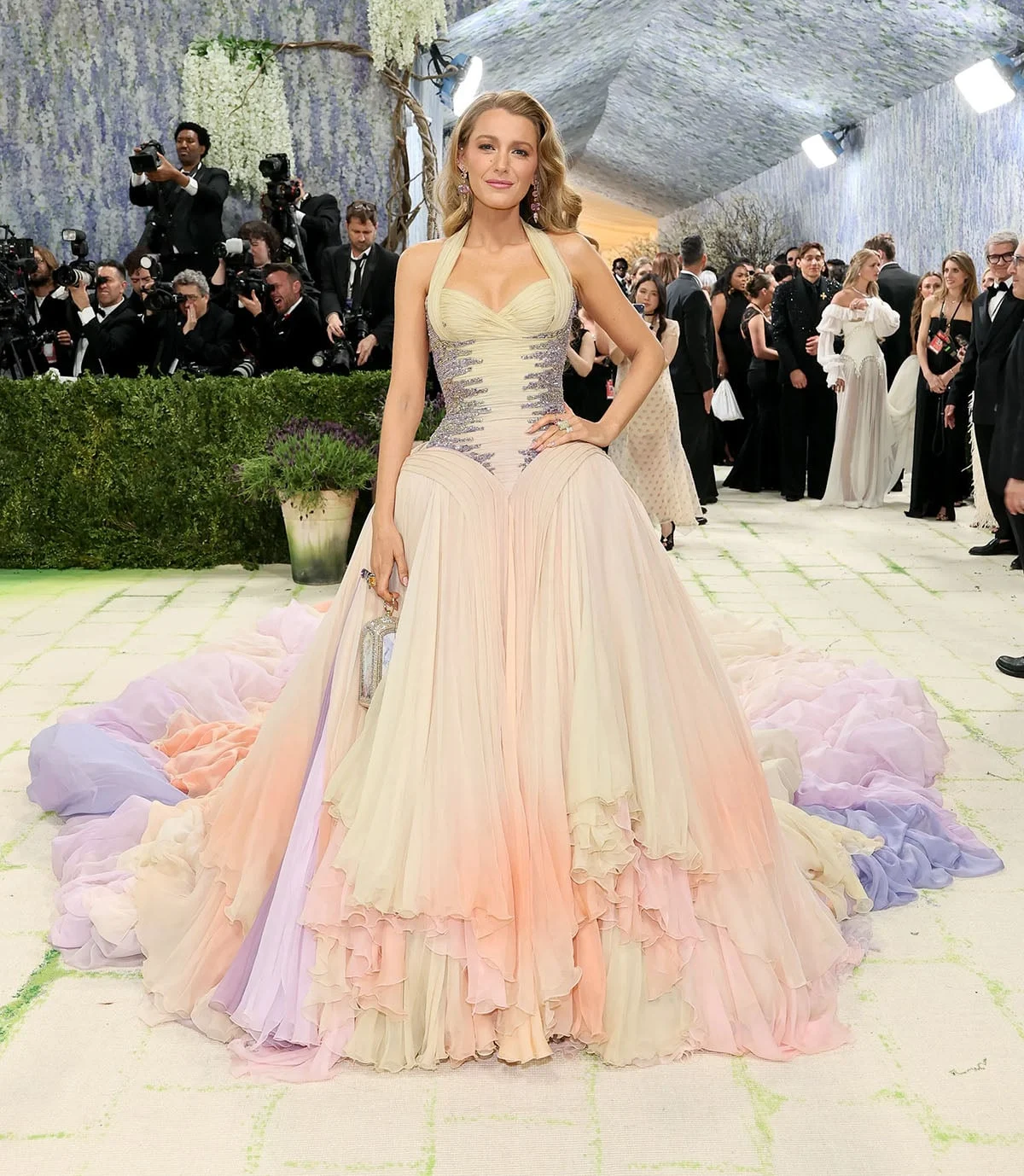
The 2026 Metropolitan Museum of Art’s Costume Institute Gala witnessed a definitive moment in red carpet history as Blake Lively made a surprise solo appearance, reaffirming her status as one of the event’s most influential figures. Arriving without her husband, Ryan Reynolds, Lively captured the attention of the global fashion community in a meticulously restored Atelier Versace gown from the Spring/Summer 2006 collection. The ensemble, which balances historical garment construction with the high-octane glamour of the early 2000s, served as a masterclass in the "fashion as art" philosophy that defines the annual benefit. As the actress ascended the iconic steps of the Met, her choice of attire signaled a sophisticated shift toward archival appreciation, blending 19th-century structural references with contemporary red-carpet sensibilities.
Technical Artistry and Architectural Inspiration
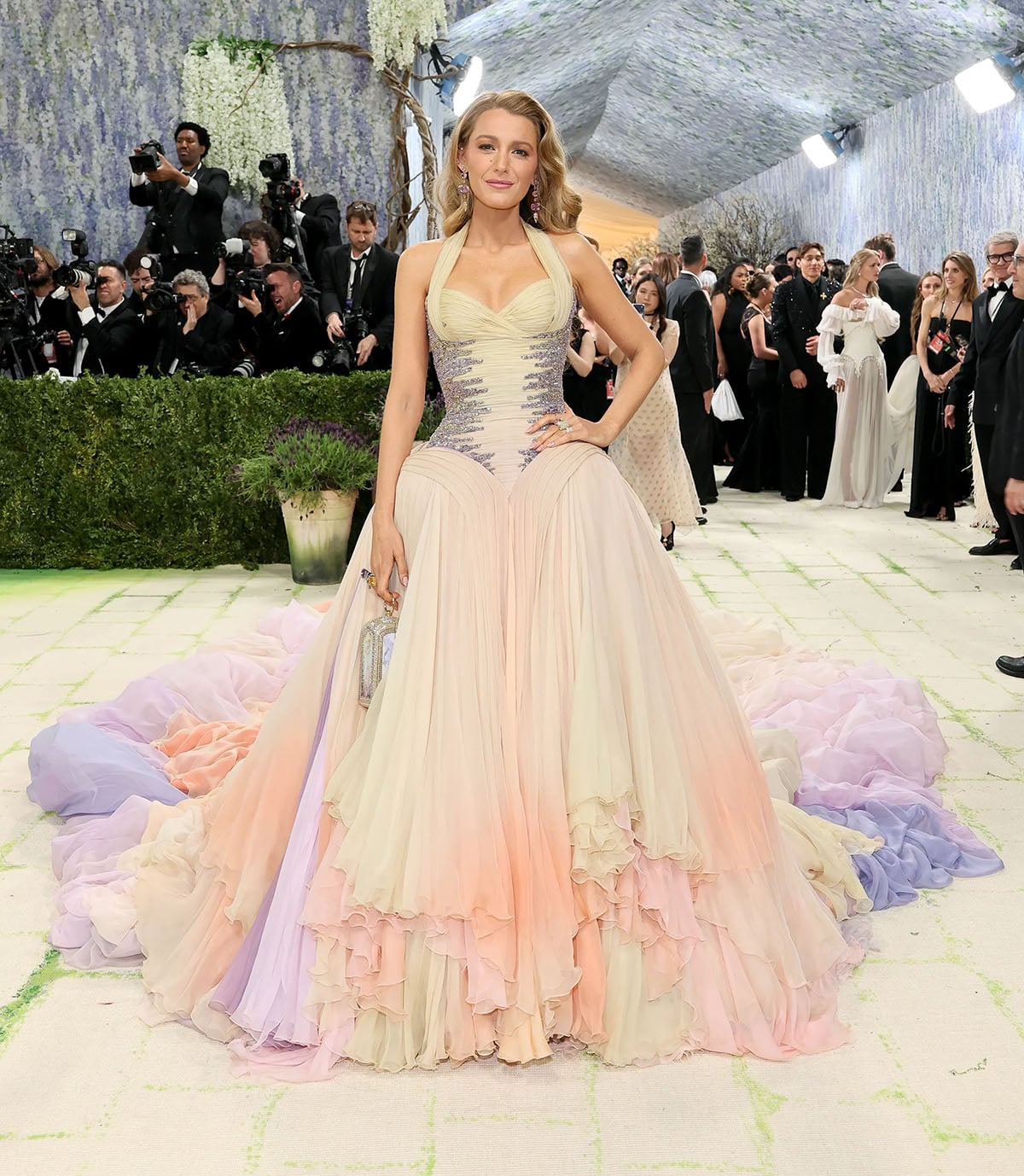
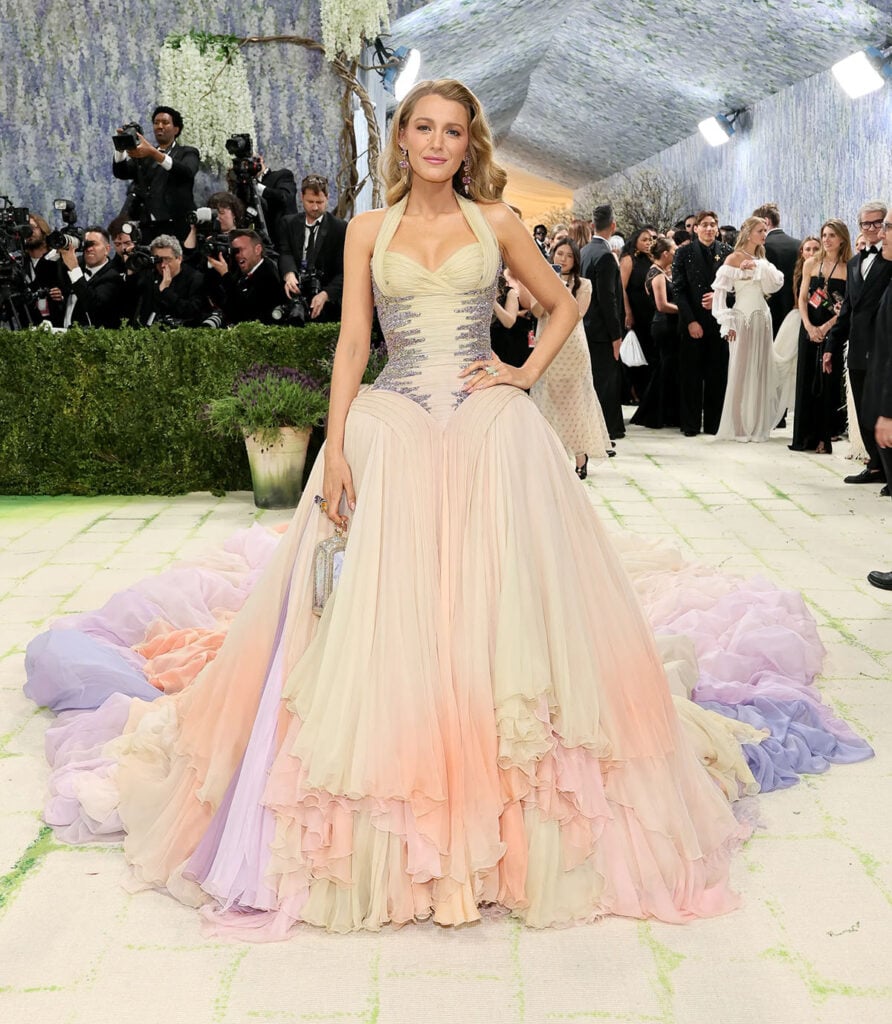
The centerpiece of Lively’s appearance was an Atelier Versace creation rooted in the dualities of fashion history. The gown features a bodice built upon the foundations of traditional 19th-century corsetry, utilizing internal boning and structured paneling to create a silhouette reminiscent of the Victorian era. However, the execution remains firmly planted in the Versace aesthetic of the mid-2000s, characterized by intricate crystal embellishments and a bold approach to femininity.
The gown’s most striking feature is its voluminous, layered ombré tulle skirt. The fabric transitions through a soft, painterly palette of peach, lilac, and cream, creating a visual effect that fashion historians have likened to watercolor washes on a canvas. This technique, requiring hundreds of hours of manual labor, involves the precise layering of different colored tulle to achieve a seamless chromatic progression. By opting for a design that emphasizes the construction of the dress as a sculptural object, Lively aligned herself with the academic rigor of the Costume Institute’s exhibitions, even as the look maintained the theatricality expected of the gala’s high-profile attendees.
The Sentimentality of Custom Accessories
In keeping with her tradition of incorporating personal narratives into her Met Gala appearances, Lively paired her vintage Versace look with accessories that bridged the gap between high fashion and family life. She carried a custom-made Judith Leiber clutch, a brand long associated with the gala’s red carpet. The bag was uniquely embellished with crystal-encrusted reproductions of artwork created by her four children. This bespoke element provided a modern, sentimental counterpoint to the archival nature of the gown, illustrating the ways in which contemporary celebrities utilize the Met Gala platform to showcase personal storytelling.
The jewelry selection was equally curated, featuring pieces from long-time collaborator Lorraine Schwartz. Known for providing the high-jewelry focal points for Lively’s most iconic looks, Schwartz’s contributions for 2026 focused on complementary gemstones that echoed the pastel hues of the ombré skirt. The inclusion of these high-value pieces underscored the event’s role as a primary showcase for the global luxury industry, where the value of the attire and accessories often reaches into the millions of dollars.
A Chronology of Met Gala Excellence
To understand the impact of Lively’s 2026 appearance, it is necessary to view it within the context of her historical relationship with the event. Since her debut, Lively has consistently been cited by Vogue and industry analysts as a "co-chair in spirit," often selecting ensembles that directly interpret the evening’s theme with literal and metaphorical depth.
In 2018, for the "Heavenly Bodies: Fashion and the Catholic Imagination" theme, Lively wore a crimson and gold Versace gown that required over 600 hours of embroidery. In 2022, for "In America: An Anthology of Fashion," she famously wore a transformation gown that transitioned from bronze to patina green, paying homage to the Statue of Liberty and New York City’s architectural heritage. Her 2026 choice of an archival 2006 piece continues this trajectory of honoring fashion history while maintaining a distinct personal brand. Industry observers note that by choosing a 20-year-old gown, Lively is participating in the growing trend of "archival dressing," which emphasizes sustainability and the preservation of fashion heritage over the consumption of new seasonal collections.
The Significance of the Archival Trend in 2026
The decision to wear a 2006 Atelier Versace piece is indicative of a broader shift within the fashion industry. As the 2020s progress, the "vintage" label has expanded to include the early 2000s, a period now referred to as "Y2K" or "Millennium" fashion. For the Met Gala, which serves as the primary fundraiser for the Costume Institute, the use of archival pieces serves a dual purpose. It highlights the museum’s mission to preserve historical garments while allowing designers like Donatella Versace to showcase the longevity and timelessness of their house’s DNA.
Market data from 2025 and early 2026 suggests that the resale value of mid-2000s couture has surged, driven in part by high-profile red carpet moments like Lively’s. Fashion analysts suggest that this trend is a response to the "fast fashion" cycle, with elite celebrities opting for pieces that have a documented provenance and historical significance. Lively’s gown, though it does not push into the avant-garde or conceptual territories explored by some of her peers, represents a "classical" approach to the Met Gala—one that prioritizes craftsmanship, silhouette, and the heritage of the Italian atelier.
Industry Reactions and Cultural Discourse
While the reception of Lively’s look was overwhelmingly positive among traditional fashion critics, the ensemble sparked a nuanced debate on social media and among younger fashion enthusiasts. Some commentators labeled the look as "Barbie-coded," a reference to the hyper-feminine, pastel-heavy aesthetic that dominated pop culture in the mid-2020s. This comparison highlights the intersection of high fashion and current cultural trends; while the gown is a 20-year-old archival piece, its color palette resonates with contemporary visual preferences.
Professional stylists and historians, however, argue that the "Barbie-coded" label oversimplifies the technical achievement of the garment. "The 2006 Atelier Versace collection was a pivotal moment for the house as it sought to redefine luxury in the post-9/11 era," noted one fashion historian during a post-gala panel. "To see it on Blake Lively in 2026 is to see a dialogue between two different eras of glamour. It isn’t just about the color; it’s about the revival of 19th-century architecture in a modern context."

The Economic and Philanthropic Impact of the Gala
The Met Gala remains the most significant financial engine for the Metropolitan Museum of Art’s Costume Institute. Under the leadership of Anna Wintour since 1995, the event has raised hundreds of millions of dollars, ensuring that the department remains the only one within the Met that must fund its own operations. The presence of stars like Blake Lively is essential to this economic model. Her appearances generate billions of social media impressions, which in turn drive sponsorship deals, ticket sales for the subsequent museum exhibition, and global interest in the fashion industry.
The 2026 gala is projected to have set new records for Earned Media Value (EMV). Lively’s surprise arrival, specifically, created a spike in digital engagement that surpassed many of the evening’s scheduled attendees. This "Lively Effect" is a recognized phenomenon in the luxury sector, where her endorsement of a brand—in this case, the revival of a 20-year-old Versace aesthetic—can influence retail trends and consumer interest in archival collections for the remainder of the fiscal year.
Broader Implications for Red Carpet Fashion
As the curtain closes on the 2026 Met Gala, the implications of Blake Lively’s fashion choice will likely resonate throughout the upcoming awards season. The move away from "newness" toward "significance" reflects a maturing red carpet culture where the narrative of the dress is as important as the person wearing it. By leaning into the historical corsetry and painterly tulle of 2006, Lively has provided a blueprint for how celebrities can remain relevant without relying on shock value or overt trend-chasing.
Furthermore, the focus on the construction of the dress as art serves to elevate the status of the dressmakers and artisans within the ateliers. In an era increasingly dominated by digital renderings and AI-generated designs, the tactile, labor-intensive reality of a hand-layered tulle skirt serves as a reminder of the human element in high fashion. Blake Lively’s 2026 appearance was more than a red-carpet "win"; it was a calculated tribute to the enduring power of the physical garment and its place within the hallowed halls of the Metropolitan Museum of Art.