






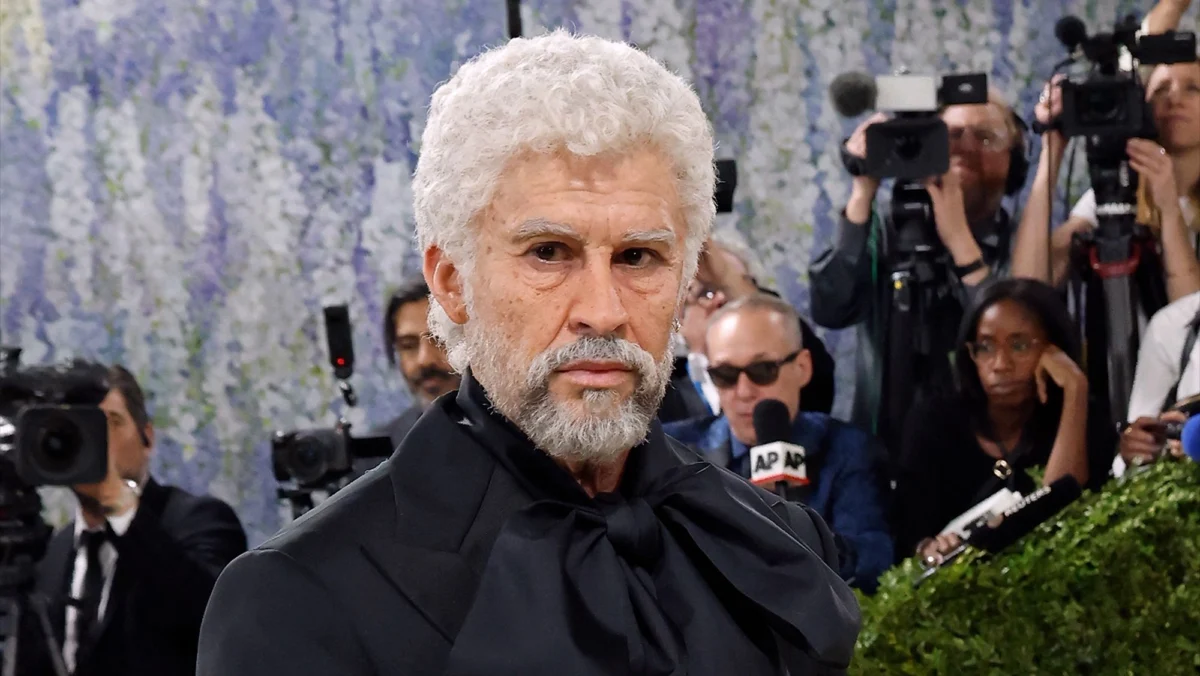
The Met Gala, an annual spectacle of high fashion and celebrity, once again delivered moments that sparked conversation and challenged norms. This year, the inimitable Bad Bunny, born Benito Antonio Martínez Ocasio, captivated attendees and critics alike with a dramatic transformation that positioned him as a striking commentary on aging and societal perceptions. Eschewing the flamboyant ensembles of past years, which included a backless blazer with a 26-foot floral train and a boiler suit paired with a bejeweled bouffant, the 32-year-old Puerto Rican superstar embraced a visage reminiscent of a distinguished elder statesman.
The transformation, a masterclass in prosthetic artistry, saw Bad Bunny adorned with a meticulously crafted gray beard and mustache, age spots subtly dappling his hands, and an elegant cane. This striking alteration, which added an estimated 50 years to his appearance, drew immediate comparisons to classical portraiture, with one writer aptly dubbing him "Bad Rabbit," evoking the timeless elegance of Diego Velázquez’s depictions of aging Madrid nobility. The custom Zara ensemble, a classic all-black suit, was subtly subverted by an oversized pussy-bow tie, a nod to Charles James’s iconic 1947 gown, "Bustle," a piece held in the Costume Institute’s permanent collection. This detail, in particular, underscored Bad Bunny’s consistent ability to challenge gender norms and traditional fashion conventions.
Behind this transformative illusion was Mike Marino, a renowned prosthetics designer with multiple Academy Award nominations. Marino, who also created Heidi Klum’s elaborate Met Gala prosthetics in a previous year, meticulously sculpted every vein, crease, and age spot, imbuing Bad Bunny’s character with a profound sense of lived history. The collaboration between artist and celebrity resulted in a visual narrative that resonated deeply with the Met Costume Institute’s 2026 exhibition theme: "Fashion and the Human Body: Forms of Expression."
The Met Gala’s Thematic Resonance: Fashion and the Human Form
The 2026 Met Gala served as a prelude to the Costume Institute’s ambitious exhibition, which delved into the multifaceted relationship between fashion and the diverse spectrum of the human body. This exhibition marked a significant departure from traditional displays, introducing 25 new mannequins that represent a broader range of physical forms than the museum’s historically sylphlike models. The new additions include representations of larger bodies, dwarfism, pregnancy, bodies with prosthetics, individuals using wheelchairs, and, crucially, aging bodies – a demographic long overlooked in the fashion discourse.
The exhibition catalog explicitly addresses this oversight, stating, "Perhaps reflecting our fear of having to face our own mortality, the youth-oriented fashion industry has traditionally ignored the aged body." This statement serves as a critical lens through which to view Bad Bunny’s Met Gala persona. By embodying an aged individual, he directly engaged with the exhibition’s core concerns, prompting a public dialogue about the fashion industry’s historical neglect of older demographics and its persistent emphasis on youthfulness.
A Cultural Commentary on Aging and Ageism
Bad Bunny’s sartorial choice at the Met Gala can be interpreted as a deliberate act of cultural commentary. In an industry often characterized by its relentless pursuit of eternal youth, where cosmetic procedures and anti-aging treatments are commonplace, his embrace of simulated aging was a powerful counterpoint. This was starkly contrasted with the appearances of many other attendees, who often arrive at such events having undergone procedures aimed at preserving a youthful appearance. Figures like Kris Jenner, at 70, presented a visage that, under the strategic lighting of the red carpet and with the aid of professional makeup, appeared significantly younger, a testament to the prevailing beauty standards. Similarly, Nicole Kidman, 58, and Anne Hathaway, 43, showcased appearances that defied conventional markers of age, appearing remarkably youthful.
The juxtaposition of these meticulously maintained youthful appearances with Bad Bunny’s profound aging simulation highlighted the complex and often contradictory attitudes society holds towards the aging process. While many celebrities strive to outwardly defy the passage of time, Bad Bunny chose to embody it, albeit temporarily. This act invites reflection on the societal pressures that lead individuals to conceal or combat signs of aging, and the often-unacknowledged ageism that permeates various aspects of life.
The article’s original author mused on the potential for Bad Bunny to experience the subtle and overt forms of ageism that an older individual might encounter if he were to maintain his persona for an extended period. This hypothetical scenario underscores the inherent privilege of being able to "take off" an age-related costume, a luxury not afforded to those who genuinely navigate the world with an aging body. The author’s reflection on Isabella Rossellini’s experiences in Hollywood, where she is often made up to appear older for film roles, further illustrates this point. Rossellini’s natural aging, unembellished by cosmetic interventions, makes her a canvas for constructed narratives of age, suggesting a societal discomfort with authentic, unadorned aging.
The Evolution of Bad Bunny’s Fashion Statements
Bad Bunny’s history at the Met Gala is marked by a consistent willingness to push boundaries and challenge expectations. His previous appearances, while extravagant, were also characterized by a playful defiance of convention. The 2021 gala saw him in a meticulously tailored suit with a flowing train, a look that was both regal and avant-garde. In 2022, he opted for a more unconventional silhouette, pairing a boilersuit with a dramatic, textured hairstyle. These choices, while diverse in their aesthetic, share a common thread: a commitment to artistic expression and a refusal to be confined by traditional sartorial norms.
His 2026 appearance, however, represented a significant evolution in his approach. Moving beyond elaborate costumes to a more conceptual transformation, Bad Bunny used his platform to engage with deeper societal themes. The choice of a classic suit, combined with the subtle yet impactful addition of age-related prosthetics, allowed his message to resonate on multiple levels. It was a performance that was both visually arresting and intellectually stimulating, demonstrating his growing maturity as an artist who uses his public platform for thoughtful social commentary.
Broader Implications and Future Narratives
The impact of Bad Bunny’s Met Gala appearance extends beyond the ephemeral glamour of the event. It has the potential to foster a more inclusive dialogue about aging within the fashion industry and broader culture. By spotlighting the often-overlooked narratives of older individuals, the Met Costume Institute’s exhibition and Bad Bunny’s participation signal a potential shift towards greater representation and acceptance.
The introduction of diverse mannequins at the Met signifies a concrete step towards acknowledging and celebrating a wider range of human bodies. This initiative, inspired by real people, aims to dismantle the narrow ideals of beauty that have long dominated the fashion landscape. The exhibition’s catalog itself serves as a critical resource, prompting introspection on the cultural biases that have contributed to the marginalization of aging bodies in fashion.
Bad Bunny’s performance at the Met Gala, therefore, can be seen as a catalyst for change. It encourages a reevaluation of how we perceive and portray age, promoting a more nuanced and empathetic understanding of the human lifecycle. As the fashion industry continues to grapple with issues of diversity and inclusion, Bad Bunny’s bold statement serves as a powerful reminder that true style and relevance are not bound by age, but by the courage to express oneself authentically and challenge the status quo. The conversation initiated by his Met Gala transformation is likely to resonate for years to come, influencing how designers, consumers, and society at large engage with the complexities of aging and identity in the modern world.