










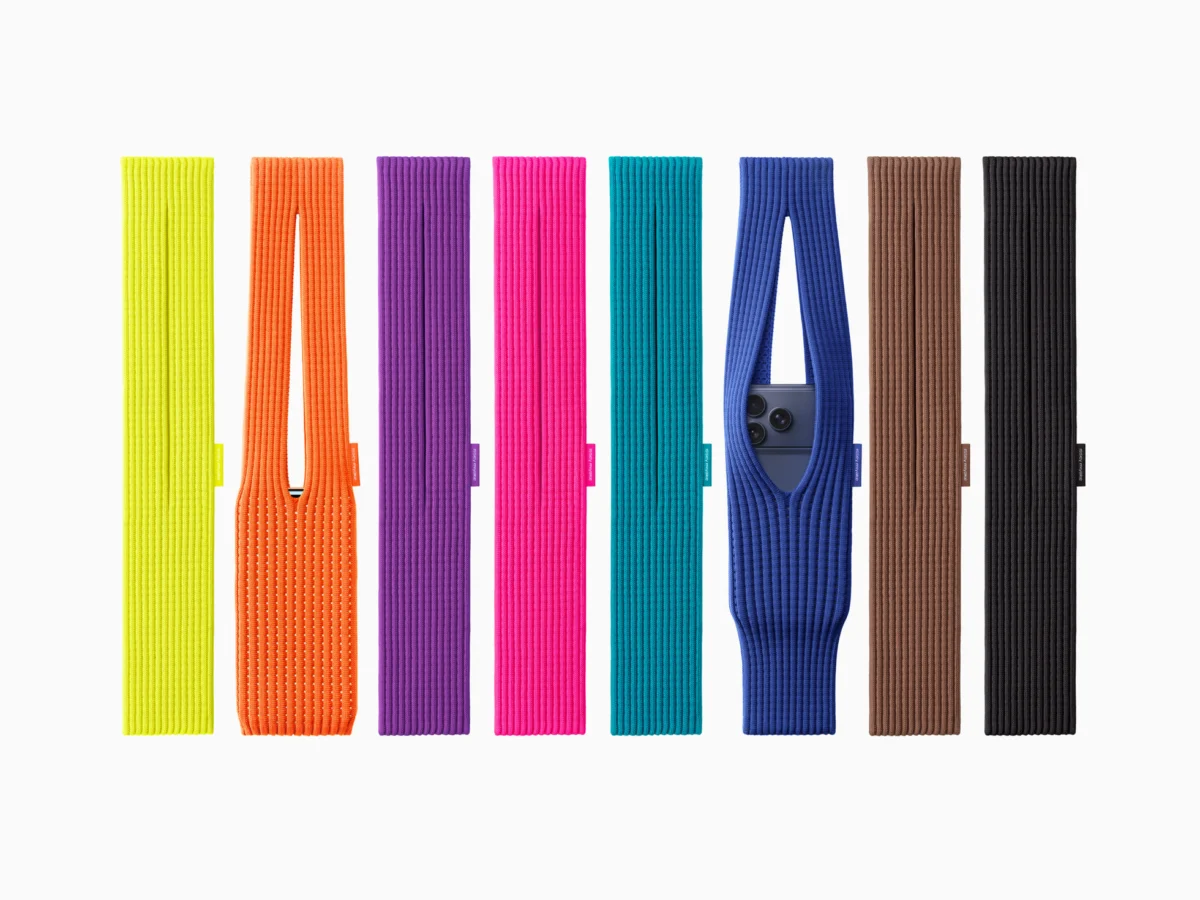
Apple has officially expanded its luxury accessory portfolio through a collaboration with the renowned Japanese fashion house Issey Miyake, introducing a high-end textile sling known as the iPhone Pocket. The product, which has sparked significant discussion regarding the intersection of technology and haute couture, is priced at $149.95 for the "short" handheld version and $229.95 for the "long" crossbody variant. This release follows a historical precedent of Apple marketing premium-priced lifestyle accessories, such as the $19 polishing cloth and the $549 AirPods Max, signaling a continued effort to capture the high-disposable-income demographic within the fashion-tech market.
The iPhone Pocket is not merely a protective sleeve but a realization of the "A Piece of Cloth" (APOC) design philosophy pioneered by the late Issey Miyake. According to product specifications released by Apple, the accessory features a ribbed mesh structure that mirrors the signature pleats for which the Miyake brand is globally recognized. The design utilizes a single piece of fabric to form the entire structure, minimizing seams and reducing material waste. Apple’s marketing materials describe the textile as an "open" structure that subtly reveals the device’s display when the fabric is stretched, allowing for limited interaction and visibility without removing the phone from the pouch.
The Historical Synergy Between Apple and Issey Miyake
The collaboration represents the formalization of a relationship that dates back decades, rooted in the personal friendship between Apple co-founder Steve Jobs and Issey Miyake. In the early 1980s, after visiting Sony factories in Japan and observing the company’s standardized worker uniforms, Jobs approached Miyake to design a similar uniform for Apple employees. While the proposal was ultimately rejected by Apple’s workforce, the endeavor led to the creation of Jobs’ signature personal uniform: the black mock turtleneck.
Miyake reportedly provided Jobs with hundreds of these shirts, which became a staple of his public identity and a symbol of Apple’s minimalist, design-first ethos. Although Miyake passed away in 2022, his design house has continued to operate under the principles of technical innovation and artistic functionality. The iPhone Pocket serves as a posthumous bridge between Miyake’s textile engineering and the sleek hardware aesthetic that Jobs helped cultivate. This product launch is viewed by industry historians as a tribute to the shared values of simplicity and precision that defined both men’s careers.
Technical Specifications and Product Variants
The iPhone Pocket is available in two distinct configurations, each targeting a different use case within the modern mobile lifestyle.

- The Short iPhone Pocket ($149.95): Designed primarily as a handheld "pocket" or a bag attachment, this version comes in a wide array of colors, including a vibrant "Lemon" yellow. It is intended to function as an "accessory for an accessory," often used to clip onto larger handbags or to be carried as a minimalist clutch.
- The Long iPhone Pocket ($229.95): This version features an extended strap designed for crossbody wear. It is currently offered in a more limited color palette, focusing on neutral tones that align with "quiet luxury" fashion trends.
The material is a specialized synthetic blend engineered to retain its shape despite the elasticity required to accommodate various iPhone models. The "ribbed mesh" is designed to provide a tactile grip while offering a layer of shock absorption, though the product is marketed more for its aesthetic and portability benefits than for rugged protection.
Market Context: The Rise of "Accessory-for-Accessory" Trends
The launch of a three-figure cloth pouch comes at a time when the consumer electronics and fashion industries are seeing a surge in "micro-accessories." Analysts point to several parallel trends that explain the potential market viability of the iPhone Pocket:
- The Miniature Bag Phenomenon: Brands like Telfar, Baggu, and Lululemon have seen massive success with "nano" versions of their flagship products. These items often serve as status symbols or decorative elements rather than purely functional storage.
- The Labubu and Blind Box Craze: The popularity of the Labubu monster plush keychains—which can range from $30 retail to over $10,000 on the secondary market—demonstrates a robust consumer appetite for high-priced, whimsical attachments for bags and phones.
- The "Phone-Only" Lifestyle: With the global adoption of "Tap to Pay" technology (NFC payments) and digital keys, many consumers no longer feel the need to carry traditional wallets. This has increased demand for specialized phone carriers that replace the function of a purse or backpack.
Apple’s entry into this space with a $230 textile sling follows its previous foray into crossbody accessories. Earlier this year, the company released a $59 crossbody strap which, while praised for its build quality, was noted by some tech reviewers for being somewhat cumbersome during daily use. The iPhone Pocket attempts to solve the aesthetic "clash" of a tech strap by integrating the device into a high-fashion garment-like structure.
Economic Implications and the "Apple Tax"
The pricing of the iPhone Pocket has reignited the perennial debate regarding the "Apple Tax"—the premium consumers pay for the Apple brand name and design. At $149.95 for a single piece of cloth, the profit margins are estimated to be significantly higher than those of Apple’s hardware products, such as the iPhone or iPad, which require complex supply chains and expensive components.
However, from a fashion industry perspective, the pricing is consistent with Issey Miyake’s standard retail rates. Authentic Miyake "Pleats Please" accessories and garments often retail between $200 and $800. By positioning the iPhone Pocket within this price bracket, Apple is signaling that it views its devices not just as tools, but as central components of a luxury wardrobe.
Industry and Consumer Reactions
While the product has faced criticism on social media platforms for its perceived lack of utility relative to its price, fashion critics have been more receptive. Many have lauded the move as a return to Apple’s roots in high-concept design. The APOC concept is celebrated in the textile world for its sustainability, as the "one piece of cloth" method minimizes fabric scraps that typically end up in landfills during the traditional "cut-and-sew" manufacturing process.

Logically inferred reactions from retail analysts suggest that the iPhone Pocket will likely become a high-volume item during the holiday gift-giving season. Its status as a "limited edition" item, combined with the prestige of the Issey Miyake brand, makes it a prime candidate for the "lifestyle gift" category, where brand cachet often outweighs functional price-per-value metrics.
Broader Impact on the Tech-Fashion Landscape
The collaboration between Apple and Issey Miyake may set a new standard for how technology companies approach partnerships with fashion houses. In the past, such collaborations were often limited to "smart" features—such as the Apple Watch Hermès, which includes specialized watch faces and leather bands. The iPhone Pocket, conversely, is a purely analog accessory that relies on textile engineering rather than digital integration.
This shift suggests that Apple is increasingly comfortable operating as a luxury lifestyle brand. As the hardware market reaches a plateau in terms of yearly innovation, "soft" goods and lifestyle accessories provide a new avenue for growth. The iPhone Pocket represents a strategic move to de-commoditize the smartphone, transforming it from a ubiquitous utility into a curated fashion statement.
Chronology of Apple’s Luxury Accessory Milestones
- 2015: Launch of the Apple Watch Hermès, marking Apple’s first major foray into the luxury fashion market.
- 2020: Introduction of the AirPods Max, positioning personal audio as a $549 fashion accessory.
- 2021: Release of the $19 Polishing Cloth, which became a viral sensation and sold out globally within days.
- 2022: Death of Issey Miyake; the Miyake Design Studio begins exploring ways to honor his legacy through modern collaborations.
- 2024: Apple releases the $59 Crossbody Strap, testing the market for wearable phone accessories.
- Late 2025 (Projected/Current): Official launch of the iPhone Pocket by Issey Miyake, merging APOC textile technology with the iPhone ecosystem.
As the iPhone Pocket enters the market, it serves as a litmus test for the "silent luxury" trend within the tech industry. Whether it becomes a mainstay of the Apple Store or remains a niche collector’s item, it underscores the enduring influence of the Jobs-Miyake partnership and the evolving definition of what constitutes a "tech" product in the 21st century.