




The phrase "Korean fashion" evokes a distinct set of associations for those in the West, often limited to the vibrant, trend-driven street style of Seoul or the meticulously curated looks of K-pop idols. Unlike the instantly recognizable aesthetics of "Italian chic," "French elegance," or "British eccentricity," a cohesive, universally understood identity for Korean fashion has remained elusive. This phenomenon, while seemingly a gap in global perception, is a complex tapestry woven from cultural nuances, historical trajectories, and the rapid evolution of South Korea’s societal landscape. It is against this backdrop that Amomento, a brand founded by Mikyung Lee (MK Lee) and steered by her brother Myeongsoo Lee (MS Lee), is consciously working to articulate a more profound and enduring definition of what "Korean fashion" truly entails.
The Elusive Identity of Korean Fashion in the Global Arena
For decades, the global fashion discourse has been dominated by established European powerhouses, whose national identities are intrinsically linked to their sartorial output. Mention "Italian fashion," and one conjures images of luxurious textiles, impeccable tailoring, and a certain sprezzatura; "French fashion" evokes timeless elegance, haute couture, and understated sophistication. These associations are deeply ingrained, products of centuries of cultural development, craftsmanship, and strategic global outreach. In contrast, "Korean fashion" often struggles to transcend its association with the ephemeral. While the explosive popularity of K-pop and K-dramas through the "Hallyu" or Korean Wave has undeniably put South Korea on the global cultural map, its fashion contributions frequently appear as either an extension of celebrity endorsement for Western luxury brands or a highly localized, fast-paced street style scene. This limits the perception of Korean design as a source of foundational, long-lasting aesthetic principles.
According to MK Lee, the driving force behind Amomento’s design philosophy, this perception gap is rooted in fundamental aspects of Korean society. "Korea is a relatively small and socially interconnected society, where people are highly conscious of others’ perspectives," she explains. This inherent social dynamic, she argues, naturally fosters a trend-driven culture where fashion evolves with breathtaking speed. The emphasis shifts from individual expression or the development of a unique brand DNA to a collective adherence to rapidly changing styles. This rapid cycle, while making Seoul a vibrant hub of emerging trends, paradoxically hinders the formation of an overarching, unified "Korean fashion" identity that can resonate globally with the same gravitas as its European or even Japanese counterparts. "Scandinavian or Japanese brands often share a common aesthetic or philosophy, whereas Korean brands lack a unified design language," Lee notes, highlighting the challenge for outsiders to interpret Korean fashion as a cohesive movement rather than a collection of disparate, transient trends.
Amomento’s Journey: From Multi-Brand Concept to Heritage Aspirations
Amomento’s inception in 2015 marked the beginning of a deliberate journey to carve out a distinct space within this dynamic landscape. Initially conceived as "Shop Amomento," a multi-brand physical retail space in Seoul, it served as a curated platform showcasing both local and international cult brands. This initial phase allowed Mikyung Lee, with her discerning eye, to understand the nuances of consumer preferences and the broader fashion ecosystem. The strategic evolution began in 2016 when her younger brother, Myeongsoo Lee (MS Lee), joined the company. His business acumen complemented MK Lee’s creative vision, leading to the pivotal decision to launch an in-house Amomento clothing line for the Autumn/Winter 2016 season.
This new clothing line immediately distinguished itself by focusing on "timeless wardrobe staples and minimalist design." This was a conscious departure from the prevailing trend-centric ethos, signaling Amomento’s intent to cultivate a brand identity rooted in longevity and understated elegance. While Shop Amomento continues to thrive as a retail destination carrying an eclectic mix of global labels like Edward Cuming, Extreme Cashmere, and Gimaguas, MK Lee has singularly dedicated her creative efforts to designing for Amomento as a standalone brand. This separation of identities—the curated retail space versus the distinct design house—underscores a strategic vision: to build Amomento into a brand with its own singular narrative and aesthetic, independent of the broader retail landscape. MS Lee, as CEO of the entire company, orchestrates this dual operation, ensuring both commercial viability and the realization of the brand’s long-term creative ambitions. This strategic dualism allows Amomento to both participate in and transcend the immediate commercial pressures of the Korean fashion market, paving the way for a more enduring legacy.
Hallyu’s Double-Edged Sword: Global Recognition, Local Identity
The global phenomenon of Hallyu, often translated as the "Korean Wave," has undeniably played a crucial role in elevating South Korea’s cultural profile worldwide since the 1990s. This cultural export strategy, initially driven by television dramas and movies across Asia (Hallyu 1.0), evolved dramatically in the mid-2010s with the explosive rise of K-pop and its global dissemination via social media platforms (Hallyu 2.0). Groups like BTS and Blackpink became household names, wielding unprecedented influence over global youth culture. By 2022, the economic value of Hallyu was estimated to be in the tens of billions of dollars, with significant ripple effects across various industries, including fashion.
Fashion’s entanglement within these waves of Hallyu has been complex. While the second wave undeniably brought significant global recognition to Korean talent and, by extension, some aspects of Korean street style, its primary impact on high fashion has been through K-pop stars becoming ambassadors for established European heritage houses. Think of Blackpink’s Jennie for Chanel, Lisa for Celine, Jisoo for Dior, and Rosé for Saint Laurent. While these collaborations spotlight Korean celebrities, they often serve to reinforce the dominance of Western luxury brands rather than elevating Korean designers or heritage houses to similar global stature. The narrative becomes one of Korean musicians successfully infiltrating global fashion as muses or marketing tools, while a truly global Korean heritage house, capable of dictating trends and aesthetics on an international scale, has yet to fully emerge. This creates a critical challenge: how to leverage the immense soft power of Hallyu to build indigenous fashion brands with lasting global appeal, rather than merely acting as conduits for foreign ones. The ongoing Hallyu 3.0, expanding into diverse cultural spheres from webtoons to culinary arts, presents a renewed opportunity for fashion to establish its independent voice.
Forging a Path: Lessons from Pioneers and Historical Context
Despite the challenges, Korean fashion is not without its trailblazers. MK Lee herself points to figures like Madame Woo, founder of Solid Homme and Wooyoungmi, and Jung Wook-jun of JUUN.J, as pivotal in introducing Korean design to an international audience. These designers have, through their distinctive aesthetics and consistent presence on global fashion week schedules, laid important groundwork. Madame Woo, for instance, has cultivated a distinctive masculine aesthetic that blends classic tailoring with contemporary urban sensibilities, achieving recognition at Paris Fashion Week for decades. Similarly, JUUN.J is celebrated for its avant-garde streetwear, oversized silhouettes, and innovative use of materials, garnering a loyal international following. "Their contributions are significant," Lee acknowledges, "but there is still much for the next generation to continue and develop." This sentiment highlights a crucial phase in Korean fashion’s evolution: moving from individual successes to building a collective, recognizable identity.
The comparison with Japanese fashion, particularly iconic brands like Comme des Garçons, Yohji Yamamoto, and Issey Miyake, serves as a poignant yardstick for Amomento. These Japanese labels, emerging onto the European scene in the 1970s and 80s, fundamentally challenged Western sartorial norms and established a distinct Japanese aesthetic that continues to influence global fashion. Korea, however, lacks a direct equivalent to such long-established heritage fashion houses, a reality MK Lee attributes to historical circumstances. "Historically, Korea experienced colonisation and the Korean War, which delayed its development compared to countries like Japan or China," she explains. This turbulent 20th-century history meant that while Japan, benefiting from an earlier post-war economic recovery, saw its designers enter the European market in the 1950s and 60s, Korea’s focus was necessarily on reconstruction and economic development, pushing cultural exports like high fashion to a later stage of maturation. This historical lag necessitates a more accelerated and deliberate effort by contemporary brands to build the foundational pillars of a global fashion identity.
Amomento’s Shanghai Statement: A Bid for Future Heritage
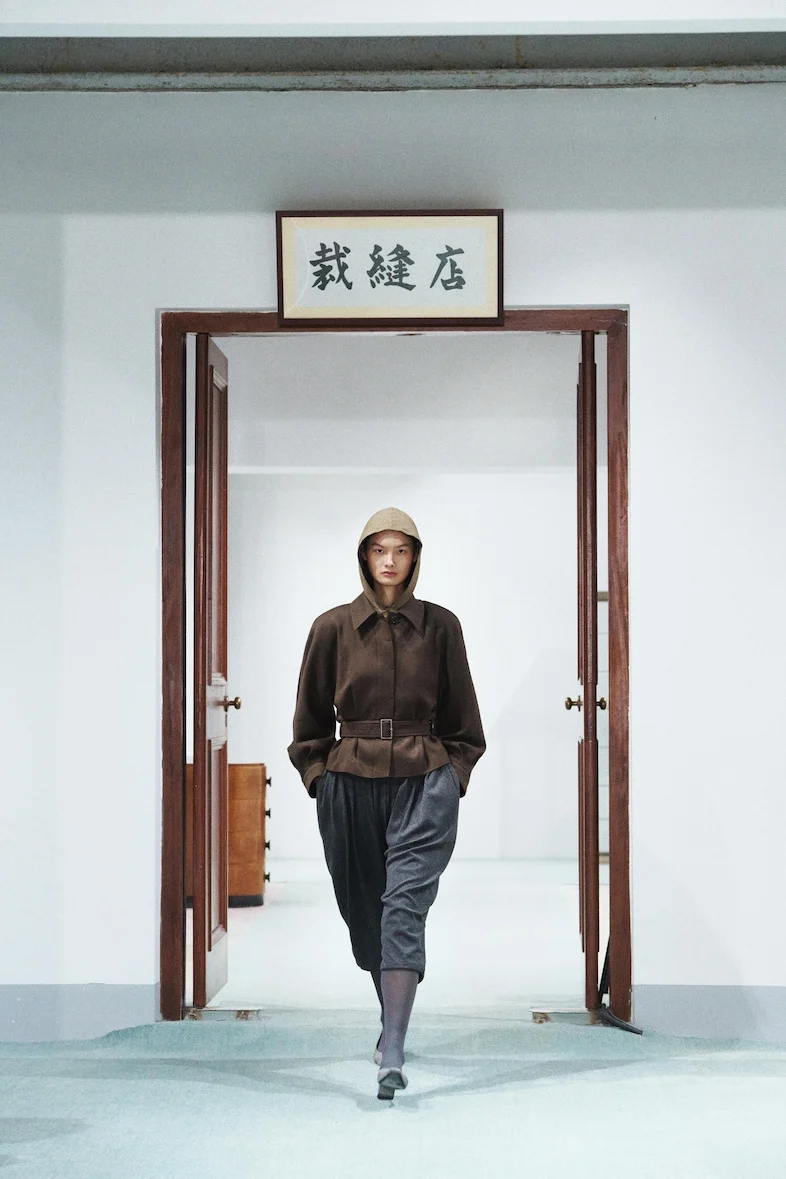
Amomento’s recent runway show at Shanghai Fashion Week was a bold declaration of its ambition to become one of Korea’s future heritage houses. The choice of Shanghai, a major fashion hub in Asia, signals a strategic pivot towards broader regional and international recognition, moving beyond the confines of Seoul. Shanghai Fashion Week, increasingly recognized for its innovative designers and significant market presence, provided an ideal platform for Amomento to articulate its vision to a global audience. The presentation itself was meticulously crafted to convey a message of timelessness and artisanal value. The venue in Shanghai’s historic Huangpu District was transformed into a Yangjangjeom—a traditional tailoring shop that historically specialized in producing "Western garments and tailoring details through a distinctly Eastern sensibility." This concept is profoundly significant, embodying a fusion of global influences with a unique Korean interpretive lens, a craft that flourished in Korea from the late 19th century through the mid-20th century, adapting Western styles to local tastes and techniques.
The show notes elaborated on this philosophy: "In an era defined by fast production and consumption, Amomento reflects on spaces and moments that are gradually fading. Revisiting the value of garments once shaped by the hands of artisans, and translating these perspectives into a contemporary language." This is a direct counter-narrative to the fast-fashion ethos that often characterizes trend-driven markets, particularly prevalent in Asia. By invoking the Yangjangjeom, Amomento not only paid homage to a disappearing craft but also positioned its collection as a bridge between tradition and modernity, East and West, fleeting trends and enduring style. It’s a statement about valuing craftsmanship over mass production and thoughtful design over transient fads.
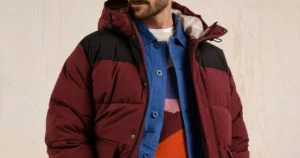
The collection presented on the runway was a tangible manifestation of this philosophy. Wardrobe classics were reimagined with a modern, relaxed sensibility. Slouchy separates offered comfort without sacrificing sophistication, paired thoughtfully with check shirts that hinted at a subtle rebellion against rigid formality. Crimson jumpers introduced carefully placed pops of color, juxtaposed with ankle-length culottes that offered a contemporary silhouette. A particularly notable detail was the replacement of traditional ties with silk scarves, messily yet artfully fastened around collars, adding an element of effortless chic and individual expression. While instances of blood-red leather shoes or crisp white shirts provided vibrant accents, the overall color palette remained predominantly muted, conveying an "earthy naturalism" that speaks to the brand’s commitment to understated elegance and timeless appeal. The fabrics, though not explicitly detailed, visually suggested natural fibers and comfortable textures, reinforcing the theme of longevity and wearability.
"This collection was about returning to the essence of clothing and focusing on its fundamentals," MK Lee reiterated, encapsulating the brand’s core mission. "In today’s fashion scene, where garments are quickly consumed and forgotten, we wanted to show what it means to create clothing that lasts—pieces that can be worn over time." This statement resonates deeply with growing global consumer demand for sustainability and conscious consumption, moving away from disposable fashion towards investment pieces. Ultimately, the very essence of a "heritage house" lies in its ability to create garments that transcend seasons, embodying enduring quality, timeless design, and a distinctive identity. Amomento’s Shanghai presentation was not merely a fashion show; it was a manifesto for a new era of Korean fashion, one built on the foundations of artisanal craft, thoughtful design, and a deep understanding of cultural context.
Broader Implications and The Future Trajectory of Korean Fashion
Amomento’s strategic vision and recent runway presentation carry significant implications for the broader Korean fashion industry. The brand is consciously attempting to shift the global perception of "Korean fashion" from a trend-follower to a trend-setter, from a market of rapid consumption to a purveyor of enduring value. This endeavor aligns with a wider aspiration within South Korea to diversify its cultural exports beyond K-pop and K-dramas, establishing a more holistic identity on the global stage.
Economically, fostering a strong, recognizable Korean fashion identity could unlock substantial market opportunities. The global apparel market, valued at approximately $1.7 trillion in 2023, is projected to reach over $2 trillion by 2026, and a distinct Korean aesthetic could capture a significant share of this, appealing to consumers seeking both novelty and quality. Furthermore, the development of indigenous heritage brands contributes to South Korea’s "soft power," reinforcing its image as a sophisticated cultural innovator rather than merely a popular entertainment exporter. This could also lead to increased foreign investment in Korean design and manufacturing capabilities, further bolstering the creative economy.
Industry analysts suggest that the journey for Korean brands to achieve "heritage" status, akin to European giants or even established Japanese houses, will require sustained commitment to unique design language, consistent quality, and compelling brand storytelling. It will also necessitate continued support from government initiatives, fashion institutions like Seoul Fashion Week, and a growing domestic appreciation for slow fashion and artisanal craft. The Korean Ministry of Culture, Sports and Tourism, for example, has increasingly invested in promoting Korean designers internationally, recognizing fashion’s potential as a cultural ambassador. Amomento, with its clear philosophy, strategic leadership, and a collection that speaks to both heritage and modernity, is positioning itself as a potential blueprint for this ambitious future. By carefully weaving historical context, cultural identity, and a commitment to lasting design, Amomento is not just creating clothes; it is actively shaping the narrative of what "Korean fashion" can, and indeed should, mean to the world. The journey is long, but with pioneers like Amomento leading the way, the vision of a globally recognized, distinct Korean fashion identity appears increasingly within reach.