










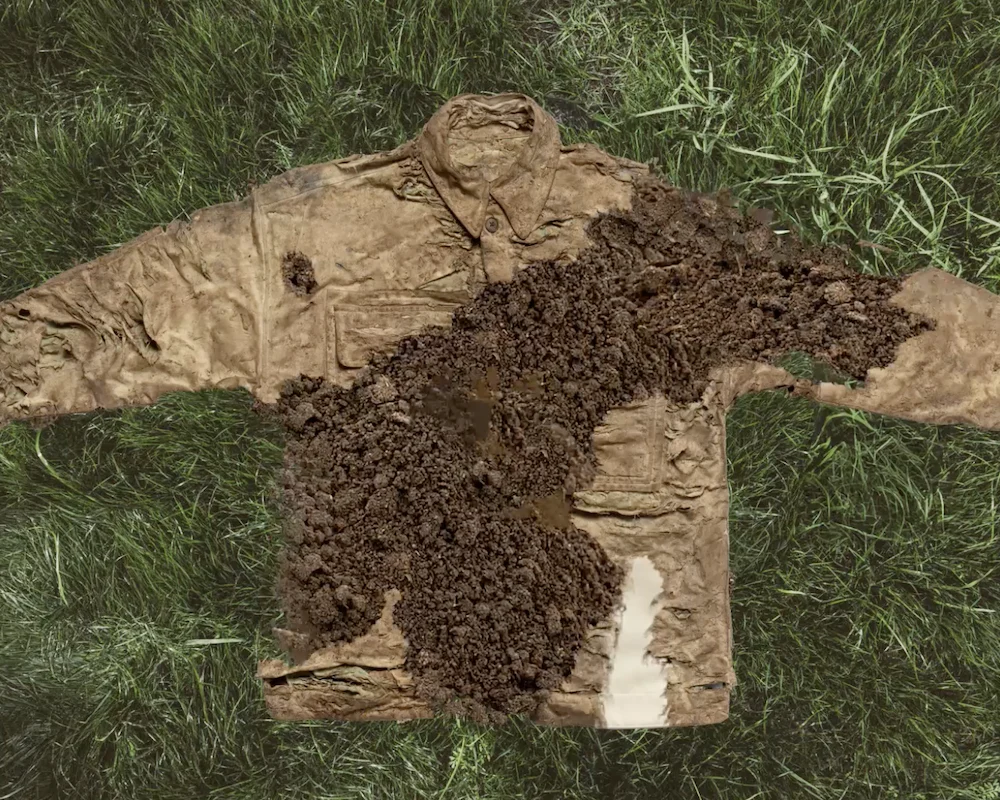
A handful of brands now promise clothes and shoes that return to the earth, embracing a vision dubbed "soilpunk." This seductive concept, where worn-out garments transform into nutrient-rich compost, offers a comforting antidote to the alarming images of textile waste choking landfills from Ghana to Chile. However, as analyst and researcher Fru Bekefi explores in this comprehensive report, the journey from this hopeful ideal to widespread practical application is fraught with challenges, including certification gaps, consumer confusion, and the inherent limits of home composting. While the dream of a garment returning to the garden is powerful, understanding its true implications requires a deep dive into material science, infrastructure, and consumer behavior, questioning where marketing enthusiasm ends and tangible ecological benefit begins.
The Global Textile Waste Crisis: A Call for Change
The fashion industry, a colossal global enterprise, grapples with an equally colossal waste problem. Annually, an estimated 92 million tons of textile waste are generated worldwide, with a staggering 87% of this material ending up in landfills or incinerators. This equates to a garbage truck full of clothes being landfilled or burned every second. Fast fashion, characterized by rapid production cycles, low prices, and disposable mindsets, has exacerbated this crisis, pushing consumption rates to unprecedented levels. Consumers, driven by fleeting trends and affordable garments, often discard clothing after only a few wears. This waste contributes significantly to environmental degradation, releasing greenhouse gases, leaching toxic dyes into soil and waterways, and shedding microplastics from synthetic fibers into ecosystems. The urgency to find viable end-of-life solutions for textiles has never been greater, propelling innovation and exploration into circular models, including the intriguing prospect of compostable fashion.
The Allure of "Soilpunk" and Circularity
In response to this environmental imperative, a burgeoning cultural and design movement known as "soilpunk" has emerged. Rooted in the health of the soil and regenerative agricultural practices, soilpunk extends beyond mere waste management, advocating for a holistic relationship with the earth. It envisions a future where human-made objects, including clothing, are designed to seamlessly integrate back into natural cycles, enriching rather than depleting the environment. This philosophy resonates deeply in an era marked by increasing climate anxiety and a collective yearning for optimistic, actionable solutions. The concept of composting, traditionally a humble household chore, has evolved into a form of cultural currency. Mandatory food waste separation in major cities like New York and across France signals a broader societal shift, leading to phenomena like "status composting" as reported by Town and Country magazine. This heightened appreciation for soil’s life-sustaining properties is celebrated through art exhibitions, speculative design projects like "The Regreening" gaming sim, and even music tracks inspired by earth’s hidden sounds.
Within the fashion industry, this shift manifests as a growing interest in circularity and regeneration. Governments, particularly in the EU, are implementing legislation such as Extended Producer Responsibility (EPR) to shift the financial burden of managing product end-of-life from taxpayers to businesses. This legislative pressure, combined with consumer demand for more sustainable options, makes the idea of compostable fashion incredibly attractive to brands. As design futurist Sarah Housley observes, "Compostable fashion is having an extended moment because consumers have become aware of low rates of recycling, particularly for textiles. They’re seeking alternatives that still feel ecologically responsible, and the idea that your clothing can return to the earth is so irresistible. It’s popular with brands for similar reasons. While recycling requires daunting systemic change—which they can influence, but only to a certain extent—compostable designs may feel a little easier to crack." This perceived ease, however, often masks significant underlying complexities.
Navigating the Technical Complexities of Compostability
The notion of a garment effortlessly dissolving back into the earth is captivating, yet the reality of achieving true compostability in fashion is far more intricate than it appears. At its core, compostable fashion relies on 100% natural fibers such as organic cotton, linen, kapok, hemp, organic bamboo, jute, wool, and certain man-made cellulosic fibers like viscose and Lenzing Tencel. However, the presence of dyes, chemical treatments, and functional or decorative trims significantly complicates the process. Becca Willcox, ratings analyst at Good On You, highlights this, stating, "Even then, if those fabrics have been dyed or chemically treated, they may no longer be compostable." Zippers, buttons, sequins, and even synthetic stitching must all be completely removed from a garment before it can be effectively composted, posing a considerable practical hurdle for consumers.
A critical distinction must also be drawn between "compostable" and "biodegradable"—terms often conflated in marketing but scientifically distinct. Compostability implies a material’s ability to break down into organic matter within a set timeframe under specific conditions (either home or industrial composting environments). Biodegradation, conversely, refers to decomposition over an unspecified period and under variable conditions. This ambiguity has led to regulatory scrutiny, with the EU prohibiting the unvalidated use of "biodegradable" claims and countries like France and Belgium banning the term entirely in marketing. The persistence of even seemingly benign natural fibers underscores this challenge. A recent paper in iScience, co-authored by Fashion Revolution co-founder Carry Somers, revealed that cotton accounted for over 70% of the 150-year fiber record in sediment from a UK lake historically fed by textile mills, demonstrating that natural fibers do not always degrade quickly in unsuitable environments. As Asha Singhal, director of the Nature of Fashion Initiative at the Biomimicry Institute, explained to Vogue Business, "Biodegradation is not just about the material itself. It depends on the ecosystem around it, from temperature and moisture to the presence of the right microbes." This means simply burying a 100% cotton T-shirt in any backyard does not guarantee its rapid transformation into soil.
Furthermore, certification schemes designed to validate compostability face their own limitations. While certifications like OK compost HOME by TÜV AUSTRIA and Cradle to Cradle (C2C) provide some guidance, they are not without their complexities. TÜV AUSTRIA’s certification often validates raw fibers rather than finished garments, leaving questions about the composite product. C2C, while promoting circularity, acknowledges that textiles certified under its framework are "most likely" to be recycled into new products rather than composted, reflecting the current industrial realities. The lack of widespread, robust certification schemes specifically for home compostable garments creates a significant barrier to consumer trust and informed decision-making.
Infrastructure and Consumer Engagement: The Missing Links
Even with technically compostable materials, the absence of adequate infrastructure and the challenge of modifying consumer behavior represent major obstacles to scaling compostable fashion. The dream of home composting, while appealing, faces practical limitations. Becca Willcox notes, "The conditions in home composting systems are highly variable, in terms of temperatures, moisture levels, and the microbes that are present. Without the right conditions, textiles may take a lot longer than expected to break down, and perhaps much longer than achieved under the test conditions. The items won’t necessarily break down quickly if they are just left and forgotten about." This variability can lead to consumer disappointment and skepticism.
Beyond home composting, industrial composting facilities capable of processing textiles are scarce. These facilities require specific parameters—high temperatures (typically 55-65°C), controlled moisture levels, and active microbial communities—to break down materials efficiently. Most existing municipal composting programs are designed for food and yard waste, and are not equipped to handle textiles, especially those with any synthetic components or persistent dyes. The logistical challenges of collecting, sorting, and transporting textile waste to specialized facilities, combined with the economic viability of such operations, currently remain significant hurdles.
The "composting literacy" gap among consumers is equally profound. Many do not understand the critical differences between home and industrial composting, or the specific requirements for effective decomposition. As Sarah Housley emphasizes, "Explaining the difference between home compostable and industrially compostable is crucial, because people who haven’t gone to the effort of educating themselves will not see any difference between the two, and will think that any compostable item can go in their food waste bin when that’s not the case." This lack of understanding can lead to incorrect disposal, contaminating composting streams and undermining the environmental benefits.
To bridge this gap, brands must engineer significant behavioral change, often running against the grain of a convenience-driven fashion culture. This requires more than just marketing; it demands robust take-back programs, clear instructions, and tangible incentives for consumers to participate actively in the end-of-life process.
Pioneering Brands and Their Iterative Innovations
Despite these systemic challenges, a small group of designers, material innovators, and brands are diligently exploring "soilpunk" circularity, pushing the boundaries of what’s possible. These pioneers are demonstrating that while complex, the vision of compostable fashion is not entirely theoretical.
One notable example is the "regenerative sportswear collection" from Under Armour and Unless Collective, debuted at Milan Design Week in April 2025. With the tagline "Make Good Dirt," this small pilot teased a near-future paradigm where athletic wear, typically a complex blend of synthetics, could be buried in a backyard. While an aspirational glimpse, it highlighted the industry’s burgeoning interest in such solutions.
Biodesigners, working with living systems like bacteria and algae, are developing truly soil-compatible solutions. Startup Cell Sense, founded by materials designer Aradhita Parasrampuria, is tackling microplastic pollution and toxic dye impacts with compostable biodesigned embellishments. Their jade-like bioluminescent beads, for instance, boast a 15-year lifespan yet fully decompose in a kitchen compost within four weeks. A recent collaboration with personal care company Dulcie (formerly Haeckels) saw Cell Sense’s durable yet compostable exfoliating face cloths framed as a limited-edition experiment, engaging customers through a subscription box and behind-the-scenes content on blogs and Instagram. This approach, leveraging "incentive aesthetics"—a concept by designer Oonagh O’Hagan that uses speculative design to foster curiosity and desire for sustainable luxury—builds loyalty by inviting audiences into the material development process.
Stella McCartney, a long-time advocate for sustainable fashion, has also made significant strides with her S-Wave sneaker upgrade. In collaboration with material science startup Balena, the brand developed BioCir Flex soles that utilize leftover cinnamon from the spice industry, imbuing the shoes with a comforting, earthy fragrance. This innovative approach transformed the challenge of using non-toxic dyes into a multisensory opportunity. The S-Wave trainers are not a one-off prototype but the result of a multi-year R&D project. Earlier 2022 versions were not fully circular due to recycled TPU soles, making the new bio-based soles a crucial milestone. While designed to be durable and recyclable, industrial composting via Balena’s global network is positioned as a last resort in the product’s lifecycle, reflecting a hierarchy of end-of-life options.
For categories particularly suited to composting, specialized brands are emerging. Underwear, often made from natural fibers, frequently replenished, having a limited lifespan, and no resale or recycling value, is an ideal candidate. Kent, an underwear brand, operates the "Compost Club," heralded as the fashion industry’s first take-back program for turning textile waste into fertilizer. Relaunching in summer 2026, the program allows US-based customers to purchase a $5 shipping label and return kit. Once washed briefs are cut into strips and sent back, they receive a $10 credit towards future purchases. The textiles are then composted by a community organization in Southern California, diverting waste and supporting local food ecosystems. This model exemplifies a thoughtful approach to incentivizing consumer participation and establishing a viable end-of-life pathway.
Beyond the Hype: A Realistic Assessment of Composting’s Role
While the advancements are promising, it is crucial to position compostable fashion realistically within the broader hierarchy of waste management: reduce, reuse, recycle, and then compost. Composting is not a panacea for the industry’s waste problems, nor should it replace efforts to extend garment lifespans through durability, repair, and resale. As Becca Willcox points out, "Composting isn’t always the solution with the lowest impact. You are completely destroying the fibre rather than extending the lifespan of clothing, while failing to cut the demand for new items. Composting is most suited for items that can’t be reused, such as underwear or socks."
Its optimal application lies in specific apparel categories or components that are difficult to reuse or recycle, such as intimate apparel, certain types of footwear, and complex embellishments. Footwear, in particular, presents a formidable challenge; an estimated 90% of the 23.8 billion pairs produced annually end up in landfills or are incinerated due to their multi-material, glued construction. Initiatives like Fashion For Good’s "Closing the Footwear Loop," partnering with global brands like Adidas, Zalando, Inditex, and Target, are exploring bio-based polymers for soles as a strategic step towards phasing out fossil fuel-derived materials and improving circularity. Stella McCartney’s S-Wave trainers, with their bio-based soles, represent a significant stride in this direction.
Compostable propositions also hold immense potential for replacing seductive but toxic embellishments, like those developed by Cell Sense, which traditionally contribute to microplastic pollution and worker health hazards. By transforming materials no longer fit for their original purpose into a valuable resource, compostable design aligns with the principles of a regenerative economy.
The Road Ahead: Policy, Investment, and the Tipping Point
Compostable clothing is currently in its niche, experimental era, attracting curious and committed early adopters. However, research suggests that significant social change can be catalyzed by a relatively small, vocal minority—a 25% "tipping point" is often sufficient to shift societal norms. The small but dedicated community embracing compostable fashion could represent this minority, provided the underlying systems catch up.
To move beyond this niche, several critical areas require urgent attention. First, there is an undeniable need for clearer, more robust certification schemes for finished garments, especially those marketed for home composting. These certifications must be transparent, verifiable, and easily understood by consumers. Second, substantial investment in industrial composting infrastructure capable of processing textiles is essential. This requires collaboration between brands, waste management companies, and local governments to establish efficient collection, sorting, and processing facilities. Policy frameworks that support this infrastructure development, perhaps through grants, subsidies, or extended producer responsibility schemes that specifically address textile composting, will be vital.
Furthermore, consumer education must be prioritized. Brands and public institutions need to clearly explain the nuances of compostability, the differences between home and industrial systems, and the correct disposal methods. Incentives, like those offered by Kent’s Compost Club, can play a crucial role in encouraging desired behaviors.
The future of compostable fashion will also be influenced by the advancement of other circular strategies, particularly textile-to-textile recycling. As Sarah Housley suggests, "textile-to-textile recycling is advancing and as that becomes more commercially viable for the fashion industry, it may take some of the spotlight away from alternative strategies." However, rather than viewing these approaches as competing, a truly regenerative fashion future will likely see them as complementary. Some fibers and garments will be best suited for high-value textile recycling, while others, particularly those difficult to recycle or those at the very end of their usable life, will find their ideal pathway through composting, returning their organic nutrients to the soil.
Cultivating a Regenerative Fashion Future
The "soilpunk" vision of fashion returning to the earth is more than just a marketing fantasy; it is a profound reimagining of our relationship with materials and nature. While the path to widespread adoption is complex, fraught with technical hurdles, infrastructure gaps, and the challenge of consumer re-education, the iterative innovations from pioneering brands demonstrate tangible progress. The potential for metamorphosis—asking what an object or material can become through decomposition—is what makes compostable design so exciting. By strategically deploying compostable solutions for specific categories and components, complementing existing reuse and recycling efforts, and fostering systemic change through policy, investment, and education, we move closer to a regenerative fashion future where we might, indeed, witness our garments enriching our own gardens.