











The cinematic landscape of 2025 is poised for a significant shift with the premiere of Tuner, the highly anticipated first fictional narrative feature from director Daniel Roher. Best known for his incisive and critically acclaimed documentary work, including the Academy Award-winning Navalny, Roher’s pivot to a crime thriller signals a bold new chapter in his filmmaking career. The film, which premiered globally in 2025, has already begun generating considerable buzz, particularly in the United Kingdom, where a series of exclusive pre-release screenings have ignited enthusiasm among film aficionados ahead of its wider theatrical release.
A Pivotal Shift for an Acclaimed Documentarian
Daniel Roher’s name became synonymous with impactful, high-stakes documentary filmmaking following the global success of Navalny. Released in 2022, the documentary chronicled the poisoning and subsequent political activism of Russian opposition leader Alexei Navalny, earning widespread critical acclaim and the Oscar for Best Documentary Feature at the 95th Academy Awards in 2023. Navalny was lauded for its investigative rigor, dramatic tension, and urgent political relevance, cementing Roher’s reputation as a director capable of crafting compelling narratives from real-world events. His previous works, such as Once Were Brothers: Robbie Robertson and the Band (2019) and Ghosts of Our Forest (2016), also demonstrated a keen eye for human stories and complex subjects, albeit within the non-fiction realm.
The transition from documentary to fictional narrative is a path few highly successful documentarians tread directly after such a significant win, making Tuner a particularly intriguing prospect. While some documentary filmmakers like Errol Morris or Alex Gibney occasionally dabble in narrative, their primary focus remains non-fiction. Roher’s decision to immediately embark on a full-fledged fictional feature suggests a deliberate artistic expansion, an exploration of different storytelling modalities, and perhaps a desire to engage with audiences on a broader, genre-driven scale. This shift often involves navigating new production challenges, adapting to script-driven character development, and managing the intricacies of fictional world-building, a distinct departure from the observational or investigative methodologies inherent in documentary filmmaking. The move allows Roher to explore themes and emotional landscapes potentially unsuited for his documentary style, offering a fresh perspective on his directorial voice.
Delving into the Narrative: The Premise of Tuner
Tuner is described as a taut crime thriller, a genre that offers rich opportunities for suspense, intricate plotting, and character-driven drama. The film centers on a gifted young piano tuner, portrayed by the rapidly rising star Leo Woodall. This protagonist possesses an extraordinary, heightened sense of hearing, a unique attribute that becomes both his greatest asset and his gravest vulnerability. His life takes an unforeseen and perilous turn when this acute auditory perception is exploited by sophisticated criminals, who coerce him into using his abilities to help them crack intricate safes.
The narrative thrust sees the protagonist irrevocably pulled into the treacherous depths of the New York underworld. This classic setting for crime thrillers promises a gritty, atmospheric backdrop, where moral ambiguities and high stakes define every interaction. The film is expected to delve into the psychological toll of this forced criminal entanglement, exploring themes of exploitation, survival, and the corruption of innocence. As his involvement deepens, his personal life, particularly his relationship with Ruthie, a composition student played by Havana Rose Liu, faces severe threats. This romantic subplot adds a crucial layer of emotional stakes, grounding the high-octane criminal narrative in relatable human drama and highlighting the protagonist’s struggle to maintain a semblance of normalcy amidst chaos. The conflict between his forced criminal life and his desire for a legitimate existence, coupled with the potential loss of his romantic connection, forms the core emotional conflict of the story.
The exploitation of a unique skill set for criminal enterprise is a compelling narrative hook, recalling classic thrillers where extraordinary abilities are twisted for illicit gains. Roher’s background in non-fiction suggests that even within a fictional framework, Tuner might ground its narrative in a sense of realism, exploring the mechanics of safe-cracking with an almost documentary-like precision, making the protagonist’s unique talent feel tangible and believable.
An Ensemble Cast Bringing Gravitas and Depth
Beyond its intriguing premise and directorial pedigree, Tuner boasts an impressive ensemble cast, blending seasoned veterans with emerging talents, a strategic move that enhances the film’s appeal and credibility.
Leo Woodall, who takes on the challenging lead role, has seen his profile skyrocket in recent years. His breakout performance in the second season of HBO’s critically acclaimed series The White Lotus garnered him international recognition and demonstrated his ability to portray complex characters with nuance and charisma. His casting as the sensitive yet exploited piano tuner suggests a performance that will likely balance vulnerability with a growing resilience as he navigates the criminal underworld. This role provides him with a significant opportunity to showcase his range as a leading man in a feature film.
Havana Rose Liu, cast as Ruthie, the composition student and the protagonist’s love interest, represents another promising talent. Known for her roles in films like No Exit and The Sky Is Everywhere, Liu brings a fresh presence to the screen. Her character is crucial for anchoring the emotional core of the film, providing a tangible connection to the protagonist’s former life and serving as a poignant reminder of what he stands to lose. Her performance is expected to convey both artistic passion and the emotional turmoil of witnessing a loved one’s descent into danger.
Adding immense gravitas and experience to the cast is Academy Award-winner Dustin Hoffman, who portrays the tuner’s mentor. Hoffman, a living legend of American cinema, has graced the screen in iconic roles across nearly six decades, earning two Best Actor Oscars for Kramer vs. Kramer (1979) and Rain Man (1988), alongside numerous other nominations and accolades. His involvement immediately elevates Tuner’s artistic stature and broadens its audience appeal. The role of a mentor in a crime thriller often involves guiding the protagonist, sometimes with ambiguous motives, or serving as a moral compass – or a corrupting influence. Hoffman’s presence promises a performance rich in complexity and wisdom, likely providing a crucial dynamic to Woodall’s character. His selection indicates the film’s ambition to attract a discerning audience, appreciating the depth and nuance that only an actor of his caliber can deliver.
The supporting cast further strengthens the film’s international and artistic appeal. Tony Award-winner Tovah Feldshuh brings her extensive stage and screen experience to Tuner. Known for her powerful performances in Broadway productions like Yentl and Golda’s Balcony, and television roles in The Walking Dead and Crazy Ex-Girlfriend, Feldshuh’s presence suggests a character of considerable strength and perhaps an imposing figure within the narrative, adding another layer of formidable talent to the ensemble.
Lior Raz, internationally recognized for co-creating and starring in the critically acclaimed Israeli series Fauda, contributes his expertise in high-stakes action and drama. His background in portraying intense, morally ambiguous characters in geopolitical thrillers makes him a compelling addition to Tuner’s crime narrative, potentially playing a role that is either an antagonist, an ally, or a complex figure operating within the underworld.
Finally, Jean Reno, the celebrated French actor, adds another layer of international star power. Reno is globally renowned for his roles in films such as Léon: The Professional, Ronin, and Mission: Impossible. His distinctive screen presence often lends itself to characters with a stoic demeanor, a formidable presence, or a certain world-weariness. His casting in Tuner hints at a potential role with significant influence within the New York underworld, perhaps a sophisticated criminal mastermind or a powerful, enigmatic figure whose actions drive much of the plot. The confluence of these diverse talents suggests a film with rich character development and compelling performances that will anchor its thrilling plot.
The Road to Release: From Production to Premiere Buzz
The journey of Tuner from script to screen involved a collaborative effort, with Black Bear Pictures playing a significant role. Black Bear, mentioned as a co-host of the UK screening event, is a reputable independent film production and distribution company known for backing critically acclaimed and commercially successful films such as The Imitation Game, Mudbound, and I Care a Lot. Their involvement signals a commitment to high-quality filmmaking and robust distribution. While specific production timelines for Tuner have not been widely publicized, a feature film of this scale typically undergoes a rigorous development process, including script refinement, casting, pre-production, principal photography (likely primarily in New York City, given the setting), and extensive post-production, including editing, sound design, and scoring. This entire process can span anywhere from 18 months to several years.
The film’s global premiere in 2025 suggests a strategic launch, potentially at a major international film festival such as Sundance, Berlin, Cannes, Venice, or Toronto. Such festival premieres are crucial for generating early critical buzz, securing international distribution deals, and positioning the film for awards consideration. The staggered release, with the UK theatrical debut set for May 29 after exclusive preview screenings, indicates a carefully planned marketing and distribution strategy aimed at maximizing impact and audience engagement. This approach allows for word-of-mouth to build organically from early viewers, creating a sense of anticipation and exclusivity.
Exclusive UK Pre-Release Screenings Generate Momentum
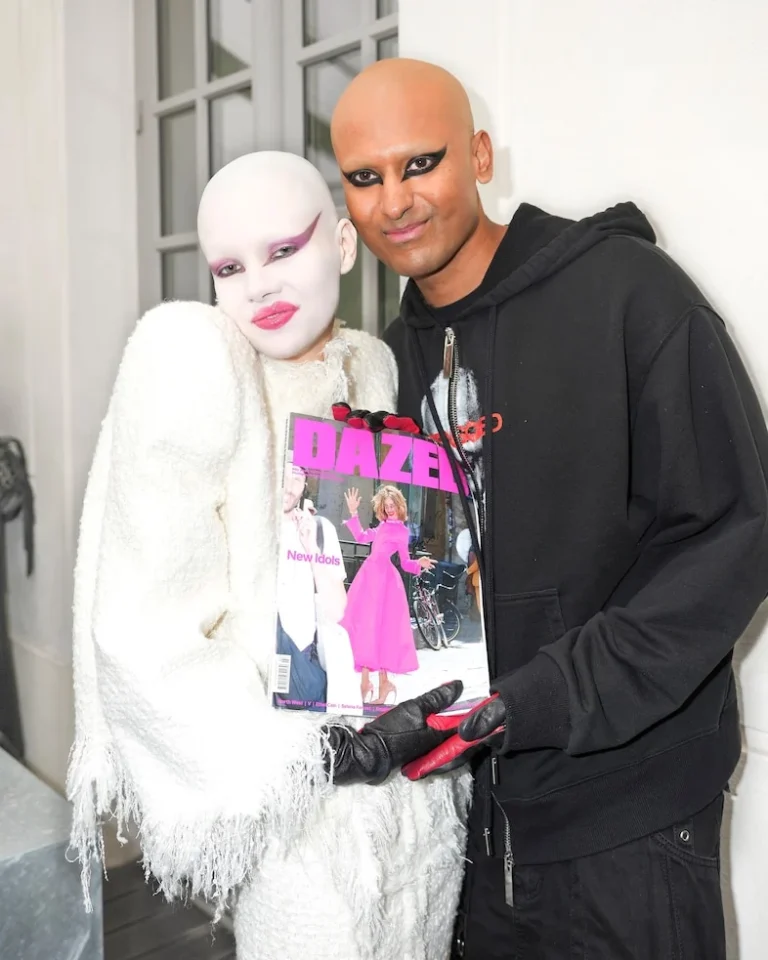
A pivotal event in the film’s pre-release campaign in the United Kingdom was a celebratory screening held on May 14. This special event, co-hosted by Dazed – a prominent independent media company focused on youth culture, fashion, and film – and Black Bear, took place not in one, but two distinct and culturally significant independent cinemas in London: Peckhamplex in south London and Genesis Cinema in east London.
The choice of these specific venues underscores a strategic approach to connect with diverse and engaged film audiences. Peckhamplex, renowned for its affordable ticket prices and community-focused programming, has long served as a vital cultural hub in Peckham, drawing a broad demographic of film lovers. Genesis Cinema, an independent picture house with a rich history in London’s East End, offers a unique blend of mainstream releases and arthouse fare, often hosting Q&As and special events that foster a strong sense of cinematic community. By utilizing both venues, Dazed and Black Bear effectively reached across London, tapping into different local film cultures and maximizing attendance.
The event successfully brought together "film lovers from across the city," eager to experience Tuner before its wider release. Such exclusive pre-screenings are a critical component of modern film marketing. They serve multiple purposes: generating early reviews and social media chatter, creating a sense of urgency and exclusivity among potential viewers, and allowing distributors to gauge audience reactions. For a film like Tuner, marking a significant directorial transition and featuring a strong ensemble, these events are instrumental in building a foundation of positive sentiment and word-of-mouth that can translate into stronger box office performance upon wider release. The partnership with Dazed, known for its finger on the pulse of contemporary culture, further amplified the event’s reach among a younger, trend-aware demographic, aligning Tuner with cultural relevance and innovation.
Strategic UK Distribution and Market Positioning
Following the successful pre-release screenings, Tuner is set to open in wider UK cinemas on May 29. This release date places the film within a competitive summer movie season, typically dominated by blockbusters. However, as a crime thriller with strong artistic credentials and a notable cast, Tuner is positioned to carve out its own niche. Black Bear, likely handling distribution in the UK given their co-hosting role, will employ a targeted marketing strategy emphasizing Roher’s unique vision, the compelling narrative, and the star power of the cast, particularly Dustin Hoffman.
The success of Tuner in the UK market will hinge on its ability to attract both art-house audiences, drawn by Roher’s reputation and the film’s sophisticated genre elements, and mainstream thriller enthusiasts. Critical reception from early screenings and reviews will play a crucial role in shaping public perception and driving attendance. A strong critical consensus, particularly highlighting Roher’s adeptness in a new genre and the performances of the cast, would significantly bolster its commercial prospects. The UK, with its robust independent cinema circuit and discerning audience, is an important territory for films that bridge the gap between commercial appeal and artistic merit. The distribution strategy will likely involve a balance of mainstream multiplex presence and targeted bookings in independent cinemas to cater to its diverse potential audience.
Broader Industry Implications and Roher’s Evolving Legacy
Daniel Roher’s foray into narrative filmmaking with Tuner carries broader implications for his career and the film industry. For Roher, it signifies an expansion of his artistic capabilities and a demonstration of versatility that could lead to a more varied and prolific directorial future, allowing him to oscillate between documentary and narrative projects. It also challenges the industry perception that documentary filmmakers are exclusively confined to non-fiction storytelling, opening doors for other talents seeking to explore different cinematic forms.
The film’s contribution to the crime thriller genre is also noteworthy. By injecting a unique premise – a piano tuner with heightened hearing – into the established tropes of the New York underworld, Tuner has the potential to offer a fresh perspective on a classic genre. Its sophisticated cast and a director known for psychological depth suggest a thriller that goes beyond mere action, delving into character motivations and moral ambiguities.
Furthermore, Tuner‘s journey, from its 2025 premiere to its strategic UK release, highlights the evolving landscape of independent cinema. The collaboration between a production company like Black Bear and a cultural platform like Dazed for pre-release events exemplifies innovative marketing strategies designed to generate grassroots enthusiasm and engage specific demographics. In an increasingly fragmented media environment, such targeted, experiential marketing is vital for independent films to cut through the noise and find their audience. The film represents a fascinating case study in artistic evolution and strategic market penetration, solidifying Roher’s position as a filmmaker whose work, regardless of genre, demands attention.
As Tuner rolls out across UK cinemas, it stands as a testament to Daniel Roher’s audacious artistic vision and his ability to command an impressive roster of talent. It is more than just a crime thriller; it is a cinematic event that marks a significant milestone for a director previously celebrated for his unflinching gaze at reality, now turning his discerning eye to the intricate machinations of a fictional world. The anticipation is palpable, signaling that Tuner is poised to be one of the most talked-about films of the year, further cementing Roher’s evolving legacy in contemporary cinema.