








The intersection of generative artificial intelligence and high fashion has reached a new milestone with the official launch of Alta, a personal styling platform that has successfully raised $11 million in a seed funding round led by Menlo Ventures. Founded by 28-year-old Jenny Wang, a Harvard-trained engineer and former tech investor, Alta seeks to solve a perennial consumer challenge: the "nothing to wear" dilemma. By leveraging advanced AI models to synthesize a user’s existing wardrobe with real-time data such as weather, personal calendars, and budget constraints, Alta aims to provide a comprehensive digital styling agent that functions as both a wardrobe manager and a personal shopper. This significant capital injection reflects a growing investor appetite for consumer-facing AI applications that offer tangible utility beyond simple chatbots, specifically within the multi-trillion-dollar global apparel market.
The Genesis of Alta and the Maturity of Generative AI
The concept of a digital closet is not entirely new, but the technical execution has historically lagged behind the vision. For Jenny Wang, the journey to Alta began years ago during her time navigating various roles in the technology and investment sectors. Wang noted that she had attempted to conceptualize and build similar products multiple times in the past, yet the underlying technology—specifically in computer vision and generative modeling—was insufficient to create a seamless user experience. The recent breakthroughs in Large Language Models (LLMs) and diffusion-based image generation have finally provided the infrastructure necessary to realize a product that can accurately render clothing on virtual avatars and provide nuanced, context-aware fashion advice.
Wang’s background as a Harvard engineer provided the technical foundation to build these in-house models, while her experience as an investor allowed her to identify the specific gap in the market. Before launching Alta, Wang served as a technical advisor to various brands and held roles at prominent investment firms, building a network that would eventually become the backbone of her seed round. Her career path, which included an internship at DoorDash and a volunteer stint at Karlie Kloss’s "Kode With Klossy" initiative, provided a unique vantage point at the intersection of logistics, engineering, and the fashion industry.
Product Architecture: Bridging the Physical and Digital Wardrobe
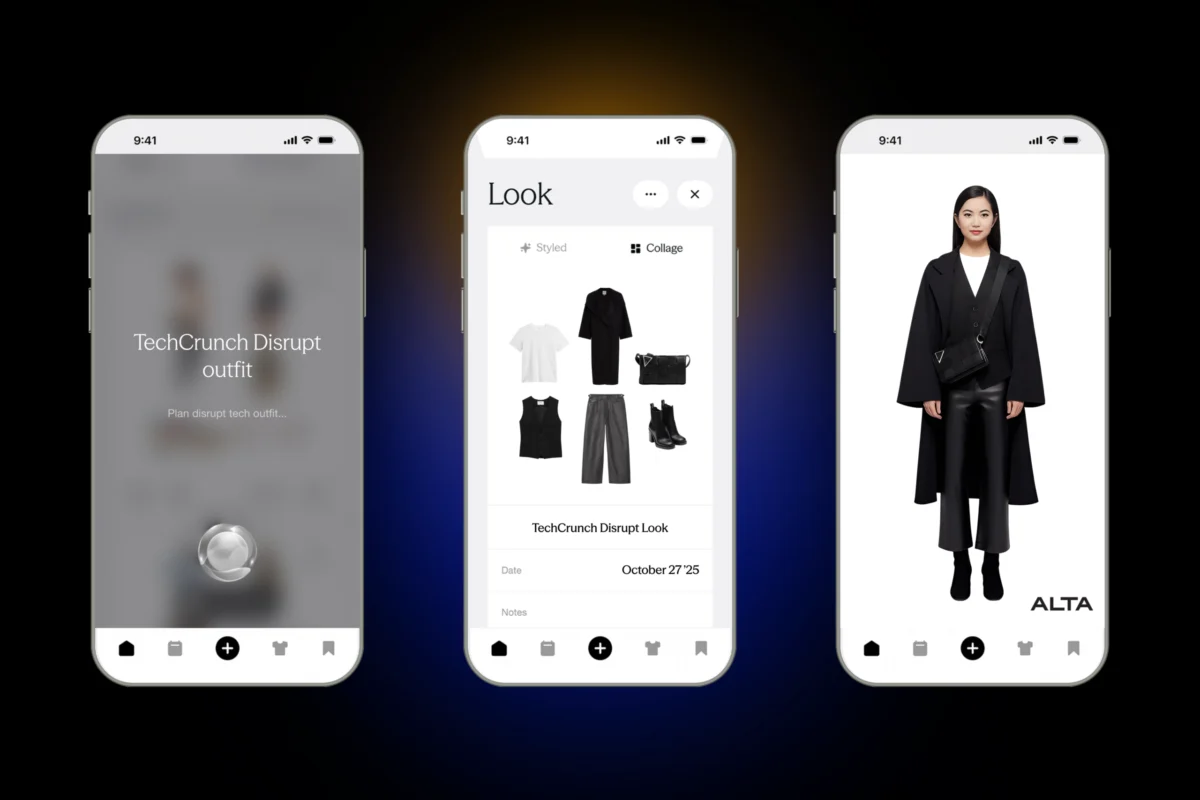
At its core, Alta is designed to act as a sophisticated AI stylist that understands the nuances of a user’s lifestyle. The user experience begins with the digitization of the physical closet. Users can populate their digital wardrobe through three primary methods: uploading photos of their own clothing, forwarding digital purchase receipts for automatic synchronization, or searching for items within Alta’s extensive existing database. This "digital twin" of the user’s closet allows the AI to understand exactly what the user owns, including colors, fabrics, and styles.
One of the platform’s standout features is the integration of a personalized virtual avatar. Unlike traditional e-commerce platforms where clothes are displayed on professional models, Alta allows users to see how outfits look on a digital representation of themselves. This feature addresses one of the primary friction points in online shopping: the uncertainty of fit and styling. The AI does not merely suggest individual items; it curates full "lookbooks." For example, a user attending a specific professional conference, such as TechCrunch Disrupt, can query the AI for the most appropriate attire. The system then analyzes the event’s nature, the local weather forecast, and the user’s schedule to present a curated selection of outfits drawn from their existing closet, potentially supplemented by new items available for purchase.
A Strategic Investor Syndicate and Industry Support
The $11 million seed round is notable not only for its size but for the caliber of the investors involved. Led by Menlo Ventures, the round includes participation from Benchstrength and Aglaé Ventures, the investment arm of the Arnault family, which controls the LVMH luxury empire. The involvement of Aglaé Ventures signals a high level of interest from the traditional luxury sector in how AI might transform the retail experience.
The cap table also features Phenomenal Ventures, founded by Meena Harris, and the Anthology Fund, which is the venture arm of the AI safety and research company Anthropic. Furthermore, the startup has garnered support from a diverse group of angel investors who bridge the gap between Silicon Valley and the fashion world. These include Tony Xu, CEO and co-founder of DoorDash; supermodels Jasmine Tookes and Karlie Kloss; Jenny Fleiss, co-founder of Rent the Runway; and Manish Chandra, CEO and co-founder of Poshmark.
A critical component of Alta’s technical training involved collaboration with Meredith Koop, the renowned stylist best known for her work with former First Lady Michelle Obama. Koop’s expertise was utilized to train Alta’s AI models, ensuring that the recommendations provided by the platform adhere to professional styling principles rather than just algorithmic patterns. This "human-in-the-loop" approach is intended to give Alta a competitive edge in aesthetic quality, a domain where purely mathematical models often struggle.
Expanding the Footprint: From San Francisco to New York and Beyond
In a strategic move to align the company with the heart of the American fashion industry, Wang relocated Alta’s headquarters from San Francisco to New York City. She cited the burgeoning consumer AI scene in New York as a primary driver, noting that the city offers a unique talent pool of individuals who are both highly technical and deeply immersed in fashion culture. The proximity to Europe was also a factor; Wang noted that New York provides a more accessible gateway to Paris and London, which is essential for the company’s international ambitions.
Alta has already begun establishing its global presence through high-profile partnerships. The company recently struck a deal with the Council of Fashion Designers of America (CFDA) to offer its platform to the organization’s extensive membership base. This partnership allows designers to integrate their collections into the Alta ecosystem, providing them with a direct line to consumers who are actively seeking styling advice.
Internationally, Alta is working with organizational consultant and author Marie Kondo as it expands into Oceania and the Pacific regions. In Europe, the company is leveraging the influence of LVMH and tech influencer Zita d’Hauteville to navigate the complex European retail landscape. These partnerships suggest that Alta is positioning itself not just as a consumer app, but as a platform that can facilitate better relationships between retailers, designers, and shoppers globally.
The Competitive Landscape and Market Context
The "Clueless closet"—a reference to the 1995 film where the protagonist uses a computer to select her outfits—has long been a holy grail for fashion technology. Existing players like Whering and Cladwell have made strides in this area, focusing on wardrobe organization and sustainability. Meanwhile, tech giants like Google and Pinterest have introduced AI-powered shopping features, such as virtual try-ons and visual search.
However, Wang argues that the next generation of consumer technology requires a fundamental shift in architecture. While Google Shopping and Pinterest excel at search and discovery, Alta is focused on the "agentic" side of AI—moving from a tool that helps users find things to a tool that helps users make decisions. The goal is to move away from the traditional search bar and toward a proactive interface that understands the user’s context without being prompted.
The market potential for such a platform is significant. According to recent industry reports, the global AI in fashion market was valued at approximately $1.5 billion in 2023 and is projected to grow at a compound annual growth rate (CAGR) of over 35% through 2030. This growth is driven by the increasing demand for personalized shopping experiences and the need for retailers to reduce return rates, which are often caused by poor fit or styling choices.
Implications for the Future of Retail and Personal Style
The successful funding of Alta underscores several broader trends in the venture capital and technology sectors. First, it highlights the transition of AI from a "back-end" optimization tool to a "front-end" consumer experience. Second, it demonstrates the continued importance of "vertical AI"—models that are specifically trained for a particular industry rather than general-purpose assistants.
For the fashion industry, Alta represents a potential shift in how consumers interact with their clothes. By making it easier for users to visualize how new purchases will work with their existing items, the platform could encourage more thoughtful consumption, aligning with the growing trend toward sustainability and "slow fashion." Conversely, by streamlining the shopping process and offering highly personalized recommendations, it could also drive higher conversion rates for retail partners.
The $11 million in new capital will be used primarily for research and development and team expansion. Wang, who remains actively involved in the coding process, emphasized that the company’s focus will remain on refining its in-house models based on community feedback. As Alta moves toward broader retail partnerships, the ultimate goal is to create a seamless loop between the user’s closet, the stylist’s advice, and the retailer’s inventory.
In an era where digital noise is at an all-time high, Alta’s promise of a simplified, AI-curated lifestyle resonates with a demographic that is increasingly looking for technology to reduce cognitive load. If successful, Wang’s "dream company" could set the standard for how artificial intelligence integrates into the most personal aspects of daily life, transforming the way we think about what we wear and how we buy it. The journey from a 1990s cinematic fantasy to a multi-million-dollar AI reality is now well underway, with New York City serving as the laboratory for this high-tech sartorial experiment.