









On the occasion of Marilyn Monroe’s 100th birthday, Allure revisits a story journalist and author Rebecca Mead wrote for its August 2012 issue to commemorate the 50th anniversary of the star’s death. In the piece, Mead examines Monroe’s legacy, and how her disarming beauty still holds the power to seduce today. This retrospective delves deeper into the cultural phenomenon that is Marilyn Monroe, exploring the genesis of her iconic image, the enduring impact of her persona, and the multifaceted reasons behind her perpetual presence in popular consciousness.
The Genesis of an Icon: Beyond the Platinum Curls
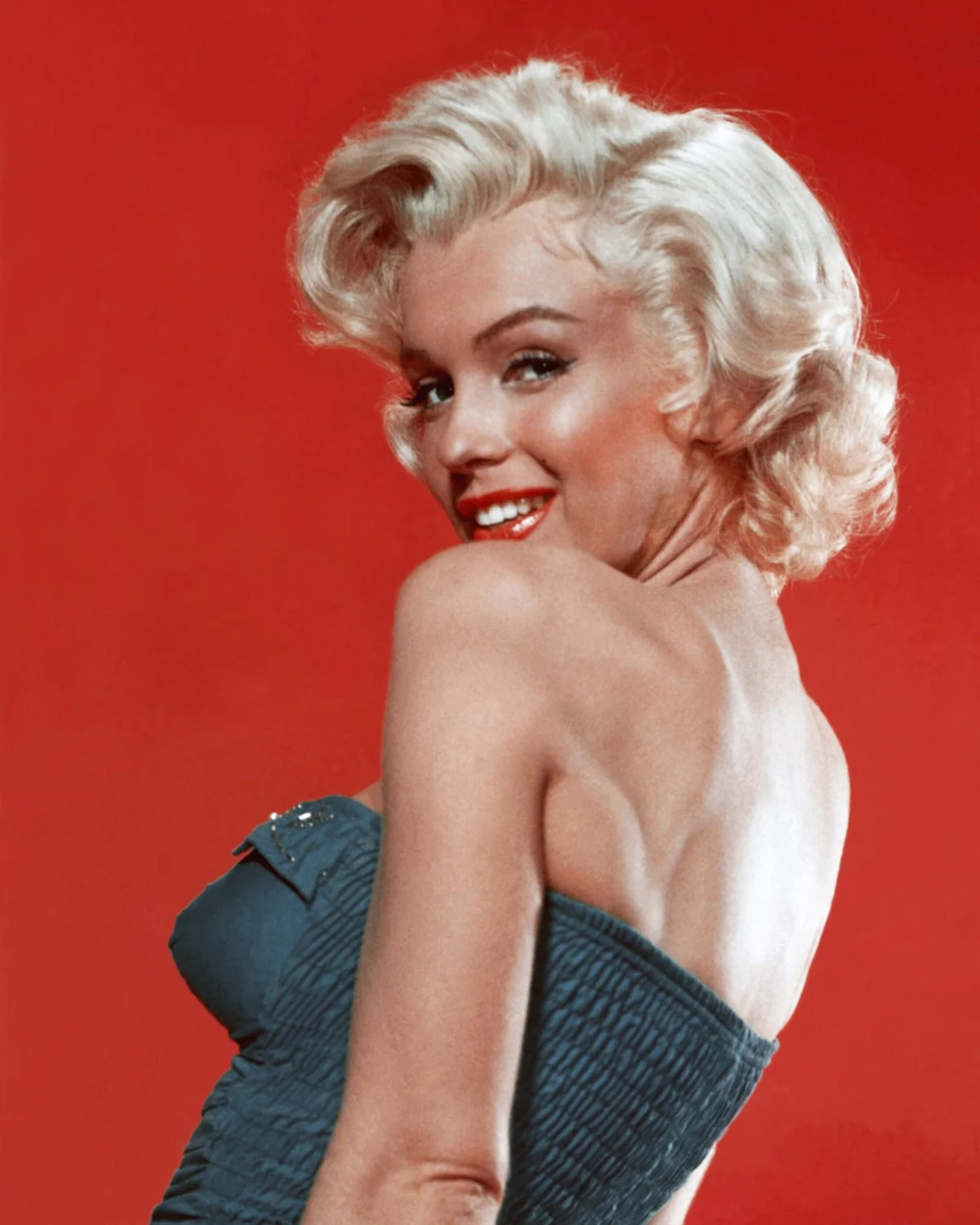
In March 1955, Life magazine featured a familiar figure on its cover: an actress with a cap of platinum-blonde curls, her deep-set eyes accentuated with bat-wing eyeliner and high-arched brows, her pink lips parted in a smile that revealed a row of perfect white teeth. It was the quintessential image of Marilyn Monroe, who at the time was riding the wave of her comic, bombshell popularity. Less than two years prior, she had captivated audiences in Gentlemen Prefer Blondes with her rendition of "Diamonds Are a Girl’s Best Friend." Within months, she would solidify her iconic status with the unforgettable scene in The Seven Year Itch, her white dress billowing above her knees.
However, the young woman gracing that 1955 Life cover was not Marilyn Monroe. It was Sheree North, a 22-year-old former burlesque dancer and one-time brunette. North’s chance had arrived: Twentieth Century-Fox, Monroe’s studio, had cast her as an alternative to Monroe, placing her in the film How to Be Very, Very Popular. In this movie, North portrayed a striptease dancer who witnesses a murder—a role originally intended for Monroe, who harbored aspirations for more serious dramatic work. In a poignant moment of recognition, when asked on the television show What’s My Line? by Bennett Cerf if she had ever been mentioned in the same sentence as Monroe, North replied with a touch of chagrin, "I think that all of us have."

North’s moment in the spotlight proved ephemeral. Within a couple of years, she was eclipsed by more durable "Marilyn substitutes" like Jayne Mansfield and Mamie Van Doren. Yet, North’s experience marked the beginning of a phenomenon: the obligation for actresses to mold themselves into the remarkable shape of Marilyn Monroe, a trend that has continued to echo through the decades.
A Cultural Touchstone: Impersonations and Homages
For countless actresses, channeling Marilyn Monroe has become a virtual rite of passage. Her image has been reinterpreted by many, each bringing their own interpretation to the enduring archetype. Nicole Kidman famously impersonated Monroe for Australian Harper’s Bazaar, while Scarlett Johansson lent her likeness for a Dolce & Gabbana advertisement. Lindsay Lohan, an avowed Monroe enthusiast who even purchased an apartment previously inhabited by the star, reenacted Monroe’s famed nude shoot with Bert Stern for New York magazine, posing behind colored chiffon and biting a pearl necklace. Makeup artist Kevyn Aucoin transformed Lisa Marie Presley, shedding her resemblance to her father, Elvis Presley, to uncannily embody the other lost legend.
Monroe’s likeness has been refracted through numerous iterations in pop culture. Guess model Anna Nicole Smith presented a coarser version of Monroe, and subsequent models for the same brand impersonated Smith impersonating Monroe. Perhaps most famously, Madonna adopted the trappings of Marilyn’s look and repurposed them for her own artistic agenda. As Gloria Steinem observed in the mid-1980s, "She has imitated Marilyn Monroe’s hair, style, and clothes, but subtracted her vulnerability." This influence is so profound that Lady Gaga’s platinum blonde pose, recalling Monroe, is itself a reference to Madonna’s earlier adoption of the icon’s style.
The Unmistakable Allure: Analyzing Monroe’s Enduring Appeal
Why does Marilyn Monroe continue to captivate audiences decades after her untimely death? She was not Hollywood’s first voluptuous, fair-haired beauty, nor was she the first to die tragically young. That distinction belongs to Jean Harlow, the original "blonde bombshell," who died in 1937 at the age of 26. Yet, Monroe is the one whose beauty has become so instantly recognizable that it can be evoked by a few key components: the signature blonde bouffant hair, the languid, half-closed eyes, and the slightly parted lips poised for a welcoming smile.

Andy Warhol’s Marilyn silk-screen prints, created in the immediate aftermath of her death and reproduced from a publicity photo for the 1953 thriller Niagara, reduced her image to these very elements, amplified by vivid Pop Art colors. Monroe’s beauty has become a common language within American pop culture, a fact that was evident even as early as 1955. As Sheree North aptly stated in Life magazine, "Marilyn’s an institution, like Coca-Cola."
From "Sturdy Blonde" to Sex Goddess: The Evolution of an Image
Monroe’s own debut on the cover of Life magazine occurred in 1952. In a striking choice of phrasing that seems almost anachronistic today, the magazine characterized the young actress—who had already appeared in notable roles in All About Eve and The Asphalt Jungle and was on the cusp of her first starring role in Don’t Bother to Knock—as a "sturdy blonde." While sturdiness might not be the first characteristic that comes to mind when considering Monroe, whose legend is intertwined with her perceived fragility and vulnerability, it’s understandable why it might have seemed an apposite description at the time.
Monroe’s vital statistics were reportedly around 36-22-35. She possessed a full, voluptuous figure, with emphasis on her breasts and hips, and a cinched waist. With minimal assistance from the corsetry and bra industries of her era, she achieved a silhouette that, to contemporary eyes, might appear digitally enhanced. Even though her curves exceeded the prevailing standards of beauty in recent decades—as Elizabeth Hurley once quipped, "I’d kill myself if I was as fat as Marilyn"—her body shape continues to possess an enduring appeal.
In 2004, Polish anthropologist Grazyna Jasieńska published findings suggesting that women with hourglass figures may exhibit higher levels of hormones conducive to conception and pregnancy. This research offers a potential biological explanation for Monroe’s enduring "sex goddess" allure.

The Magnetic Gaze: Monroe’s Cinematic Presence
Following her first silent screen test in 1946, at the age of 20, cinematographer Leon Shamroy reportedly remarked that "every frame of the test radiated sex." While it is debatable whether she remains "the world’s most photographed woman" in the digital age, it is highly probable that she was the most photographed woman lying down. Even in her initial Life shoot, she is depicted lounging on a chaise. Numerous photographers captured her in horizontal languor, including a notable shot for the inaugural issue of Playboy in 1953. This prevalence of horizontal poses sometimes creates the impression that she rarely stood on her size-7 feet.
Billy Wilder, who directed her in seminal films like The Seven Year Itch and Some Like It Hot, commented on the "luminosity" of Monroe’s face. She appeared almost incandescent, her skin adorned with a fine, downy peach fuzz that amplified her glow before the camera. When the studio suggested removing it, she refused. Her natural radiance was further enhanced by subtle cosmetic interventions. An overbite, which accentuated her distinctive pout, was corrected, and a bump on her nose was reduced early in her career, meticulously shaping her iconic features.
The Art of Illusion: Makeup, Hair, and the Creation of an Image
The transformative power of cosmetics, often applied by her longtime makeup artist, Allan Snyder, played a crucial role in crafting Monroe’s screen persona. For her final film, The Misfits—a production marred by her struggles with alcohol and prescription drug abuse—Snyder began his work while she was still in bed, a testament to the prolonged effort required for her to become camera-ready. At the time of her death, her meticulously organized makeup case contained Erno Laszlo creams, a green Leichner of London eyeshadow, two Elizabeth Arden Eye Stopper pencil liners, and Glorene of Hollywood false lashes. This collection, auctioned at Christie’s in 1999, fetched over a quarter of a million dollars, far exceeding its pre-auction estimate, underscoring the enduring fascination with her beauty regimen.
Early photographs of Monroe, taken when she was an 18-year-old munitions factory worker, reveal her with long, brunette curls. This natural hair color was transformed into her signature platinum blonde only after she signed with a modeling agency. She enlisted the expertise of Pearl Porterfield, a colorist renowned for her work on Jean Harlow’s hair, who used old-fashioned peroxide to achieve the desired effect. Over the decades, Monroe would rely on several prominent hairdressers, including Kenneth Battelle, who styled her hair for her famous appearance at President Kennedy’s birthday gala. Battelle also famously styled Jacqueline Kennedy’s hair.

Blonde hair, much like the high, breathy voice Monroe employed in her presidential serenade, is often associated with youth and innocence. Her womanliness was amplified by a childlike cuteness that rendered her unthreatening to other women, while simultaneously making her irresistibly appealing to men. As film critic Pauline Kael once observed, "Women couldn’t take her seriously enough to be indignant: She was funny and impulsive in a way that made people feel protective."
The Shadow of Childhood: Vulnerability and Dramatic Power
As a child, rather than an onscreen embodiment of one, Marilyn Monroe—then known as Norma Jeane Mortensen—did not find protection from those who were most obligated to provide it. Born in Los Angeles in 1926 to a mentally unstable mother who was ill-equipped to care for her, Monroe spent much of her childhood in a series of foster homes. She later spoke of experiencing sexual abuse. Married at 16 to a neighbor’s son, she was divorced for the first time at 19. The profound hardships of her upbringing are widely believed to have contributed to her onscreen power. Her beauty was animated by a palpable neediness that commanded attention. Playwright Arthur Miller, who was married to Monroe for four and a half years, described her in his memoir, Timebends, as "the saddest girl I’ve ever known."
The inherent sadness of Monroe’s life looms large. The iconic images from the Bert Stern nude shoot, which might have been a whimsical footnote in a longer career, now possess the gravitas of a tragic valediction, having been captured just six weeks before her death. It is a peculiar aspect of celebrity culture that Monroe is now more recognizable for her still images than for many of the films in which she appeared. She is instantly known to generations who have never seen Gentlemen Prefer Blondes or Some Like It Hot.
The Enduring Enigma: Motion, Aliveness, and Lasting Impact
In this context, Monroe presents a stilled image of impending tragedy. Her dynamism and kinetic energy are lost in static portrayals—as is the much-lampooned sway of her hips. The actress Constance Bennett reputedly quipped, "There’s a broad with her future behind her." Literary critic Diana Trilling, in an essay published shortly after Monroe’s death, argued that viewing her in a photograph, rather than in a moving image, diminished her, "since no still picture could quite catch her electric quality." It was this inherent motion and aliveness that powered Marilyn Monroe’s beauty, and it is this very quality that continues to resonate and move us today, even though her physical presence has been stilled for fifty years. Her legacy transcends mere visual representation, embodying a complex interplay of glamour, vulnerability, and an enduring human connection that continues to captivate the world.