



The 77th Cannes Film Festival served as a definitive nexus for the global luxury industry and international cinema, transforming the Promenade de la Croisette into a high-stakes theater of sartorial diplomacy. As the film industry grapples with shifting distribution models and the rise of streaming, the red carpet at the Palais des Festivals remains one of the few remaining platforms capable of generating instantaneous, worldwide media value. This year’s festival was characterized by a sophisticated blend of heritage European houses, the rise of South Asian couture, and a renewed emphasis on "method dressing," where actors align their aesthetic choices with the thematic resonance of their filmic projects.
The Strategic Dominance of French Heritage Maisons
The presence of traditional French fashion houses—Dior, Chanel, and Louis Vuitton—was not merely a matter of proximity but a calculated display of brand dominance. Louis Vuitton, in particular, utilized the festival to showcase its deep roster of global ambassadors. Cate Blanchett, a perennial figure of sartorial intelligence, appeared in Louis Vuitton, reinforcing her long-standing relationship with the house. She was joined by Léa Seydoux, Gianna Jun, Hoyeon, and Alicia Vikander, all of whom donned custom creations by Nicolas Ghesquière. This "LV cohort" illustrates the brand’s strategy of diversifying its appeal across different markets, from the established European cinema circles to the burgeoning South Korean entertainment industry.
Chanel maintained its focus on "quiet luxury" and artistic prestige. Sandra Hüller, who has seen a meteoric rise following her performances in Anatomy of a Fall and The Zone of Interest, appeared in Chanel Haute Couture, a choice that solidified her status as a muse of the house. Kristen Stewart, a veteran Chanel ambassador, continued to push the boundaries of the brand’s traditional tweed heritage, while Liu Wen represented the house’s significant reach into the Chinese luxury market.
Dior, under the creative direction of Maria Grazia Chiuri, opted for a narrative of timeless elegance and feminist empowerment. Ruth Negga’s appearance in Dior Haute Couture was a highlight of the festival’s opening days, followed by Camille Cottin and Charlotte Le Bon. Taylor Russell’s inclusion in the Dior lineup further signaled the brand’s interest in the next generation of Hollywood "it-girls" who command significant influence on social media platforms.
The Demi Moore Fashion Marathon: A Case Study in Rebranding
Perhaps no individual captured the attention of the international press more than Demi Moore. Her presence at the 77th Cannes Film Festival was marked by a series of high-profile appearances that functioned as a masterclass in red carpet versatility. Moore’s wardrobe was not tethered to a single house, allowing her to explore various facets of contemporary fashion.
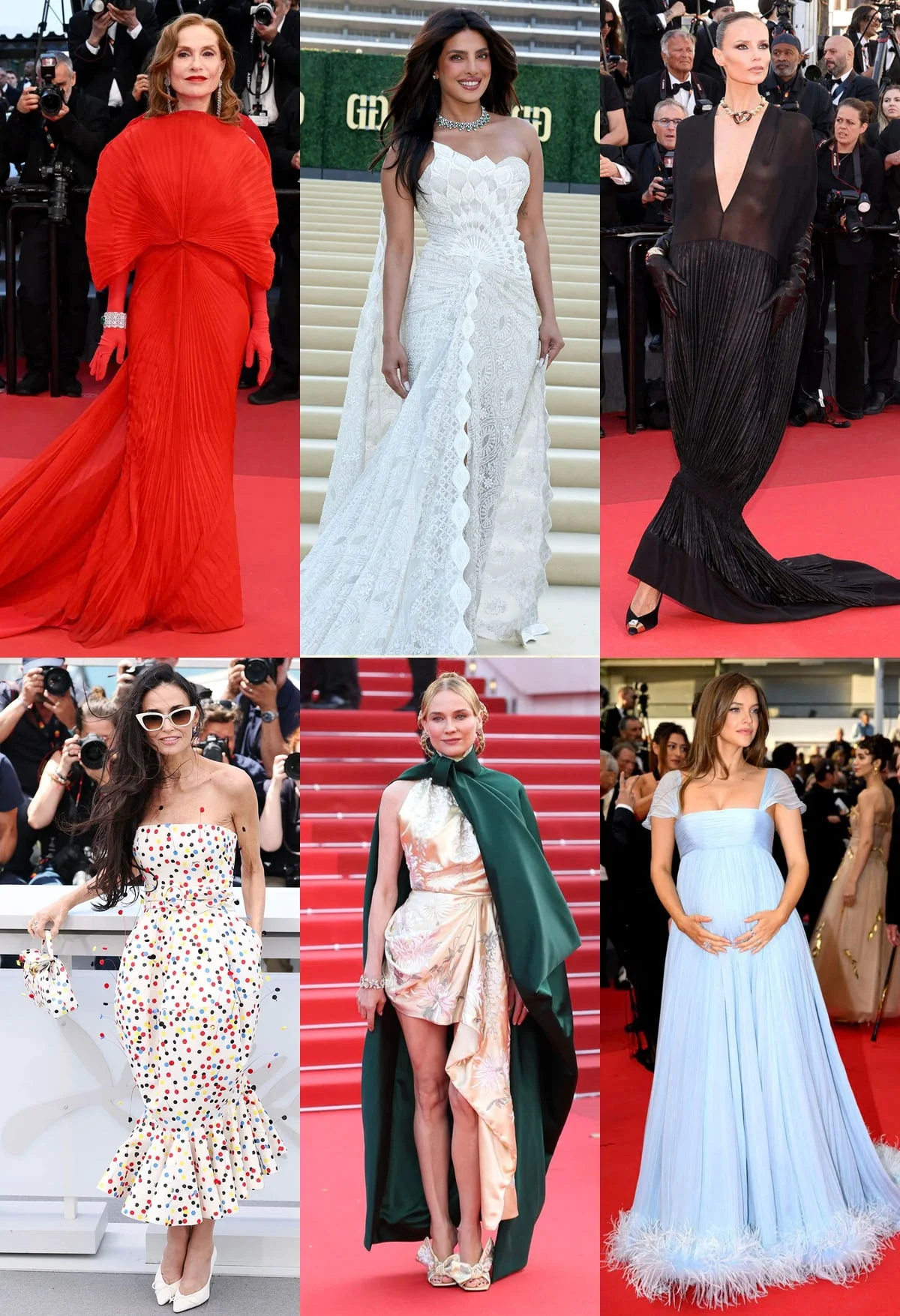
Her choices ranged from the structured elegance of Tamara Ralph to the minimalist chic of Jacquemus. However, it was her foray into more experimental territory that sparked the most dialogue among fashion critics. Her appearance in Matières Fécales—a label known for its provocative, otherworldly aesthetic—represented a significant departure from the standard "Hollywood Glamour" expected at Cannes. By also wearing Gucci and Schiaparelli Haute Couture, Moore successfully positioned herself as a versatile icon capable of oscillating between traditional sophistication and avant-garde risk-taking. Industry analysts suggest this multi-brand strategy was designed to maximize Earned Media Value (EMV) ahead of the release of her latest projects, signaling a revitalized chapter in her career.
Global South Influence and the Rise of Regional Couture
One of the most notable shifts in the 2024 festival circuit was the increased visibility of designers from the Global South. This trend was spearheaded by Indian cinema icons who utilized the Cannes platform to highlight domestic craftsmanship. Priyanka Chopra made a significant impact in Amit Aggarwal Couture, a designer known for his architectural silhouettes and innovative use of recycled materials. Similarly, Alia Bhatt’s appearance in Tarun Tahiliani brought traditional Indian embroidery and draping techniques to a global audience, showcasing a blend of cultural heritage and modern sensibility.
This shift was mirrored by other international stars. Sara Sampaio’s choice of Waad Aloqaili, a Saudi Arabian designer, highlighted the growing influence of Middle Eastern fashion houses on the international stage. These choices indicate a move away from the Eurocentric monopoly of the red carpet, as stylists and celebrities increasingly seek out unique, culturally resonant pieces that stand out in a saturated media landscape.
Technical Innovation and the Return of Surrealism
The festival also served as a showcase for the technical prowess of haute couture. Schiaparelli, under Daniel Roseberry, continued its revival of surrealist fashion. Leïla Bekhti’s appearance in Schiaparelli Haute Couture and Chloe Zhao’s choice of the same house demonstrated how the brand has become a go-to for celebrities looking to make a cerebral, artistic statement. The use of unconventional materials, gold hardware, and exaggerated proportions has allowed Schiaparelli to reclaim its position as a leader in "conversational fashion."
In contrast, the "New Look" of Italian houses like Prada and Miu Miu focused on cinematic nostalgia. Marisa Abela, who recently portrayed Amy Winehouse in the biopic Back to Black, appeared in Prada, an aesthetic choice that bridged the gap between 1960s mod influences and contemporary minimalism. Barbara Palvin’s Miu Miu ensemble catered to a younger, trend-focused demographic, emphasizing the brand’s dominance in the "luxury-youth" sector.
Chronology of Red Carpet Milestones
The 12-day festival followed a rigorous schedule of premieres and galas, each with its own sartorial tone:
- The Opening Ceremony: Dominated by heritage houses, the focus was on establishing a baseline of classic glamour. Meryl Streep’s honorary Palme d’Or presentation set a dignified tone for the evening.
- The Mid-Festival Shift: As the competition screenings intensified, the fashion became more daring. This period saw the rise of the avant-garde choices, including Demi Moore’s Matières Fécales look and Natasha Poly in Ferragamo.
- The amfAR Gala: This charitable event serves as the festival’s unofficial fashion finale. It is here that designers like Elie Saab (worn by Araya A. Hargate and Olga Kurylenko) and Givenchy (worn by Diane Kruger and Cate Blanchett) typically debut their most high-octane evening wear.
- The Closing Ceremony: A return to formality, where the focus shifts back to the winners of the Palme d’Or, often featuring stars in Chanel and Dior to maintain a sense of prestige.
Supporting Data: The Economics of the Red Carpet
The impact of these fashion choices extends far beyond aesthetic appreciation. According to data from Launchmetrics, a single red carpet appearance by a high-profile star at Cannes can generate upwards of $10 million in Media Impact Value (MIV) for a brand.
- Total Attendees: Approximately 35,000 accredited professionals.
- Media Presence: Over 4,000 journalists from 75 countries.
- Economic Impact: The festival is estimated to generate over €200 million for the local economy of Cannes.
- Social Media Reach: Red carpet hashtags consistently trend globally, with an estimated reach of 2.5 billion impressions over the two-week period.
For brands like Louis Vuitton and Chanel, these figures justify the immense cost of flying in teams of tailors, stylists, and publicists to manage the appearances of their ambassadors.
Broader Implications and the Future of Red Carpet Diplomacy
The 77th Cannes Film Festival has confirmed that the red carpet is no longer just a precursor to a film screening; it is a sophisticated marketing ecosystem. The inclusion of stars like Isabelle Huppert in Gucci and Julianne Moore in Bottega Veneta underscores a move toward "intellectual fashion," where the celebrity’s personal brand is as important as the garment itself.
Furthermore, the presence of directors like Chloe Zhao in haute couture suggests that the divide between the "talent behind the camera" and the "talent in front of the camera" is blurring in terms of brand partnerships. Luxury houses are increasingly looking to associate themselves with the prestige of award-winning directors and screenwriters, recognizing that their influence is more enduring than that of a fleeting social media trend.
As the festival concludes, the industry looks toward the upcoming awards season. The trends established on the Croisette—regional representation, the revival of surrealism, and the strategic use of multi-brand rotations—are expected to influence the red carpets of the Venice Film Festival and the Academy Awards. The 2024 Cannes selection has proven that while the films may be the heart of the festival, the fashion is its most powerful global currency.