












Consumers are increasingly using Large Language Models (LLMs) to shop online, fundamentally reshaping the e-commerce landscape and compelling retailers to rapidly adapt their strategies. Drapers examines how this paradigm shift, driven by sophisticated artificial intelligence, is altering consumer behaviour and what steps retailers must take to remain competitive and relevant in an AI-augmented marketplace. The transition from traditional keyword-based searches to highly intuitive, conversational AI interactions marks a critical inflection point, moving beyond mere product recommendations to an era of intelligent, personalised shopping assistance.
The Dawn of Conversational Commerce: A New Era for E-commerce
For years, artificial intelligence has played a subtle yet significant role in online retail, primarily powering recommendation engines, fraud detection, and basic customer service chatbots. However, the advent of generative AI and Large Language Models, epitomised by technologies like OpenAI’s GPT series, Google’s Gemini, and Microsoft’s Copilot, has unleashed a far more transformative capability. These advanced AI systems can understand complex natural language queries, synthesise information from vast datasets, and generate human-like responses, effectively mimicking a highly informed personal shopper or a trusted advisor.
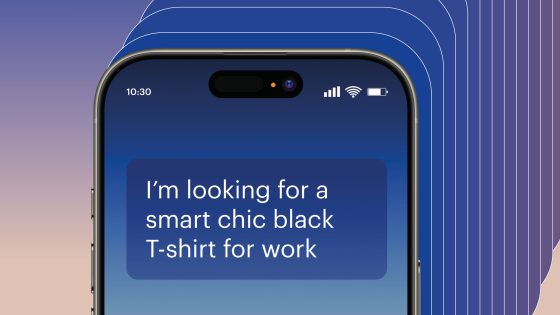
Consumers, accustomed to interacting with AI in their daily lives through virtual assistants and productivity tools, are now naturally extending these behaviours to their shopping journeys. This isn’t just about asking an AI where to buy a specific item; it’s about articulating nuanced needs, preferences, and constraints, then receiving curated, intelligent suggestions. For instance, instead of searching for "black dress," a consumer might ask, "Find me a sophisticated black cocktail dress suitable for a winter gala, made from sustainable materials, under £300, and available in petite sizes, showing me reviews that mention comfort and fit." The LLM can then process this multi-faceted request, scour countless product listings, analyse reviews, cross-reference brand values, and present a highly refined selection, complete with summaries of pros and cons, direct links, and even styling advice.
A Brief History of AI in Retail: From Algorithms to Advisors
The journey of AI in retail can be traced through several distinct phases:
- Early 2000s – Rule-Based Systems: Initial attempts at automation involved simple rule-based systems for inventory management, basic customer FAQs, and email segmentation. These were rigid and lacked true intelligence.
- Mid-2000s – Collaborative Filtering and Recommendation Engines: Pioneers like Amazon popularised algorithms that suggested products based on past purchases, browsing history, and what similar customers bought. This marked the beginning of personalised shopping, albeit in a rudimentary form.
- Late 2010s – Machine Learning and Predictive Analytics: The rise of big data and more powerful computing enabled retailers to employ machine learning for more sophisticated tasks: demand forecasting, dynamic pricing, churn prediction, and more nuanced personalisation driven by deep learning models. Chatbots became more common, but often remained script-bound.
- Early 2020s – Generative AI Breakthrough: The public release of highly capable LLMs in late 2022 fundamentally shifted the landscape. These models demonstrated an unprecedented ability to understand context, generate creative text, and engage in fluid, coherent conversations. This sparked widespread experimentation across industries, including retail.
- 2023-2025 – Rapid Integration and Adoption: As LLM capabilities matured and became more accessible via APIs and integrated platforms, retailers began to pilot and deploy these technologies for enhanced customer service, content generation, and, crucially, intelligent product discovery. Consumers, already familiar with generative AI from personal use, eagerly embraced these new shopping assistants.
- 2026 – Widespread Consumer-Driven Adoption: The current landscape sees a significant portion of online shoppers actively leveraging AI tools, either directly through dedicated shopping assistants or indirectly through AI-enhanced search engines, to inform their purchasing decisions. This is no longer an experimental phase; it is a mainstream phenomenon.
How Consumers Are Leveraging AI for Shopping Discovery
The ways in which consumers are integrating AI into their shopping journey are diverse and extend beyond simple product search:
- Hyper-Personalised Product Discovery: AI acts as a digital concierge, understanding individual style preferences, budget constraints, ethical considerations (e.g., sustainability, ethical sourcing), and even specific use cases. It can cross-reference these criteria against vast product catalogues, filtering out irrelevant options and presenting highly tailored suggestions.
- Intelligent Comparison and Evaluation: Consumers are using AI to perform comprehensive product comparisons. Instead of manually sifting through dozens of product pages and review sites, an AI can summarise key differences between competing products, highlight common praises or criticisms from reviews, and even identify the best value based on current promotions.
- Trend Forecasting and Styling Advice: LLMs, trained on extensive fashion databases and social media trends, can offer sophisticated styling advice, suggest complementary items, or even predict upcoming trends based on current data, helping consumers make more informed and fashionable choices.
- Problem Solving and Niche Needs: For specific or challenging requirements – such as finding adaptive clothing for a person with specific mobility needs, or sourcing a rare component for a hobby – AI can navigate complex inventories and specialist retailers more effectively than traditional search engines.
- Simplified Decision-Making: By distilling vast amounts of information into concise, actionable insights, AI reduces cognitive load for the consumer, making the shopping process less overwhelming and more efficient. This is particularly valuable for complex purchases like electronics or home appliances.
- Post-Purchase Support: AI is increasingly being used for automated order tracking, managing returns and exchanges, and providing instant answers to post-purchase queries, improving the overall customer experience.
Supporting Data and Industry Projections
The shift towards AI-powered shopping is not merely anecdotal; it is substantiated by robust industry analysis. A recent report by Gartner projects that by 2027, over 60% of consumers will have engaged with an AI assistant for product discovery or purchase, a significant leap from an estimated 20% in late 2024. Similarly, McKinsey & Company’s analysis suggests that generative AI could add between $2.6 trillion and $4.4 trillion annually across various industries, with retail and consumer goods being among the primary beneficiaries due to enhanced personalisation and operational efficiency. Forrester Research further indicates that retailers investing in advanced AI solutions are seeing a 15-20% uplift in conversion rates and a notable reduction in customer service costs. The global AI in retail market, valued at approximately $7 billion in 2023, is forecast to grow at a compound annual growth rate (CAGR) exceeding 30% through 2030, underscoring the rapid and substantial investment in this domain.
Industry Reactions and Expert Perspectives
The retail sector is acutely aware of this transformative trend. "The era of passive product display is over," states Sarah Chen, CEO of Innovate Retail Tech, a leading consultancy. "Consumers now expect an active, intelligent partner in their shopping journey. Retailers who fail to embrace this shift risk being relegated to mere transactional platforms, losing out on valuable customer engagement and loyalty."
Similarly, Dr. Emily Hayes, Head of AI Research at OmniCommerce Solutions, highlights the technical imperative: "Integrating LLMs effectively requires robust data infrastructure and a deep understanding of customer intent. It’s not just about plugging in an API; it’s about curating vast datasets, managing model biases, and ensuring ethical deployment to build trust with the consumer."
However, the rapid adoption also raises questions. "While the benefits of AI in shopping are immense, we must remain vigilant about data privacy, algorithmic bias, and the potential for ‘filter bubbles’ that limit consumer exposure to diverse products," cautions Mark Jenkins, a spokesperson for Digital Consumer Watch. "Transparency in how AI influences purchasing decisions will be paramount for maintaining consumer trust."
Implications for Retailers: Preparing for the AI-Augmented Future
The shift in consumer behaviour necessitates a comprehensive strategic overhaul for retailers. To thrive in this new environment, businesses must focus on several key areas:
- Investment in AI Infrastructure and Talent: Retailers need to allocate significant resources to develop or acquire advanced AI capabilities. This includes investing in cloud infrastructure, data pipelines, LLM integration, and attracting AI specialists, data scientists, and prompt engineers.
- Refined Data Strategy: The efficacy of any AI system hinges on the quality and quantity of data it processes. Retailers must establish robust data governance frameworks, focusing on collecting clean, relevant, and ethically sourced customer data. This data will be crucial for training and fine-tuning AI models to provide truly personalised and accurate recommendations.
- Seamless Omnichannel Integration: AI assistants should not be siloed tools. They must be seamlessly integrated across all touchpoints – website, mobile app, social commerce, and even in-store interactions (e.g., through smart mirrors or augmented reality applications) – to provide a consistent and coherent customer experience.
- Optimisation for Conversational Search: Traditional SEO (Search Engine Optimisation) focused on keywords. Retailers now need to optimise their product descriptions and website content for natural language queries, ensuring their products are discoverable by AI assistants interpreting complex user intent. This means richer, more descriptive content that answers potential questions an AI might ask.
- Cultivating a Brand-Specific AI Personality: Just as a brand has a distinct voice in its marketing, its AI assistants should reflect this personality. Whether it’s helpful, luxurious, quirky, or practical, the AI’s tone and response style should align with the brand’s identity to foster a cohesive customer experience.
- Ethical AI Deployment and Transparency: Building trust is paramount. Retailers must commit to ethical AI practices, addressing potential biases in algorithms, safeguarding customer data, and being transparent about when and how AI is being used in the shopping journey. This includes offering opt-out options and clearly explaining AI-driven recommendations.
- Empowering Human Employees: AI is a tool to augment, not replace, human interaction. Retail staff can be upskilled to work alongside AI, using its insights to provide more informed and empathetic service, particularly for complex issues or high-value sales.
- Strategic Partnerships: Many retailers, particularly smaller and mid-sized businesses, may not have the internal resources to develop cutting-edge AI. Forming strategic partnerships with AI solution providers, tech giants, or specialised consultancies will be crucial for accelerating adoption and innovation.
Broader Impact and the Future of Retail
The pervasive adoption of AI in consumer shopping heralds a profound transformation of the retail industry. It will undoubtedly intensify competition, with agile, AI-first retailers gaining significant advantages. The focus will shift from merely selling products to selling solutions, experiences, and highly personalised value. Brands that can leverage AI to truly understand and anticipate customer needs will foster deeper loyalty and engagement.
The landscape will also see a redefinition of traditional marketing and sales roles. Marketing will become even more data-driven and hyper-targeted, while sales associates will evolve into expert advisors, leveraging AI insights to enhance their human touch. Supply chains will become smarter, predictive, and more responsive, driven by AI’s ability to forecast demand with unprecedented accuracy.
However, challenges remain. The cost of implementing advanced AI, managing vast datasets, and mitigating algorithmic biases are significant hurdles. The regulatory environment surrounding AI is also evolving, requiring retailers to stay adaptable and compliant.
Ultimately, the future of retail is inextricably linked with AI. As consumers increasingly rely on intelligent assistants to navigate their purchasing decisions, retailers must not only adapt but innovate, embracing AI as a core component of their strategy to create richer, more efficient, and deeply personalised shopping experiences. The imperative is clear: understand the digital customer, leverage the power of AI, and redefine the meaning of modern retail.