



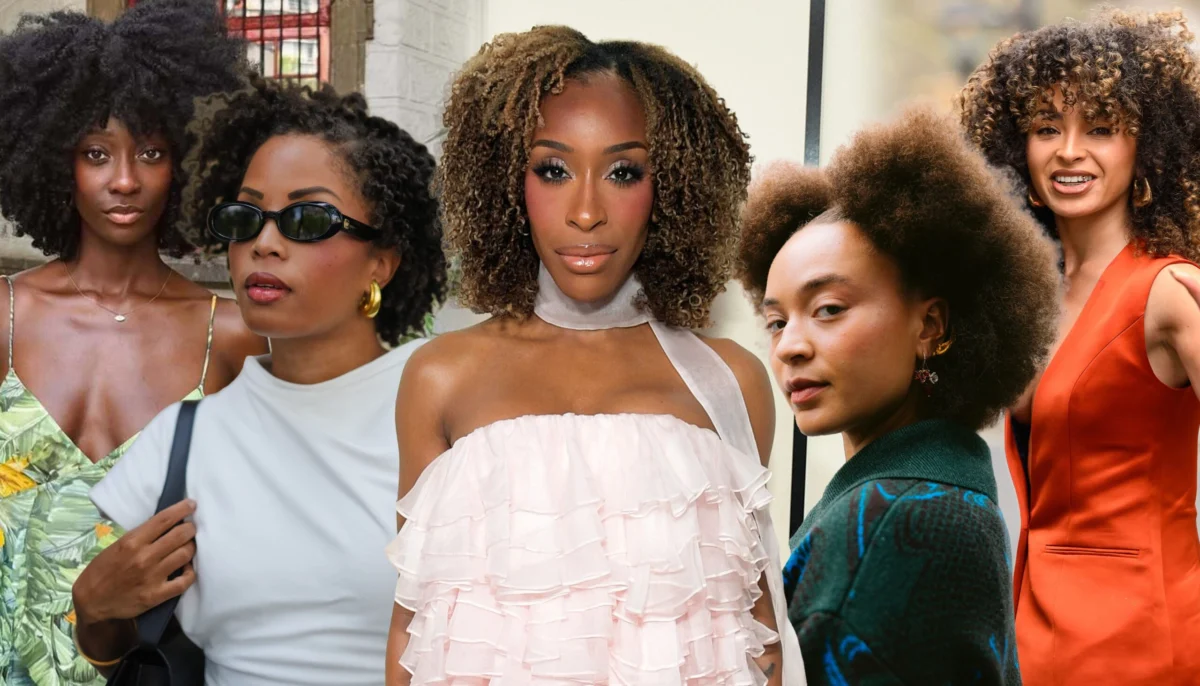
The question, posed by Ireland-based TikTok creator @sshozxox, was deceptively simple: "When’s the last time you left the house wearing your natural hair out?" For many Black women, the answer is recent, even daily. But for a significant segment, the query elicits discomfort, defensiveness, and a stark realization of how infrequently their natural texture graces the outside world. This viral sentiment, sparked by @sshozxox’s candid critique, has ignited a fervent online discourse, forcing a collective introspection into why many Black women opt for wigs and weaves, and whether this choice stems from convenience or a deeper, internalized discomfort with their natural hair.
The creator, who prefers to be identified by her first name, Sharon, articulated her central argument in a now-viral video: "You treat your wig with the care your natural hair deserves." Her contention is not an outright condemnation of protective styles, but a pointed observation that many Black women invest more time, energy, and resources into maintaining their extensions than the very strands growing from their scalps. In a series of follow-up posts, Sharon doubled down, challenging the notion that natural hair is inherently more difficult to manage than its synthetic counterparts. She posited that the perceived "convenience" of wigs and weaves often masks a more profound, perhaps subconscious, unease with embracing their natural texture.
The reaction was swift and polarized. Some viewers embraced Sharon’s critique as a form of tough love, prompting them to examine their own hair practices and the underlying reasons for concealing their natural texture. Others felt her perspective oversimplified a complex issue, unfairly shaming Black women for their styling choices.
Blake Newby, a former beauty editor turned content creator, initially observed the debate with quiet agreement. However, as her "For You Page" became saturated with response videos and accusations of Sharon policing Black women’s hair, Newby felt compelled to defend Sharon’s stance. "I was so confused by the discourse because I felt like she was right," Newby stated. "I understand that I need to deconstruct the reasons behind the fact that I never wear my natural hair." Newby, who exclusively wears straight wigs and weaves over her natural hair, acknowledged the need for personal introspection regarding her own styling choices.
Other prominent Black creators, including beauty gurus Jackie Aina and Patricia Bright, have joined the conversation, echoing Sharon’s sentiments and encouraging Black women to delve deeper into their motivations for choosing wigs, weaves, and even braids over their natural hair. At the heart of this complex dialogue lies the pervasive issue of internalized racism. The discomfort with natural hair textures is not innate but often inherited through generations of systemic racism designed to denigrate Black people and their features. As Newby articulated in her video, "Until natural hair is no longer political, until things like the CROWN Act are no longer necessary for us to wear our natural hair in professional workplaces… [this discourse] is important and relevant." The CROWN Act, which stands for Creating a Respectful and Open World for Natural Hair, is landmark legislation aimed at prohibiting discrimination based on hair style and texture in workplaces and schools. Its continued necessity highlights the ongoing struggle for acceptance of natural Black hair in professional and social spheres.
Sharon’s initial video was not an intentional bid for viral fame. It was a passionate response to another Black creator who, according to Sharon, "made multiple videos about how she hates her 4C hair texture and how it’s difficult to maintain." This resonated deeply with Sharon, who stated, "It triggered something in me because I’m tired. My hair looks exactly like hers, and I’ve been able to take care of my hair. We’re both on the same internet. We both have access to the same information. How have I been able to create a routine, and you’re still crying on the internet?" Her frustration stems from a perceived disconnect between the expressed difficulty of managing certain natural hair textures and her own lived experience of successfully doing so.
The Counterarguments: Policing and Policing Perceptions
A significant portion of the backlash against Sharon’s videos centers on the argument that Black women should not police each other’s hair choices. Proponents of this view emphasize the historical and ongoing external regulation of Black hair. Given that Black hair has been subjected to intense scrutiny and often deemed unprofessional, they argue that Black women should have the autonomy to style their hair as they please, free from judgment or commentary.
Furthermore, some critics suggest that Sharon’s direct approach perpetuates the very shame Black women may already feel about their natural hair. One viewer commented under Sharon’s video, "Let’s acknowledge the hurt and pain they [Black women] internalize… it’s not their fault. It takes a lot of time to unravel the self-hate, so let’s not use guilt… defenses will naturally go up when the approach isn’t empathetic." This perspective highlights the need for empathy and understanding when discussing sensitive topics related to self-esteem and identity, particularly for a community that has historically faced hair-based discrimination.
Another crucial point raised by a segment of the Black female community is that Sharon’s critique overlooks the realities faced by women dealing with hair loss and conditions like alopecia. "As someone with alopecia and very thin hair that is no longer full, I feel like this conversation often centers women who already have full, healthy-looking hair," one user commented on a video defending wigs and weaves. "It unintentionally leaves out a whole group of women who would love to wear their natural hair but are dealing with damage, hair loss, or conditions like mine." This perspective underscores the fact that for some, wigs and weaves are not merely aesthetic choices but essential tools for managing medical conditions and reclaiming a sense of normalcy and confidence.
The Echoes of Past Movements: A Look Back at Natural Hair’s Evolution
This ongoing discourse has prompted many, including Blake Newby, to speculate about the potential for a new natural hair movement. However, this iteration, they suggest, may embody greater freedom and less pressure than its predecessors. To understand where the movement might be heading, it’s essential to trace its historical trajectory.
The initial significant push for Black people to embrace their natural texture occurred during the 1970s, intertwined with the Black Power movement. A more recent iteration gained momentum around 2010 and peaked in 2016, largely fueled by the burgeoning platform of YouTube. Black creators flocked to the site, producing a wealth of tutorial-style content dedicated to natural hair care. Figures like Chizi Duru, Whitney White (Naptural85), and Jessica Pettway (OnlyOneJess) provided much-needed representation for diverse curl patterns and coils, fostering a space where Black women could learn to care for and style their natural hair.
Prior to this digital wave, knowledge about natural hair care was primarily confined to salons or passed down through familial networks. The rise of YouTube creators democratized this information, making accessible educational content on everything from establishing a washday routine and transitioning from relaxed hair to mastering complex styles like twist-outs.
The impact of this movement was profound for many individuals. For example, after over a decade of relaxed hair, the author transitioned to natural hair in 2016, relying heavily on these online resources. Sharon herself acknowledges the inspiration drawn from these creators, stating, "They gave me inspiration for how to do my hair."
However, a decade later, the natural hair community appears to be experiencing a partial reversal, with an increasing number of Black women returning to straightened styles after exploring their natural texture. A 2021 report by Allure on this phenomenon noted that the most common reason cited by women for returning to relaxers was a simple, yet telling, phrase: "I’m tired." This fatigue suggests that the demands of maintaining natural hair, as perceived or experienced, may have become unsustainable for some.
The Fraying Threads of the Movement: Brand Influence and Unrealistic Expectations
Sharon attributes a decline in the natural hair movement’s momentum to what she perceives as misleading marketing from hair-care brands. "The natural hair movement was supposed to be for kinky, curly girls that looked like me," Sharon asserts, highlighting that individuals with looser curl patterns have historically faced less ostracization than those with Type 4 hair. She observed that as the movement gained traction, "we saw a lot more girls with loose curls at the forefront." Brendnetta Ashley, a hairstylist in San Francisco, corroborates this observation, noting that while creators with Type 4 hair remained influential, the most visible figures often sported looser, bouncier curls rather than tight, kinky coils.
Sharon’s theory suggests that brands capitalized on the trend by producing a plethora of natural hair products. However, she contends that their marketing often failed to consistently center tightly coiled textures. "The natural hair campaigns started changing; the women started to get lighter, and the curls started to get looser, and then the message behind the movement got lost," she stated. This shift, in Sharon’s view, led many women with Type 4 hair to purchase products with the expectation of achieving the curl patterns showcased in advertisements. When these results were not realized, frustration ensued, and the idea that their hair was inherently difficult to manage became internalized. Sharon argues that the issue was not their hair texture but the misaligned expectation that it should mimic a completely different one.
This disconnect was not solely the fault of brands. Several contributing factors fueled these unrealistic expectations:
- Flawed Curl Charts: Inaccurate categorization systems led many individuals to misidentify their hair type, setting them up for disappointment.
- YouTube Algorithm Influence: Some YouTubers presented their routines and techniques as the definitive "best way" to achieve specific styles, without adequately acknowledging the significant impact of individual hair texture on outcomes.
- Persistent Texturism: The enduring issue of internalized racism manifested as texturism, where even within the natural hair movement, imagery often subtly prioritized looser curl patterns as the most aspirational. While slogans like "love your God-given texture" and "natural hair is beautiful" were prevalent, the visual representation often told a different story.
Reflecting on this era, writer Kayla Greaves shared in a 2024 Allure essay about heat-training her hair, "I wanted these perfectly defined curls because that’s what I felt the Black community was telling me I needed to have." This pressure contributed to a sense of fatigue. Greaves, who went natural in 2014, found the experience less empowering and more akin to a chore. "It felt like a chore. I grew to resent doing my hair," she stated. "Having ‘healthy hair’ came at the cost of my mental health, and that’s just not a price I’m willing to pay." Consequently, Greaves now opts for frequent keratin treatments and often wears her natural hair straight, a routine that allows for a swift 20-minute styling session weekly.
Greaves represents a growing contingent of Black women who do not inherently dislike their natural texture but find the convenience of straightened styles, wigs, or weaves more manageable. "I do not have the capacity to care for my hair the way it deserves to be cared for on a daily basis," Newby admitted.
The Paradox of Maintenance: Wigs, Weaves, and the Time Investment
Sharon counters the argument of convenience by highlighting the significant time and effort involved in maintaining wigs and weaves. Having worn wigs exclusively for two years, she detailed the intricate process: applying wig caps, layering glue along the hairline with drying time between each layer, using a band for a few minutes, and then applying a spritz—all before any styling. "To me, it’s quite hypocritical that you can take time out of your day to do something as intricate as gluing a wig down, but washing your hair, putting conditioner on your hair, taking out your cornrows, is too much work," she argued. This observation suggests that the perceived ease of wigs and weaves might be a subjective assessment, potentially overlooking the labor involved in their application and upkeep.
Beyond the practicalities of maintenance, an uncomfortable truth persists: many Black women with tightly coiled and kinky hair textures have been conditioned to believe their hair is not beautiful. This belief is a direct legacy of colonization, Eurocentric beauty standards, and systemic racism, which historically deemed Black hair unprofessional, a perception that sadly lingers in many circles today. Newby, who hosts red carpet events in addition to her content creation, shared, "In the industry that I’m in, there’s this unspoken rule that if you want to be successful, then your hair needs to look a certain way. It is just really ingrained in me that for special occasions, your hair should be straight."
While legislative efforts like the CROWN Act have made strides in combating hair-based discrimination in professional settings, the underlying biases remain deeply ingrained. Sharon’s critique, therefore, serves as a call for deeper introspection, hoping to challenge these deeply held beliefs for the current generation and for those to come.
The Future of Natural Hair: Towards an Inclusive Movement 3.0
For Black women with daughters, like the author, the most resonant aspect of Sharon’s argument is the potential disconnect created by an overreliance on wigs, weaves, and even braids. This disconnection, she posits, can inadvertently send a harmful message to the next generation: that their natural hair is not good enough. While the practical skills of natural hair care can be acquired through online tutorials, the deeper, more insidious message transmitted can be that natural hair is unworthy, unprofessional, and unlovable.
At its core, Sharon’s impassioned stance is driven by a desire to see Black women embrace and celebrate themselves in their entirety, including their natural hair textures. "My videos were never intended to get Black women to stop wearing wigs," Sharon clarified. "I just want them to feel confident in their natural hair, in the hair that grows from their scalp. I want them to understand that you can feel so beautiful just rocking the curls on your head."
Whether this pivotal conversation will lead to a widespread reduction in wig and weave usage in favor of natural hair remains to be seen. However, if a new natural hair movement emerges, it is likely to be distinctly different. It may herald an authentic celebration of all natural hair textures, with a renewed emphasis on comprehensive education. This education could move beyond superficial curl pattern discussions to provide expert guidance on crucial aspects like hair density, porosity, and scalp health. As Ashley suggests, "This is a big opportunity for hairstylists to really show up and support Black women by showing them how to work with their hair type." This focus on professional guidance and individual hair needs could help mitigate the fatigue experienced during the previous wave of the natural hair movement.
Wigs, weaves, and straightened styles like the silk press will likely remain popular choices. However, in this potential evolution, the emphasis may shift from concealment to exploration. Black women may feel empowered to experiment with various hairstyles not as a means to hide their natural texture, but as an act of personal expression, all while holding their natural curls and coils in high regard, tending to them with care, patience, and profound love.