





The 2026 Met Gala, held at the Metropolitan Museum of Art in New York City, served as the definitive platform for Alessandro Michele’s inaugural red carpet showing as the Creative Director of Valentino. Following his high-profile appointment to the historic Roman house, the fashion industry had anticipated how Michele would merge his signature maximalist, eccentric aesthetic with the refined, architectural heritage established by Valentino Garavani. On the first Monday in May, that vision was crystallized through eleven distinct celebrity looks that prioritized theatricality, intricate surface detail, and a reimagining of house codes. The presentation marked a significant shift for Valentino, transitioning from the monochromatic, structural elegance of the previous era into a period defined by narrative-driven couture and historical pastiche.
The Strategic Evolution of Valentino Under Alessandro Michele
The 2026 Costume Institute exhibition provided a thematic backdrop that allowed Michele to lean into the "Specula Mundi" (Mirror of the World) philosophy of his debut Haute Couture collection. Since taking the helm, Michele has sought to bridge the gap between Valentino’s mid-century Roman glamour and a more contemporary, gender-fluid, and heavily embellished sensibility. The Met Gala served as a strategic proving ground for this transition. By dressing a diverse cohort of actors, musicians, and models, the brand signaled its intention to capture a broader demographic while maintaining its status as a pinnacle of artisanal craftsmanship.
Industry analysts noted that the choice of celebrities—ranging from established award-season veterans like Colman Domingo to rising stars like Tyla and Sombr—reflected a calculated effort to dominate social media discourse and traditional fashion criticism simultaneously. The sheer volume of custom work, which reportedly involved thousands of hours of hand-embroidery and specialized textile development in Valentino’s Roman ateliers, underscored the house’s commitment to the "Specula Mundi" narrative.

Reimagining Menswear: From Draped Silhouettes to Harlequin Motifs
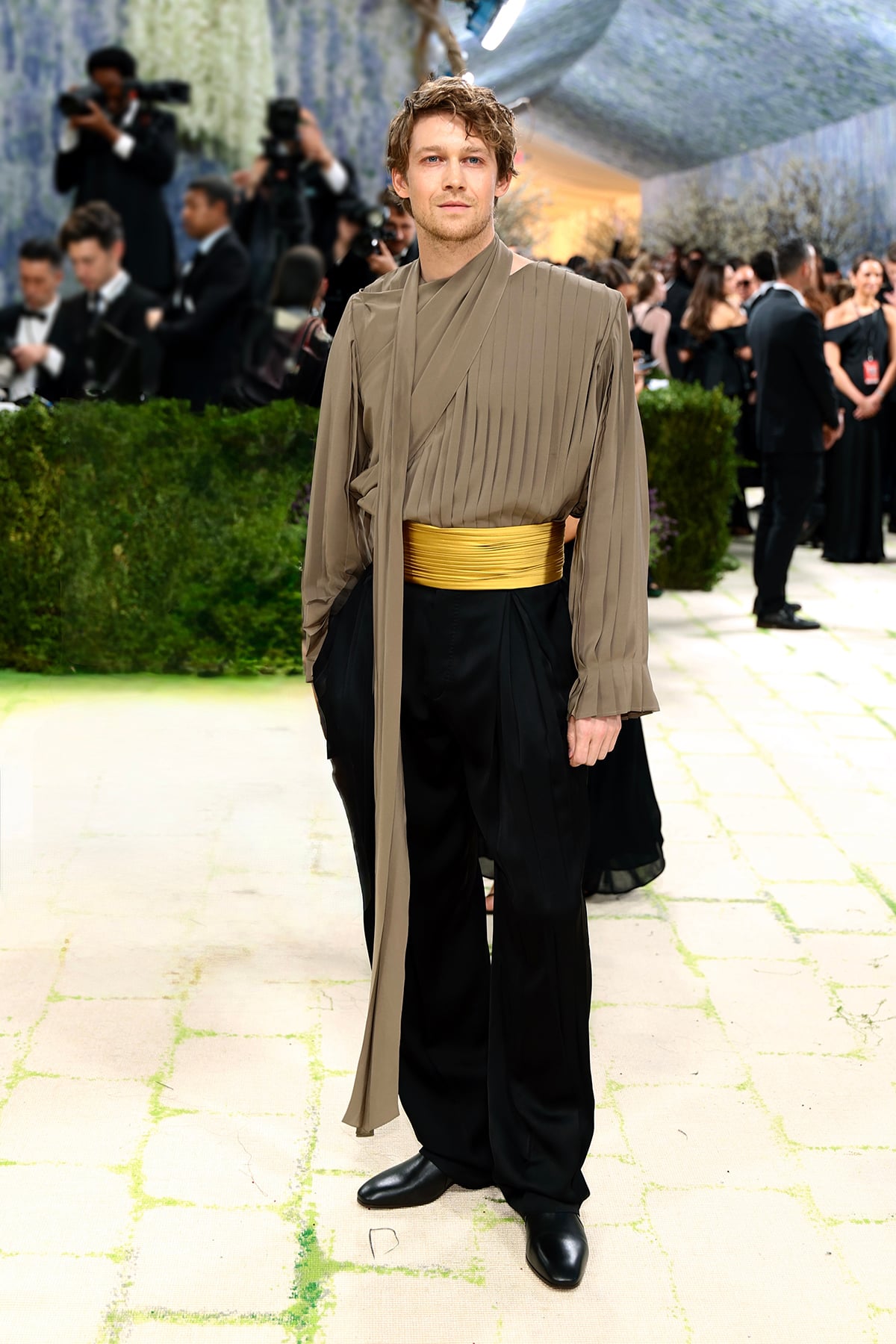
The menswear contingent of Michele’s Valentino debut was characterized by a rejection of the traditional tuxedo in favor of more expressive, narrative-driven silhouettes. Joe Alwyn, an actor typically associated with understated and conservative tailoring, emerged as one of the evening’s most discussed figures. His custom look featured a pleated, draped neckline shirt paired with a wide satin belt and relaxed trousers. The ensemble represented a departure from Alwyn’s previous red carpet appearances, signaling a new willingness to engage with avant-garde proportions. The look was accessorized with a Hublot timepiece, blending high-fashion theatricality with luxury horology.
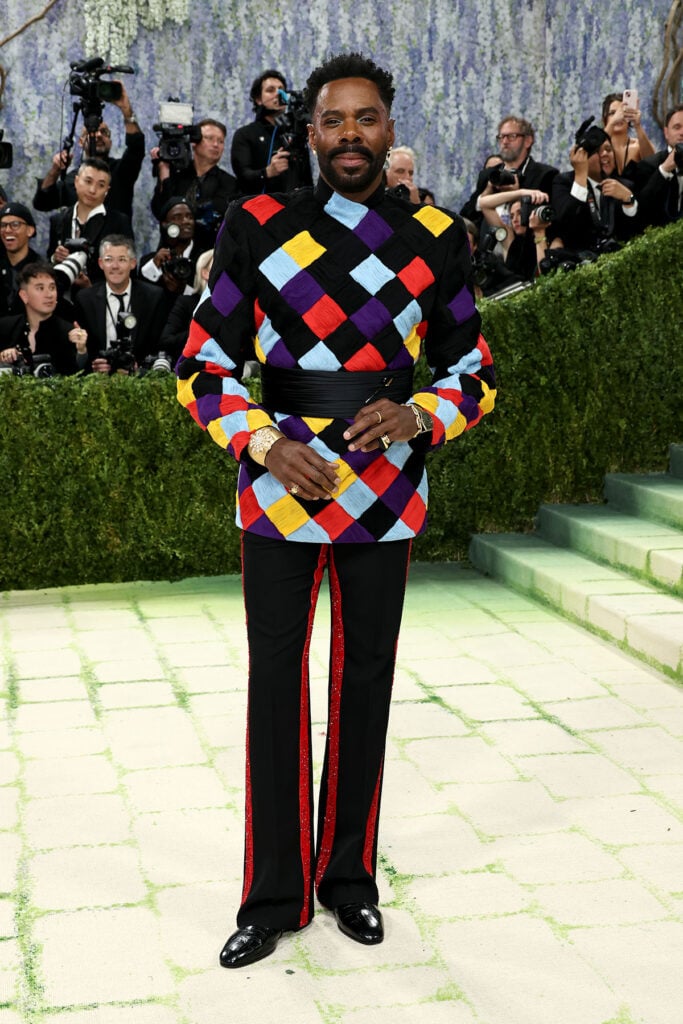
In contrast, Colman Domingo’s attire leaned into the historical archives of the house. His custom Valentino look featured a woven jacket inspired by the brand’s traditional harlequin motif—a pattern that has appeared in various iterations throughout Valentino’s history. However, Michele updated the reference by pairing the structured jacket with red beaded and sequined trousers, creating a visual tension between classical courtier aesthetics and 1970s disco influences. The look was completed with high-jewelry pieces from Boucheron, emphasizing the intersection of masculine tailoring and ornamental luxury.
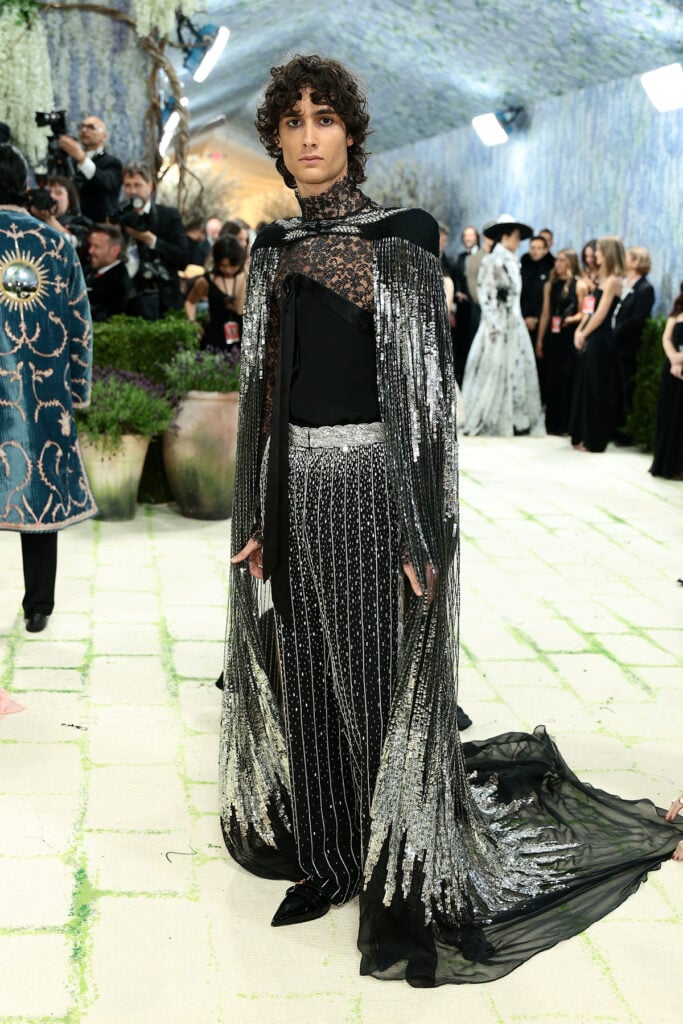
The musical artist Sombr further pushed the boundaries of performance-driven dressing. His Valentino ensemble centered on a heavily embroidered cape, a garment that has become a staple of Michele’s design vocabulary. The cape served as a mobile canvas for the house’s artisanal capabilities, featuring intricate needlework that aligned with Sombr’s theatrical stage persona. For younger stars like Hero Fiennes Tiffin and Ahn Hyo-Seop, Michele offered a more structured take on maximalism. Tiffin wore a custom tuxedo distinguished by a bow-tied collar detail, while Ahn Hyo-Seop’s look focused on a sequined jacket that provided a high-shine anchor to a classic silhouette.
The Women of Valentino: Couture Fantasy and Artistic Concept
The women’s looks for the 2026 Met Gala were divided between the "Specula Mundi" Haute Couture collection and custom creations that explored specific artistic concepts. Tessa Thompson’s appearance was noted for its literal interpretation of art. Her custom asymmetrical dress featured cut-out hems and a neckline designed to mimic the appearance of dripping paint. This conceptual approach was extended to her styling, with paint details trailing from her fingers to her gown, creating a seamless transition between the wearer and the garment. The look, accessorized with Pandora Jewelry, was cited by critics as a successful fusion of fashion and performance art.
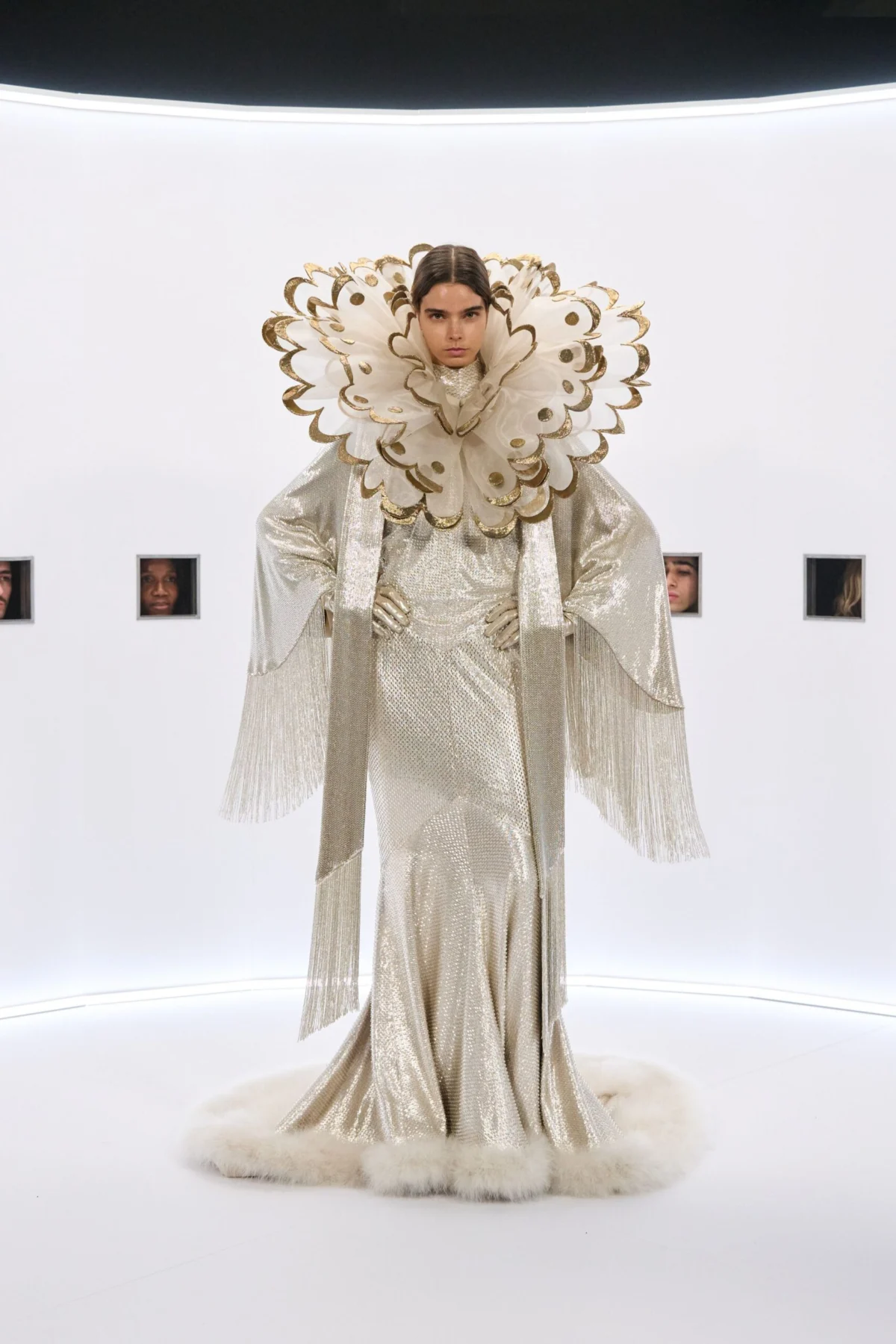
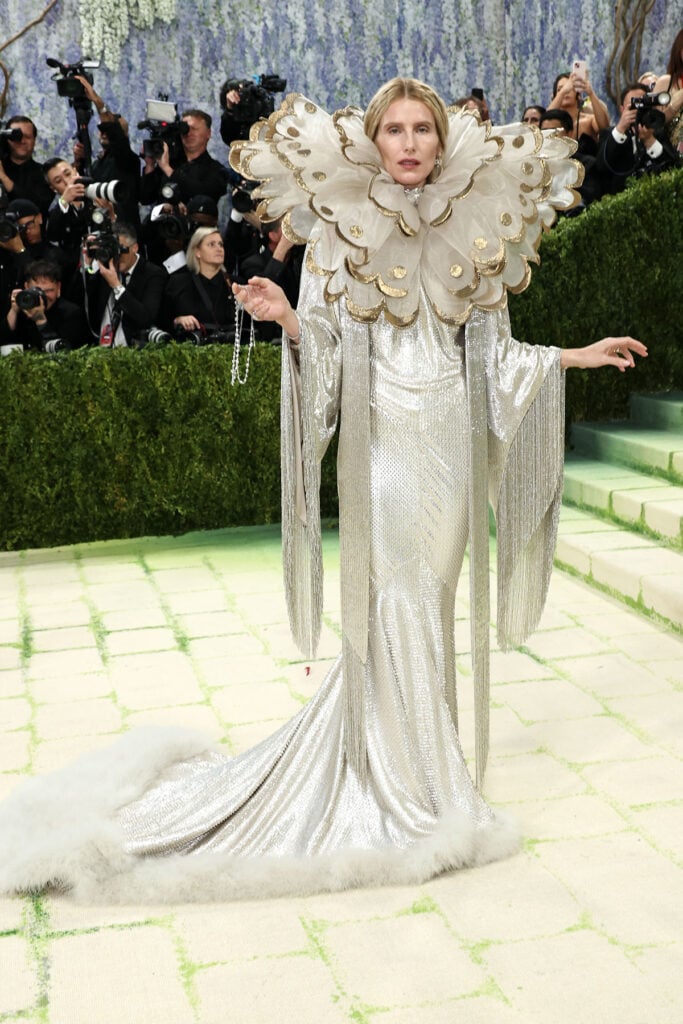
Dree Hemingway and Maude Apatow represented the more traditional, yet no less dramatic, side of Michele’s couture vision. Hemingway’s look, pulled from the Maison Valentino Specula Mundi Haute Couture collection, featured an oversized pleated crinoline collar edged in gold Lurex with polka-dot detailing. The silhouette evoked vintage stage costumes, framing the face in a manner that recalled Elizabethan ruffs reimagined through a surrealist lens. Apatow’s look utilized a similar pleated collar but in a more muted, ethereal execution. While the craftsmanship was highly praised, some commentators noted that the subtlety of the piece risked being overshadowed by the evening’s more aggressive silhouettes.
Odessa A’zion’s custom look signaled a shift in her personal style trajectory. Known for more repetitive silhouettes during the previous awards season, her Met Gala Valentino gown featured a sculpted bodice with a high slit and strategic exposure. The design pushed the brand into "riskier" territory, prioritizing contemporary proportions over traditional modesty. Similarly, Tyla’s ensemble leaned into "showgirl" codes, featuring an ornamental embellished bodice and a teal satin skirt. The look was paired with Valentino Garavani Révélé pumps, though some critics argued that the addition of a heavy necklace disrupted the intentional chaos of the bodice’s detailing.

Maximalism and the Power of the Spectacle
The final two looks in the Valentino lineup, worn by Lena Dunham and Nicole Kidman (who wore Chanel but shared a similar aesthetic theme), highlighted the return of high-octane glamour. Dunham’s red sequined Valentino gown was framed by a massive feather trim that functioned as a built-in boa. The use of feathers and sequins in tandem is a hallmark of Michele’s "more is more" philosophy, and the execution for Dunham was unapologetically maximalist. The look was anchored by Valentino Garavani Rockstud shoes, a nod to one of the house’s most commercially successful accessory lines.
The collective impact of these eleven looks generated significant data regarding the brand’s reach. According to initial social media sentiment analysis and search engine trends, the Valentino "Specula Mundi" debut was one of the most searched collections of the night. The diversity of the looks—ranging from the architectural dripping of Thompson to the feathered spectacle of Dunham—demonstrated Michele’s ability to cater to various facets of the luxury market while maintaining a cohesive creative identity.
Technical Craftsmanship and Industry Implications
Behind the visual spectacle, the 2026 Met Gala looks represented a massive technical undertaking. Sources within the Valentino atelier indicated that the embroidery on Sombr’s cape alone required over 400 hours of manual labor. The use of Lurex, sequins, beads, and custom-dyed satins across the eleven looks highlighted the brand’s access to Italy’s most prestigious textile mills. Furthermore, the integration of various jewelry partners—including Pandora, Boucheron, and Brilliant Earth—showcased the collaborative nature of modern red carpet dressing, where multiple luxury sectors converge to create a single image.
The broader implications for Valentino under Alessandro Michele are significant. For years, Valentino was defined by a specific type of "PP Pink" and a lean toward minimalist elegance. Michele’s debut suggests a pivot toward a more eclectic, historical, and narrative-heavy brand identity. This shift mirrors broader trends in the luxury sector, where brands are increasingly moving away from "quiet luxury" in favor of "expressive luxury" to capture the attention of a global audience saturated with visual stimuli.

Chronology of the Evening and Brand Reception
The arrival of the "Valentino Eleven" was staggered throughout the evening to ensure maximum visibility for each individual look. The sequence began with the younger stars, such as Odessa A’zion and Sombr, setting a high-energy tone, and culminated with the more established figures like Colman Domingo and Tessa Thompson. This choreographed rollout allowed fashion commentators to digest the various themes of the collection—drapery, harlequin motifs, and surrealist collars—in real-time.
Official responses from fashion critics have been largely positive, though some have noted the "conflicting" nature of certain looks, such as Domingo’s jester-meets-disco ensemble. However, most agree that Michele has successfully injected a sense of wonder and theatricality back into the house of Valentino. The 2026 Met Gala will likely be remembered as the moment the brand officially moved into its next chapter, one defined by the "Mirror of the World" and the unapologetic pursuit of the extraordinary. As the fashion world looks toward the upcoming runway seasons, the foundation laid at the Met suggests that Valentino will remain a central protagonist in the ongoing evolution of global haute couture.