





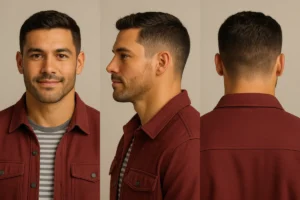

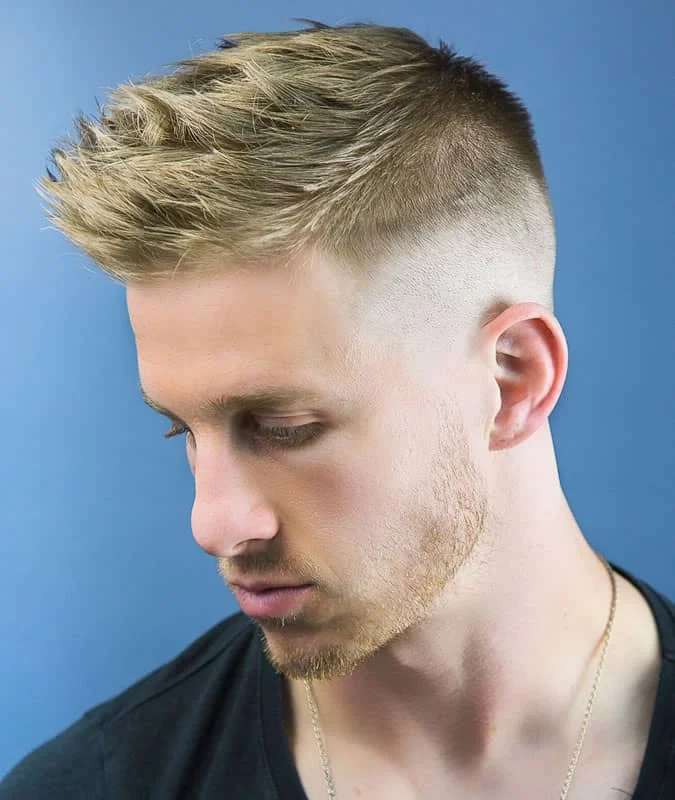
The faux hawk, a sophisticated evolution of the iconic mohawk, offers a versatile and approachable style for the modern man. While the mohawk, with its rebellious punk roots, symbolized a bold statement of individuality and non-conformity, the faux hawk achieves a similar aesthetic with greater practicality and wider social acceptance. This contemporary interpretation allows for unhindered movement through everyday life, from navigating tight doorways to confidently facing professional interviews. Celebrities such as David Beckham, Zayn Malik in his earlier phases, and a timeless Brad Pitt have all sported the faux hawk, showcasing its adaptability across different eras and personal styles. This guide delves into the nuances of the faux hawk, providing essential insights for achieving and styling this enduringly popular haircut.
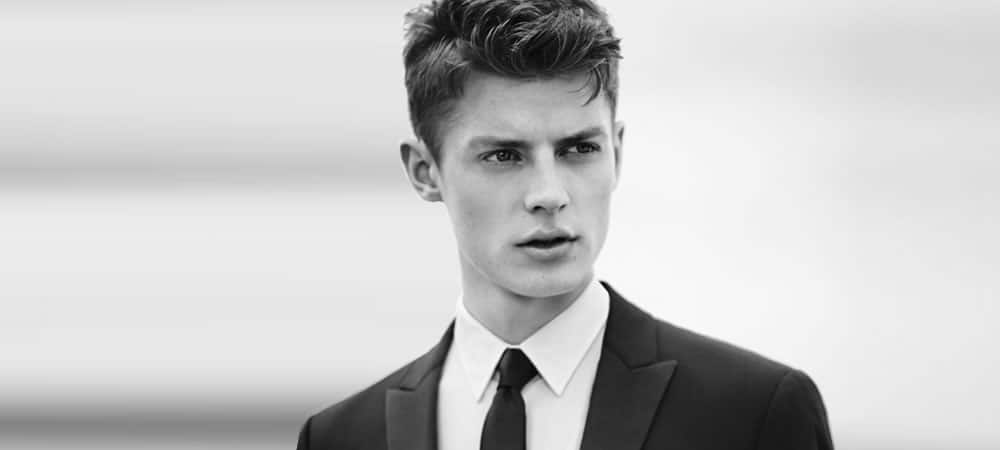
Understanding the Faux Hawk: A Modern Evolution
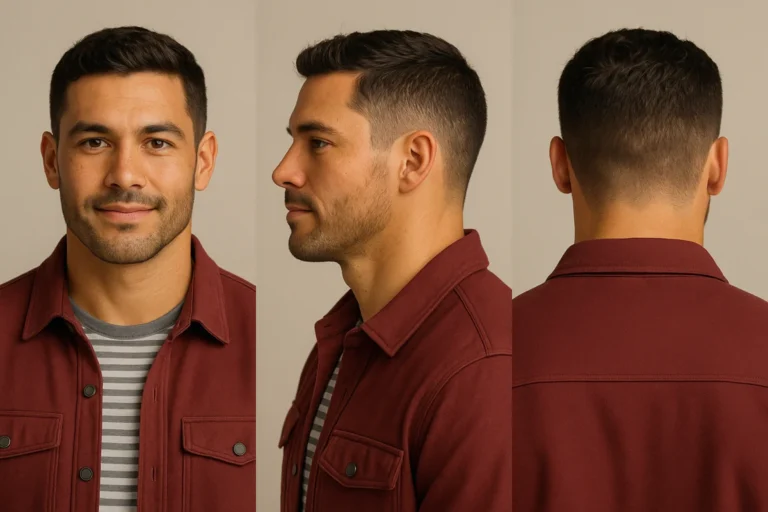
At its core, the faux hawk distinguishes itself from its predecessor by eschewing the stark contrast of a shaved scalp. Instead, it maintains a gradient of length, with shorter sides that transition into a longer, more voluminous top. This approach creates a subtle yet defined peak, offering a less aggressive profile than the dramatic strip of hair found in a traditional mohawk. Celebrity stylist Jason Collier, who has styled the hair of notable figures like Justin Timberlake and Damian Lewis, emphasizes its crowd-pleasing nature. "The defining features of a faux hawk are a short back and sides but with longer than usual hair on the top," Collier explains. "Not as much length as a pompadour, but long enough that the hair can be spiked up or formed into a point." He further elaborates on its appeal, stating, "It’s much more of a crowd-pleaser, less dramatic than a mohawk and has a sleek, urban sophistication to it that makes it a far more wearable look." In simpler terms, the faux hawk represents a stylish middle ground – a departure from the conventional short back and sides, incorporating a touch of playful texture and height at the front, without venturing into overtly provocative territory. It strikes a balance between being distinctive and understated, making it a practical choice for a broad range of personal and professional settings.
Selecting the Ideal Faux Hawk: Face Shape and Lifestyle Considerations
The successful implementation of a faux hawk hinges on two primary factors: an individual’s face shape and their daily lifestyle. Understanding these elements ensures the chosen style complements facial features and fits seamlessly into the wearer’s routine.

For individuals with longer face shapes, such as rectangular or triangular, it is crucial to avoid excessive length on top and overly tight sides. These elements can inadvertently elongate the face further. Conversely, those with wider facial structures, like heart or round shapes, benefit from adding height to the top of the hair and keeping the sides relatively shorter. This strategy creates a more balanced visual proportion. As with any haircut, the goal is to achieve harmony with one’s facial contours. Oval-faced individuals, often considered to have the most versatile face shape, generally have the freedom to experiment with a wider range of faux hawk variations.
Furthermore, the perceived effortlessness of celebrity faux hawks often belies the reality of styling. The longer the hair on top, the more time and product may be required to achieve and maintain the desired shape. Therefore, individuals with time constraints may opt for shorter variations of the faux hawk to ensure ease of styling and longevity throughout the day.

Mastering the Art of Faux Hawk Styling
Achieving a well-styled faux hawk does not necessitate the use of heavy, industrial-strength hair products. According to Jason Collier, the key lies in a thoughtful combination of preparation and product application. "To style the faux hawk, keep it simple," he advises. "If you have fine or straight hair, you can leave your hair to dry as normal before styling, but if you have thicker or wavy hair, you might want to blast it dry and brush it through to get a sleeker finish."
When it comes to product selection, moderation is essential. Over-application can result in stiff, unnaturally rigid spikes, detracting from the style’s intended texture. Collier recommends a strong-hold hair wax as the ideal product. "Use an amount the size of a pea and warm it between your palms, spread it across your hands and get some heat into it," he suggests.

The faux hawk’s inherent design favors a quick, somewhat disheveled aesthetic, minimizing the need for extensive mirror time or specialized tools. "Simply use your fingers to push the lengths of the hair up, and tweak it until you’re happy with how the area looks," Collier explains. He emphasizes a preference for a naturally tousled look: "You could go completely spiky and separate each area, but the best finish for this kind of look is all pulled up, a little messy, nothing too ‘done’."
Exploring Faux Hawk Variations: A Spectrum of Styles
The faux hawk, in its adaptability, encompasses a variety of sub-styles, each catering to different preferences and hair types.

The Faded Faux Hawk
This iteration of the faux hawk incorporates a graduated fade on the sides, creating a smoother transition from skin to hair. It retains a connection to the original punk aesthetic but softens it for broader appeal. Hair stylist Joseph Lanzante, who operates a renowned barbering academy, outlines the technical approach: "To achieve a faded faux hawk, ask your barber to set the clippers on 0, then the hair should be faded into a grade 2, using 0.5 to 2 grades." He adds, "On top, hair should be of uniform length but layered. To finish this style use paste to define and separate the hair."
The Short Faux Hawk
Ideal for those seeking a subtle nod to the faux hawk without significant commitment, this short haircut offers textural interest on top while remaining entirely office-appropriate. Stylist Josh Thorner of Manifesto Barbers notes, "A clipper fade will achieve a sharp uniform look for a short faux hawk: the shorter the fade the greater the overall contrast will be." He advises, "Agree with your barber on the maximum length through the middle, asking for a round shape to be cut into the connect at each side." For styling, Thorner suggests, "Length on top should be graduated from the back to the front, retaining length at the fringe. To style, a surf spray will help create lots of texture – apply to your hair when damp and dry with a diffuser hair dryer, then finish off with clay for a matte look."

The Shaggy Faux Hawk
This style is perfect for individuals with naturally wavy or curly hair, allowing their texture to shine while maintaining a structured shape. It emphasizes volume and movement on top with minimal styling required on the sides. Joe Mills, owner of Joe and Co., explains, "Ideally, the top should be at least 4 inches long and shaved at the sides: I would recommend having the top chopped into to add texture as this will help the peak to not fall flat." For styling, Mills recommends, "Use some sea salt spray and apply to damp, clean hair. Then use a hair dryer to blast it dry, using your fingers to lift the front to create a messy quiff then finish with a matte paste."
The Medium Faux Hawk
Representing a balanced approach, the medium faux hawk offers more length and styling potential than its shorter counterparts, without the high maintenance of longer versions. Lanzante describes the cut: "To get a medium faux hawk hairstyle requires using hair clippers at the back and sides from grade 3 up to a grade 4." He adds, "On the crown of the head, hair should be layered in uniform length and defined and textured using a medium shine paste."

The Long Faux Hawk
This variation demands more time and dedication to styling, making it suitable for those with ample hair length on top and a willingness for regular maintenance. It is often favored by individuals with oval face shapes. Thorner advises, "For a long faux hawk, ask for a clipper fade at the back and sides of your head, but one which isn’t too short." He emphasizes the disconnect: "Ask your barber to keep the top disconnected from the sides; the top should be cut from the back to front and the back should be the shortest point. Ask for lots of length at the fringe." Styling involves, "Texturise when dry with a styling cream. Apply this to damp hair then use a hair dryer to blow dry it upwards and backwards. If you need added hold, once dry, blast the hair with cold air, which will seal the cuticle to help keep it upright." Hairspray can be used for additional hold if needed.
The Undercut Faux Hawk
This high-fashion variation combines the bold statement of an undercut with the textured volume of a faux hawk. It requires precision from the barber, creating a stark contrast between the shaved sides and the longer, often deliberately tousled, top. Mills notes, "This is a slightly shorter version of the shaggy faux hawk, but the underlying idea is the same. The top is still disconnected but with less length throughout." He stresses the importance of sufficient length: "However, you do still need enough length so the finished style doesn’t look like an accident." For styling, he recommends, "A minimum of a couple of inches. The whole concept of this haircut is that it has a slightly DIY feel about it. Use a texture spray on clean damp hair (five pumps throughout) and then blast dry with a hair dryer. Finish with a grooming cream and add some texture with your fingers."

The faux hawk, in its many forms, continues to be a testament to the enduring appeal of a hairstyle that balances edginess with wearability. Its evolution from the punk rock staple to a mainstream fashion choice highlights its inherent versatility and adaptability to the contemporary man’s lifestyle and aesthetic sensibilities.