









Tea, an everyday beverage for billions worldwide, transforms into a remarkably refined experience when approached with meticulous care and a profound understanding of its accompanying rituals. Far more than a simple infusion, the preparation and consumption of tea embody a civilizing ritual, a testament to patience, consideration, and the subtle art of hospitality. This comprehensive guide explores the multifaceted dimensions of refined tea service, from the essential tools and brewing techniques to the nuanced etiquette that elevates a commonplace drink to a cultural cornerstone.

A Historical Brew: Tea’s Journey to Refinement
The journey of tea began millennia ago in ancient China, evolving from a medicinal tonic to a staple beverage. Its introduction to Europe in the 17th century, particularly to Great Britain, marked a pivotal moment. Initially a luxury item accessible only to the wealthy elite, tea quickly permeated all social strata, profoundly shaping British culture and social customs. By the 18th and 19th centuries, tea had become synonymous with British identity, giving rise to elaborate tea ceremonies and the institution of afternoon tea. This historical trajectory underscores tea’s transition from a mere commodity to a symbol of social grace and refined living. Data from the Tea Association of the U.S.A. indicates that tea remains the second most consumed beverage globally, a testament to its enduring appeal and cultural integration across diverse societies.

Beyond the Cup: The Philosophy of the Tea Ritual
At its heart, the refined act of drinking tea transcends the physical act of consumption. It offers a deliberate opportunity to slow down, practice mindfulness, and foster genuine connection. Like other gentlemanly pursuits, it is steeped in traditions, requiring specific tools and adherence to certain standards of conduct. These elements are not intended to create a stiff or theatrical atmosphere but rather to encourage a more thoughtful and considerate approach. A properly served cup of tea rewards patience, neatness, and an acute awareness of one’s companions. It is as much about demonstrating hospitality and courtesy as it is about savoring the distinct flavors of the brew. As J. M. Barrie poignantly queried in Peter Pan, "Would you like an adventure now, or would like to have your tea first?" – a subtle nod to tea’s power to anchor and prepare one for life’s moments.

The Essential Elements of a Traditional Tea Service
A truly refined tea service, while not necessarily extravagant, demands a collection of essential items, each playing a critical role in the overall experience. The careful selection and arrangement of these pieces underscore the host’s dedication to the ritual.
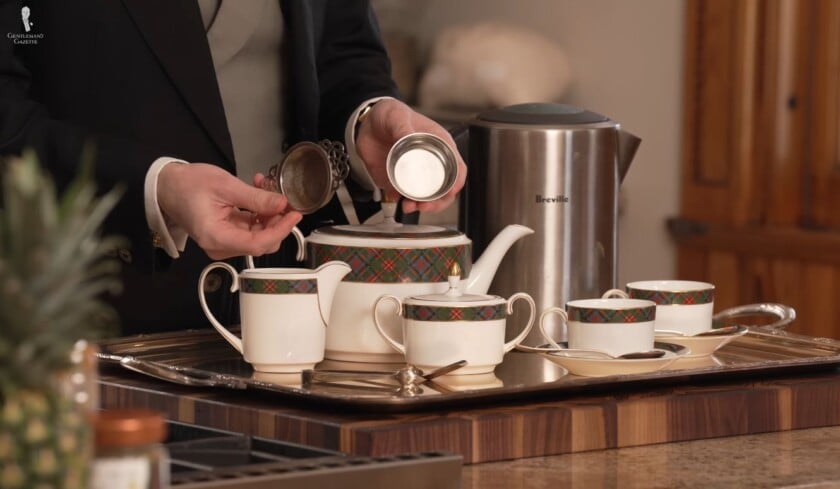
- Kettle: For boiling water to the precise temperature required for optimal infusion.
- Teapot: The central vessel for brewing, ideally made from materials that retain heat effectively.
- Tea Strainer: Indispensable for loose-leaf tea, ensuring a clear, sediment-free pour.
- Milk Jug: For serving milk, an optional but traditional accompaniment.
- Sugar Bowl: Containing granulated sugar or cubes, offered with a dedicated spoon or tongs.
- Teacups and Saucers: The primary drinking vessels, chosen for their elegance and tactile experience.
- Teaspoons: For stirring, neatly placed on the saucer.
- Serving Tray: To present the entire service with grace and ease.
These pieces do not necessitate significant expense. Indeed, vintage, thrift, and charity shops frequently yield high-quality, often rarely used, antique tea sets at remarkably reasonable prices, adding a layer of historical charm to the service.
Selecting the Ideal Tea Set Components
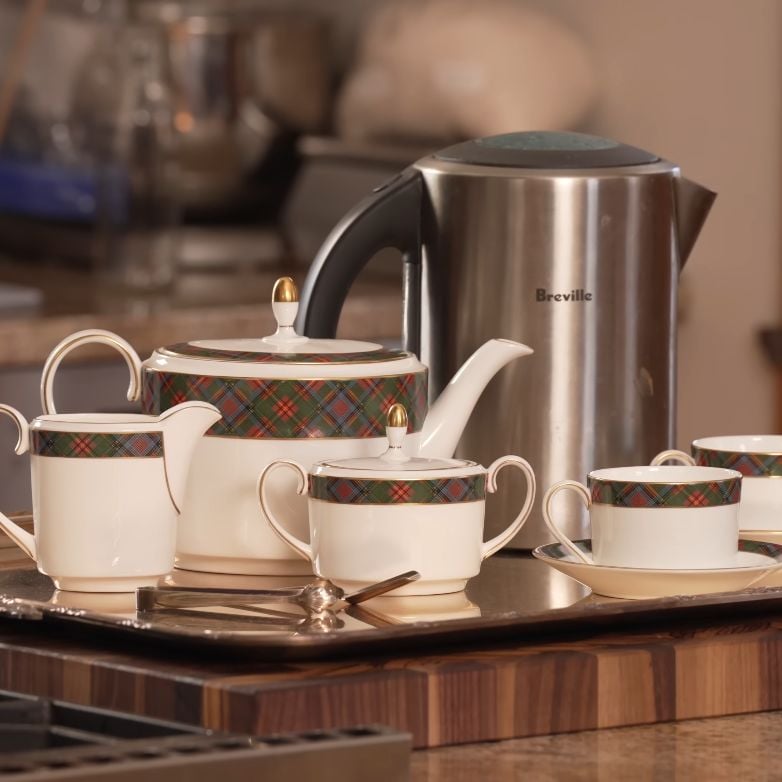
The choice of teaware significantly influences the drinking experience.
- Teacups and Saucers: At a minimum, these should be crafted from bone china. Its inherent thinness, lightness, and delicate translucence offer a more elegant and refined drinking experience compared to heavier ceramic alternatives. The material’s ability to retain heat without becoming excessively hot to the touch is also a practical advantage.
- Teapot: Traditional teapots typically fall into two categories:
- Matching Bone China Teapot: Harmonizes seamlessly with the cups and saucers, creating a cohesive aesthetic.
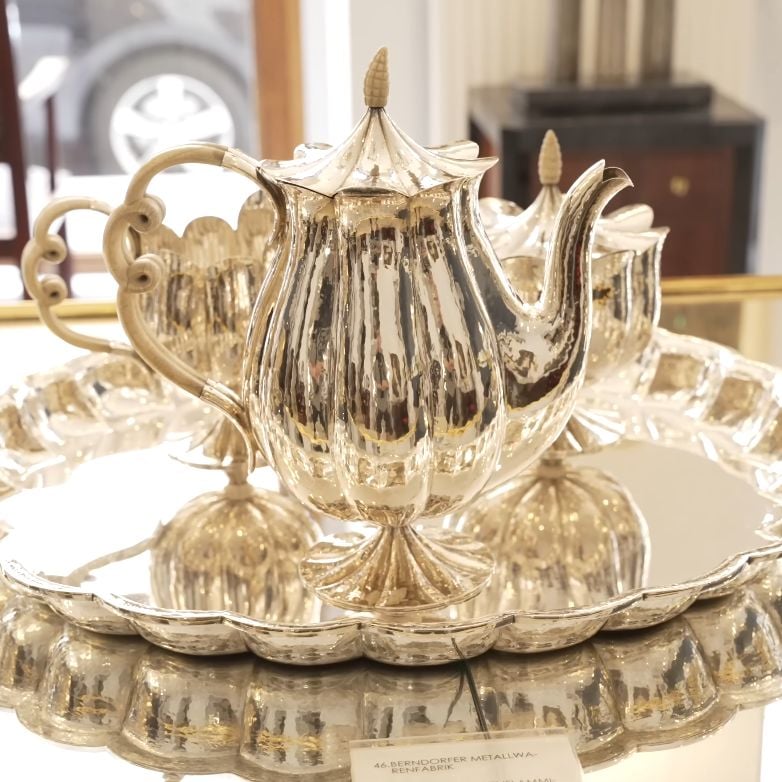
- Silver-Plated or Sterling Silver Teapot: Offers a classic, stately appearance, often associated with more formal services.
A common point of confusion can arise when a service includes both a teapot and a coffee pot. Distinguishing them is straightforward: a teapot is generally shorter, rounder, and squatter, designed for optimal tea leaf expansion, whereas a coffee pot is taller and more tapered, suited for coffee’s specific serving requirements.
The Supremacy of Loose-Leaf Tea
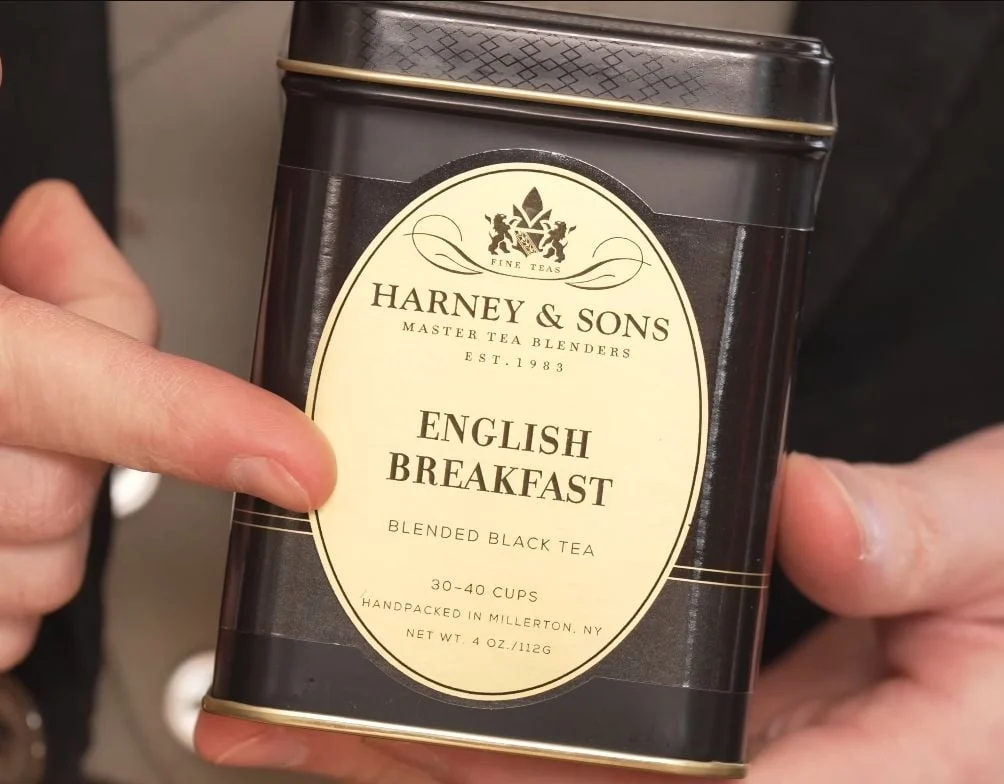
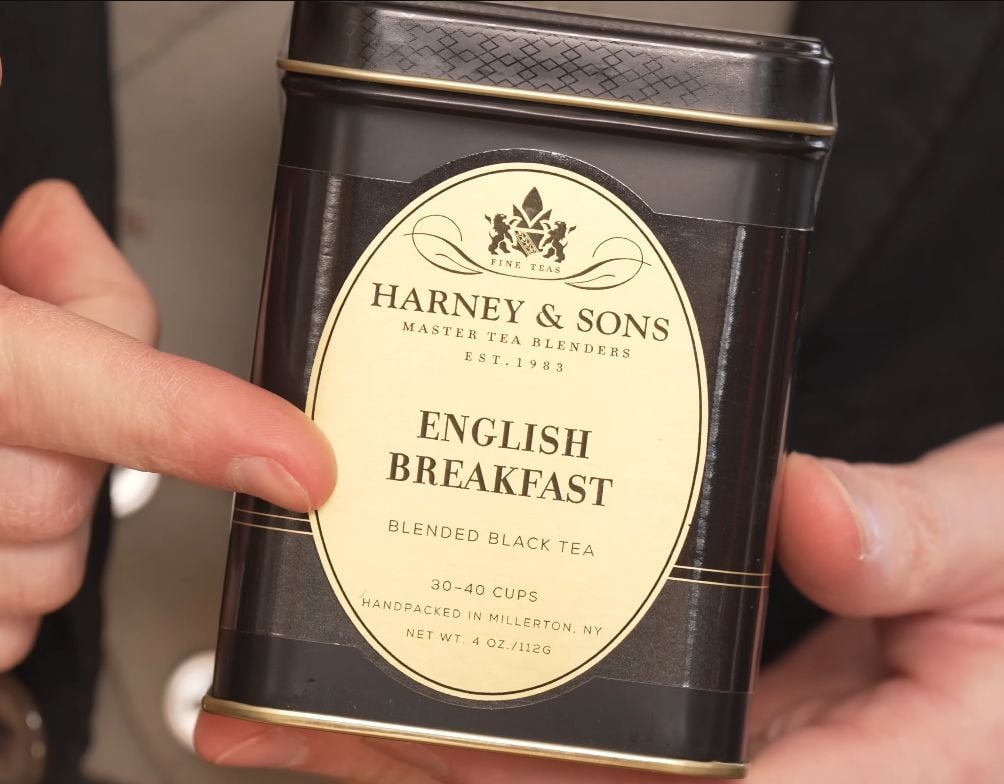
For a truly authentic and flavorful cup, loose-leaf tea is paramount. Unlike tea bags, which often contain lower-grade fannings and restrict leaf expansion, loose leaves require ample space to unfurl and infuse fully, releasing their complete aromatic and flavor profiles. This vital need for circulation directly explains why a tea strainer is among the most crucial components of any traditional service. It effectively filters the expanded leaves as the tea is poured, ensuring a smooth, clear beverage without compromising the richness of a proper infusion. While a stainless steel strainer is perfectly functional, a silver-plated variant provides an elegant touch, often serving as a thoughtful traditional gift. For black teas like the classic English Breakfast, a robust blend of black tea leaves is recommended, producing a full-bodied cup that harmonizes well with milk and sugar.
The Art of Proper Tea Brewing
The brewing process lays the foundation for the entire tea experience. Adhering to precise steps ensures the tea’s intrinsic qualities are fully realized.
- Water Temperature: For robust black teas, such as English Breakfast, the water must reach a full, rolling boil, approximately 100°C (212°F). This high temperature is crucial for extracting the tea’s full flavor and color. Different tea types, such as green or white teas, require lower temperatures, but for traditional black tea service, a vigorous boil is essential.
- Filtered Water: The quality of the water directly impacts the tea’s flavor. Hard water, characterized by a high mineral content, can chemically react with tea compounds, often resulting in a flattened or weakened taste profile. Conversely, filtered water, devoid of excessive minerals and impurities, consistently yields a cleaner, more vibrant infusion.
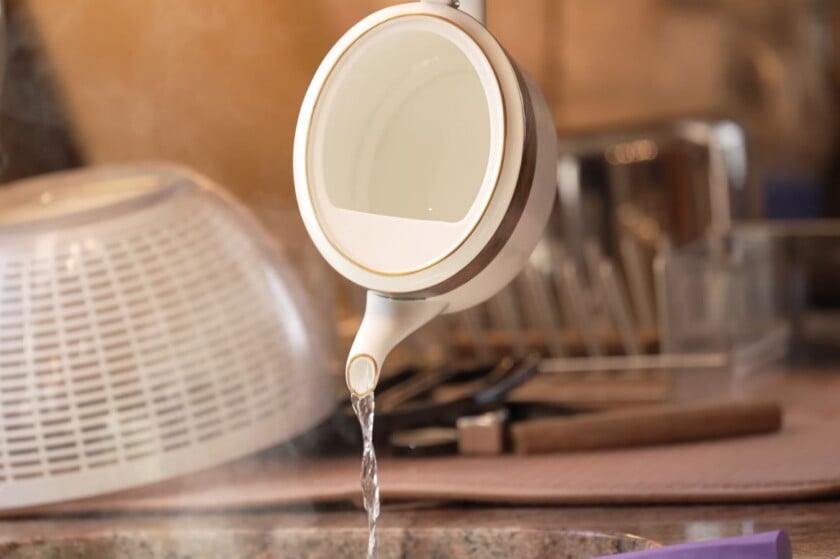
- Warming the Teapot: Prior to adding the tea leaves, a small amount of hot water should be poured into the teapot, swirled gently, and then discarded. Briefly replacing the lid allows the heat to evenly warm the ceramic or metal of the pot. This crucial step prevents the cold pot from rapidly cooling the brewing water, thereby maintaining the optimal steeping temperature and ensuring a consistent infusion.
- Accurate Tea Measurement: The traditional guideline for loose-leaf tea is "one portion of tea per person, plus one extra for the pot." While a caddy spoon is the historically accurate measure, a heaped teaspoon serves as a practical equivalent. This ratio ensures adequate strength and flavor for all servings.
- Filling the Pot: Once the measured leaves are in the warmed pot, freshly boiled water should be poured in until the pot is approximately three-quarters to four-fifths full. Leaving a small amount of headspace facilitates the circulation of heat and steam, which is vital for the thorough infusion and expansion of the tea leaves.
- Patient Steeping: The tea should be allowed to steep undisturbed for three to five minutes, with the exact duration adjusted to personal preference for strength. Rushing this stage will result in a weak, underdeveloped flavor, while over-steeping can lead to bitterness. As Fyodor Dostoevsky famously declared, "I say let the world go to hell, but I should always have my tea," highlighting the sanctity of this waiting period.
Preparing Accompaniments: Milk, Sugar, and Lemon
While the tea steeps, attention turns to preparing the accompaniments, ensuring they are presented elegantly and correctly.
- Milk and Sugar: Milk should be poured into a spouted milk jug, never served directly from a carton or bottle. Sugar belongs in a sugar bowl, offered either as coarse white granulated sugar with a communal serving spoon or, more formally, as white sugar cubes accompanied by sugar tongs. Traditional tea service is quite specific regarding these:
- Only cow’s milk is traditionally offered; alternatives like oat or almond milk are generally not part of formal service.
- Only white sugar is presented. Brown sugar or artificial sweeteners are typically omitted from a traditional setting.
- Lemon: Lemon is generally reserved for lighter, more delicate teas, rather than robust breakfast blends. If offered, thin slices should be arranged neatly on a separate small plate and accompanied by a small fork for serving. It is crucial to remember that milk and lemon are never served together in the same cup, as the acidity of the lemon will curdle the milk.
The Grace of Pouring Tea for Guests

Once steeped, the act of serving tea requires a deliberate, unhurried approach, reflecting the care taken in its preparation.
- Slow Pour: Rushing the pour increases the risk of spills and conveys a sense of carelessness. A slow, steady stream is key.
- Always Use a Strainer: The tea strainer is held close to the cup, and the tea is gently poured through it, preventing loose leaves from entering the cup and ensuring a smooth drinking experience.
- Avoid Overfilling: Each cup should be filled to approximately three-quarters full. This leaves adequate space for milk or sugar and makes the cup easier and safer for guests to handle without spilling.
- Prioritize Guests: The host always serves guests first, ensuring everyone is attended to before pouring their own cup. This demonstrates quintessential hospitality.
- Accessible Teapot: After the initial round of serving, the teapot should be returned to the table within easy reach of guests, with its handle positioned conveniently, as subsequent servings are typically self-service.
Adding Milk and Sugar with Precision
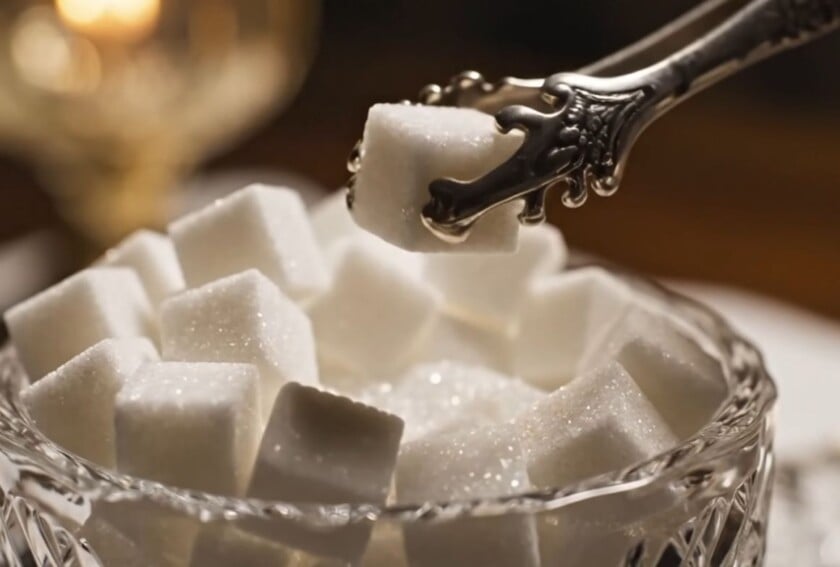
Once the tea has been poured, guests may customize their cup with milk or sugar, following specific protocols.
- Milk After Tea: The long-standing debate over whether milk should be added before or after the tea ("milk-in-first" or MIF) is often settled in group settings by adding milk after the tea. This allows each person to accurately assess the tea’s strength and adjust their milk quantity to personal taste. The milk is poured from the jug and the jug returned thoughtfully for the next person.
- Careful Sugar Application: If granulated sugar is offered, it should be added using the communal sugar spoon, which is then returned directly to the sugar bowl without touching the tea. A wet spoon placed back into the sugar will cause clumping, an unpleasant inconvenience for others. If sugar cubes are provided, they should be gently placed into the tea using tongs, avoiding a careless drop that could splash the liquid.
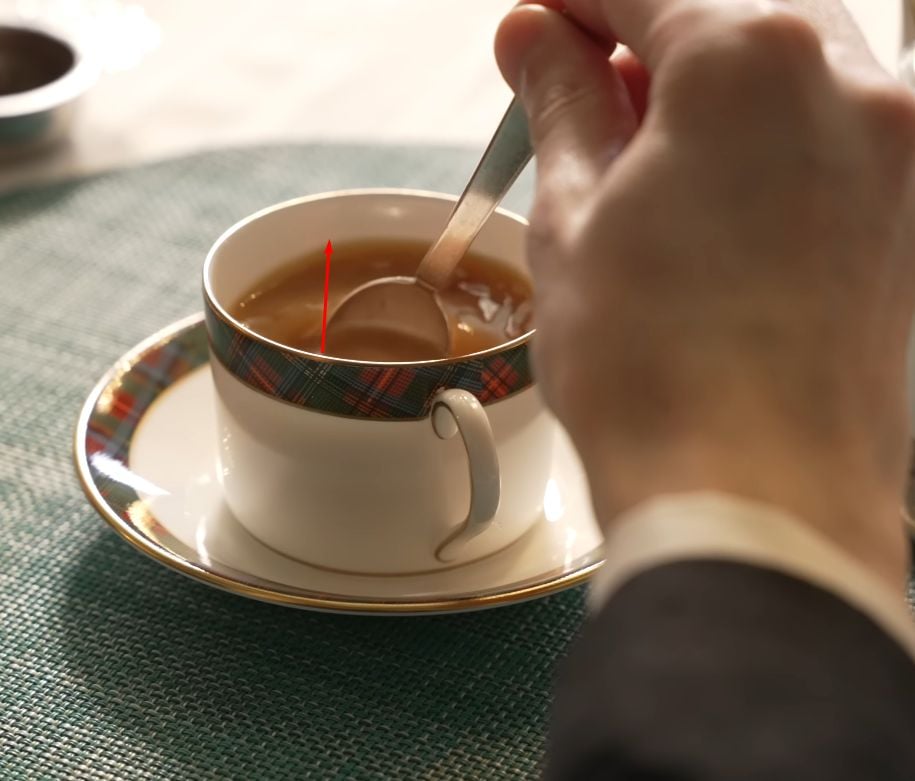
- Neat Stirring: Any stirring, whether for milk or sugar, should be performed with the teaspoon from the saucer, using a back-and-forth motion from 12 to 6 o’clock, rather than an energetic circular swirl. This method is quieter, neater, and more elegant, preventing clinking against the cup. Upon completion, the spoon is returned to the saucer, never left in the cup.
The Proper Hold: Cup and Saucer Etiquette
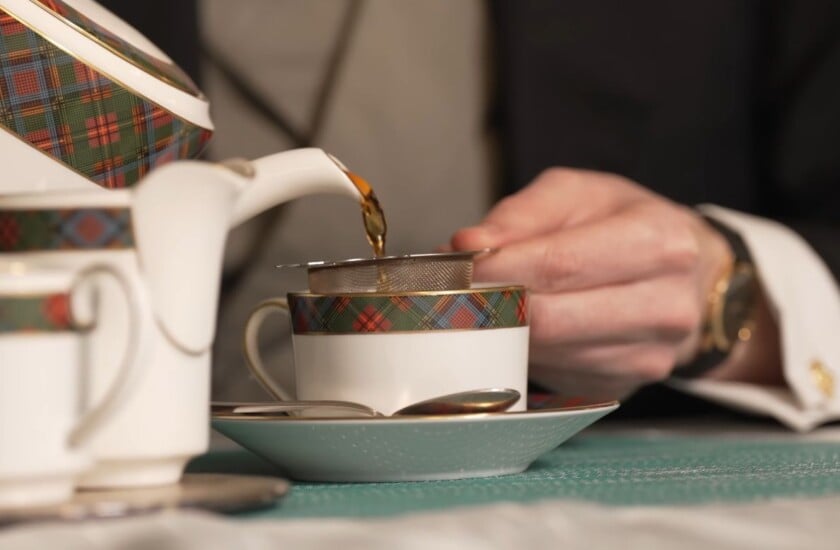
The manner in which one holds the cup and saucer is a subtle yet significant indicator of refined tea manners.
- Cup Position on Saucer: After serving, the cup should be returned to the saucer with its handle positioned between 4 and 5 o’clock for a right-handed individual. The teaspoon rests on the saucer, parallel to the handle. Left-handed drinkers simply mirror this arrangement.
- Handle Grip: When lifting the cup, the handle should be pinched lightly between the thumb and forefinger, with the middle finger providing gentle support underneath. Crucially, the fingers should not be hooked through the handle. This delicate grip is a hallmark of polished tea etiquette.
- The Pinky Finger Myth: Despite popular caricature, the pinky finger should remain down. Raising it is, in fact, considered a faux pas in traditional etiquette. The remaining fingers should either be neatly tucked into the palm or discreetly used to steady the cup.
- Drinking Position: When drinking, the handle will naturally settle around 3 o’clock (or 9 o’clock for left-handed drinkers). After each sip, the cup is gently returned to the saucer, resuming its original slight angle.
Navigating Tea in Various Settings
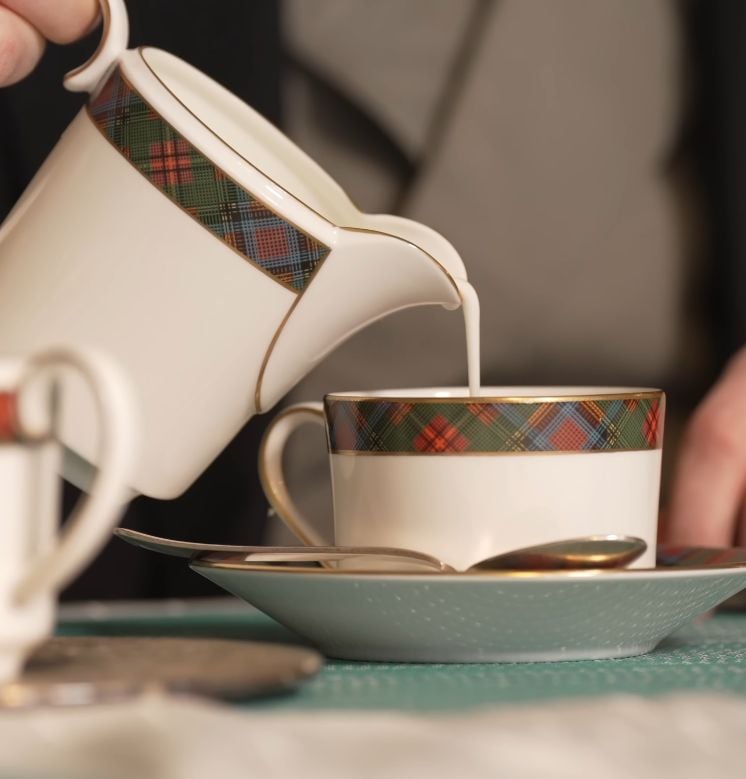
Regardless of the environment, the overarching principle is controlled movement, composed posture, and careful handling of the cup and saucer.
- Seated at a Table: If seated at a table, both the cup and saucer remain on the table until one is ready to drink. Only the cup is lifted to the mouth, leaving the saucer and teaspoon undisturbed on the table. After each sip, the cup is gently returned to its place on the saucer.
- Seated Without a Table: When seated without a table (e.g., on a sofa), the saucer is held steadily in the non-dominant hand, resting comfortably in the lap or just above it. The dominant hand then lifts only the cup to drink. The saucer remains in place, and the cup is returned to it immediately after each sip.
- Standing: If standing, the saucer is held in the non-dominant hand, close to the body, typically around the natural waistline for stability. As in other scenarios, only the cup is raised to drink, without lifting the saucer towards the face.
In all contexts, posture is paramount. One should sit or stand upright, move with intentional control, and maintain an overall composed demeanor.
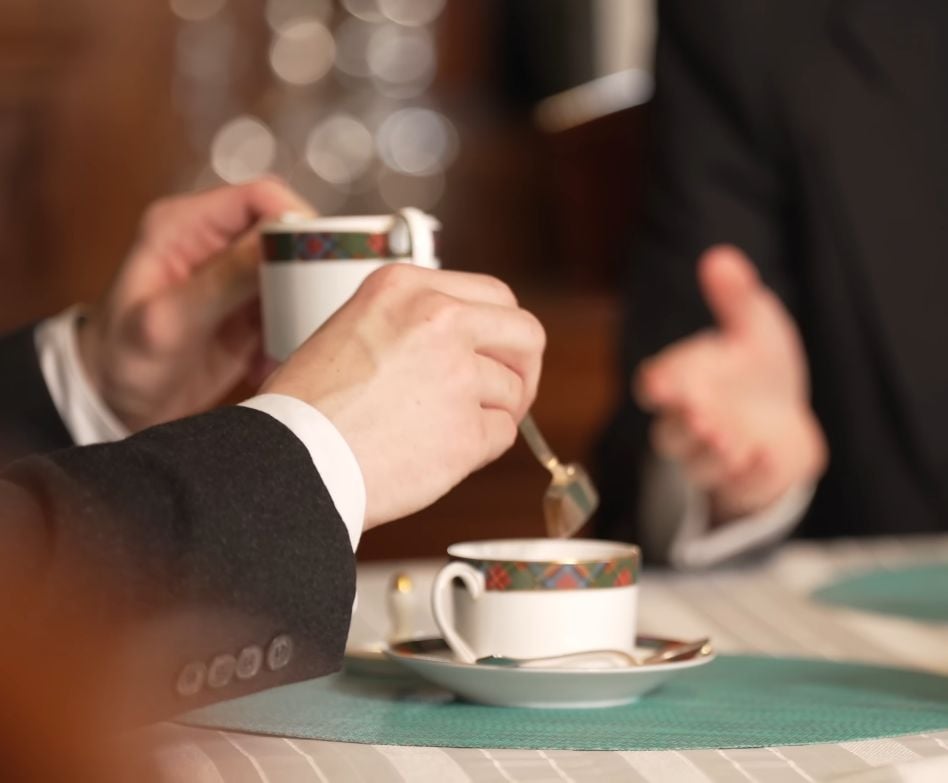
Common Tea Etiquette Mistakes to Avoid
Many aspects of refined tea etiquette boil down to avoiding actions that create a sense of sloppiness or haste. Key mistakes to circumvent include:
- Slurping or Loud Drinking: A gentleman drinks quietly, never slurping.
- Clinking the Teaspoon: Stirring should be silent, avoiding any contact between the spoon and the cup.
- Leaving the Spoon in the Cup: The teaspoon always returns to the saucer after stirring.
- Dunking Food: In refined company, dunking biscuits, scones, or other food items into the tea is considered poor manners.
- Extending the Pinky Finger: As previously noted, this is a misconception of elegance.
- Holding the Cup with Fingers Through the Handle: The delicate pinch is preferred.
- Raising the Saucer to the Mouth While Seated at a Table: The saucer remains on the table.
- Complaining About the Tea: A polite guest offers thanks and enjoys the effort.
- Ignoring Guests While Serving: The host’s attention should be on those being served.
- Being Hasty: The entire ritual is about slowing down and being deliberate.
- Placing a Wet Spoon in the Sugar Bowl: This ruins the sugar for others.
The True Mark of a Gentleman at Tea
The genuine essence of refined tea drinking lies not merely in the adherence to specific equipment or gestures, but fundamentally in the atmosphere and tone one cultivates around the occasion. A true gentleman views tea as more than a mere beverage; it is an opportunity for thoughtful interaction. He serves with meticulous care, demonstrates attentive listening, and ensures that everyone present feels comfortable, valued, and genuinely considered. Ultimately, impeccable tea etiquette is an eloquent expression of courtesy and respect. This underlying spirit is what imbues the ritual with its lasting charm. While the quality of the cup, the precision of the brewing, and the elegance of the manners all play their part, the true hallmark of a gentleman is the gracious spirit in which the tea is shared, transforming a simple drink into a profound act of social connection and civility.