









Turin, Italy – In a striking convergence of industrial heritage and contemporary art, the legendary Swiss photographer Walter Pfeiffer, on the occasion of his 80th birthday, is being celebrated with a major retrospective titled In Good Company at the Pinacoteca Agnelli. The exhibition, marking Pfeiffer’s first large-scale, comprehensive showing in Europe outside his native Switzerland, unfolds within the iconic Lingotto building, a structure whose own history mirrors a journey from pioneering innovation to reimagined purpose.
A Historic Venue Reimagined: The Lingotto’s Enduring Legacy
The Lingotto factory, situated in the industrial south of Turin, stands as a monument to 20th-century automotive ambition. Opened in 1926, it was, at the time, the largest car factory in the world. Its groundbreaking design, conceived by architect Giacomo Mattè-Trucco, featured a unique vertical production line. Raw materials entered at ground level, and Fiat cars ascended through five concrete floors as they were assembled, culminating in a dramatic rooftop racetrack. This two-kilometer oval track, complete with steep parabolic curves, served as the ultimate testing ground for finished vehicles, a spectacle of engineering and speed. Visionaries like the renowned architect Le Corbusier lauded the Lingotto as a "masterpiece of industrial architecture," recognizing its bold functionalism and aesthetic power.
However, by the 1980s, the once-revolutionary factory had become obsolete, a relic of a bygone industrial era, and faced the grim prospect of abandonment. Its salvation came through a visionary transformation project led by the acclaimed architect Renzo Piano, commencing in 1989. Piano meticulously converted the vast industrial spaces into a multifaceted complex, preserving its structural integrity while adapting it for a new century. Today, the Lingotto houses a concert hall, a shopping mall, a hotel, and the prestigious Pinacoteca Agnelli, an art institution that proudly occupies the building’s uppermost levels, including the famous rooftop track. This architectural metamorphosis from a symbol of mass production to a beacon of culture provides a fitting backdrop for Pfeiffer’s retrospective, an artist who has consistently challenged traditional boundaries and recontextualized the quotidian.
Walter Pfeiffer: A Life in Images and the Pursuit of Beauty
Born in 1944, Walter Pfeiffer is a self-taught photographer whose artistic journey has been anything but conventional. While he never formally studied photography, his education at a Swiss art school provided him with a foundational understanding of Bauhaus theories, particularly concerning form, color, and interdisciplinarity. These principles subtly underpin his work, even as he consciously embraced an "amateur" sensibility throughout his career. Before gaining widespread recognition as a photographer, Pfeiffer honed his visual acumen in various roles, including as a window dresser, graphic designer, and commercial illustrator. These experiences undoubtedly contributed to his distinctive eye for composition and his innate ability to infuse everyday objects and scenarios with dramatic significance.
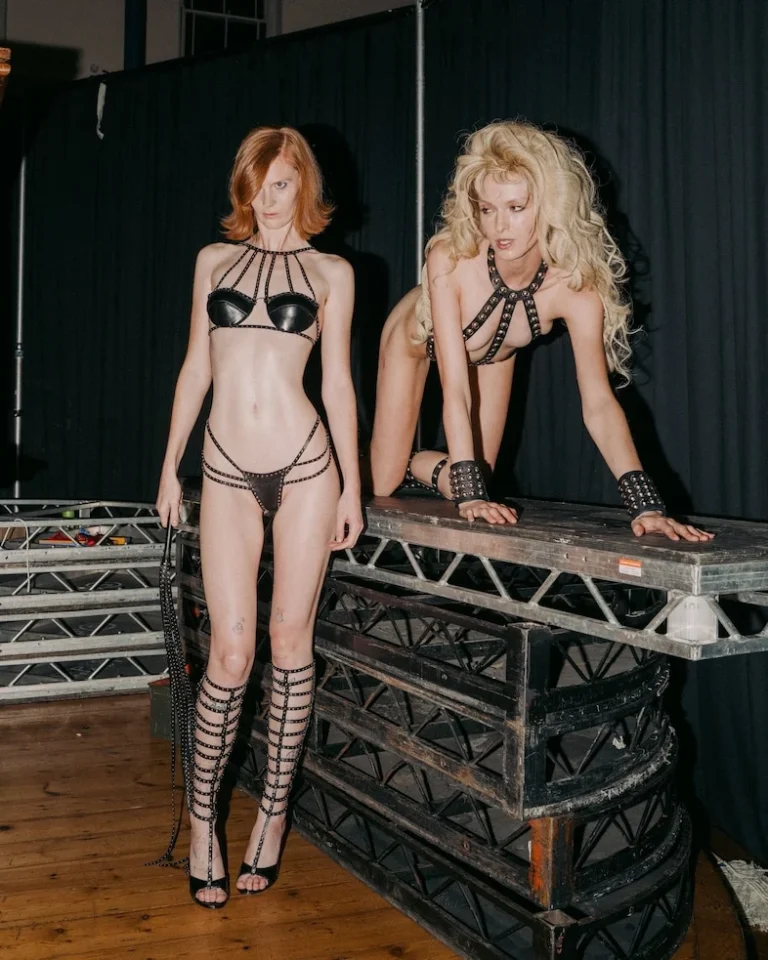
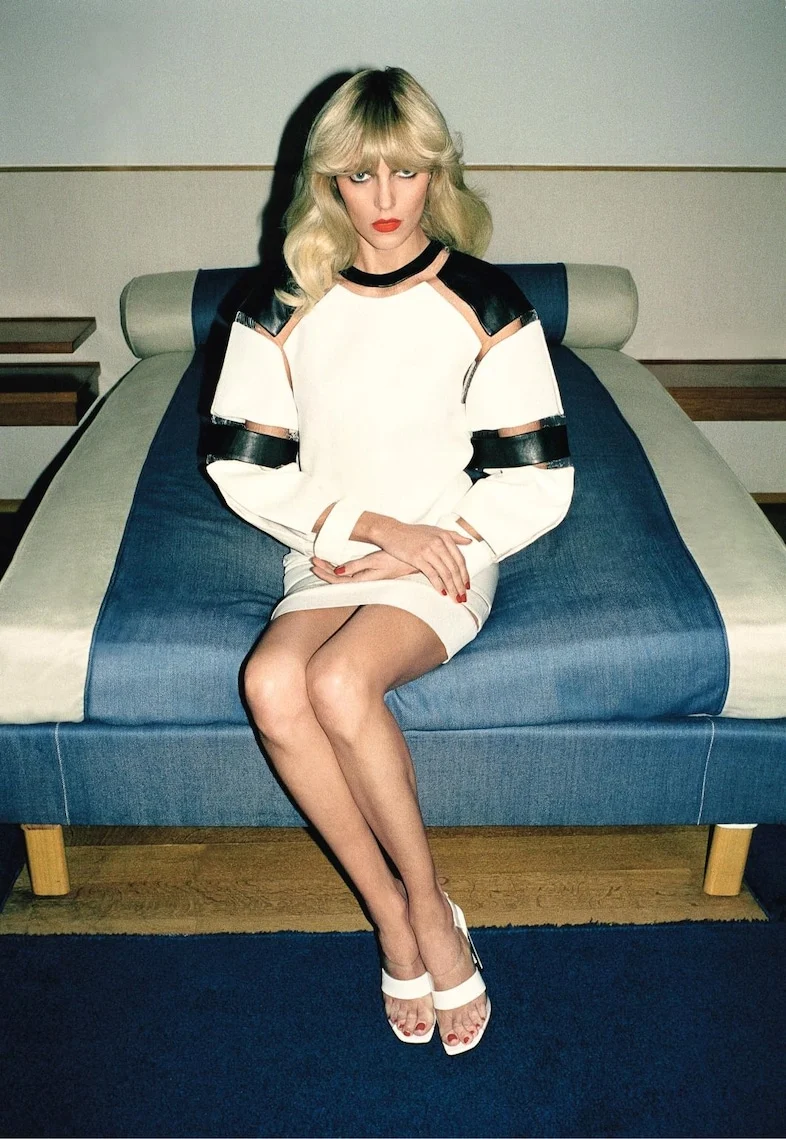
Pfeiffer’s early career, spanning the 1970s and 80s, saw him operate on the fringes of the art world. He cultivated a dedicated following within cult circles, admired for his pioneering visual language that defied easy categorization. His photographs and film works, often characterized by their highly saturated colors and raw intimacy, fluidly collapse distinctions between personal and commercial practice. Through his lens, he meticulously crafted a unique lexicon exploring themes of sexuality, desire, comedy, and consumption.
The influence of his artistic heroes, Cecil Beaton and Andy Warhol, is palpable in Pfeiffer’s oeuvre. From Beaton, he inherited a profound sensitivity to formal beauty and a flair for the regal, often elevating his subjects with a certain grandeur. From Warhol, he absorbed an affinity for hustlers, outsiders, and the vibrant, often subversive, energy of the underground and avant-garde. This dual appreciation—for both classic elegance and subversive grit—is a hallmark of Pfeiffer’s enduring appeal. He masterfully blends high art aesthetics with a streetwise sensibility, creating images that are both visually stunning and deeply human.
"In Good Company": A Comprehensive Retrospective
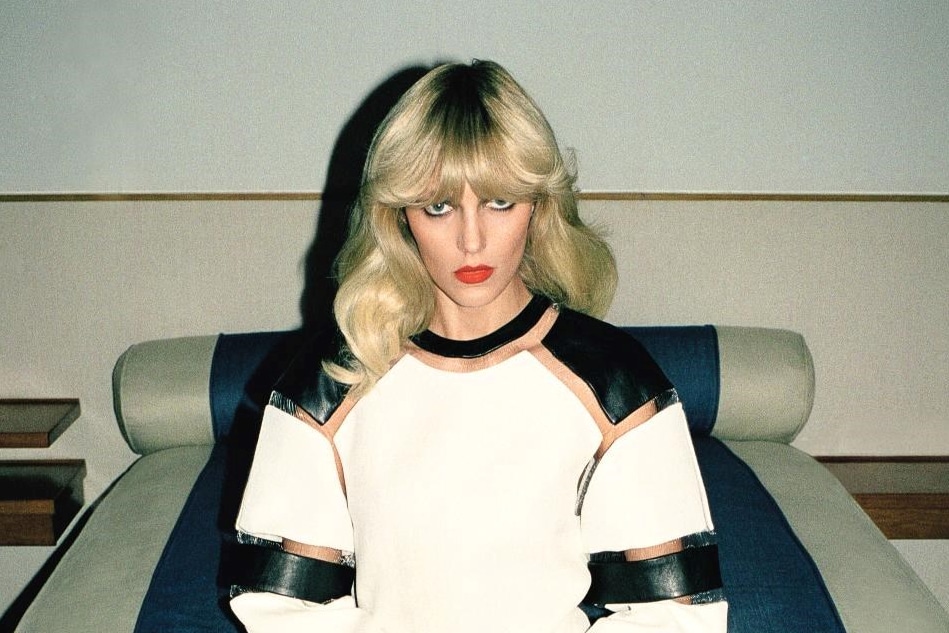
The In Good Company exhibition, curated by Simon Castets and Nicola Trezzi, is a monumental undertaking, presenting over 100 works that span Pfeiffer’s prolific career from the early 1970s to the present day. Arranged thematically across six rooms, the retrospective offers a comprehensive overview of his evolution as an artist, showcasing his consistent yet ever-evolving engagement with his core subjects and stylistic concerns.
The curators have designed the exhibition space in a manner that pays homage to Pfeiffer’s deep connection with printed media. Rather than a traditional gallery display of individual, framed works, the photographs are often arranged in diptychs, mimicking magazine spreads, or laid out on the walls with a "page architecture" that evokes the experience of flipping through a publication. This approach directly reflects Pfeiffer’s early artistic development, where the limitations and possibilities of the double-page spread in books and magazines significantly shaped his compositional choices and his intuitive understanding of how images interact. "The spirit focuses less on individual works, and comes more from the publishing system, on how images can be combined together," Pfeiffer explained during an interview, noting this approach harks back to his very first book.
Pioneering a Visual Language: Beyond the Frame
Despite being a visual artist, the words most frequently used to describe Pfeiffer’s work often belong to the realm of sound: "cacophonous," "polyvocal," "loud." This seemingly paradoxical description speaks to the vibrant, multi-layered, and often audacious nature of his images. There is an undeniable sense of theater in his compositions, a stylized mise-en-scène that can be traced back to his formative years as a window dresser. He possesses a unique ability to transform mundane, quotidian objects into dramatic signifiers, imbuing them with unexpected meaning and emotional resonance. A wilting daisy poking from a collar, a pair of worn shoes, or a casually draped scarf—all become active participants in Pfeiffer’s visual narratives.
His highly saturated photographs and film works are not merely aesthetically pleasing; they are incisive explorations of identity, desire, and the human condition. Pfeiffer’s work has consistently challenged societal norms around sexuality, portraying diverse forms of intimacy and beauty with an unvarnished honesty and playful irreverence. His artistic practice has been pivotal in shaping contemporary photography, influencing generations of artists and fashion photographers who admire his bold aesthetic and his unwavering commitment to his unique vision. His images have appeared in prestigious publications like Dazed, forging a long-standing relationship that began in the early 2000s, where his contributions, especially with former creative director Robbie Spencer, were characterized by their "youthful exuberance and insolent eroticism."
From Amateur to Icon: A Philosophy of Curiosity and Persistence
At 80, Pfeiffer remains remarkably industrious, his mind "working non-stop." He articulates his philosophy not as a relentless drive for success, but as a "mentality, remaining curious." This curiosity fuels his unwavering "chasing beauty," a quest he believes has "no time to stop, because you might find beauty when you least expect it." This intrinsic motivation, rather than external validation, has been the engine of his long and distinguished career.
Despite decades of exhibitions, numerous books, and now a major European retrospective, Pfeiffer still identifies as an "amateur." He qualifies it with a playful "amateur affiné now, perhaps!" For Pfeiffer, being an amateur is not about lacking skill, but about maintaining a certain sensibility, a freedom from the commercial pressures and strategic networking that often define professional artistic careers. "If I were a pro, I’d have a studio, and next week Nestle would be coming," he quips, contrasting his approach with the perceived demands of the commercial world. He notes the difference between being an amateur and a beginner, highlighting his deep experience.
Pfeiffer reflects on the current generation of artists, observing, "I meet lots of youngsters these days who are very driven, very pushy, very fame-hungry. Always networking, taking this person or that person flowers." He contrasts this with his own path: "I have never been like that, I’ve always been a nobody. Always on the outside. But it never stopped me. And now, [the success] has seemed to come on its own." This sentiment underscores his belief in authentic creation driven by passion, rather than by a calculated pursuit of fame or recognition. His career trajectory serves as a testament to the power of artistic integrity and perseverance.
A Dialogue with Beauty and Beyond: Personal Insights
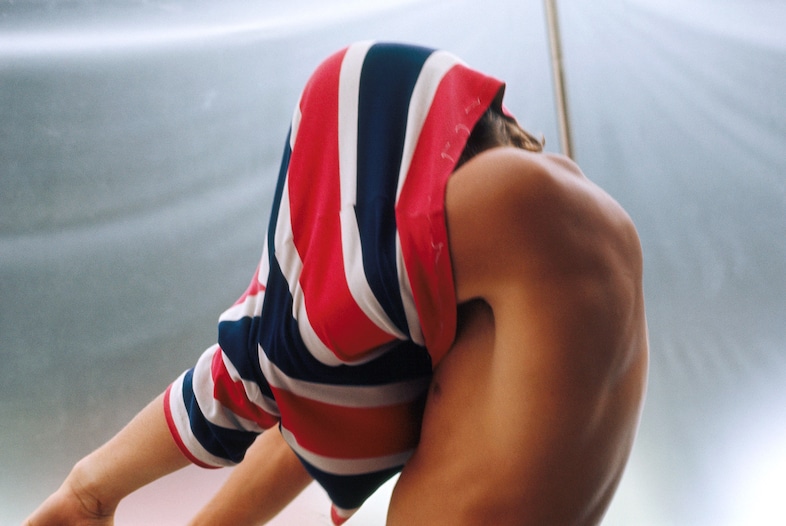
Pfeiffer’s interview reveals a rich inner world that informs his art. His concept of beauty, he asserts, has remained steadfast over the years: "No. You have the same eyes." However, he has learned the importance of knowing "when it’s over. When my curiosity has moved on." He cites Roy Orbison’s "It’s Over" as a favorite song, highlighting a contemplative side that accepts the natural ebb and flow of inspiration.
Music, for Pfeiffer, is a "time machine." He listens to old hit parades, citing artists like The Ronettes, Phil Spector, and Roy Orbison from the 1950s and early 60s, which transport him to a different era. Yet, his curiosity also extends to the present, as he keeps tabs on the current top ten charts, eager to understand contemporary cultural currents.
His recent experiences of being photographed have offered him valuable insights into the dynamic between artist and subject. He describes it as "playful," emphasizing his love for play and playful people. His confidence in the photographer allows him to embrace the role of a model fully, and through this experience, he learns "a lot about the experience of being photographed. I see what I need to do as a photographer." This reciprocal learning process underscores his continuous engagement with the medium from all perspectives.
Pfeiffer thrives on dialogue and conversation, both in life and in his photographic practice. When behind the camera, he focuses intensely on connecting with his subjects, an interaction he finds "very intense," often leaving him "exhausted." While not afraid of sex, he states his primary interest lies in "sensuality." He values models who possess "irreverence, a lack of self-consciousness," individuals who are unburdened by the art world’s expectations. His early models, including "boxers, drug dealers and young men with this kind of movie star energy," often came from the margins, a reflection of his enduring fascination with outsiders. He notes poignantly that "Many of them ended up in prison."
Cats, embodying this same irreverence, have been constant companions and "colleagues" in the "Walter Pfeiffer Company." He fondly recalls his cats, Pips (named after Gladys Knight & the Pips due to his high voice) and Nocciolina, both of whom appear in the exhibition. Pips, a former street cat, lived a long life with Pfeiffer, illustrating the deep personal connections that weave through his artistic output. His current inability to keep cats due to increased travel for work is a small sacrifice for his expanding global recognition.
Legacy and Enduring Influence
Walter Pfeiffer’s In Good Company retrospective at the Pinacoteca Agnelli is more than just a celebration of an artist’s milestone birthday; it is a critical re-evaluation of a seminal figure in contemporary photography. His work, which has consistently blurred the lines between fashion, art, and personal documentation, has profoundly influenced how we perceive beauty, sexuality, and the photographic medium itself. His "amateur" philosophy, coupled with his unwavering curiosity and dedication to capturing authentic sensuality, offers a powerful counter-narrative to the often-commoditized art world.
The exhibition at the Lingotto, a building that has successfully transitioned from industrial titan to cultural beacon, symbolizes Pfeiffer’s own journey from the margins to the mainstream, without ever compromising his distinctive vision. His enduring legacy lies not only in the captivating imagery he has produced over five decades but also in the defiant spirit he embodies – a spirit that champions intuition, irreverence, and the ceaseless pursuit of beauty in all its forms.
In Good Company runs at Pinacoteca Agnelli until September 13.