





Danish artist Maja Malou Lyse is set to challenge conventional perceptions of art, sexuality, and societal anxieties with her upcoming exhibition, "Things To Come," at the Danish Pavilion of the 61st International Art Exhibition – La Biennale di Venezia, running from May 9 to November 22, 2026. The ambitious project, curated by Chus Martinez, delves into a speculative future where virtual reality (VR) pornography becomes a crucial, if unsettling, solution to a global male fertility crisis. Lyse’s work, known for its provocative exploration of the body, desire, and digital culture, promises a profound reflection on image consumption and humanity’s shifting relationship with technology and its own biological future.
The genesis of "Things To Come" is rooted in an extraordinary encounter. Approximately three years prior to the exhibition’s announcement, Lyse received an unexpected call from the owner of Cryos International, the world’s largest sperm bank, coincidentally located in her Danish hometown. The owner extended an unusual offer: "I have 20 litres of sperm that I really want to give to an artist, and you seem like the right person to call." This peculiar proposition, while ultimately not resulting in a direct use of the donated sperm, provided Lyse with unprecedented access to the facility. Her subsequent visit to Cryos International proved to be a pivotal source of inspiration.
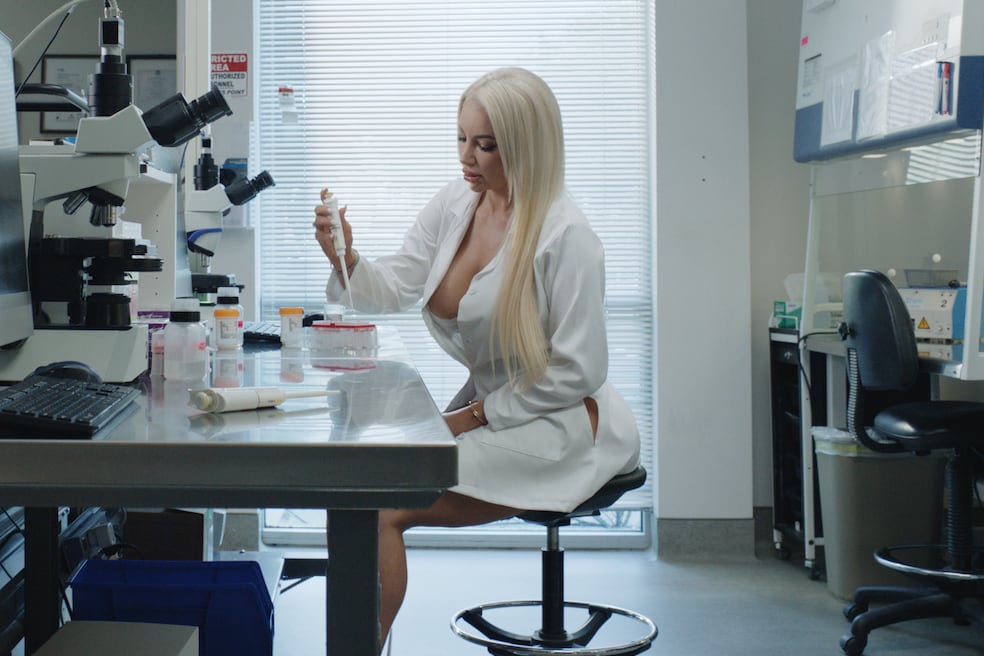
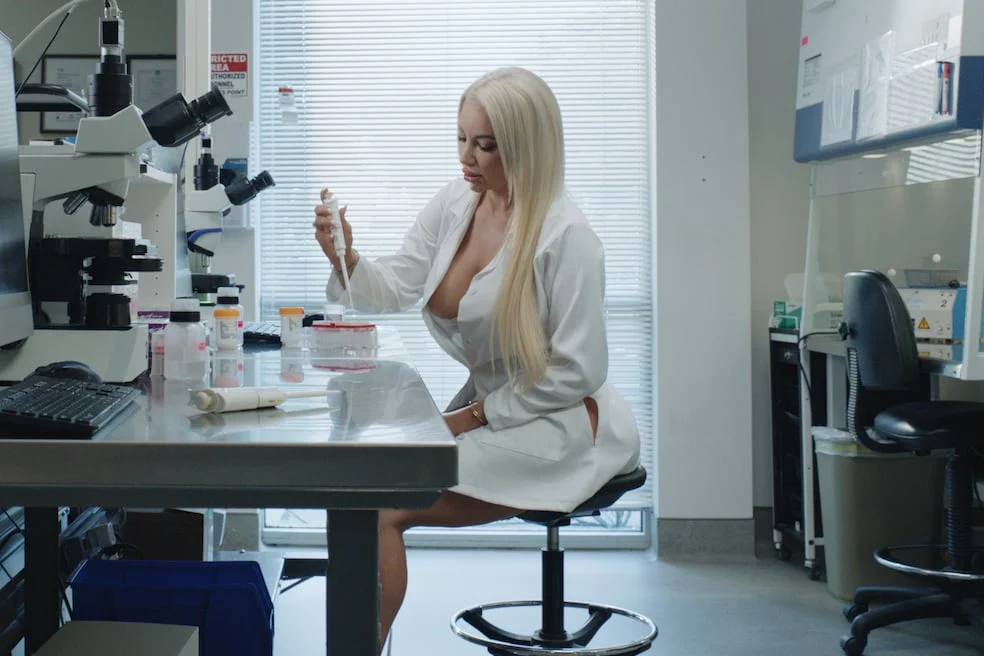
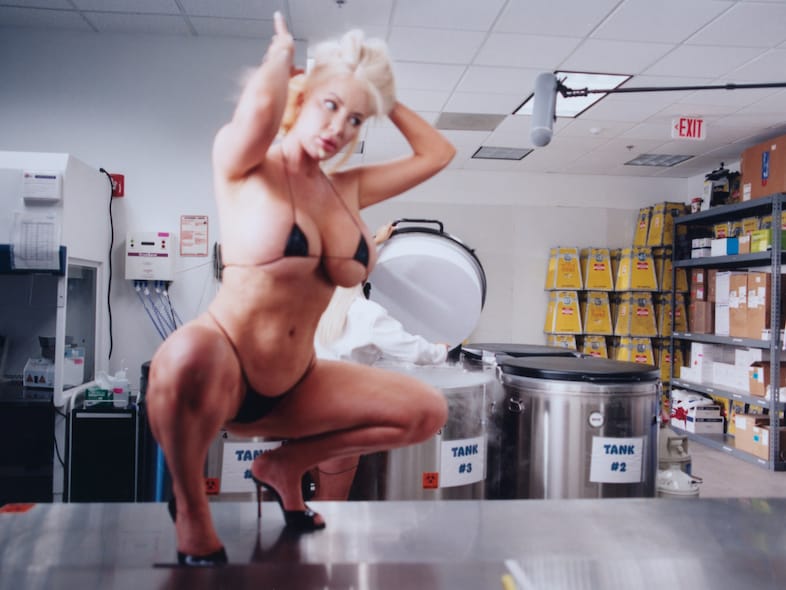
During her visit, Lyse observed the stark juxtaposition within the sperm bank: the clinical precision of the laboratory, staffed by technicians in lab coats and goggles, contrasted sharply with the intimate, almost illicit atmosphere of the donation booths. These dark rooms, equipped with leather couches and screens automatically displaying adult content, highlighted a peculiar blurring of boundaries between scientific reality and erotic fantasy. As Lyse remarked, "A lab is such a slutty place. If you put a woman with huge fake tits in a real laboratory, it instantly looks like a porn set." This observation underscored the inherent tension between reproduction as a biological process and the often-eroticized means of its initiation.
Beyond the immediate visual contrasts, Lyse’s exploration unearthed a scientific study linking the consumption of VR pornography to increased sperm motility—the ability of sperm to effectively "swim" towards an egg. This real-world research became the conceptual bedrock for "Things To Come." The exhibition extrapolates this scientific tidbit into a fictional near-future narrative, envisioning a world grappling with a severe male fertility crisis where VR porn, paradoxically, emerges as a vital tool for human survival. The project thus positions pornography as both "toxin and antidote," a powerful force capable of both shaping and potentially saving humanity.
Maja Malou Lyse’s artistic practice has consistently engaged with themes of sexuality, the body, and media culture, often through a lens of frankness and subversive humor. Her previous works include oversized dildo sculptures that playfully deconstruct phallic power, an extensive archival project titled "Bombshell Boom" investigating "Page 9" newspaper nudes and their cultural impact, and the nationally televised Danish show "Sex with Maja," which openly discussed sexual topics. This history of confronting societal norms and exploring the intersection of the intimate and the public sphere made her a natural choice for such a groundbreaking, and potentially controversial, project at the Biennale. The invitation from the sperm bank owner, despite its initial absurdity, was a testament to Lyse’s established reputation for fearlessly tackling subjects often relegated to the fringes of mainstream art.
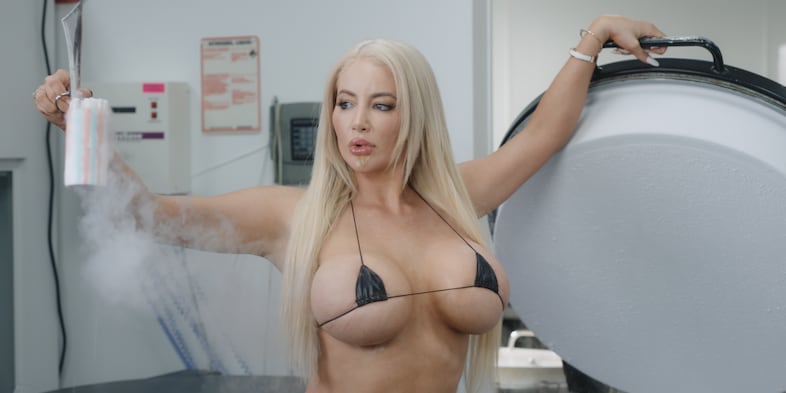
Lyse herself describes "Things To Come" as a "bimbo sci-fi," a genre designation that encapsulates its unique blend of futuristic speculation, critical commentary on gender roles, and an unapologetic embrace of aesthetic elements often associated with popular culture and sexuality. The narrative unfolds not in a distant galaxy or a post-apocalyptic wasteland, but in a near-future world grappling with present-day biological anxieties. In this imagined future, the declining global sperm count, a real and growing concern highlighted by scientific reports detailing a significant decrease in male fertility over the past decades (some studies suggest a 50-60% decline since the 1970s in Western countries), reaches a critical point. Lyse’s film explores how humanity might respond, particularly when conventional solutions fail.
A central element of this future dystopia-turned-utopia is a radical shift in power dynamics. As VR porn becomes instrumental in maintaining reproductive viability, the porn stars who create this content ascend to positions of "extreme authority." They become the custodians of futuristic sperm banks, operating beyond the moral frameworks and societal judgments that often constrain such industries today. This inversion of power challenges viewers to reconsider who holds influence in a crisis and how societal values might morph under existential threat. Lyse’s work, therefore, is not merely about pornography but about the aesthetics of fear and control. As she states, "The sci-fi cinema tradition is humans trying to aestheticise their fear of the unknown. We use images to try to control the narrative when things are, in reality, out of our control."
The production of "Things To Come" involved significant collaborative efforts. Filming took place partly over Christmas in an Orlando, Florida laboratory, a satellite facility of the very Danish cryosperm bank that initiated Lyse’s journey. The casting was deliberate and impactful, featuring prominent adult film actors such as Nicolette Shea, described by Lyse as a "major icon" in the industry, alongside Kira Noir, Abigail Morris, and Kayley Gunner, representing a "new generation" of performers. Lyse’s connection with Shea, forged at the AVN Awards in Las Vegas, was crucial to her vision, admiring Shea’s "camp" persona, commanding presence, and physical attributes. The decision to cast real, mainstream porn actors was integral to the project’s authenticity and its critique of image consumption. The production also benefited from collaboration with DIS, a New York-based art collective known for its critical engagement with contemporary culture and technology.
The exhibition at the Venice Biennale itself serves as a crucial platform for Lyse’s commentary on image consumption. Lyse draws a stark comparison between the art world’s audience and the reach of mainstream pornography. While the Venice Biennale, a globally renowned art event, might attract approximately 700,000 visitors over several months (as reported for the 2024 edition), Lyse points out that "porn sites get that in ten minutes." This profound disparity highlights the omnipresence and pervasive influence of pornography in contemporary society, irrespective of its cultural acceptance or artistic recognition. By bringing this "vulgar, extreme image consumption into the art world," Lyse forces a confrontation with what constitutes valuable cultural output and how images shape our collective consciousness.
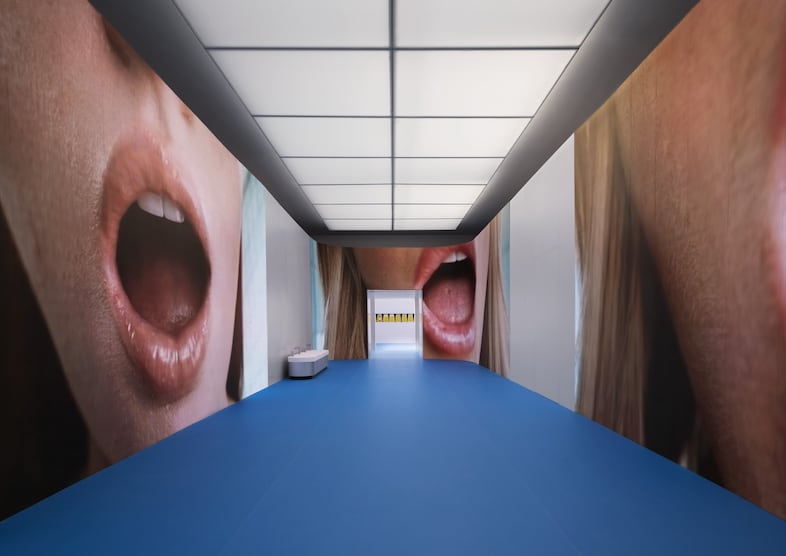
Navigating the prestigious context of the Venice Biennale also required strategic artistic choices. While the film is undeniably "sexy as hell" and imbued with eroticism, Lyse deliberately avoided explicit nudity or sexual acts. This conscious decision ensures the work transcends mere provocation, allowing for deeper conceptual engagement. "It’s very conservative porn, if someone calls it porn," Lyse notes, explaining that this approach helps to deflect accusations of "empty provocations" and allows for ideas with "more meat on their bones." Practical considerations, such as the logistics of managing queues for VR headsets at a high-traffic exhibition, also influenced the presentation, with the film projected on large-scale screens that interact with the pavilion’s architecture, offering multiple perspectives from the fictional facility’s workers.
"Things To Come" ultimately explores the profound impact of images on human perception, desire, and self-identity. Lyse contends that "mainstream pornstars are, in a way, the ultimate embodiment of that," representing figures whose bodies and personas are intensely consumed and often dictate cultural narratives around sexuality. The porn industry, she argues, "has written the scripts for a whole generation’s sexuality and desire. It’s such a powerful image system."
While Lyse acknowledges the existence and importance of feminist porn, she maintains that her role as an artist is not to "change or disrupt porn" directly, recognizing her position outside the industry. Instead, her project serves as a critical lens through which to examine the phenomenon of image consumption and its real-world consequences. The exhibition poses a provocative question: could VR porn actually save the world? Lyse herself admits, "It probably won’t." However, the work compellingly illustrates a societal tipping point where images are no longer mere representations but active forces shaping reality, from internet memes and AI-generated content to the pervasive influence of pornography.
This evolving relationship with images, where they increasingly act within and on the world rather than simply reflecting it, presents a fertile ground for artistic inquiry. "We stand at this tipping point where our relationship to images is being changed forever," Lyse concludes. "Things To Come" is thus poised to be a significant contribution to contemporary discourse, leveraging the unique platform of the Venice Biennale to address urgent biological anxieties, power dynamics, and the undeniable, often uncomfortable, influence of digital culture on the human condition. The Danish Arts Foundation’s presentation of this audacious exhibition underscores its relevance and potential to spark vital conversations about our collective future.