










Cartier stands at a zenith of horological achievement in 2026, commanding unprecedented market popularity and an exceptionally strong brand image, particularly among younger collectors. This contemporary success, coupled with a pervasive wave of 2000s-era nostalgia influencing broader cultural trends, provides fertile ground for the brand to leverage its rich heritage. At Watches and Wonders Geneva 2026, Cartier unveiled a significant revival: the Cartier Roadster collection, marking its return after a 14-year hiatus. The original Roadster line, launched in 2002, concluded its initial run in 2012. While the reintroduction has refined some of the 2000s’ distinctive quirkiness and the overt ’50s automotive Americana that informed its design, the new generation presents a cleaner, more sophisticated aesthetic, positioning it as a contemporary sports watch cornerstone within Cartier’s esteemed lineup.
A Strategic Revival in a Flourishing Market
The reintroduction of the Roadster is a calculated move by Cartier, capitalizing on several converging market forces. The brand’s current dominance is not merely anecdotal; reports from industry analysts indicate a substantial year-over-year growth in luxury watch sales for Cartier, particularly in the enthusiast-driven segment. This surge is attributed to a combination of aggressive product development, successful marketing campaigns targeting a younger demographic, and a general resurgence of interest in mechanical timepieces. The timing of the Roadster’s return aligns perfectly with a broader cultural appreciation for early 2000s design, a period characterized by bold lines and a distinct blend of functionality and expressive aesthetics.
The original Roadster, launched in the early 2000s, was a deliberate departure from Cartier’s more classically oriented collections. Inspired by the automotive world, particularly American classic cars of the 1950s, it offered a sportier, more robust alternative. Its distinctive tonneau case, prominent crown, and dashboard-inspired dial elements resonated with a new generation of watch buyers seeking both brand prestige and a more casual, yet still luxurious, timepiece. The discontinuation of the line left a void, and its subsequent absence has likely fueled collector demand and anticipation for its return.

Design Evolution: From Automotive Americana to Refined Sportiness
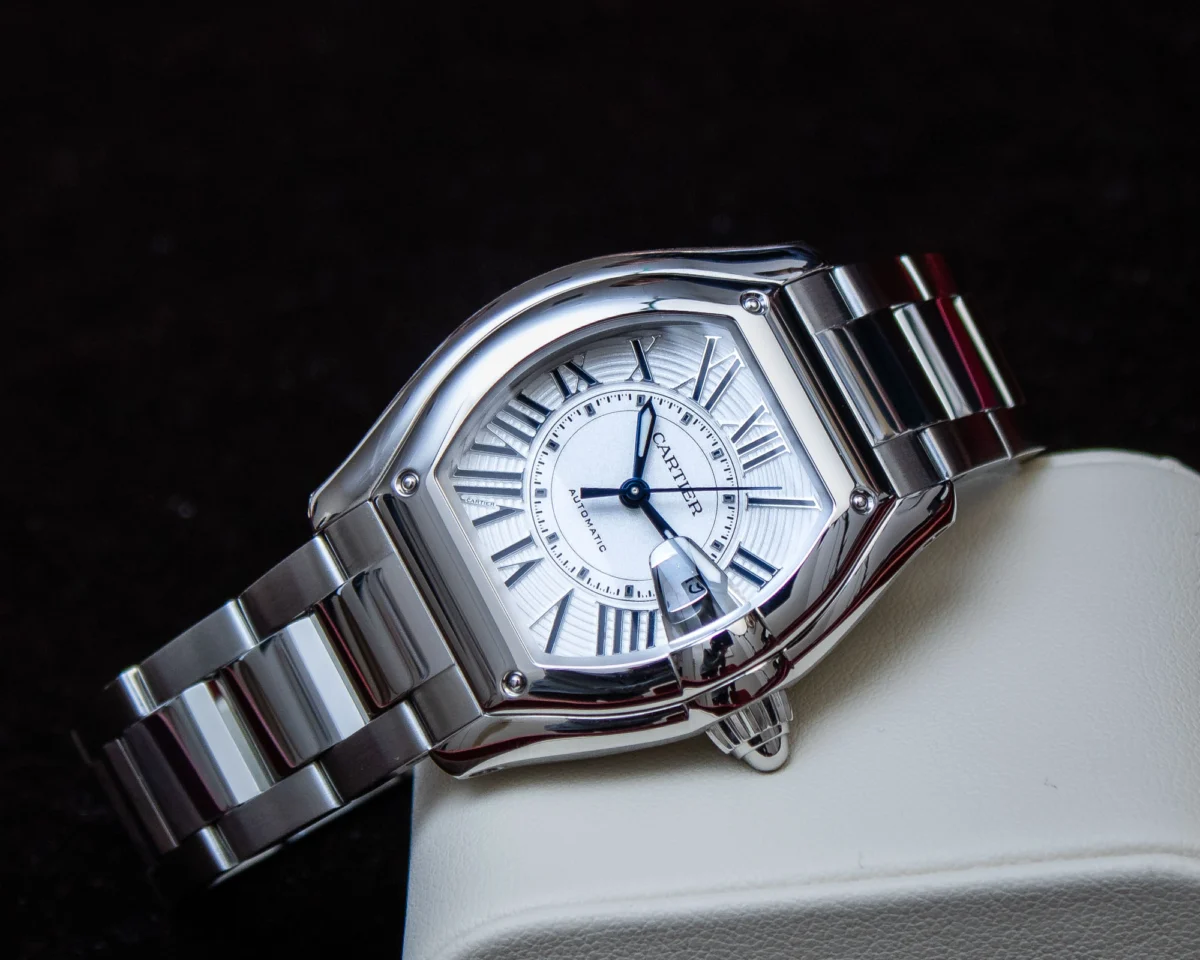
Cartier has opted for a comprehensive relaunch of the Roadster, introducing multiple variations from the outset rather than a phased approach. The collection features two distinct case sizes: a medium variant measuring 34.9mm in width and 42.5mm in lug-to-lug, and a larger model at 38mm wide with a 47mm lug-to-lug dimension. Buyers can choose from cases crafted in stainless steel, 18K yellow gold, or a sophisticated two-tone combination of steel and gold. The stainless steel model pictured is the medium size, while the two-tone example represents the larger iteration.
While the overall silhouette remains recognizable as a Roadster, this new generation exhibits a more streamlined and ergonomically refined tonneau case. The most notable change lies in the lugs. The original Roadster’s lugs featured recessed screws, a design element directly inspired by the taillights of a 1957 Corvette. These have been replaced by a smoother, more flowing design that draws parallels with Cartier’s Tortue collection. The polished bezel now incorporates four subtle rivets, a design cue that aligns with the prevailing trend of integrated sports watches, though it departs from the explicit ’50s American automotive references of its predecessor.
A key design feature of the original Roadster was its integration of automotive-inspired elements into the case architecture. The new generation retains this spirit, notably in the flow from the date magnifier at 3 o’clock through to the crown. This element, reminiscent of a 1959 Cadillac Eldorado taillight, has been reinterpreted. Instead of the pronounced protrusion of the original crown, which could sometimes prove intrusive during wear, the new crown is slightly recessed into the case. This subtle adjustment enhances wearability without sacrificing the distinctive visual identity of the series. This less obtrusive presentation is likely to appeal to a broader audience, mitigating potential divisive reactions to the original’s bolder execution.
The case design also emphasizes wearability through a significant undercut on the sides. This "wing-like" feature, visible from the caseback, minimizes the watch’s footprint on the wrist, allowing it to sit lower and appear slimmer. This thoughtful engineering contributes to a more comfortable and visually balanced profile. The solid caseback design remains consistent with the original models, and the inclusion of a 100-meter water resistance rating firmly establishes these new Roadsters as some of the sportier offerings within Cartier’s extensive catalog.

Dial Design: A Blend of Heritage and Modern Sophistication
In contrast to the more significant case revisions, the dial designs of the new Cartier Roadster collection exhibit a greater degree of fidelity to the original aesthetic, albeit with a pronounced enhancement in perceived quality and refinement. The dial surface itself is a testament to this evolution, presenting a more three-dimensional and layered appearance. The ridged hour track, inspired by VDO gauges found in vintage automobiles, now features deeper, more pronounced grooves, adding a tactile and visual depth.
Cartier’s iconic oversized Roman numerals remain a central design element. These are no longer simply printed but are stamped and either lumed or filled with enamel, elevating their presence and legibility. Within the hour ring, the central dial surface has transitioned from the intricate guilloché patterns of earlier models to a simpler, refined grained matte texture. This clean backdrop is complemented by a purposeful minutes scale and new, understated applied indices positioned at five-minute intervals.
The slim Roman sword hands, a signature of the series, have been retained. In a particularly elegant touch, the stainless steel model features newly blued hands and matching blue fills for the Roman numerals, imbuing the design with a classic Cartier flair. A newly stylized frame for the date window at 3 o’clock adds a touch of contemporary sophistication, while preserving the unique tapering shape of the date display itself, a subtle nod to its lineage.
Movement Specifications and Bracelet Integration
Details regarding the movements powering the new Roadster collection are typically kept closely guarded by Cartier. However, industry consensus suggests that the larger variants are equipped with the in-house caliber 1847 MC automatic movement, while the medium models utilize the slimmer in-house caliber 1899 MC automatic power plant. Both movements operate at a beat rate of 28,800 vibrations per hour and offer approximately 40 hours of power reserve. While these specifications are standard for many luxury watches, they are considered somewhat modest for timepieces at this price point, particularly given the brand’s prestige.

A notable shift from the original Roadster, which offered a wide array of quick-release strap and bracelet options, is the new collection’s primary focus on a new three-link bracelet design. This bracelet, while featuring the brand’s established, albeit somewhat dated, butterfly clasp, offers a clean and versatile aesthetic. It features smoothly brushed outer links contrasted by broad, polished center links.
The two-tone variant introduces a unique twist to this bracelet design. The center links adopt an alternating pattern of gold and steel, creating a distinctive "patchwork" look that sets it apart from conventional two-tone bracelets. The long-term appeal of this specific aesthetic among collectors remains to be seen, but it certainly injects a novel element into the market.
Market Positioning and Pricing
The reintroduction of the Cartier Roadster collection arrives at a propitious moment for the brand. In 2026, Cartier enjoys a position of remarkable strength in the watch market, marked by record sales and a growing cultural influence, particularly among younger enthusiasts. The Roadster’s revival is a strategic endeavor to broaden its appeal and experiment within its established heritage.
The collection successfully refines the bolder, idiosyncratic styling of the early 2000s original into a smoother, more conventionally attractive timepiece. It retains the automotive charm of its predecessor while significantly elevating the collection’s market positioning towards a more upscale segment.

The Cartier Roadster collection is available immediately through authorized dealers. Pricing reflects the use of precious metals and the brand’s luxury positioning. The collection starts at an MSRP of $9,300 USD for the medium stainless steel model. For those seeking the opulence of 18K yellow gold, the large version is priced at $57,000 USD. This pricing strategy places the Roadster in direct competition with other luxury sports watches from established maisons, emphasizing its dual appeal as both a collector’s item and a sophisticated everyday timepiece.
Broader Implications and Future Outlook
The successful reintroduction of the Roadster signifies Cartier’s adeptness at navigating evolving market trends and consumer preferences. By balancing heritage with contemporary design sensibilities, the brand has managed to revive a beloved model while ensuring its relevance in the modern horological landscape. This strategy of revisiting and refining iconic lines is a well-trodden path for luxury brands, but Cartier’s execution with the Roadster demonstrates a particular flair for marrying historical inspiration with forward-looking design.
The collection’s reception will undoubtedly be closely monitored by industry observers. Its success could pave the way for further revivals of other discontinued Cartier lines, further solidifying the brand’s dominance. Furthermore, the Roadster’s appeal to a younger demographic, a key focus for many luxury watchmakers, suggests that Cartier is effectively cultivating its next generation of collectors. The blend of a recognizable name, updated aesthetics, and the prestige of the Cartier brand positions the Roadster as a compelling option for both established collectors and newcomers to the world of luxury watches. The long-term implications of this revival will be felt not only within Cartier’s product strategy but also across the broader luxury watch market, as other brands assess the impact of nostalgia-driven product development in a thriving market.