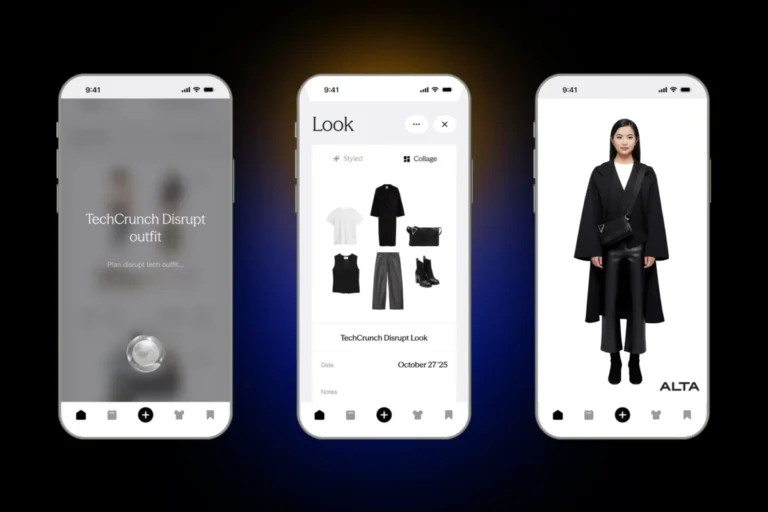









The intersection of high fashion and generative artificial intelligence reached a new milestone this Saturday as designer Kate Barton unveiled her latest collection at New York Fashion Week (NYFW), featuring a sophisticated technological layer designed to redefine the attendee experience. In a strategic partnership with Fiducia AI, Barton introduced a multilingual AI agent powered by IBM watsonx on IBM Cloud, enabling guests to interact with the collection through a visual lens that identifies specific garments and facilitates photorealistic virtual try-ons. This activation marks a significant shift in the fashion industry’s adoption of AI, moving beyond internal logistics and into the realm of public-facing, consumer-centric storytelling.
The presentation, which took place against the high-stakes backdrop of NYFW, was not merely a display of clothing but a demonstration of how advanced computing can serve as a "portal" into a designer’s creative vision. By utilizing a visual AI lens, the system can detect specific pieces from Barton’s new collection in real time, answering inquiries via voice or text in multiple languages. This capability addresses a long-standing barrier in the global fashion market—language—while providing a tactile, albeit digital, way for consumers to engage with high-concept silhouettes.
The Technical Framework: Orchestration Over Model Tuning
The collaboration between Kate Barton and Fiducia AI represents a complex technical achievement in the deployment of production-grade AI within a live event environment. Ganesh Harinath, the founder and CEO of Fiducia AI, emphasized that the primary challenge of the project lay not in the tuning of individual models, but in the "orchestration" of a multifaceted ecosystem. The solution utilized a suite of IBM technologies, including IBM watsonx, IBM Cloud, and IBM Cloud Object Storage, to manage the data-heavy requirements of photorealistic virtual reality.
IBM watsonx, designed as a data and AI platform for enterprises, provided the foundational models necessary for the agent’s multilingual capabilities and visual recognition. Unlike generic chatbots, this implementation required a high degree of precision to ensure that the AI could distinguish between subtle fabric textures and complex architectural cuts unique to Barton’s aesthetic. The use of IBM Cloud Object Storage ensured that the high-resolution assets required for virtual try-ons could be delivered with minimal latency, a crucial factor in maintaining the "magic" of a live fashion presentation.
The deployment of this technology signals a move toward "visual AI," where the software does not just generate text or images from a prompt but actively "sees" and interprets the physical world. For Barton, this was a deliberate choice to enhance, rather than distract from, the physical garments. She described the technology as a tool for expanding the narrative world around the clothes, creating a sense of curiosity that encourages viewers to take a "double take" at the fusion of the real and the unreal.
Chronology of Innovation: Barton’s Path to AI Integration
Kate Barton’s journey into fashion technology is not a sudden pivot but a measured evolution. This Saturday’s presentation follows a series of experiments conducted over previous seasons.
- September 2024: Barton first collaborated with Fiducia AI during the previous fashion cycle. This initial phase was largely experimental, focusing on the use of AI-generated models and digital imagery to augment the traditional runway format. This period served as a proof-of-concept for how AI might assist in visualizing complex designs before they reach the manufacturing stage.
- Development Phase (Late 2024 – Early 2025): Following the success of the initial experiment, Barton and Harinath shifted their focus toward "operationalizing" the technology. The goal moved from static AI imagery to interactive, real-time agents. During this time, the team integrated IBM watsonx to ensure the AI could handle the nuances of a global audience.
- February 2025 (NYFW Debut): The current activation represents the first time a multilingual, voice-activated AI agent has been used to facilitate real-time virtual try-ons of a live collection at NYFW.
This timeline reflects a broader trend in the industry where designers are moving from "AI for AI’s sake" toward purposeful applications that solve specific retail and engagement problems. Barton noted that while many brands currently use AI for back-end operations—such as inventory management or trend forecasting—fewer have been willing to put the technology in the hands of the public due to perceived reputational risks.
Supporting Data: The Economic Impact of AI in Fashion
The Barton-Fiducia partnership arrives at a time when the fashion industry is under pressure to modernize its digital presence. According to industry reports, the global market for AI in fashion is projected to grow from approximately $0.65 billion in 2023 to over $4.5 billion by 2030, representing a compound annual growth rate (CAGR) of over 30%. This growth is driven by a demand for personalized shopping experiences and the need for more efficient production cycles.

Virtual try-on (VTO) technology, specifically, is seeing rapid adoption. Data from retail analytics firms suggest that VTO can reduce return rates by as much as 25% to 30%, as consumers gain a better understanding of how a garment fits and drapes before making a purchase. Furthermore, multilingual AI agents address a critical gap in the luxury market; with nearly 40% of luxury sales projected to come from Chinese consumers by 2030, the ability to communicate across language barriers in real-time is no longer a luxury but a logistical necessity.
Barton likened the current state of AI in fashion to the early days of e-commerce. In the late 1990s and early 2000s, many heritage brands were hesitant to establish websites, fearing that an online presence would cheapen their exclusivity. Eventually, the digital storefront became inevitable, and the industry’s focus shifted from "should we be online" to "is our online presence any good?" Barton suggests that AI is currently at this same inflection point.
Official Responses and Strategic Perspectives
The integration of IBM’s enterprise-grade AI into a creative field like fashion has drawn commentary from both the tech and retail sectors. Dee Waddell, Global Head of Consumer, Travel, and Transportation Industries at IBM Consulting, highlighted the competitive advantage of real-time engagement. Waddell noted that when product intelligence and consumer engagement are connected instantly, AI ceases to be a mere "feature" and becomes a "growth engine." This perspective aligns with IBM’s broader strategy of positioning watsonx as a tool for "responsible AI" that can be operationalized across diverse industries.
Ganesh Harinath of Fiducia AI echoed this sentiment, predicting that AI will be normalized within the fashion industry by 2028. By 2030, he anticipates that AI will be embedded into the core operational DNA of retail, moving beyond surface-level chatbots and content generation into deep-tier logistics and creative collaboration.
However, the conversation remains tempered by a commitment to human craft. Barton was vocal about her stance on the "replacement" narrative often associated with artificial intelligence. "If the technology is used to erase people, I am not into it," she stated. She emphasized that the audience is capable of distinguishing between "invention" (using tools to create something new) and "avoidance" (using tools to bypass the human element).
Broader Impact and Implications for the Industry
The Barton presentation serves as a case study for the "Responsible AI" movement within the creative arts. As the industry grapples with questions of copyright, licensing, and the displacement of human labor, Barton’s approach emphasizes "clear discourse, clear licensing, and clear credit." This framework is essential for maintaining the integrity of human creativity, which Barton argues should not be viewed as an "annoying overhead cost."
The implications of this technology extend far beyond the runway. For independent designers, AI tools like those provided by Fiducia and IBM could democratize access to high-end visualization and global communication tools that were previously only available to multi-billion-dollar conglomerates. Conversely, for established luxury houses, these tools offer a way to maintain "brand heat" by providing immersive experiences that resonate with a younger, tech-native demographic.
As NYFW concludes, the Barton-Fiducia collaboration stands as a testament to the potential of "augmented" fashion. The focus remains on heightening craft and deepening storytelling. In Barton’s view, the most exciting future for the industry is one where technology brings more people into the experience without "flattening" the humans who make the clothes worth wearing. The success of this activation suggests that while the "runway" may remain physical, the "portal" through which we view it is becoming increasingly digital, intelligent, and borderless.