







The intersection of generative artificial intelligence and high fashion reached a significant milestone during this season’s New York Fashion Week as Alta, the fashion technology startup founded by Jenny Wang, unveiled its latest enterprise integrations. Since securing $11 million in a funding round led by Menlo Ventures last year, Alta has transitioned from a buzzy consumer app to a critical infrastructure provider for the digital retail space. The company, which seeks to modernize the wardrobe management concept first popularized by the 1995 film Clueless, is now positioning itself as the "personal identity layer" for the burgeoning era of agentic commerce. By allowing users to create personalized avatars and virtually "wear" thousands of brand-name garments, Alta is attempting to solve the long-standing industry challenge of digital fit and stylistic visualization.
The Evolution of the Digital Closet: From Cinema to Commerce
For decades, the fashion industry has viewed the computerized wardrobe interface seen in the movie Clueless as the "North Star" of retail technology. In the film, protagonist Cher Horowitz uses a desktop computer to cycle through digital representations of her clothing, ensuring a perfect match before ever opening her physical closet. While several startups have attempted to replicate this experience over the last 30 years, most were hampered by the limitations of static imagery and the inability to accurately render how different fabrics and cuts interact with a human body.
Alta has broken through these historical barriers by leveraging the latest advancements in generative AI and computer vision. The platform allows users to digitize their existing wardrobes and supplement them with items from thousands of partner brands. Since its official launch in 2023, the platform has seen explosive growth, with more than 100 million outfits generated by its user base. This volume of data provides Alta with a unique insight into consumer styling preferences, a data set that is increasingly valuable to brands looking to personalize their marketing efforts.
The company’s recent momentum was validated when Time and Vogue recognized the platform as one of the premier innovations of the past year. However, the true test of the technology lies in its move from a standalone consumer application to a direct integration on designer websites, a transition that began in earnest this month.
Strategic Partnerships and the Public School New York Integration
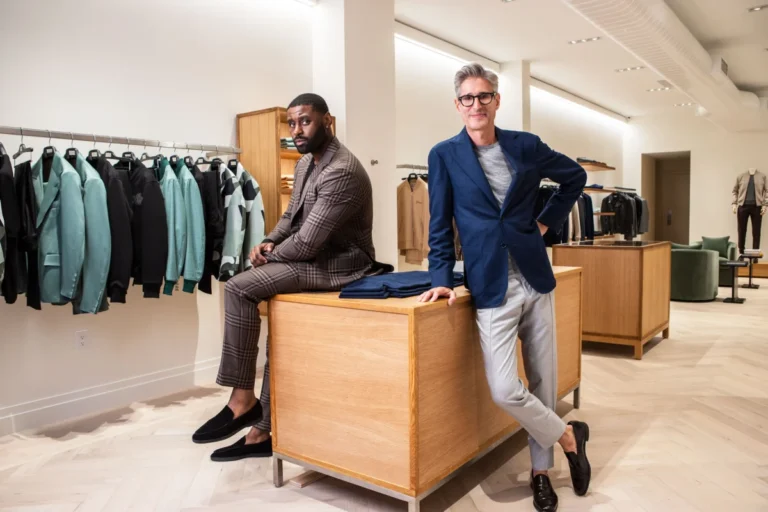
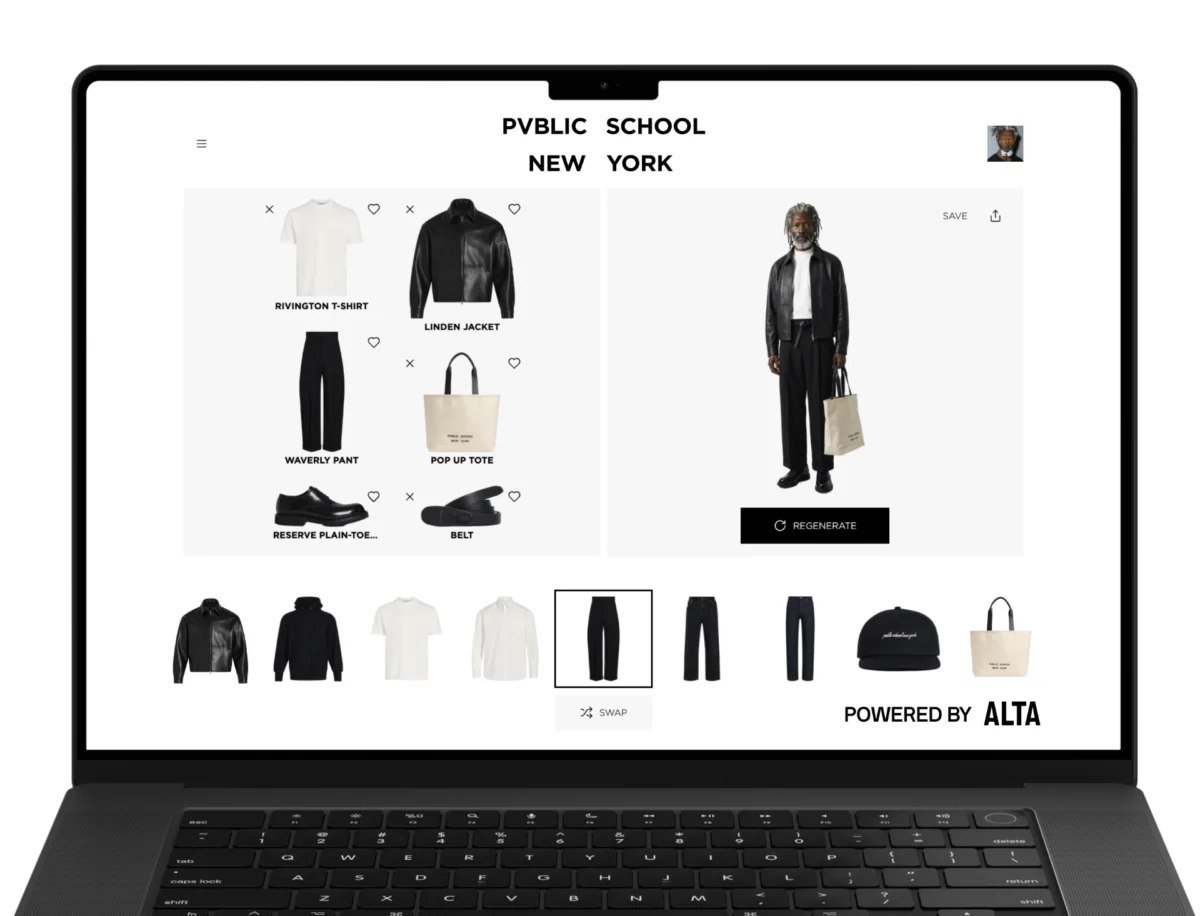
The centerpiece of Alta’s New York Fashion Week presence was its collaboration with Public School New York. The storied streetwear brand, led by designers Dao-Yi Chow and Maxwell Osborne, recently returned from a multi-year hiatus, choosing this season for a high-profile re-debut. Central to their comeback strategy is the integration of Alta’s virtual try-on technology directly into the Public School e-commerce experience.
The partnership originated through a shared connection with the founder of Poshmark, who serves as an angel investor in both Alta and Public School. According to Jenny Wang, Chow was already an active user of the Alta app, which facilitated a natural transition toward a professional collaboration. On the Public School product pages, a "Style with Alta" icon now appears, allowing prospective customers to instantly see how a specific garment—such as the Linden Jacket—would look on their personalized Alta avatar.
This integration represents a shift in how designers view technology. Dao-Yi Chow noted that the current landscape of the fashion industry requires a fundamental reassessment of digital tools. He emphasized that the goal is not to use AI as a replacement for human creativity in the design process, but rather as a "storytelling tool" that bridges the gap between the runway and the consumer’s home. For a brand like Public School, which thrives on the energy of New York City, providing a way for global consumers to interact with the brand’s silhouette and styling ethos virtually is essential for modern scaling.
Funding and Institutional Support: The All-Star Backing of Alta
Alta’s rapid ascent is supported by a robust financial foundation and a diverse group of high-profile investors. The $11 million round led by Menlo Ventures featured participation from the Anthology Fund, which is the venture capital arm of the AI research company Anthropic. The involvement of an AI-focused fund underscores the technical complexity of Alta’s backend, which must process vast amounts of visual data to render clothing accurately on diverse body types.
Beyond institutional capital, Alta has attracted significant interest from the fashion elite. Investors include supermodels Karlie Kloss and Jasmine Tookes, as well as Jenny Fleiss, the co-founder of Rent the Runway. This blend of Silicon Valley technical expertise and Seventh Avenue fashion authority has given Alta a level of credibility that previous fashion-tech startups lacked.

The company’s growth is also bolstered by institutional partnerships with the Council of Fashion Designers of America (CFDA) and Poshmark. These relationships provide Alta with a pipeline to both established luxury houses and the massive secondary market, where the ability to "try on" used clothing could significantly reduce return rates and increase buyer confidence.
Technical Superiority and the Competitive Landscape
The virtual try-on (VTO) market is becoming increasingly crowded, with major retailers like Zara and luxury conglomerates like LVMH experimenting with digital avatars. However, Wang points out that Alta’s competitive advantage lies in its speed and its ability to handle complex layering.
In a comparison with Zara’s existing avatar technology, Wang noted that while Zara’s system often limits users to four items and can take up to two minutes to render a look, Alta’s technology allows for the styling of eight or more items in just seconds. This efficiency is critical for maintaining consumer engagement in a mobile-first environment.
Furthermore, Alta is building what Wang calls a "data layer" for the future of shopping. While competitors often focus on a single-session try-on experience, Alta maintains a persistent digital identity for the user. This identity includes the user’s likeness, body measurements, style preferences, and a digital record of their existing physical closet. This holistic view of the consumer is the prerequisite for "agentic commerce"—a future in which AI assistants can autonomously suggest, style, and even purchase clothing on behalf of a user based on their unique profile.
Market Context and Industry Implications
The rise of Alta comes at a time when the fashion industry is grappling with high return rates and a shifting retail landscape. Industry data suggests that approximately 30% to 40% of all clothing ordered online is returned, with "fit and style" cited as the primary reason. By providing a high-fidelity virtual try-on experience, Alta aims to mitigate these losses, which cost the industry billions of dollars annually in logistics and lost inventory value.
The global virtual try-on market is projected to grow at a compound annual growth rate (CAGR) of over 20% through 2030. As consumers become more accustomed to digital-first interactions, the demand for personalized shopping experiences is expected to skyrocket. Alta’s strategy of embedding its technology directly into brand websites allows it to capture this market at the point of sale, rather than relying solely on users to visit a third-party app.
A Timeline of Alta’s Major Milestones
- 2023: Alta launches its consumer app, allowing users to digitize their closets and generate AI-powered outfits.
- Late 2023: The platform surpasses 100 million outfits generated; Time and Vogue name it a top innovation.
- June 2024: Alta announces an $11 million funding round led by Menlo Ventures, with participation from Anthropic’s Anthology Fund.
- September 2024: Alta partners with the CFDA and Poshmark to expand its brand ecosystem.
- February 2025: The company debuts its first major enterprise integration with Public School New York during New York Fashion Week, marking its move into direct-to-consumer website functionality.
The Path Forward: Agentic Commerce and Personal Identity
As Jenny Wang looks toward the future, the goal for Alta extends beyond simple virtual try-ons. The company aims to become the foundational infrastructure for AI-driven retail. In Wang’s vision, the "personal identity layer" provided by Alta will enable a new generation of shopping assistants that understand a user’s physical reality and aesthetic desires.
"For agentic commerce to truly work, we need a data layer that understands the shopper’s style preferences, such as their closet, past purchases, and their avatar, likeness, and body," Wang explained.
By positioning itself as the bridge between the user’s physical wardrobe and the digital marketplace, Alta is not just reviving a 90s cinematic fantasy; it is defining the technical standards for how the next generation will interact with fashion. As more brands follow the lead of Public School and integrate Alta’s technology, the distinction between the "digital closet" and the "physical closet" is likely to become increasingly blurred, signaling a new era of efficiency and personalization in the global fashion economy.