








From late 2025 to the early months of 2026, a distinctive cultural phenomenon, dubbed "Chinamaxxing," has captivated social media platforms across the US and Europe. This trend sees young Westerners adopting elements of Chinese life, culture, and even traditional practices, signaling a deeper affinity for the world’s burgeoning superpower that extends far beyond a fleeting interest in popular Chinese cuisine or beverages. Videos showcasing American expatriates in Paris preparing breakfast with Traditional Chinese Medicine (TCM) ingredients, or British TikTokers embracing warm water consumption, house slippers, and boiled apples for gut health, have gone viral. This online fascination is mirrored by a growing yearning among Europeans for China’s glittering metropolises like Chongqing, Shenzhen, and Shanghai, suggesting that Chinamaxxing is more than a superficial meme; it reflects a profound re-evaluation of China’s role and appeal in the global landscape.
A Shifting Diplomatic and Public Sentiment Landscape
The emergence of Chinamaxxing coincides with, and perhaps is influenced by, a significant reorientation in Western diplomatic relations with China. In Britain, a YouGov poll conducted between October 2025 and late January 2026 revealed a notable increase in the number of people viewing China in friendly terms. This shift stood in stark contrast to public sentiment towards the United States, which saw a 17-point decline in positive perception during the same period. A separate 2025 poll further highlighted a stark generational divide, with younger demographics demonstrating a considerably greater inclination to trust China compared to their older counterparts.
This evolving public opinion preceded a landmark diplomatic thaw. In January 2026, Labour leader Keir Starmer became the first UK leader since 2018 to accept an invitation from the Chinese Communist Party (CCP), effectively ending a prolonged diplomatic "ice age." This visit notably secured plans for seven new Labubu stores in the UK, a symbol of growing cultural and commercial exchange. Concurrently, Canadian Prime Minister Mark Carney declared a "new strategic partnership" with China, and European leaders embarked on a new era of diplomacy with Beijing as the Year of the Fire Horse began. These developments culminated in major trade deals and the introduction of visa-free travel for several European nations, underscoring a broad Western pivot towards deeper engagement with China.
The Rupture of the Old World Order
This diplomatic re-alignment is set against a widely acknowledged "rupture" in the established global order. The United States, long considered the dominant superpower, has seen its international reputation erode significantly due to contentious policies and actions. Commentators frequently point to "illegal" wars and threats against allied territories, with some arguing that former President Donald Trump’s unilateralist foreign policy during his previous term inadvertently pushed Western allies closer to China. However, this complex shift is not merely a straightforward cause-and-effect scenario; the political disruptions of early 2026 merely accelerated a process of re-evaluation that was already underway.
The origins of this shift are multi-faceted. Is it the result of a sophisticated Chinese "soft power" campaign, strategically deployed across social media, music, and video games? Are young Westerners falling under the spell of subconscious TikTok "psy-ops"? Or is it a genuine enchantment with the vibrant glimpses of Chinese life, culture, and technological prowess that pierce through the Great Firewall—from images of "aunties dancing" in public parks to videos of "backflipping robots" showcasing advanced robotics?
Amy Ireland, a writer, theorist, and editor of Machine Decision is Not Final, suggests that the obsession might reveal more about the West’s internal struggles. In 2026, many in the UK and Europe perceive themselves as living through the "death throes of empire," a sentiment reinforced by declining national pride. Polls in 2025 indicated that only 29% of young Britons felt proud of their country, and faith in democratic institutions was steadily fading across Europe. Ireland posits, "We’re going through this negative moment, where we’re feeling a sense of loss and decline, and we’re looking for something to fill that void."
Influencers as Cultural Bridges and Catalysts
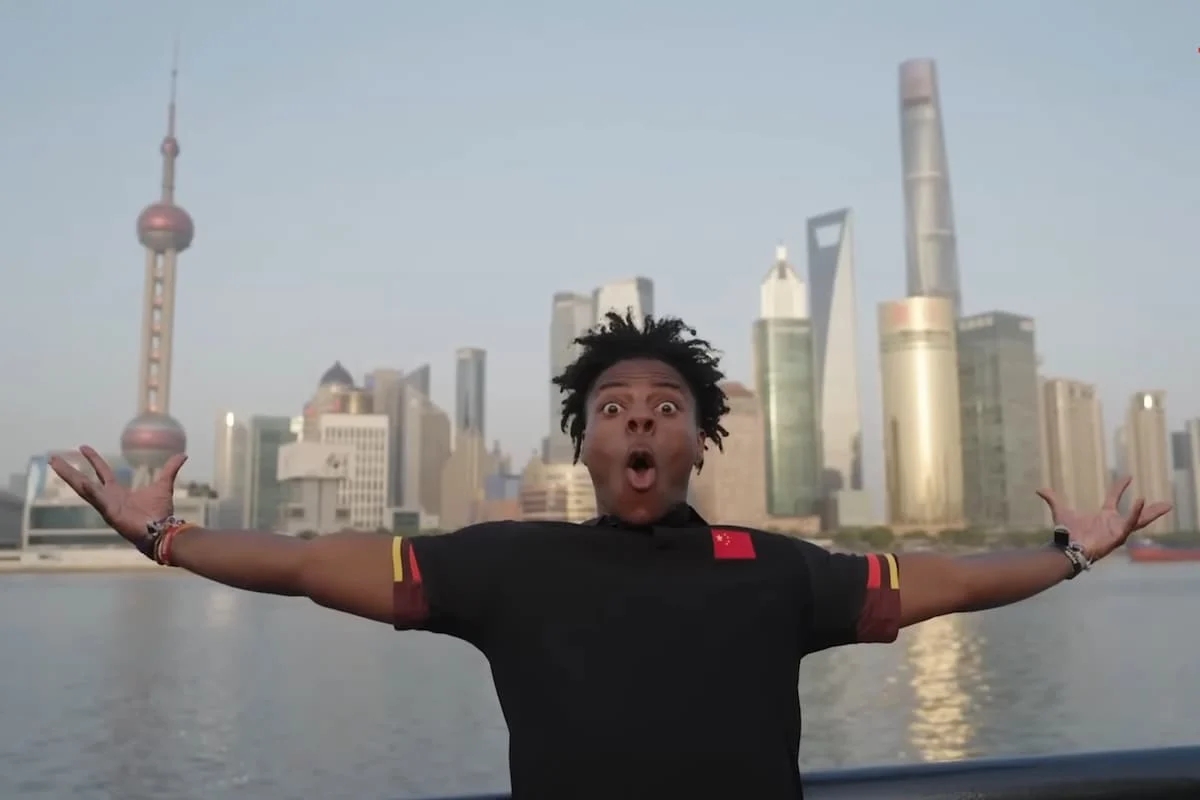
A year prior to the widespread Chinamaxxing trend, Ohio-born streamer IShowSpeed embarked on a two-week livestreamed journey through major Chinese cities, including Shanghai, Beijing, Chongqing, and Shenzhen. This widely viewed expedition exposed tens of millions to a facet of China "rarely highlighted" by Western mainstream media, earning effusive praise from CCP officials. In November 2025, popular streamer Hasan Piker also visited China, stating to the South China Morning Post, "My motivation was to show that China isn’t this hermit kingdom the way it’s often presented… Americans have been taught to hate China, this country that we heavily rely on. And I find that to be not only hypocritical, but also very stupid." More recently, actor Timothée Chalamet engaged with Chinese social platforms like RedNote and Weibo to share his experiences while promoting his film Marty Supreme.
Vincent Garton, a researcher specializing in aesthetics, technology, and Chinese philosophy, credits IShowSpeed, in particular, with significantly enhancing perceptions of China among American youth. Garton notes that the streamer achieved this through various means, from authentic interactions with "random people" in local restaurants and bustling Shanghai streets to showcasing the "futuristic cityscapes" that reinforced the Western notion of China as a cyberpunk utopia—a seductive, albeit simplified, fantasy cultivated in pop culture since Deng Xiaoping’s modernization reforms in the 1980s.
Concurrently with these high-profile visits, Western content creators began sharing footage of Chinese-developed media, such as the 2025 game Road to Empress and the critically acclaimed 2024 title Black Myth: Wukong. These video games, rooted in ancient Chinese history and mythology, captivated young gamers. "Young gamers were like, ‘Holy shit, these Chinese studios are doing amazing stuff,’" recalls Amy Ireland, highlighting the growing recognition of China’s burgeoning creative industries.
Navigating Critiques and Propaganda Concerns
Inevitably, many influencers and streamers engaging with China have faced criticism for allegedly overlooking serious accusations leveled against the CCP under President Xi Jinping. Xi, who assumed office in 2013 and abolished the two-term limit in 2018 to become "president for life," presides over a state accused of human rights abuses, including the alleged use of "detention camps" for Uyghurs and other Turkic minorities in Xinjiang. Concerns also persist regarding China’s pervasive censorship, mass surveillance, and its "neocolonialism" in Africa, though the latter remains a much-disputed claim.
Some critics contend that Western influencers are wittingly or unwittingly promoting Chinese government propaganda, or are at least engaging in "ragebait" by spreading anti-Western messages to boost engagement. Garton acknowledges that influencers have "their own set of incentives… to wind people up and clickbait." However, he suggests that truly insidious, organized forms of propaganda are "pretty rare" in his 15 years of observation.
Garton also argues that the extent of the Chinese state’s intervention in daily life is often exaggerated in Western narratives. "Youth culture in China is a lot more open than people realise," he states. This openness is exemplified by phenomena like the "lying flat" (or tang ping) movement, which emerged in 2021 as a rejection of societal pressures to overwork, particularly against the technically illegal "996" work schedule (9 am to 9 pm, six days a week). The tang ping manifesto, heavily censored by the government, proliferated through memes that outpaced censors, showcasing how youth subcultures can express disillusionment and critique the state from within.
Moreover, Garton highlights that Chinese youth culture is "more in sync with the western internet" than commonly perceived. The widespread adoption of VPNs in the early 2010s allowed a new generation of net-savvy Chinese youth to voraciously consume Western media, especially music. This cross-cultural exchange has birthed movements like the "Nu China" rap scene, which offers an interesting counterpoint to Chinamaxxing.
The Nu China Counterpoint: Mirroring Disillusionment
The Nu China rap scene, featuring artists like Billionhappy, Jackzebra, and Chalky Wong, draws deep inspiration from Western music—from the rise of Swedish artists like Yung Lean and Drain Gang to the EDM-rap fusions of 2hollis. However, its resonance is uniquely tailored to the issues facing Chinese youth today. Billionhappy, a prominent figure in the scene, told Dazed earlier in 2026, "Now, a lot of kids [in China] have graduated [university] and they don’t have a job… Either they don’t want to work, or they can’t find work. A lot of teenagers are hopeless [so] they just choose to do weird stuff and have fun." This sentiment echoes the tang ping trend, with Billionhappy’s Shabby Club collective (a pun on the vulgar Chinese word shabi, meaning stupid) advocating a form of nihilistic enjoyment in response to overwork and dimming future prospects.
Crucially, Billionhappy acknowledges that the Nu China scene is built on selective and sometimes "faulty" readings of Western youth culture. Just as Western influencers’ fascination with TCM and warm water might reflect their own "negative moment" rather than a deep engagement with Chinese social reality, the Nu China scene’s interpretations of Western musical subcultures articulate a distinctly Chinese disillusionment—one largely absent from the Chinamaxxing discourse abroad. This reciprocal cultural borrowing highlights how youth in both East and West are grappling with similar anxieties about the future, albeit through different cultural lenses.
Challenging the Technological Narrative
Games like Black Myth: Wukong not only introduced Western gamers to Chinese mythology but also contributed to the "slow unravelling" of a pervasive myth: that China lags technologically behind the West. The long-standing maxim among political commentators, "America innovates, China imitates," faced a significant challenge in January 2025 with the release of the China-based AI chatbot DeepSeek. DeepSeek outperformed many US competitors in benchmark tests despite utilizing fewer resources, leading to a staggering $1 trillion wipeout from US stocks. Donald Trump reportedly described this as a "wake-up call" for Western industries.
Today, a strange paradox defines Western discussions of Chinese technology. On one hand, China is often perceived as playing catch-up, with many dominant technologies originating in the West before being adopted and improved by Chinese companies. On the other, images of China’s advanced humanoid robots, sophisticated facial recognition systems, and impressive energy output fuel anxieties about China potentially winning a technological arms race.
Garton points to electric vehicles as a prime example. Chinese electric supercars that can dance and jump, alongside increasingly competitive consumer options, create a cognitive dissonance in the West. "You get this weird tension between people [saying], ‘This is all copied, stolen tech, or really low quality.’ But also, ‘We need to exclude them, because if people were given a free choice, they would all rush to buy them.’ It doesn’t quite make sense," Garton observes.
Amy Ireland attributes this paradox to an ideological indoctrination, where the "western obsession with originality and invention" is erroneously viewed as the sole path to success. Thinkers like Yuk Hui have challenged this narrow perspective over the past decade. As Chinese technological development unfolds in real-time, this paradox is reaching a breaking point. Ireland believes this could be beneficial, forcing the West to recognize that its worldview is not objective or universal, thereby allowing for critical self-reflection and questioning of long-held values.
The Role of Social Media and Changing Perceptions
The complex interplay of technology and geopolitics was starkly illustrated by the saga of TikTok. In January 2025, the US government threatened to ban TikTok, then owned by the Chinese company ByteDance, which boasted 136 million active American users. Ironically, this threat sparked a brief user exodus to more localized Chinese apps like Xiaohongshu (RedNote), where users from both nations began to interact and share content, including AI-generated videos depicting overweight American factory workers. This exchange further contributed to a shifting perspective on Chinese life, culture, and infrastructure compared to their Western equivalents.
Caroline Ying Ouellette, a researcher featured in a January 2026 video for the anthropology channel Anthrodorphins, summarized this transformation: "For millennials, China used to be framed as cheap, authoritarian, backwards, not cool. Now this image has flipped. Online, China shows up as clean cities, functional public transit, dancing aunties in parks, late night food markets… little clips of social life that feel almost utopian compared to American burnout."
In January 2026, ByteDance ultimately averted a TikTok ban by selling a majority stake in its US operations to a consortium of American investors, including Larry Ellison’s Oracle. However, this takeover resulted in a reputational setback when the new US-based leadership, already scrutinized for its pro-Zionist beliefs and alleged links to the Israeli military, appeared to censor content related to Palestine, as well as ICE, Jeffrey Epstein, and anti-Trump messages. This sparked significant backlash and calls for the reinstatement of Chinese leadership. US TikTok denied claims of more draconian censorship policies than its Chinese predecessor, attributing content suppression to "technical issues."
Amy Ireland notes the inherent hypocrisy: "There’s this condescending, liberal humanist critique of China as being techno-authoritarian and despotic, while we in the west are free… We don’t have social credit scores, and facial recognition in all the train stations, all of that…" Yet, recent events, both online and off—from the crackdown on pro-Palestine demonstrations in the UK to ICE’s aggressive enforcement in the US—have eroded the perception of the West as a uniquely free and liberal alternative. Simultaneously, the image of China as an authoritarian dystopia has been increasingly exposed as a "caricature."
Sinofuturism and the Future Outlook
The mainstreaming of China as a place where "sci-fi dreams can come true" has its roots in more niche artistic and intellectual communities. In the 1990s, thinkers associated with the Cybernetic Culture Research Unit (CCRU) at Warwick University, who laid the groundwork for accelerationist philosophy, were fascinated by China. Nick Land, a controversial member, famously wrote in his 1995 essay Meltdown, "Neo-China arrives from the future."
Steve Goodman (AKA Kode9) later coined the term "Sinofuturism," which artist Lawrence Lek popularized through his 2016 video essay Sinofuturism (1839 – 2046 AD). Lek’s film playfully explores how Chinese cosmology, cultural clichés, and emerging technology converge in modern China, with the voiceover proclaiming, "It is a science fiction that already exists." Lek, aware of the complex history of orientalism, doesn’t seek to dismantle the "orientalized image" of China but rather to explore its "productive possibilities." Ireland explains, "He takes this orientalized image of China and goes, ‘Okay what are the productive possibilities of it? What if we just accept the caricature and see where it goes?’ And he comes up with this really creative, amazing manifesto, out of leaning into that."
Today’s Chinamaxxing trend raises similar questions: Are young Westerners engaging with the "real" China, or merely fetishizing a distant reality? Even if it’s a fantasy, can it help navigate the fragmentation and fragility of the West, much as the Nu China scene selectively interprets Western culture to articulate its own disillusionment?
Ireland believes it can. "It stops us from thinking that the Western approach to technology, temporality, history, and the sense of the future is objective and universal," she says. "Young kids on the internet fetishising [China] are building a way to think outside of western prejudices." She suggests that prolonged engagement, even if initially based on fetishization, can lead to a deeper understanding. "If you fetishise China for long enough, and become enough of a committed Sinofuturist, eventually you come out the other side, into the actual complexity of today’s China, and recognise that there are a lot of different things going on, especially in Chinese cyber-culture and youth movements."
Ultimately, while the full, complicated reality of "becoming Chinese" may not be what Western youth initially envision, this burgeoning cross-cultural fascination and critical self-reflection could offer a clearer sense of where they truly desire the future to lead. The Chinamaxxing phenomenon, therefore, represents not just a trend, but a symptom of a profound global realignment and a re-imagining of future possibilities.