










The modern professional landscape, increasingly defined by hybrid work models and a heightened awareness of environmental responsibility, is fundamentally reshaping how individuals approach their daily attire. What was once a rigid, formal expectation has evolved into a nuanced blend of professionalism and personal expression, all while grappling with the urgent imperative for sustainability. This shift necessitates a re-evaluation of our wardrobes, moving beyond the fleeting trends of fast fashion towards a more intentional, enduring, and ethically conscious approach to workwear.
The Paradigm Shift in Professional Attire
For decades, the corporate world adhered to strict dress codes, often dictating suits, ties, and formal dresses as the standard for daily office attendance. The 1990s, for instance, saw many professionals uniformly clad in two-piece suits, a symbol of corporate identity and seriousness. However, as the 21st century progressed, a gradual loosening of these strictures began, influenced by the rise of tech culture, creative industries, and a general move towards more employee-centric workplaces.
The most significant catalyst for change, however, emerged in the mid-2020s. The global pivot to remote work during the pandemic fundamentally altered perceptions of professional presentation. As companies embraced hybrid models, where employees might spend part of their week at home and part in the office, the definition of "office attire" broadened considerably. In 2026, the spectrum is wide: finance professionals might still gravitate towards business-casual or traditional suits, while those in creative studios might find jeans, tailored trousers, and smart casual shirts perfectly appropriate. What remains constant across this diverse landscape is the underlying need to appear "put-together," reflecting consideration and competence, regardless of the specific garments chosen. This evolving flexibility creates a unique opportunity to integrate sustainability into daily professional choices, moving away from disposable fashion cycles.
The Environmental Imperative of Sustainable Fashion
The call for sustainable workwear is not merely a trend; it is a critical response to the environmental and social impacts of the global fashion industry. Often cited as one of the most polluting industries worldwide, conventional fashion practices exert immense pressure on natural resources and contribute significantly to climate change.
The Hidden Cost of Fast Fashion: Fast fashion, characterized by rapid production cycles, low prices, and disposable garments, epitomizes many of these environmental challenges. Annually, the industry consumes staggering amounts of water—an estimated 79 billion cubic meters per year globally, equivalent to 32 million Olympic-size swimming pools. The cultivation of conventional cotton, a common fabric, is particularly water-intensive and often relies heavily on pesticides, contaminating soil and water systems. Furthermore, textile dyeing and finishing processes are major polluters, discharging toxic chemicals into waterways in many manufacturing regions.
Perhaps one of the most insidious problems lies with synthetic fabrics like polyester, which currently dominate the market. Derived from fossil fuels, their production is energy-intensive and contributes to greenhouse gas emissions. Moreover, these cheap synthetics are a primary source of microplastic pollution, shedding tiny plastic fibers into waterways with every wash, ultimately entering the food chain and impacting ecosystems. The sheer volume of discarded fast fashion garments also overwhelms landfills, where they can take hundreds of years to decompose, often releasing methane and other harmful gases. Data from the Ellen MacArthur Foundation suggests that less than 1% of material used to produce clothing is recycled into new clothing, highlighting a largely linear "take-make-dispose" model.
Investing in Durability: Cost-Per-Wear vs. Upfront Price: While sustainable brands often come with a higher upfront price tag, this initial investment is frequently offset by superior quality and longevity. Fast fashion items, designed for fleeting trends and often constructed with flimsy materials and shortcuts in manufacturing, quickly lose their shape, fade, or fall apart after a few washes. This necessitates frequent replacements, leading to a higher long-term expenditure and contributing to the cycle of consumption and waste.
In contrast, garments from brands committed to sustainability are typically made with durable, high-quality materials and meticulous craftsmanship. This means they withstand repeated wear and washing, maintaining their appearance and integrity for years. The concept of "cost-per-wear" illustrates this economic benefit: a well-made, sustainable blazer worn 100 times, even if it costs twice as much as a fast-fashion alternative, will have a significantly lower cost-per-wear if the cheaper item only lasts for 10 wears. This economic argument, coupled with the reduced environmental footprint, makes a compelling case for investing in "less but better."
Curating a Sustainable Professional Wardrobe
Adopting a sustainable approach to your professional wardrobe doesn’t require an overnight overhaul but rather a thoughtful, incremental strategy centered on mindful consumption.
The "Buy Less, But Better" Mantra: This guiding principle encourages a departure from impulse purchases and a shift towards considered acquisitions. Instead of chasing every trend, focus on timeless pieces that integrate seamlessly into your existing collection and reflect your personal style. This approach naturally reduces demand for new production and minimizes waste.
Maximizing Your Existing Wardrobe: The most sustainable garment is always the one you already own. Before considering new purchases, take stock of your current wardrobe. Can items be repurposed, restyled, or repaired? A fresh perspective can reveal hidden gems and new outfit combinations, extending the life of your clothes without any additional environmental impact. Simple alterations, such as hemming trousers or replacing buttons, can refresh an item and give it a new lease on life.
Embracing Pre-Loved and Circular Fashion: When new items are truly needed, the next most sustainable option is to explore the thriving market for pre-loved clothing. Platforms such as eBay, Vinted, and Vestiaire Collective offer a vast array of high-quality, pre-owned garments, often at a fraction of their original price. Shopping second-hand not only diverts clothing from landfills but also gives unique pieces a second life, fostering a circular economy where resources are continually reused. This approach is particularly effective for discovering unique blazers, designer dresses, or well-preserved accessories that can elevate a professional look.
Strategic New Purchases: If buying new is unavoidable, make it a strategic decision.
- Intentional Colour Palettes and Versatility: Develop a curated colour palette for your work wardrobe. Opt for neutral tones (black, navy, grey, white, beige) complemented by a few accent colours that can be easily mixed and matched. This maximizes the number of outfits you can create from a smaller selection of clothes, ensuring versatility and longevity. Investing in separates that can be dressed up or down is key to achieving maximum mileage.
- The Power of Quality Fabrics: The choice of fabric is paramount in sustainable workwear, influencing durability, comfort, and environmental impact.
- Natural Fibres: Prioritize natural, plant-based fibers known for their quality, breathability, and lower environmental footprint.
- Organic Cotton: Grown without harmful pesticides or synthetic fertilizers, organic cotton requires significantly less water than conventional cotton and maintains soil health. It’s soft, breathable, and durable, making it ideal for shirts, blouses, and everyday trousers.
- Linen: Derived from the flax plant, linen is incredibly strong, durable, and naturally moisture-wicking, perfect for staying cool in warm office environments or under air conditioning. Its production requires minimal water and pesticides.
- Hemp: Similar to linen, hemp is a robust fiber that grows quickly with minimal water and no pesticides. It softens with wear and is highly durable, suitable for tailored trousers, jackets, and shirts.
- Recycled Wool: Utilizing post-consumer or post-industrial wool waste, recycled wool reduces the demand for virgin wool production and diverts textiles from landfills. It offers excellent temperature regulation, making it versatile for various office climates.
- Innovative Regenerated Fibres: For items requiring a beautiful drape, consider innovative alternatives to traditional viscose or virgin polyester.
- Tencel Lyocell and Modal: These are Lenzing AG’s brand names for lyocell and modal fibers, produced from sustainably sourced wood pulp (e.g., eucalyptus, beech) in a closed-loop system that recovers and reuses solvents, minimizing waste and emissions. They are incredibly soft, breathable, and have an elegant drape, making them excellent for dresses, skirts, and flowing blouses.
- Bamboo Viscose: While bamboo itself is a sustainable crop, the processing into viscose can be chemical-intensive. However, advancements in closed-loop systems are making some bamboo viscose a more responsible choice, offering a silky feel and good drape. Always look for certifications to ensure responsible processing.
- Avoiding Harmful Synthetics: It is advisable to minimize reliance on virgin polyester, nylon, and acrylic. Beyond their fossil fuel origins and microplastic shedding, cheap synthetics often lack the sophisticated look and feel of natural or regenerated fibers, tending to pill, wrinkle, and look "scruffy" quickly. Opting for recycled versions of these synthetics, where available and responsibly sourced, can be a better alternative, as it repurposes existing plastic waste.
- Natural Fibres: Prioritize natural, plant-based fibers known for their quality, breathability, and lower environmental footprint.
For a comprehensive understanding of fabric choices, resources like the Good On You "ultimate guide to materials" provide invaluable insights into the environmental and social impacts of various textiles.
Spotlight on Sustainable Brands for the Office
Integrating these principles into practice involves identifying brands that prioritize ethical production, sustainable materials, and fair labor practices. Our editors meticulously curate highly-rated brands, assessed by a rigorous ratings system, ensuring that recommendations align with true sustainability values.
Ethical Apparel Selections: For clothing that balances professionalism with planetary care, a growing number of brands offer compelling options:
- Dresses and Skirts: The Whimsy + Row Ryan Dress offers versatile elegance, while the Lanius Striped Midi Shirt Dress provides a classic, comfortable option. Brands focusing on Tencel Lyocell or organic cotton blends often excel in creating pieces with beautiful drape and enduring style.
- Shirts and Blouses: The Neem Comfort Shirt, made with recycled Italian twill, exemplifies innovation in material use. Thoughtfully designed shirts in organic cotton or linen from brands like Knowledge Cotton Apparel (available via Brothers We Stand) offer breathability and a sharp look.
- Blazers and Outerwear: A well-structured blazer is a cornerstone of any professional wardrobe. The Akyn Noor Blazer or the E.L.V. Denim Jamie Blazer (potentially crafted from upcycled denim) showcase how sustainability can meet tailoring. WILDA.ECO offers personalisable blazers and matching trousers, allowing for a bespoke, lasting investment.
- Knitwear: For warmth and texture, the Santicler Zoe Sweater or The Knotty Ones January Cardigan, often made from merino wool or cashmere, demonstrate a commitment to quality natural fibres.
- Trousers and Vests: Artknit Studios Tailored Trousers with Pleats offer sophisticated styling, while the Alchemist Masey Vest or Komodo India Vest provide versatile layering options in responsible materials.
Accessories with Integrity: Beyond clothing, sustainable choices extend to shoes, bags, and essential office accessories, completing a conscientious professional look.
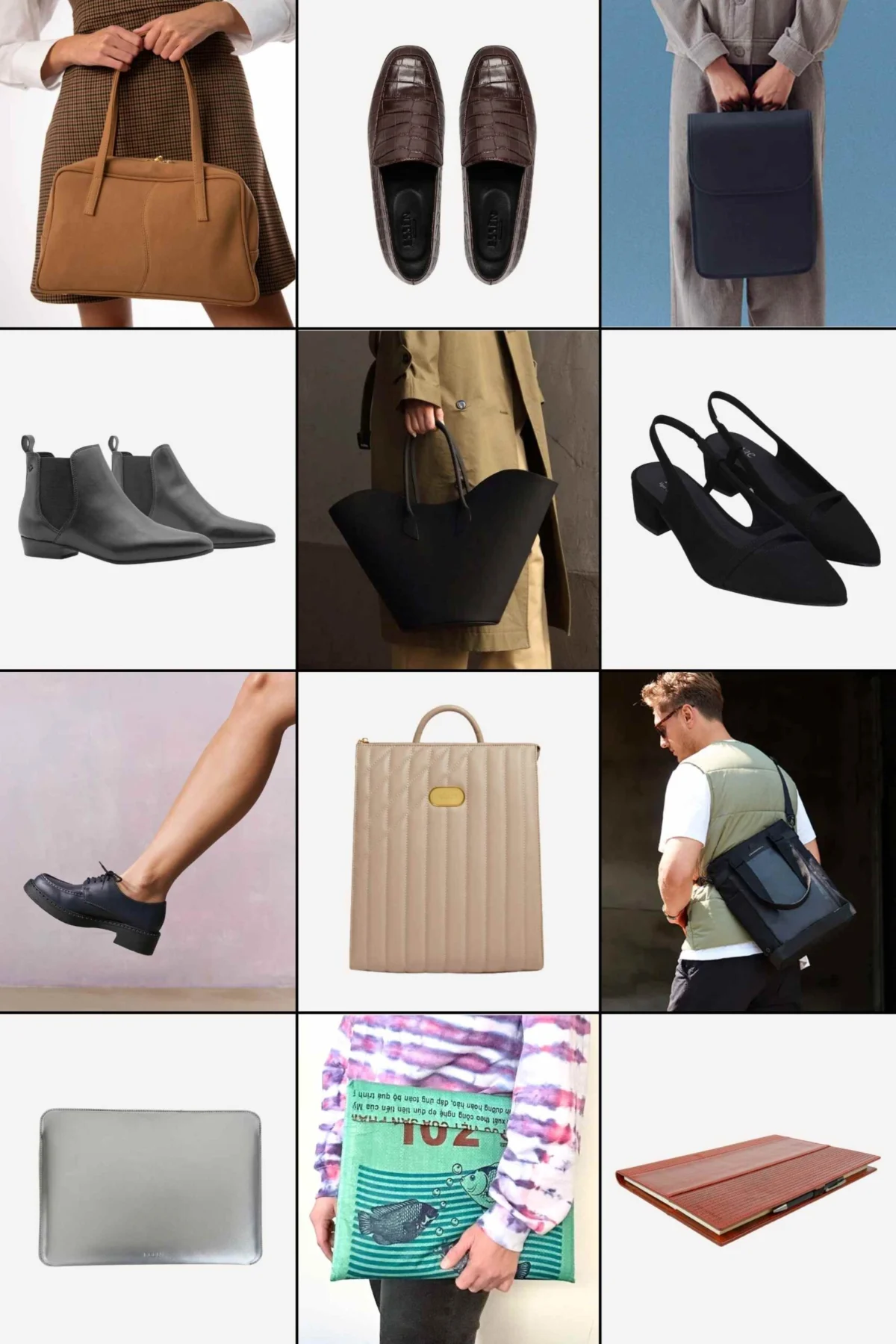
- Bags: The Mashu Artemis Bag or ASK Scandinavia Willow Tote Bag offer elegant, responsibly made options. For functionality, the Ucon Acrobatics Adina Backpack and LaBante Danai Vegan Backpack provide stylish, ethical choices for carrying essentials. Brands like Groundtruth offer Rikr Vegan Laptop Bags, utilizing innovative recycled materials.
- Footwear: ESSEN Modern Moccasin Shoes, COG Vegan Chelsea Boots, Nae Vegan Slingback Shoes, and Agazi Helen Vegan Loafers highlight the growing availability of chic, comfortable, and ethically produced footwear, often utilizing vegan leathers or recycled materials.
- Laptop Sleeves & Notebooks: Protect your tech sustainably with options like the BEEN London Orton Vegan Laptop Sleeve or Torrain Padded Laptop Sleeve. For note-taking, the Elvis & Kresse Firehose Notebook repurposes discarded fire hoses, showcasing creative upcycling.
These brands represent a commitment to transparency, ethical production, and sustainable materials, making it easier for professionals to align their values with their daily attire.
Industry Perspectives and Future Outlook
The trajectory towards sustainable workwear is supported by a confluence of factors, including evolving consumer demands, increasing brand accountability, and technological innovation.
Brand Accountability and Transparency: The proliferation of ratings systems, like the one employed by Good On You, plays a crucial role in holding brands accountable. By assessing brands’ impact on people, the planet, and animals, these systems empower consumers to make informed choices, driving the market towards greater transparency and ethical practices. Brands are increasingly recognizing that neglecting sustainability is not only an environmental risk but a business liability, as conscious consumers actively seek out and reward responsible companies.
Consumer Demand as a Driving Force: A growing segment of the global population, particularly millennials and Gen Z, prioritizes sustainability in their purchasing decisions. A 2023 report by NielsenIQ indicated that 78% of US consumers say a sustainable lifestyle is important to them. This demographic shift means that brands failing to offer sustainable options risk alienating a significant and influential consumer base. This demand is pushing innovation in material science, supply chain management, and manufacturing processes within the fashion industry.
The Circular Economy in Workwear: The future of sustainable workwear is likely to be deeply embedded in the principles of the circular economy. This model emphasizes keeping products and materials in use for as long as possible, through design for durability, repair services, rental programs, and robust recycling initiatives. We may see more companies offering take-back programs for their garments, allowing old items to be recycled or upcycled into new products. Rental services for formal or specialized workwear could also become more commonplace, reducing individual ownership and maximizing garment utility.
Policy and Innovation: Governmental policies and industry standards will also play a role in shaping this future. Regulations promoting sustainable manufacturing, discouraging waste, and incentivizing the use of eco-friendly materials could accelerate the shift. Simultaneously, ongoing research in material science continues to yield breakthroughs, from lab-grown alternatives to traditional fibers to advanced recycling technologies that can efficiently process complex textile blends.
In conclusion, the journey towards a fully sustainable professional wardrobe is multifaceted, requiring conscious choices from individuals and systemic changes within the industry. By embracing the "buy less, but better" philosophy, prioritizing quality fabrics, exploring pre-loved options, and supporting transparent, ethical brands, professionals can confidently navigate the evolving landscape of workwear. This commitment is not merely about personal style; it is a powerful statement of intent, contributing to a more responsible economy and a healthier planet for all.