









Associated British Foods (ABF), the diversified conglomerate and parent company of the ubiquitous fast-fashion retailer Primark, is poised to deliver a highly anticipated update next week regarding the potential separation of its fashion retail arm from its extensive food and agricultural businesses. The announcement, scheduled to coincide with the company’s interim results on April 21st, is expected to clarify whether the long-speculated spin-off of Primark will receive the definitive green light, marking a potentially transformative moment for one of the UK’s largest and most diverse publicly traded entities. This strategic review has been a significant point of discussion among investors and market analysts, who have frequently posited that a de-merger could unlock substantial shareholder value currently obscured by the conglomerate structure.
The Strategic Imperative: Unlocking Value and Focus
The consideration of a Primark spin-off is not a recent development but rather the culmination of years of increasing investor and analyst pressure. The core argument for such a separation revolves around the concept of a "conglomerate discount," where diverse business units, despite performing well individually, are often undervalued when grouped under a single corporate umbrella. ABF’s portfolio spans distinct sectors: the high-growth, capital-intensive, and trend-driven world of fast fashion through Primark, alongside more stable, mature, and capital-light industries like sugar production, ingredients, and branded grocery products.
These differing operational profiles and growth trajectories often present a challenge for investors, who may struggle to appropriately value the combined entity. A retail investor might be attracted to Primark’s growth potential but deterred by the slower, cyclical nature of sugar production, while a defensive food sector investor might find Primark’s volatility unappealing. By separating the businesses, each entity could attract a more focused investor base, potentially leading to a re-rating of both companies’ shares and a higher aggregate market capitalization.
Furthermore, a de-merger would allow each management team to pursue strategies and allocate capital more effectively, tailored specifically to their respective market dynamics without the need to balance the competing demands of vastly different industries. For Primark, this could mean more agile decision-making regarding its digital strategy, international expansion, and supply chain investments. For the remaining ABF food and agriculture businesses, it could foster a clearer identity, potentially enabling more targeted acquisitions and investments within their core competencies.
Associated British Foods: A Diverse and Historic Conglomerate
Associated British Foods traces its roots back to 1935, founded by W. Garfield Weston. Over the decades, it meticulously built a sprawling empire encompassing various sectors. Today, its operations are broadly categorized into five segments: Sugar, Grocery, Agriculture, Ingredients, and Retail.
- AB Sugar: A leading global sugar business with operations across the UK, Spain, China, and Africa, producing sugar from beet and cane.
- ABF Grocery: A collection of iconic consumer brands, including Twinings tea, Ovaltine malt drinks, Ryvita crispbread, Jordans cereals, Kingsmill bread (in the UK), and Patak’s and Blue Dragon ethnic foods.
- AB Agri: A group of businesses operating across the agricultural supply chain, providing products and services to farmers, feed manufacturers, and food producers.
- ABF Ingredients: A global manufacturer of speciality ingredients for food, animal feed, and industrial applications.
- Primark (Penneys in Ireland): The jewel in the crown, a leading international retailer known for its value-for-money clothing, accessories, and homeware.
Historically, ABF’s diversification provided resilience, allowing different divisions to offset cyclical downturns in others. However, in recent decades, Primark has grown to become the dominant financial contributor, frequently accounting for a significant proportion of the group’s revenue and an even larger share of its operating profit, particularly before the COVID-19 pandemic and during its robust post-pandemic recovery. This disproportionate contribution has intensified the debate about whether Primark’s full value can be realized within the existing conglomerate structure.
Primark’s Phenomenal Rise and Market Position
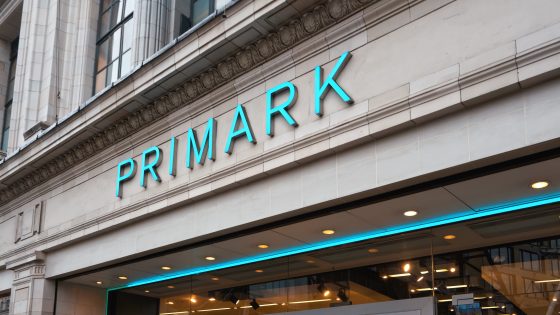
Primark’s journey from a single store in Dublin in 1969 to an international retail powerhouse is a testament to its successful business model. Operating primarily on a high-volume, low-margin strategy, Primark has cultivated a reputation for offering extremely competitive prices on fashionable items. Its unique approach, famously eschewing traditional e-commerce for many years in favour of a pure bricks-and-mortar experience, has driven immense footfall to its large-format stores.
As of early 2026, Primark boasts over 400 stores across 16 countries, including a significant presence in the UK, Ireland, continental Europe, and an expanding footprint in the United States. Its strategic expansion into new markets and the continuous refurbishment of existing stores underscore its commitment to physical retail. While the company has recently experimented with a click-and-collect service and an enhanced online presence to showcase its inventory, the core of its business remains firmly rooted in the in-store experience.
Financially, Primark has been a formidable growth engine for ABF. Prior to the pandemic, it consistently delivered double-digit revenue growth and robust profit margins, often outperforming many of its fast-fashion rivals. For instance, in the fiscal year ending September 2023, Primark reported sales growth of 17% at constant currency to £9.0 billion, with adjusted operating profit rising 4% to £756 million, demonstrating its strong rebound and continued market appeal. This performance stands in contrast to the more stable, but less explosive, growth seen in some of ABF’s food divisions. The retailer’s sheer scale and brand recognition mean that a standalone Primark would instantly become one of Europe’s largest publicly traded fashion retailers.
A Chronology of Speculation and Deliberation
Discussions surrounding a potential spin-off of Primark from Associated British Foods have circulated within financial circles for well over a decade, often intensifying during periods of market volatility or significant strategic reviews by ABF.
- Early 2010s: Initial whispers began as Primark’s rapid growth started to overshadow other parts of the ABF empire, leading analysts to question whether the market was fully appreciating its value.
- Mid-2010s: As Primark embarked on its ambitious U.S. expansion, the distinct capital requirements and risk profile of the retail business became more pronounced compared to ABF’s more mature food segments. Reports from major investment banks occasionally highlighted the potential for value creation through a separation.
- 2020-2021 (Pandemic Era): The COVID-19 pandemic profoundly impacted Primark, forcing widespread store closures and significantly disrupting its business model due to its reliance on physical retail. This period, paradoxically, reignited the spin-off debate. While ABF’s food businesses provided a degree of stability, Primark’s vulnerability highlighted the differing risk profiles. Analysts argued that a standalone Primark might have better access to capital markets to navigate such crises and fund its eventual recovery and digital transformation.
- 2022-2023: As Primark staged a remarkable recovery post-pandemic, reporting strong like-for-like sales growth and improved profitability, investor confidence in its underlying strength returned. This resurgence provided an opportune moment for ABF to revisit the strategic merits of a separation from a position of strength.
- Late 2023: ABF publicly acknowledged that it was "always reviewing" its portfolio structure, a statement widely interpreted as a formal signal that a spin-off was actively being considered at the highest levels.
- Early 2026: Specific reports emerged, citing sources close to ABF, indicating that a formal decision on the spin-off was imminent, with the interim results announcement on April 21st designated as the key date for a definitive update. These reports suggested that internal preparations, including financial modeling and legal considerations, had progressed significantly.
The upcoming announcement on April 21st is therefore not an isolated event but the potential culmination of years of strategic deliberation, market pressure, and the evolving dynamics of both the retail and food industries.
Analyst and Investor Perspectives: A Positive Outlook with Caveats
The consensus among financial analysts and institutional investors largely leans towards a positive reception for a Primark spin-off. Many believe that such a move could unlock a significant "sum-of-the-parts" valuation uplift, potentially adding billions to the combined market capitalization of the two new entities.
Analysts from leading investment banks have previously estimated that a standalone Primark could command a market capitalization in the range of £10-15 billion, depending on its capital structure and growth projections. The remaining ABF food and agriculture businesses, with their stable cash flows and defensive characteristics, would also likely attract a premium valuation from investors seeking more predictable returns. This re-rating is anticipated because each company would be valued on its own merits, without the "conglomerate discount" applied to the current ABF share price.
However, the process is not without its complexities and potential challenges. Analysts will be keen to scrutinize the proposed capital structure of both the spun-off Primark and the remaining ABF entity. Key questions include:
- Debt Allocation: How will existing group debt be apportioned between the two companies?
- Dividend Policy: What will be the dividend policy for each entity? Will the food business maintain a strong dividend payer status, and will Primark retain earnings for growth?
- Management Teams: Who will lead the independent Primark, and how will the executive team for the core ABF business be structured?
- Execution Risk: The logistical complexities of carving out a major retail operation from a diverse conglomerate are considerable, involving IT systems, supply chain disentanglement, and corporate services.
Despite these hurdles, the general sentiment suggests that the long-term benefits of enhanced focus and clearer investment propositions would outweigh the short-term execution risks. Major institutional investors, who have long advocated for such a separation, are expected to react favorably to a definitive plan.
Implications for Primark: A New Era of Autonomy
Should the spin-off proceed, Primark would enter a new era of corporate autonomy. This would bring several significant implications:
- Direct Access to Capital Markets: As an independent publicly traded company, Primark would have direct access to equity and debt markets, enabling it to raise capital specifically for its growth initiatives without competing with the capital demands of ABF’s other divisions. This could accelerate its digital transformation, fund further international expansion, and bolster investments in supply chain resilience and sustainability.
- Focused Strategy and Governance: A dedicated board of directors and executive team would be solely focused on Primark’s retail strategy. This clarity could lead to more agile decision-making, quicker adaptation to market trends, and a sharper focus on competitive positioning.
- Clearer Valuation: Investors would be able to value Primark purely as a retail entity, comparing it directly to its peers in the fast-fashion and value retail sectors, potentially leading to a more accurate and higher valuation.
- Enhanced Brand Profile: A standalone listing would elevate Primark’s corporate profile on the global stage, increasing its visibility among investors, potential partners, and talent.
Implications for the Remaining ABF Businesses: A Focused Food and Agri Powerhouse
The remaining Associated British Foods entity, stripped of its retail arm, would transform into a focused food, ingredients, and agriculture conglomerate. This new configuration would also have profound implications:
- Clearer Identity and Investment Thesis: The "new ABF" would present a much clearer investment proposition centered on stable, defensive sectors. This could attract investors specifically seeking exposure to global food security, sustainable agriculture, and specialty ingredients.
- Stable Cash Flows: The food and agri businesses generally exhibit more predictable and less cyclical cash flows compared to fast fashion, offering a more stable earnings profile.
- Strategic Flexibility: Management could pursue M&A opportunities and capital investments tailored specifically to the food and agriculture sectors, without the complexities of managing a large retail operation.
- Potential for Re-rating: The market could re-rate the core ABF businesses, recognizing their inherent value in essential sectors, potentially reducing the conglomerate discount they currently face.
Broader Industry Context: A Trend Towards De-mergers
The potential spin-off of Primark is not an isolated event but rather part of a broader global trend of large, diversified conglomerates streamlining their operations. In recent years, companies across various sectors, from industrials like General Electric and Siemens to pharmaceuticals like GSK, have opted to separate distinct business units. The rationale is consistently to unlock shareholder value, enhance strategic focus, and allow each entity to pursue tailored growth strategies.
In the retail and consumer goods sectors, this trend reflects an increasing demand from investors for "pure-play" investments. Specialized funds dedicated to retail, food and beverage, or agriculture prefer to invest in companies that align directly with their mandates, rather than diversified groups where investment theses might be diluted. A standalone Primark would instantly become a significant player in the listed retail sector, attracting dedicated retail analysts and investors. Similarly, a focused ABF food group would appeal to funds specializing in food security, sustainable agriculture, and consumer staples.
The decision on April 21st will therefore not only reshape Associated British Foods but will also offer a significant case study in the ongoing evolution of corporate structures in response to market demands and the pursuit of shareholder value in a dynamic global economy. The financial world will be watching closely to see if Primark is indeed set to embark on an independent journey, charting its own course in the competitive landscape of global fashion.