








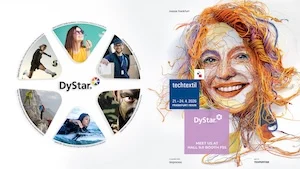
DyStar, a global leader in specialty chemical manufacturing with a legacy spanning more than a century, has officially confirmed its participation in Techtextil 2026, the international trade fair for technical textiles and nonwovens. Scheduled to take place from April 21 to April 24, 2026, at the Messe Frankfurt exhibition grounds in Germany, the event serves as a critical platform for the industry’s most significant advancements in functional materials. From its headquarters in Singapore, DyStar announced that its exhibition will be located in Hall 9.0, Booth F55, where the company intends to present a comprehensive portfolio of eco-friendly dyeing technologies, high-performance chemicals, and integrated digital solutions tailored for the evolving needs of the technical textile sector.
The announcement comes at a pivotal time for the global textile industry, which is currently navigating a complex landscape defined by stricter environmental regulations, fluctuating raw material costs, and an urgent demand for circular economy models. By positioning itself at the forefront of Techtextil 2026, DyStar aims to demonstrate how its research and development initiatives are directly addressing these challenges, providing manufacturers with the tools necessary to balance high-performance output with ecological responsibility.
Strategic Significance of Techtextil 2026
Techtextil is widely recognized as the world’s premier trade fair for the technical textile and nonwoven industries. Held biennially in Frankfurt, it attracts thousands of exhibitors and tens of thousands of trade visitors from across the globe, including researchers, engineers, and product developers. The 2026 edition is expected to focus heavily on "Green Transformation," a theme that aligns with DyStar’s long-term corporate strategy.
For DyStar, the event is more than a trade show; it is a strategic venue to engage with a diverse range of sectors, including automotive, aerospace, medical, and protective apparel. These industries require textiles that can withstand extreme conditions—such as high heat, chemical exposure, and mechanical stress—while increasingly demanding that the production processes for these materials minimize water consumption and carbon emissions.
A Legacy of Innovation: DyStar’s Century-Long Evolution
The roots of DyStar stretch back over a hundred years, tracing through the historical dye and chemical divisions of industry giants such as Bayer, Hoechst, and BASF. Since its formal inception as a joint venture in 1995 and its subsequent evolution under the ownership of the Liri Group and Zhejiang Longsheng Group, the company has maintained a singular focus on innovation in colorants and specialty chemicals.
Throughout its history, DyStar has transitioned from a traditional dye manufacturer into a holistic solution provider. This evolution has been marked by the development of iconic brands and technologies, such as the Levafix and Remazol reactive dyes, Indanthren vat dyes, and the more recent Cadira sustainability program. At Techtextil 2026, the company will draw upon this deep well of expertise to showcase how heritage knowledge is being applied to modern technical challenges.
High-Performance Solutions for Functional Textiles
The core of DyStar’s exhibition at Hall 9.0, Booth F55, will revolve around functional textiles that demand rigorous performance standards. Technical textiles are distinct from conventional fashion textiles in that their value is derived from their physical and chemical properties rather than their aesthetic appeal. DyStar’s latest advancements are engineered to enhance these properties without compromising the environment.
Key areas of focus at the booth will include:
- Sustainable Dyeing Technologies: DyStar will highlight its latest low-impact dyeing systems designed to reduce the consumption of water, energy, and chemicals. These systems are particularly relevant for technical fibers such as high-tenacity polyester and polyamides used in safety equipment and automotive interiors.
- Advanced Finishing Auxiliaries: The company’s range of finishing chemicals provides essential properties such as flame retardancy, water repellency, and antimicrobial protection. As global regulations move toward the elimination of per- and polyfluoroalkyl substances (PFAS), DyStar’s research into eco-friendly alternatives is expected to be a major draw for visitors.
- Specialty Chemicals for Nonwovens: With the nonwoven sector expanding rapidly in medical and hygiene applications, DyStar will present specialized chemicals that ensure safety and biocompatibility while maintaining high production speeds.
Digitalization and the Drive for Traceability
A significant portion of DyStar’s presentation at Techtextil 2026 will be dedicated to digital solutions. In an era where "greenwashing" is a major concern for consumers and regulators alike, traceability has become a non-negotiable requirement for the textile supply chain. DyStar’s digital tools, such as the e-Direct platform, allow manufacturers to access comprehensive data regarding the environmental impact and compliance status of the chemicals they use.
Furthermore, DyStar will showcase its advancements in digital textile printing through the Jettex range. Digital printing is increasingly viewed as a sustainable alternative to traditional screen printing, as it significantly reduces waste and allows for more precise application of dyes and functional finishes. By integrating digital solutions with their physical product offerings, DyStar provides a roadmap for manufacturers to achieve full transparency from the laboratory to the finished product.
Official Perspectives on the Industry Transition
Hartmut Behnke, Director of Global Marketing Auxiliaries at DyStar, emphasized the company’s commitment to industry-wide transformation in a statement regarding the upcoming exhibition. "At Techtextil 2026, DyStar will showcase eco-friendly dyeing technologies alongside advanced textile innovations that help manufacturers reduce their environmental footprint while ensuring transparency, traceability, and compliance with global sustainability standards," Behnke stated.
Behnke’s remarks reflect a broader industry sentiment that sustainability is no longer an optional "add-on" but a core requirement for market access. By engaging directly with technical textile experts and global managers at the booth, visitors will be able to discuss bespoke solutions that address specific regulatory hurdles, such as the EU Strategy for Sustainable and Circular Textiles and the increasingly stringent ESG (Environmental, Social, and Governance) reporting requirements.
Market Context: The Growth of Technical Textiles
The decision to focus on Techtextil 2026 is supported by robust market data indicating continued growth in the technical textiles sector. Analysts project that the global technical textiles market will exceed $200 billion by 2026, driven by infrastructure development in emerging economies and the rising demand for lightweight, high-strength materials in the transportation sector.
The shift toward sustainability is also a significant market driver. A growing number of automotive OEMs (Original Equipment Manufacturers) and medical device producers are setting "Net Zero" targets, which creates a ripple effect throughout the supply chain. DyStar’s role as a provider of the foundational chemistry for these textiles puts it in a unique position to influence the carbon footprint of entire industries.
Chronology of Development Leading to 2026
The road to Techtextil 2026 has been marked by several key milestones for DyStar:
- 2023-2024: Expansion of the Cadira modules to include more fiber types and finishing processes, specifically targeting the reduction of greenhouse gas emissions in the dyeing process.
- 2025: Launch of a new generation of bio-based auxiliaries, reducing reliance on fossil-fuel-derived raw materials.
- Early 2026: Implementation of enhanced digital tracking systems across all global production sites to provide real-time compliance data to customers.
- April 2026: The showcase at Techtextil Frankfurt, serving as the culmination of these research and development efforts.
Broader Impact and Industry Implications
The innovations DyStar plans to present at Techtextil 2026 carry significant implications for the future of textile manufacturing. By proving that high-performance technical textiles can be produced using sustainable methods, DyStar is challenging the long-held industry belief that "performance" and "sustainability" are mutually exclusive.
The emphasis on compliance and traceability is particularly vital as the industry prepares for the "Digital Product Passport" (DPP) requirements expected to be introduced by various regulatory bodies. These passports will require detailed information on the chemical composition and environmental impact of every textile product sold. DyStar’s proactive approach in providing this data helps insulate its customers from the risks of non-compliance and future-proofs their operations.
Moreover, the focus on functional textiles for sectors like healthcare and safety highlights the social impact of DyStar’s chemistry. From antimicrobial coatings that prevent hospital-acquired infections to flame-retardant fibers that protect first responders, the specialty chemicals developed by DyStar play an essential role in public safety and health.
Conclusion and Future Outlook
As the textile industry moves closer to the 2030 sustainability goals set by various international frameworks, events like Techtextil 2026 serve as essential benchmarks for progress. DyStar’s participation underscores its role as a key architect of the industry’s greener future. By combining a century of chemical expertise with cutting-edge digital and ecological innovations, the company is not only providing products but is also offering a strategic partnership to manufacturers worldwide.
Visitors to Hall 9.0, Booth F55 at Messe Frankfurt will find a company that is deeply rooted in its history yet firmly focused on the future. The solutions presented by DyStar in April 2026 are expected to set the standard for the next generation of technical textiles, ensuring that the industry can continue to grow and innovate in a world that increasingly values environmental stewardship as much as technical excellence.