





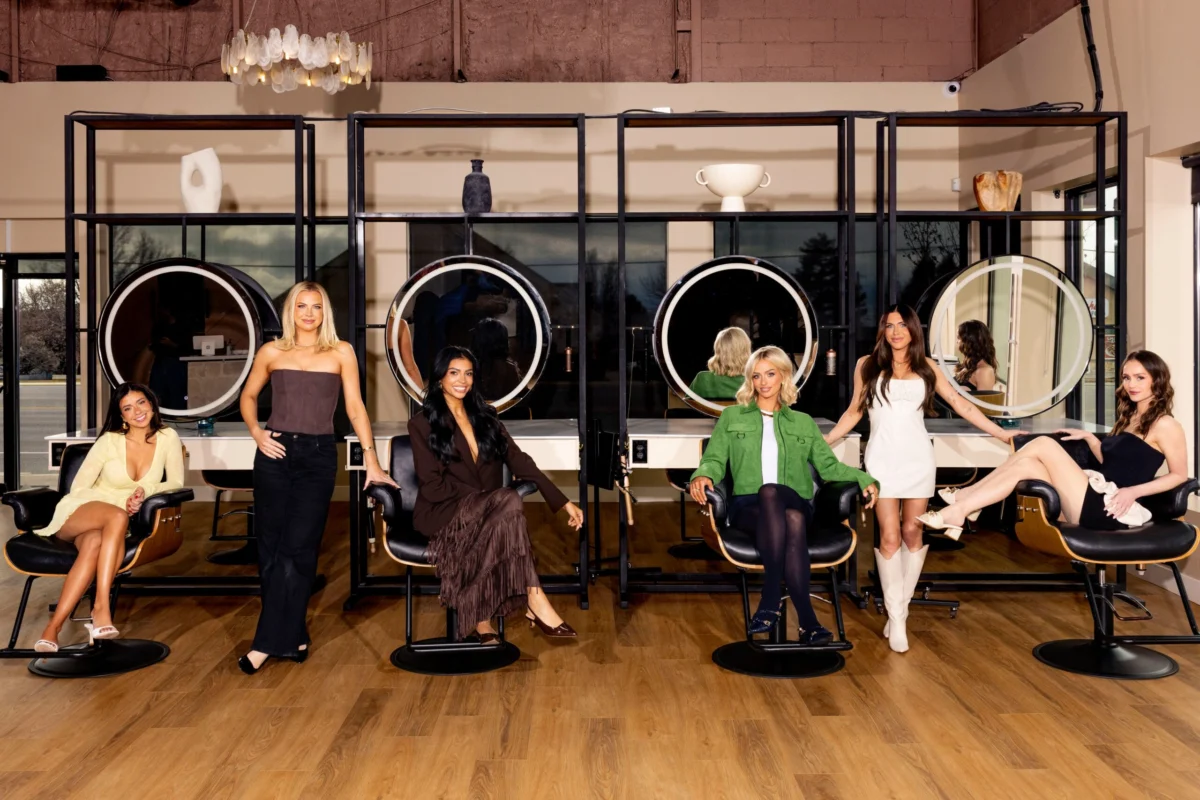
March 2026 was poised to be a landmark month for the burgeoning cultural influence of Utah’s Latter-day Saint (LDS) community, particularly women who have navigated faith, tradition, and modern media. The anticipated fourth season of the Hulu series "The Secret Lives of Mormon Wives" was set to debut with ten new episodes, promising a familiar blend of aspirational lifestyles and personal narratives. This was quickly followed by the premiere of "The Bachelorette" on ABC, featuring Taylor Frankie Paul, a prominent cast member from "The Secret Lives of Mormon Wives," as its lead. This dual cultural moment represented a significant peak in the visibility and perceived marketability of this demographic. However, this carefully curated image experienced a seismic disruption when a video surfaced online, depicting Paul in a violent altercation with her ex-partner, Dakota Mortenson, in the presence of a child. The video, reportedly from 2023, cast a stark shadow over Paul’s public persona and, by extension, the broader narrative of Mormon lifestyle influence.
The immediate fallout was swift and severe. "The Bachelorette," a franchise known for its substantial production costs, estimated to be in the tens of millions of dollars, was abruptly canceled just three days before its scheduled premiere. Reports from cast members also indicated that filming for the fifth season of "The Secret Lives of Mormon Wives" has been placed on hiatus. As of press time, Hulu had not issued a formal statement or responded to requests for comment regarding the show’s status.
This series of events raises critical questions about the sustainability and evolution of the "Mormon commerce machine" that has been steadily gaining traction over the past decade. What began with lifestyle bloggers in the 2010s, characterized by modest attire, family-centric content, and affiliate marketing, has evolved into a more prominent reality television presence. The recent turmoil suggests that the carefully constructed image of this demographic may be facing significant challenges, prompting speculation about whether this cultural wave is nearing its end or undergoing a new transformation.
A Deeper Dive into the Utah Beauty Aesthetic
In the weeks leading up to this unfolding drama, a reporter from Allure traveled to Salt Lake City to investigate the "powerful 2.0 wave of Utahn beauty influence." This visit coincided with what was anticipated to be a pivotal month for Mormon cultural representation. The itinerary included interviews with cast members of "The Secret Lives of Mormon Wives" (excluding Paul and Whitney Leavitt, who was performing on Broadway), a visit to the med spa owned by Heather Gay of "The Real Housewives of Salt Lake City," experiencing the signature "Utah Curls," and sampling the popular "dirty soda." This exploration aimed to capture the essence of this aesthetic subculture and forecast its future trajectory.

The Genesis of "Utah Curls" and the Aesthetics of JZ Styles
The journey into Utah’s beauty landscape often begins with a visit to JZ Styles, a sprawling 15,000-square-foot beauty emporium founded by hairstylist Jessi Draper. Here, conversations about personal transformations, including procedures like labiaplasty, are framed as commonplace. Draper, a 33-year-old stylist, openly discusses her own experiences, such as her post-partum labiaplasty, which she explained was motivated by a desire to regain comfort and confidence in her body. This willingness to share intimate details underscores the culture of openness surrounding aesthetic procedures within this community.
JZ Styles, located in the Pleasant Grove suburb of Salt Lake City, is also a stone’s throw from a Swig location, the "dirty soda" shop that achieved national fame following the premiere of "The Secret Lives of Mormon Wives." These "dirty sodas," a concoction of Diet Coke, flavored syrups, and half-and-half, highlight a unique aspect of Utah’s culture, where traditional religious prohibitions on alcohol have fostered innovative beverage alternatives.
The region itself, dotted with idyllic-sounding towns like Thanksgiving Point and American Fork, has a statistically significant concentration of plastic surgeons. A 2017 report by the Utah Women & Leadership Project indicated a higher per capita rate of plastic surgeons in this area compared to Los Angeles. This density is further contextualized by Utah’s substantial LDS population, with approximately 42% of the state identifying as Mormon, the highest proportion in the United States.
The JZ Styles building itself is a multifaceted hub, housing not only the salon but also a production space for the confessionals of "The Secret Lives of Mormon Wives" and a retail store. The store stocks an array of beauty products, hair extensions, accessories, and merchandise, including apparel emblazoned with phrases like "SAINT," "SINNER," and "FAME WHORE." The popular "Utah Curls" hairstyle, trademarked by Draper, is prominently featured on her product packaging, including her curling irons, which reportedly sold out within 24 hours of the show’s first season premiere. Draper’s business acumen is further evidenced by the JZ Academy, a hair school operating within the same facility, and her team of approximately 50 employees, including family members in key operational roles. The salon’s steady clientele, with multiple chairs occupied by young women seeking blonde highlights even on a random Tuesday afternoon, underscores the enduring demand for these aesthetic services.
The Evolving Image of the "Mormon Wife"
The aesthetic associated with the "Mormon wife" has undergone a significant evolution. While the earlier stereotype often depicted young men in conservative attire, the contemporary image is far more aligned with the beauty standards promoted by reality television. Jessi Draper observes that "you can tell when a girl’s from Utah" due to a distinctive look, echoed by castmate Mikayla Matthews, who notes the prevalence of "blonde bitches here." This aesthetic influence extends beyond those who are active members of the LDS church; the culture permeates the state, even impacting institutions like restaurants that may not serve alcohol.
The cast of "The Secret Lives of Mormon Wives," many of whom have past or present affiliations with the church, generally present as white with long, styled hair, microbladed eyebrows, and often plumped lips, frequently with multiple children. Between the seven primary cast members (excluding those no longer filming), there are 23 children.

The cast members themselves acknowledge that Utah’s obsession with aesthetics is not merely a media exaggeration. Billboards lining Interstate 15, the major artery through Utah County, serve as constant advertisements for plastic surgeons, med spas, teeth whitening services, and hair extension providers, including JZ Styles. Layla Taylor, a 25-year-old cast member, candidly states, "I think that if people assume that this is a vain state, they would be correct."
The openness about aesthetic procedures is a hallmark of the "Secret Lives of Mormon Wives" cast. Their procedures range from neuromodulators and breast implants to labiaplasty. Taylor, for instance, underwent breast augmentation, rhinoplasty, a tummy tuck, and various injectables after her pregnancies, citing a desire to "feel hot again" as a single woman. Taylor Frankie Paul, the former "Bachelorette" lead, gained notoriety for documenting her "swinging scandal" on social media and later, her breast augmentation for her "Bachelorette" appearance, aiming to "feel good in" the dresses she would be wearing.
For the stars of "The Secret Lives of Mormon Wives," transparency about cosmetic procedures is framed not as vanity, but as a form of sharing experience. "We’re not pushing for people to get plastic surgery," says Mikayla Matthews. "It’s just like, ‘Hey, if this is something you want to do, there’s no shame, there’s no judgment. This is my experience for your information, for your knowledge.’" Demi Engemenn echoes this sentiment, contrasting their openness with celebrities who deny having had procedures, emphasizing their recognition that "we know we’re not perfect."
The Religious Underpinnings of Appearance
While the LDS Church does not explicitly mandate cosmetic enhancements, its doctrines and cultural norms implicitly place a significant emphasis on appearance. The church’s website includes a section on "Dress and Appearance" for missionaries, underscoring the importance of presentation. Witney Carson, a "Dancing with the Stars" cast member and former blogger, previously told Allure that "From a young age, we’re taught that our bodies are sacred temples where we make covenants with God. It’s about self-confidence from the inside out. Inner beauty is really important, too."
However, a more critical perspective suggests a deeper, perhaps more problematic, connection between religious expectation and physical appearance. Psychotherapist Julie de Azevedo, specializing in the emotional health of Mormon women, notes the existence of a saying: "the harder you work as a missionary, the hotter your wife." She believes there is "truth in jest" to this sentiment, hinting at underlying misogynistic attitudes within the culture. This is further exemplified by public statements from prominent church figures. In 2015, Elder M. Russell Ballard, then a member of the Quorum of the Twelve Apostles, advised women to "don’t wander around looking like men. Put on a little lipstick now and then and look a little charming. It’s that simple." Such pronouncements, alongside historical sermons like one from former church president David O. McKay in 1994, which compared women to painted barns, suggest a consistent messaging around female attractiveness within LDS discourse.
The influence of Mormon culture on personal presentation is pervasive, even for those who have left the church. Cast members like Taylor Frankie Paul, Mikayla Matthews, Jessi Draper, and Miranda Hope have publicly disavowed active participation in the LDS faith. Jen Affleck is navigating a "faith crisis," while Mayci Neeley remains a practicing Mormon. Taylor Frankie Paul and Whitney Leavitt continue to attend church services. Miranda Hope describes the process of deconstructing a "high-demand religion" as complex, acknowledging both gratitude for certain teachings and the ongoing need to process others.

The concept of "every member [is] a missionary" contributes to the idea that personal presentation is a form of evangelism. Historian Katie Ludlow Rich notes a post-World War II movement within the church to assimilate into broader American culture, which included an increased emphasis on appearance as a means to attract a mate and represent the church positively. This creates an environment where outward beauty is seen as a reflection of spiritual worthiness and a tool for proselytization.
The Data on Cosmetic Procedures and Mormonism
Research provides quantitative support for the strong correlation between LDS identity and engagement with cosmetic procedures. A survey conducted by researchers at Brigham Young University, the church’s affiliated university, found that 14% of Latter-day Saints surveyed had undergone major cosmetic surgery, and 20% had received cosmetic enhancements beyond injectables. These figures are notably higher than the national average, where only 4% of Americans report having had cosmetic surgery, according to Pew Research Center data.
This trend towards more visible engagement with cosmetic surgery is a relatively recent development. A decade ago, such procedures were often kept private, even within the LDS community. Today, as Heather Gay, owner of Beauty Lab + Laser and a cast member on "The Real Housewives of Salt Lake City," observes, "it’s like, I want everyone to know that I am invested in self-care, that I can afford it, that I am going to the coolest place in town, and that I own what I want and I get it." Gay, who left the church nine years ago, has publicly explored the psychological impact of LDS culture in her book "Bad Mormon" and the Peacock series "Surviving Mormonism."
The church’s emphasis on modesty and its tenets against tattoos and piercings might seem at odds with the prevalence of cosmetic enhancements. However, experts like Dr. de Azevedo suggest that the LDS emphasis on "godly worthiness" can be misinterpreted as a pursuit of "external flawlessness." This leads to a "cultural belief in Utah that if you look perfect—if your kids look perfect, if your house is perfect—then somehow it’s tied to your righteousness." This echoes historical directives from Brigham Young, who encouraged early Utah settlers to "Beautify your gardens, your houses, your farms; beautify the city. This will make us happy and produce plenty." The implicit message: appearance matters significantly.
The Pressure Cooker of Marriage and Competition
The focus on appearance is further amplified by the societal pressures within the LDS community. Dr. de Azevedo suggests that as women are often encouraged to be stay-at-home mothers, the pursuit of external beauty can become a primary source of self-worth and satisfaction. Katie Ludlow Rich adds that "spiritual imperatives" are placed on Mormon women to look a certain way to attract a husband, a critical step for eternal salvation within LDS theology.
However, the LDS faith faces a demographic imbalance, with twice as many single women as men, intensifying the competition to find a spouse. The average age of marriage in Utah is notably higher for women (26.8) and men (28.5) compared to national averages, according to a 2023 church devotional. The "Secret Lives of Mormon Wives" cast members were typically married between the ages of 17 and 23, highlighting the pressure to marry young. Jen Affleck notes, "There is pressure to get married, and when you’re finding your significant other, you obviously want to attract the right person. So what do you do? You do all the right things."

This competitive drive extends beyond marriage. Rich recounts an anecdote about an 88-year-old Mormon woman in Boston who continues to get weekly lash appointments, feeling the need to "keep up" with the perceived aesthetic standards of her church community. Heather Gay describes this phenomenon as a "performative faith," where individuals constantly "check yourself against your neighbor" based on their cosmetic choices. Miranda Hope concurs, noting the prevalence of "keeping up with the Joneses" in Utah.
Researchers have identified a "contagion effect" in such homogenous environments, where attitudes and behaviors, including those related to cosmetic enhancements, can rapidly spread. Similar phenomena have been observed in other culturally distinct populations, such as in South Korea and Orthodox Jewish communities. This pursuit of an idealized aesthetic is also intertwined with proximity to whiteness. Jen Affleck, whose mother is Ecuadorian, notes that in predominantly white Utah County (89.2% white), being different can lead to insecurities, prompting her to dye her hair blonde in the past to conform. The global LDS population is also predominantly white, at 72%.
Navigating Race and Representation
The issue of race within the context of Utah’s beauty standards is a significant concern. Taylor, the only Black cast member on "The Secret Lives of Mormon Wives," speaks about the lifelong struggle with perceptions of beauty. She recalls internalizing the idea that "long, straight hair, light-colored eyes, skin that wasn’t dark like mine" constituted beauty, leading to harmful practices like attempting to bleach her skin and straightening her hair. While the region’s homogeneity plays a role, historical racism within the LDS faith, including earlier passages in the Book of Mormon that described dark skin as a divine curse and the prohibition on Black men holding the priesthood until 1978, has left a lasting impact. The church has since issued statements condemning racial prejudice, but the cultural legacy persists.
Taylor’s journey toward self-acceptance has been marked by embracing her natural hair texture and style, including braids and wigs, after previously feeling unsafe to do so. Her experience with hair damage at JZ Styles due to a lack of expertise with Black hair has prompted Jessi Draper to collaborate with Taylor’s stylist on a curriculum for JZ Academy, aiming to "expand what you know" and avoid similar situations.
The Shifting Sands of Mormon Beauty Standards
The aesthetic ideals within the Utah Mormon community are demonstrably evolving. While the "Utah Curls" and blonde highlights were emblematic of season one of "The Secret Lives of Mormon Wives," the current trend favors more natural hairstyles and colors. Only two of the eight wives in the latest season are blonde, a stark contrast to the previous season where nearly all had lighter hair. Taylor has stopped using lash extensions, and Mikayla Matthews had her breast implants removed, partly due to concerns about chronic eczema flare-ups.
Heather Gay observes that her clients at Beauty Lab + Laser are increasingly interested in treatments like microneedling and lasers for "glazed donut skin" rather than traditional fillers. This shift suggests a move towards a more "naturally" enhanced appearance, though achieving this still requires significant investment and attention.

Even Jessi Draper admits to regretting recent cosmetic surgeries, including eyelid lifts and fat grafting, acknowledging she "got caught up in ‘it’"—the relentless pursuit of flawlessness amplified by being in Utah’s high-beauty-standard culture and on television. She revealed in an Instagram video to her 1.6 million followers that she underwent Kybella injections to address the effects of her fat grafting, recognizing her own struggles with self-confidence.
Taylor Frankie Paul also speaks candidly about her ongoing battle with an eating disorder and her past abuse of Tirzepatide, a GLP-1 medication obtained easily from a Utah plastic surgeon without a proper consultation. Her willingness to share this experience aims to raise awareness about the drug’s accessibility and potential for misuse.
Miranda Hope, who previously considered ear pinning but ultimately decided against it after receiving online criticism, emphasizes intentionality in her pursuit of aesthetic enhancements. She continues to get Botox and has a breast augmentation but is increasingly focused on making deliberate choices. Her visits to med spas like Rise Rejuvenation, frequented by the cast, involve treatments like HydraFacials and discussions about Moxi laser treatments, contingent on having sufficient downtime between filming commitments.
The cultural landscape of Utah, even within the spiritual heart of Salt Lake City, reflects these evolving trends. While the city’s center around Temple Square remains a hub of religious activity, the surrounding areas buzz with aesthetic services. The sheer number of med spas in Salt Lake City and Utah County—estimated to be 225 and 125 respectively—underscores the significant industry dedicated to beauty and rejuvenation.
The Future of Utah Mormon Influence
The recent controversies surrounding Taylor Frankie Paul and the potential impact on "The Secret Lives of Mormon Wives" signal a period of reevaluation for the outward projection of Utah’s Mormon culture. The carefully constructed image of aspirational beauty and spiritual fulfillment, which once fueled a burgeoning media empire, is now being tested by public scrutiny and the complexities of individual lives.
The "Mormon commerce machine" has proven remarkably adaptable, evolving from blogging to reality television and a pervasive aesthetic culture. While the current challenges are significant, the underlying drive for influence and self-expression within this community is likely to persist. The future may see a continued shift towards more nuanced portrayals, a greater emphasis on authenticity, and perhaps a more critical examination of the pressures that drive the pursuit of perfection. The ongoing narrative of Utah Mormon influence will undoubtedly continue to unfold, shaped by both the enduring traditions of faith and the ever-changing currents of modern media and societal expectations.