






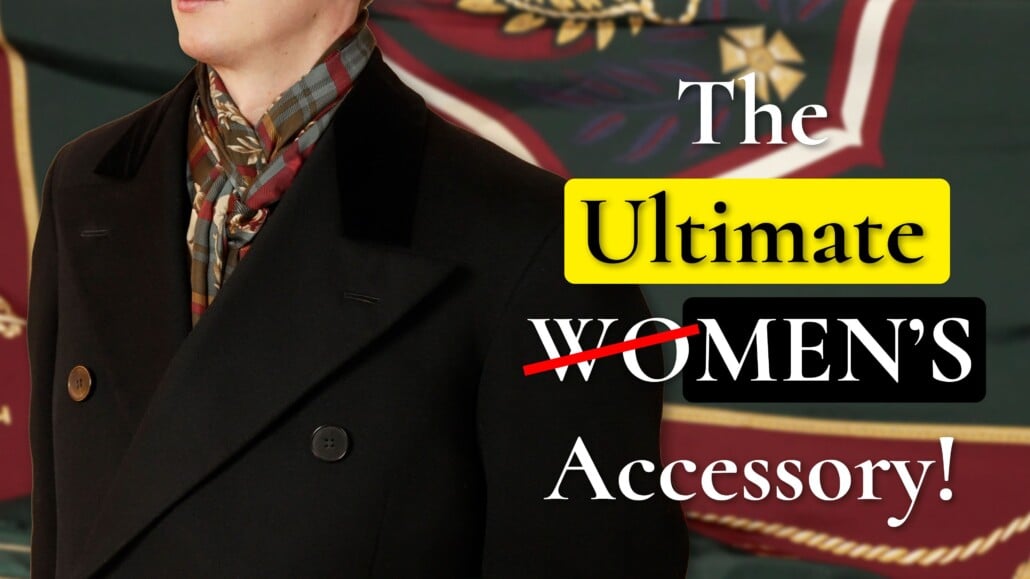
Silk scarves, long considered a niche accessory, are experiencing a notable resurgence within sophisticated menswear, proving to be one of the most underrated elements capable of elevating an ensemble with unparalleled elegance and versatility. Far from being a mere decorative flourish, a well-chosen silk scarf can impart warmth, introduce vibrant color, and infuse character into an outfit without the heft associated with a traditional winter scarf or the inherent formality of a necktie. The prevailing question among sartorially inclined men is not whether they can wear silk scarves, but rather how to discern the appropriate selections and integrate them into their wardrobe in a manner that feels balanced, classic, and authentically natural.
A Legacy of Elegance: Tracing the Silk Scarf’s History in Menswear
The concept of neckwear for men dates back centuries, with precursors to the modern scarf appearing in ancient civilizations. Roman soldiers, for instance, wore ‘focale’ – pieces of cloth tied around their necks to protect against the elements and to keep them clean. Fast forward to the 17th century, Croatian mercenaries serving in France introduced their distinctive neckerchiefs, which captivated King Louis XIII and subsequently gave birth to the ‘cravat,’ a direct ancestor of today’s necktie and, by extension, the decorative scarf. Silk, with its exquisite sheen and smooth texture, quickly became the preferred material for these sartorial statements among the aristocracy and burgeoning merchant classes. Throughout the 18th and 19th centuries, the cravat evolved into elaborate styles, often crafted from fine silk, symbolizing social status and refined taste.
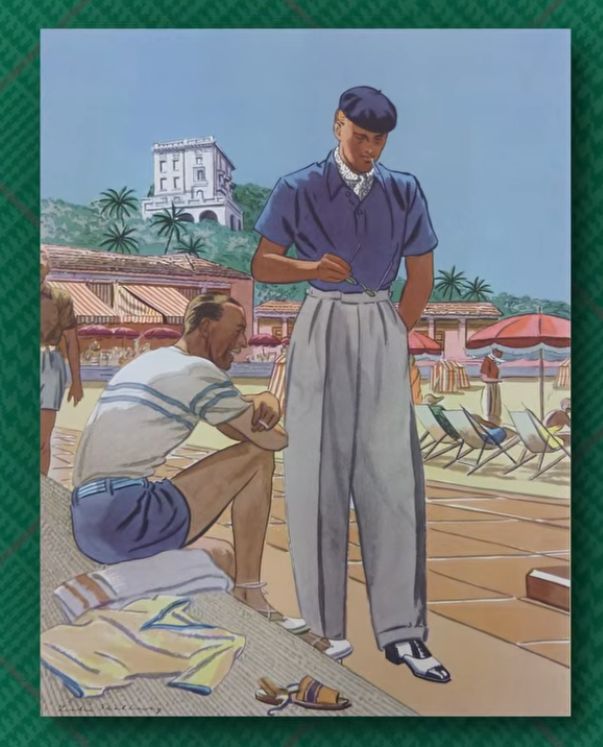
The 20th century saw silk scarves adopt more diverse roles. From the daring aviators and motorcyclists who wore them for protection and a dash of rebellious glamour, to Hollywood icons and European gentlemen who embraced them as a hallmark of effortless sophistication, the silk scarf cemented its place as a versatile accessory. This rich historical tapestry underscores the scarf’s inherent masculine roots and its enduring appeal across various social and stylistic landscapes.
The Allure of Silk: Beyond Aesthetics

The intrinsic properties of silk itself contribute significantly to the scarf’s unique appeal. Derived from the cocoons of silkworms, this natural protein fiber is renowned for its exceptional strength, luxurious softness, and remarkable luster. Unlike synthetic alternatives, silk is a breathable fabric, offering natural thermoregulation – it provides warmth in cooler temperatures by trapping air, yet feels cool against the skin in warmer conditions due to its moisture-wicking properties. This makes it an ideal accessory for transitional seasons or for adding a layer of comfort without overheating.
Furthermore, silk’s inherent fluidity allows it to drape beautifully, creating soft folds and elegant contours that enhance any ensemble. Its ability to absorb dye deeply results in rich, vibrant colors and intricate patterns that hold their integrity over time. These qualities collectively position the silk scarf as a superior alternative to both a stiff necktie, which can sometimes feel overly formal, and a heavy woolen scarf, which often adds unnecessary bulk. It softens the lines of an outfit, injects visual intrigue, and provides a subtle layer of warmth, making it particularly useful for those seeking nuanced sartorial expression.
Bridging the Style Gap: Why Silk Scarves Resonate Today
In an era where menswear is increasingly embracing individualism and a blend of formal and casual aesthetics, the silk scarf serves as a crucial bridge. Fashion analysts observe a growing trend towards "quiet luxury" and understated elegance, where quality fabrics and thoughtful accessories take precedence over overt branding. The silk scarf perfectly aligns with this movement, offering a sophisticated touch that speaks volumes without shouting. It caters to men who desire to:
- Introduce Color and Pattern: For those hesitant to incorporate bold hues or intricate designs through larger garments, a silk scarf provides a manageable canvas.
- Add Personality to Simpler Outfits: A plain shirt or sweater can be instantly elevated with the addition of a vibrant, patterned silk scarf.
- Enhance Layering without Bulk: It’s an excellent piece for adding an extra dimension to a layered look, particularly under a blazer or overcoat, without creating an unwieldy silhouette.
- Achieve Effortless Sophistication: The right scarf can imbue an outfit with a sense of "sprezzatura" – that studied carelessness that defines Italian elegance.
Strategic Selection: Curating Your Silk Scarf Collection
The successful integration of a silk scarf into a man’s wardrobe hinges on judicious selection. The key is to choose a piece that complements existing garments rather than overpowering them.
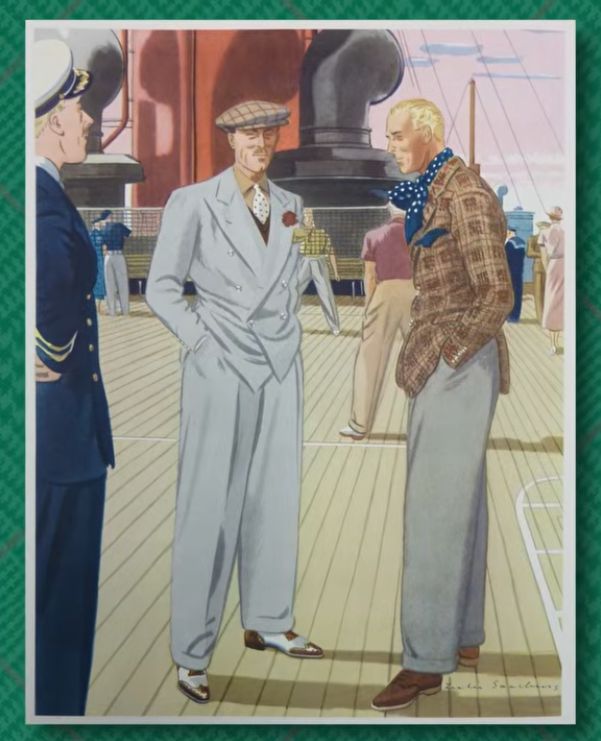
Color and Pattern: The Art of Understatement
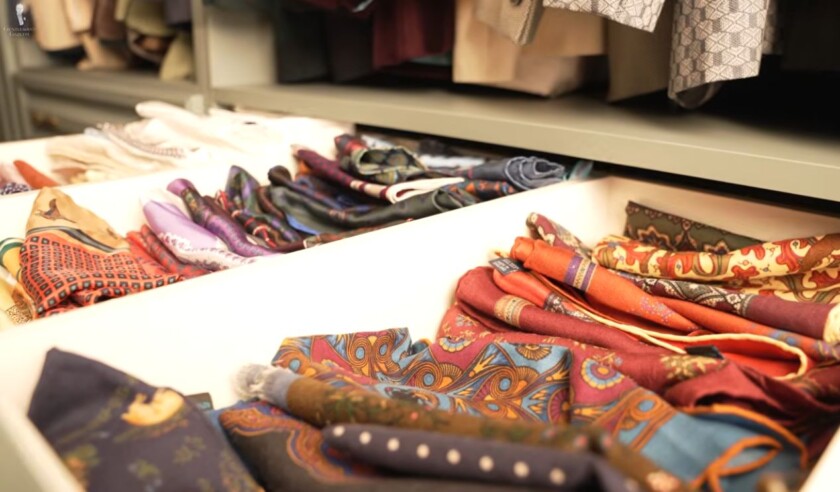
When selecting colors, it is advisable to steer clear of overly saturated or neon shades that can appear jarring. Instead, opt for muted tones and classic patterns. Earthy browns, deep blues, forest greens, burgundy, and subtle grays offer a sophisticated palette. As for patterns, large floral prints in understated colorways, Western-inspired motifs such as paisleys, or geometric designs are excellent choices. When folded and tied, these patterns tend to read as inherently masculine and refined, adding texture and depth without appearing overly feminine or ostentatious. Comparing several scarves side-by-side can help in identifying which colors and motifs offer the most versatility and align best with one’s personal style.
Size and Shape: Tailoring to Your Look
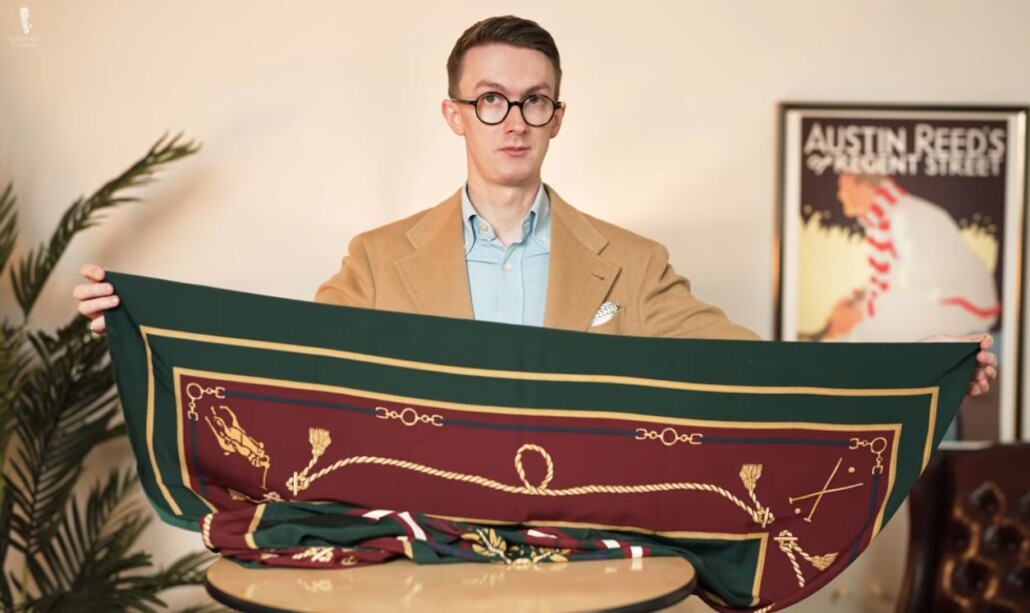
The dimensions of a silk scarf play a crucial role in its styling potential and overall aesthetic. For beginners, larger square scarves (typically 90×90 cm or 36×36 inches) are often easier to manipulate. Their generous size allows for a greater variety of knots and drapes, offering more room for error and experimentation. Smaller squares (around 50×50 cm or 20×20 inches) or oblong shapes (typically 160×30 cm or 63×12 inches) offer different styling opportunities, often favoring neater, more restrained looks. The choice of size should ideally align with the desired knot and the overall volume one wishes to add to the neck area.
Mastering the Drape: Versatile Styling Techniques
A significant part of the silk scarf’s appeal lies in its myriad styling possibilities. However, not every knot is suitable for every scarf size or outfit.
For Larger Square Scarves: Effortless Panache
Larger square silk scarves offer the most flexibility for drapes, knots, and under-the-collar styling. Useful options include:
- The Parisian Knot: Fold the scarf in half, drape it around the neck, and pull the loose ends through the loop. This classic knot offers good warmth and a neat appearance.
- The Ascot Knot: Fold the scarf into a triangle, then roll it into a band. Drape it around the neck, cross the ends, and tuck one end under the other, letting it rest inside an open shirt collar. This exudes a relaxed yet refined charm.
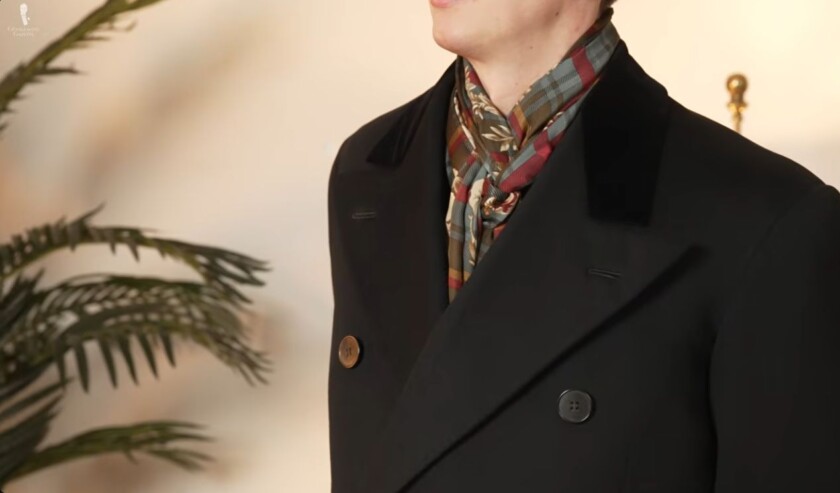
- The Simple Drape: Simply drape the scarf around the neck with both ends hanging down the front, either inside or outside a jacket. This is the simplest and most elegant way to display the scarf’s pattern.
- The Reverse Drape: Drape the scarf around the neck, then bring one end over the opposite shoulder, creating a dynamic, flowing look.
These styles offer versatility and usually work best when the scarf has enough length to sit cleanly around the neck without feeling too tight or too loose.
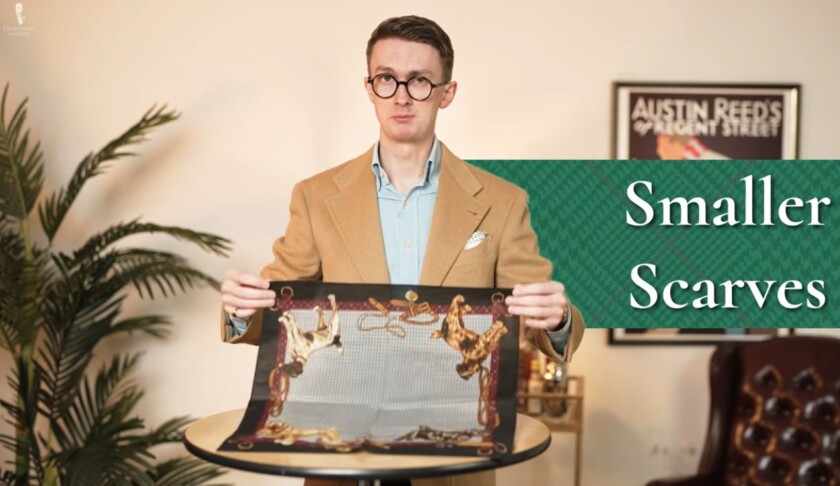
For Smaller Square Scarves: Refined Accents
With less fabric to work with, smaller scarves usually suit neater and more restrained styling. Good options include:
- The French Knot: Fold the scarf into a thin band, wrap it once around the neck, and tie a small, neat knot at the front, often tucked into the collar of a shirt or jacket.
- The Four-in-Hand Knot (Modified): Similar to a tie knot, where the scarf is folded into a narrow band, wrapped around the neck, and then tied into a small, tight knot.
- Tucked Inside Collar: Folded into a narrow band and simply tucked inside the collar of a shirt, allowing just a hint of color or pattern to peek out.
These options create a crisp result, ideal for adding a subtle pop of color or texture close to the neck.
For Oblong or Standard Silk Scarves: Classic Adaptability
When a square silk scarf is folded to resemble an oblong shape, it becomes remarkably easy to wear, adapting to many straightforward styling methods used for traditional scarves. Good options include:
- The Simple Loop: Drape the scarf around the neck once, letting both ends hang evenly in front.
- The Overhand Knot: Drape the scarf, then tie a single, loose knot at the front for a casual effect.
- The Wrap-Around: Wrap the scarf fully around the neck once, allowing the ends to fall naturally or be tucked in.
The overarching lesson in styling is clear: larger scarves provide the most variety, smaller scarves lend themselves to cleaner aesthetics, and standard oblong-like silk scarves often serve as the easiest bridge between classic scarf wear and lighter neckwear.
Situational Sophistication: When to Deploy Your Silk Scarf
Silk scarves truly shine in situations where a traditional tie feels excessively formal, and a heavier winter scarf is unnecessary. They are particularly effective in transitional weather, offering just the right amount of warmth and protection against a slight chill. They work exceptionally well with:
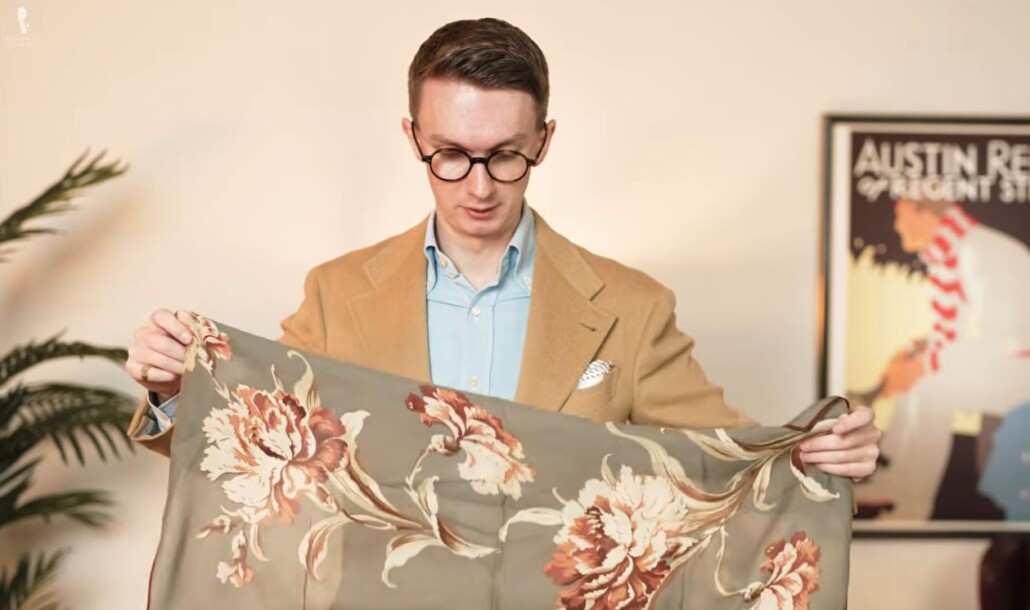
- Sport Coats and Blazers: Adding a layer of sophistication and visual interest to smart casual or business casual ensembles.
- Overcoats and Trench Coats: Providing warmth without the bulk, and an elegant contrast against the heavier outerwear fabric.
- Casual Jackets: Such as denim jackets, leather jackets, or bomber jackets, injecting an unexpected element of refinement.
- Resort Wear: Lending polish to relaxed outfits like linen shirts and tailored shorts.
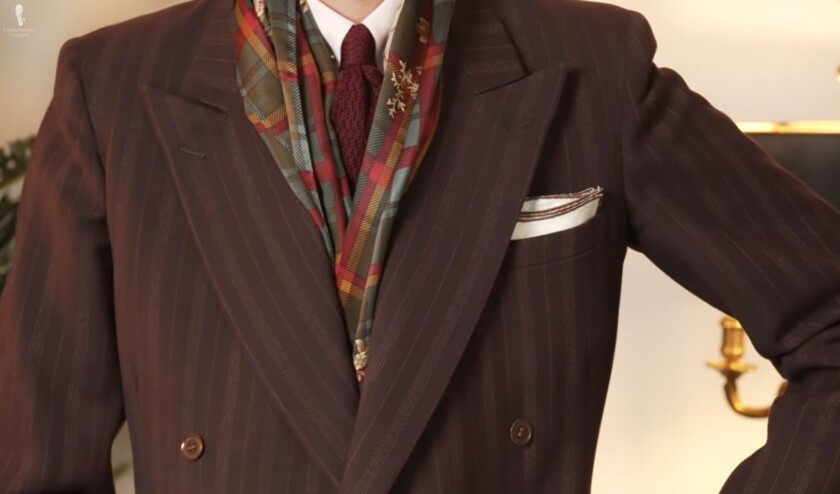
- Suits (without a tie): Offering a debonair alternative to a tie, especially for evening events or less formal business settings.
- Suits (with a tie): When paired thoughtfully, a silk scarf can add another layer of texture and depth, particularly with a knit tie.
Moreover, for men who regularly incorporate ties, pocket squares, and traditional scarves into their rotations, a silk scarf offers a fresh avenue for diversifying their accessory options. Stylists often emphasize that a silk scarf should complement the outfit rather than dominate it. Beginning with subtle choices and gradually experimenting allows one to discover what feels most comfortable and authentic to their personal style.
Market Trends and Expert Insights
The growing appreciation for silk scarves among men reflects broader shifts in the fashion industry. Industry reports indicate a steady growth in the men’s accessories market, driven by a desire for personalization and differentiation. Fashion commentators observe that accessories like silk scarves allow individuals to express their unique identity within the confines of classic menswear. This trend also aligns with an increased focus on artisanal craftsmanship and high-quality materials, where silk stands out as a premium choice. The adaptability of silk scarves across various dress codes—from formal events to casual weekend outings—further solidifies their position as a valuable investment in a discerning gentleman’s wardrobe.
Conclusion: A Timeless Statement
While not the most ubiquitous menswear accessory, the silk scarf’s understated presence is precisely what contributes to its unique appeal. It offers a distinct blend of warmth, personality, and refinement that is softer than a tie and significantly lighter than a traditional scarf. For men keen on expanding their accessory repertoire without deviating from established classic style principles, the silk scarf represents a compelling and sophisticated option, promising a touch of individualized elegance that stands the test of time.
Frequently Asked Questions
Can men wear silk scarves without appearing overdressed?
Absolutely. The key lies in selecting scarves with understated colors and classic patterns, and then styling them in a simple, balanced manner that complements the overall outfit without drawing excessive attention.
What is the ideal silk scarf size for those new to wearing them?
For beginners, a larger square scarf (e.g., 90×90 cm) is generally the easiest choice. Its generous dimensions provide greater flexibility for various knots and drapes, making the styling process more forgiving and versatile.
Are silk scarves considered formal attire?
Not exclusively. Silk scarves possess remarkable versatility and can be styled to suit both casual and more elegant ensembles. Their formality largely depends on the chosen pattern, color, and the specific knot or drape employed, as well as the accompanying garments.

Which silk scarf knots are most suitable for beginners?
For those starting out, a simple drape, a classic French knot, or a loose casual knot (such as an overhand knot) are excellent and straightforward options. Larger scarves typically offer the most ease and flexibility for these foundational styles.
In which situations do silk scarves perform best?
Silk scarves are particularly effective during transitional weather conditions, providing light warmth and protection without the bulk of heavier neckwear. They also excel with outfits that benefit from a touch of refined neckwear, where a tie might feel too formal or restrictive. They are ideal for elevating sport coats, blazers, and overcoats.