








Winston Churchill, a figure etched into the annals of history, is universally recognized by his iconic image: the resolute bulldog jaw, the defiant oratorical prowess, and the ubiquitous plume of cigar smoke. Beyond these grand symbols, however, lay a meticulously curated selection of daily objects—his everyday carry (EDC)—which served as more than mere personal effects. These items were, in contemporary parlance, his personal "suit of armor," crafted from precious metals, fine silks, exquisite tortoiseshell, and plush velvet, rather than conventional steel. They were instruments that facilitated his profound thinking, critical decision-making, and projection of unwavering authority, offering a compelling glimpse into the man behind the legend and the quiet power of ritual and heritage that shaped his public and private life.
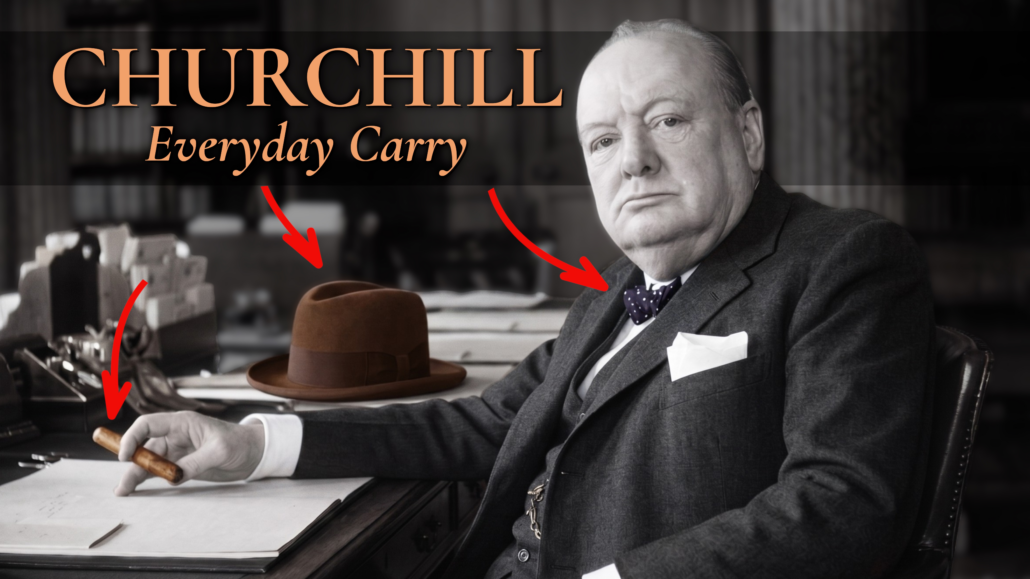
This examination delves into eight such pivotal items, revealing their historical context, the deliberate choices behind Churchill’s allegiance to them, and the profound lessons they impart to discerning individuals about the enduring value of quality, tradition, and personal consistency.
The Instruments of Heritage and Time
The Spencer-Churchill Signet Ring: A Tangible Link to Lineage

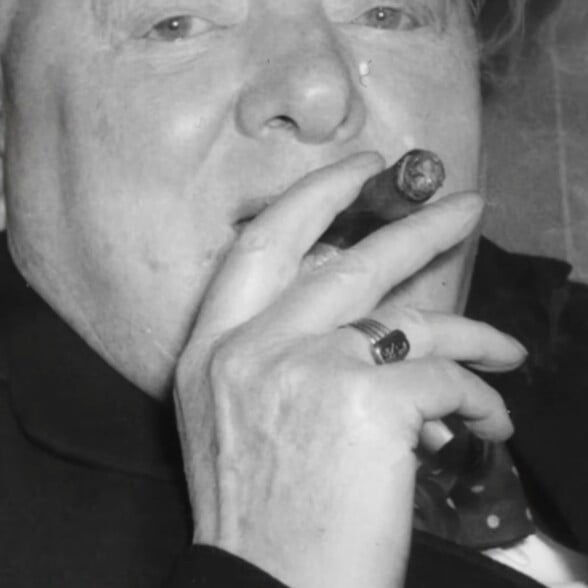
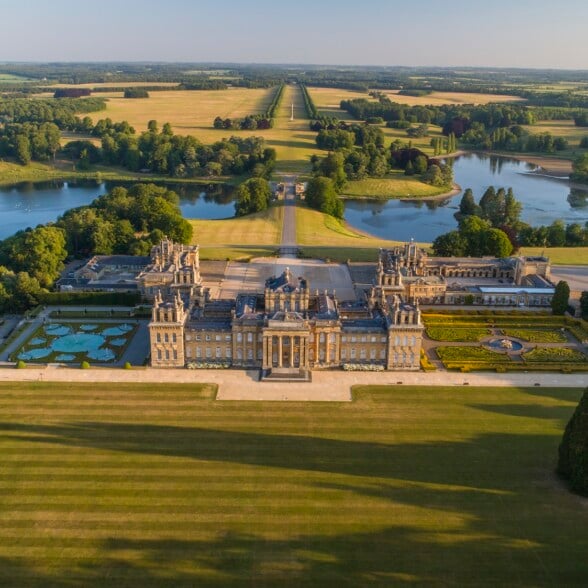
For Churchill, the concept of heritage was not an abstract ideal but a tangible presence, quite literally at his fingertips. His prominent gold signet ring, believed to have been crafted by Garrard, the esteemed royal jeweler, bore the intricately engraved Spencer-Churchill arms. This heraldic device served as an indelible link, binding him directly to the illustrious Dukes of Marlborough and to Blenheim Palace, his ancestral home and birthplace. The ring was a constant, physical reminder of a lineage steeped in British history and military distinction, a weight of expectation and duty he carried with conscious pride.
While contemporary continental fashion often dictated wearing a signet ring on the pinky finger—a more flamboyant display—Churchill, with characteristic deliberation, chose to wear his on the ring finger of his right hand. This was not an oversight but a conscious stylistic and symbolic choice. It underscored that the ring was not intended as a flashy piece of ornamental jewelry but rather a solemn and constant connection to his profound sense of duty and his aristocratic heritage. It was a private anchor and a public declaration, serving as a physical embodiment of the historical weight he felt on his shoulders, especially during periods of immense national crisis. The ring subtly communicated his identity and the deep roots from which his authority sprang. Garrard, with its history dating back to 1735 and its role as Crown Jeweller, imbued the ring with an additional layer of royal pedigree and master craftsmanship, further cementing its significance.
"The Turnip": The Breguet Pocket Watch – A Nod to Enduring Tradition
In an era witnessing the widespread adoption of the wristwatch, particularly among military personnel after the First World War for its practical utility in coordinating operations, Churchill remained steadfastly loyal to the pocket watch. His chosen timepiece was a Breguet reference number 765, a sophisticated instrument equipped with a minute-repeating complication. He affectionately dubbed it "the Turnip," a moniker likely inspired by its substantial, bulbous 18k gold case. This was no mere trinket; it was a serious instrument for a serious man, reflecting both his methodical nature and his deep respect for tradition.
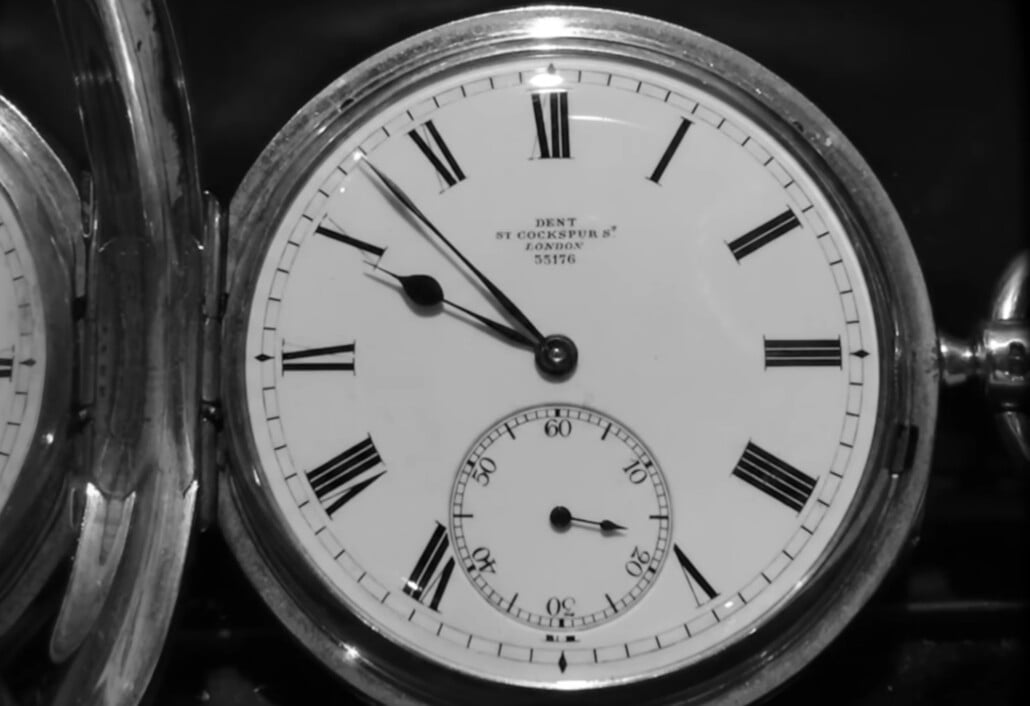
The minute-repeating complication, a marvel of horological engineering, allowed Churchill to ascertain the exact time by sound, an invaluable feature during dimly lit meetings or the blackout conditions of the Blitz, where checking a luminous dial might compromise security. This functionality transcended mere luxury, becoming a practical tool for a leader operating under wartime pressures. Churchill’s unwavering preference for the pocket watch spoke volumes about his character. For a gentleman of his stature in the early to mid-20th century, clinging to the pocket watch was a mark of traditionalism and gravitas. The wristwatch, still a relatively "new-fangled gadget" to some, lacked the inherent weight and established prestige of its pocket-dwelling predecessor. The act of retrieving the watch from a waistcoat pocket, opening its cover, and observing the time was a deliberate ritual—a moment of pause and reflection that perfectly complemented Churchill’s thoughtful and unhurried decision-making process.
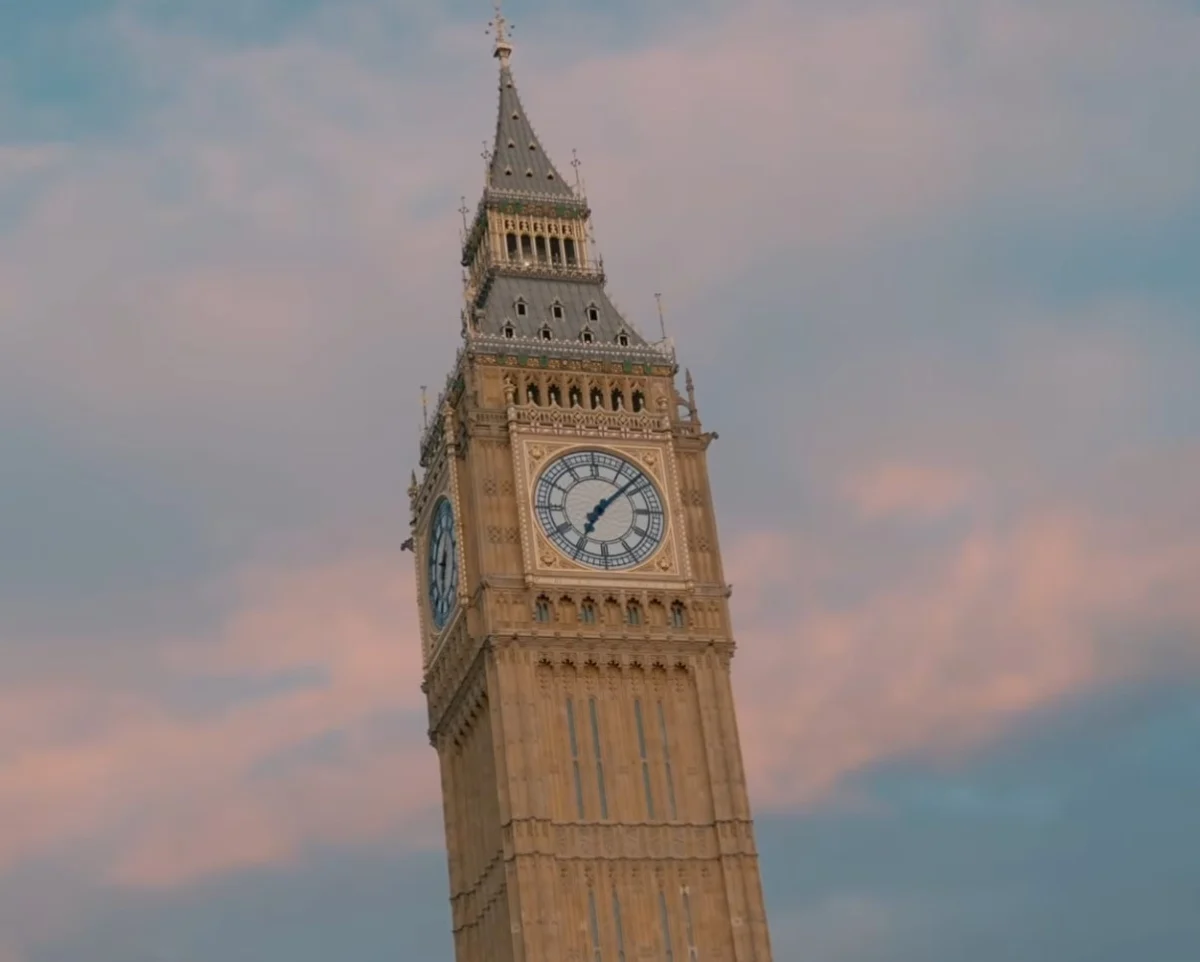
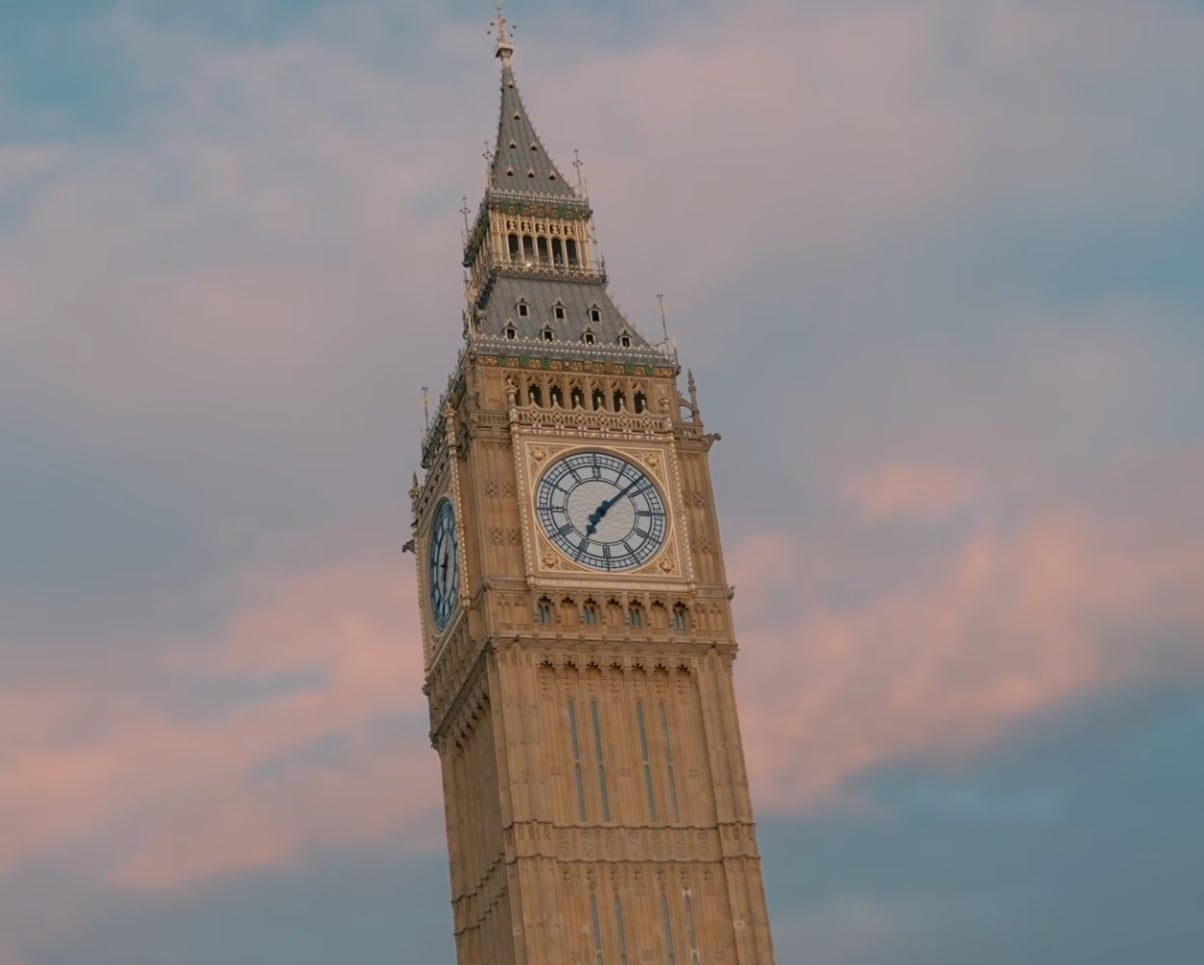
The origins of "the Turnip" further underscore its familial and historical significance. It was originally commissioned in 1890 by John Spencer-Churchill, the 7th Duke of Marlborough, from Dent, an esteemed London watchmaker renowned for crafting the Great Clock at Westminster, colloquially known as Big Ben. The Duke later bequeathed this magnificent timepiece to Winston, who carried it with profound pride throughout his life. This inheritance transformed the watch from a simple timekeeping device into a family heirloom, a symbol of continuity and connection to his forebears.
The Tools of Thought and Persona
The Cuban Signature: Romeo y Julieta Cigars – An Icon Embodied
No accessory is more intrinsically linked to Winston Churchill’s public image than his cigar, which became his ultimate, unmistakable signature. Far more than a mere personal indulgence, Churchill strategically deployed cigars as a potent tool for public relations, projecting the image of a hard-charging leader who also possessed a refined appreciation for life’s finer pleasures. His unwavering preference lay with Cuban brands, specifically Romeo y Julieta, a marque that continues to thrive today, and the now-defunct La Aroma de Cuba. So profound was his association with Romeo y Julieta that, while the company initially marketed his preferred cigar size as the "Clemenceau" (after the distinguished French Prime Minister), it was subsequently renamed the "Churchill" in his honor, a designation it retains globally to this day. This commercial renaming stands as a testament to the indelible mark his persona left on popular culture.
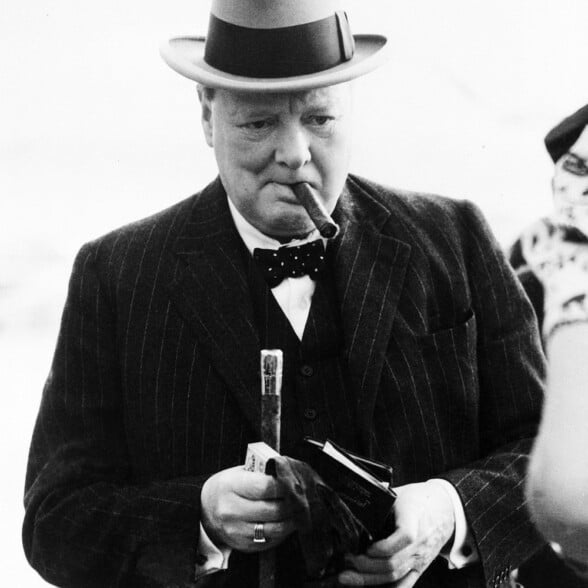
Churchill favored cigars that were long in size and notably mild in strength. He was famously reported to consume between eight and ten cigars daily, though not always through conventional smoking. His demanding schedule often meant he would light a cigar only to be interrupted by urgent affairs, allowing it to go out. Moreover, he developed a distinctive habit of "consuming" cigars by chewing them down to nubs, a practice so prevalent that his wife, Clementine, would occasionally insist he wear a bib to protect his clothing. To keep his fingers clean while writing, he devised a practical DIY paper wrap for his cigars, which he humorously referred to as a "bellybando." This ritualistic engagement with cigars, whether smoked or chewed, became an integral part of his larger-than-life image, symbolizing resilience, contemplation, and a defiant embrace of life amidst turmoil.
The Steadfast Fountain Pen: Wielding the Mightier Instrument
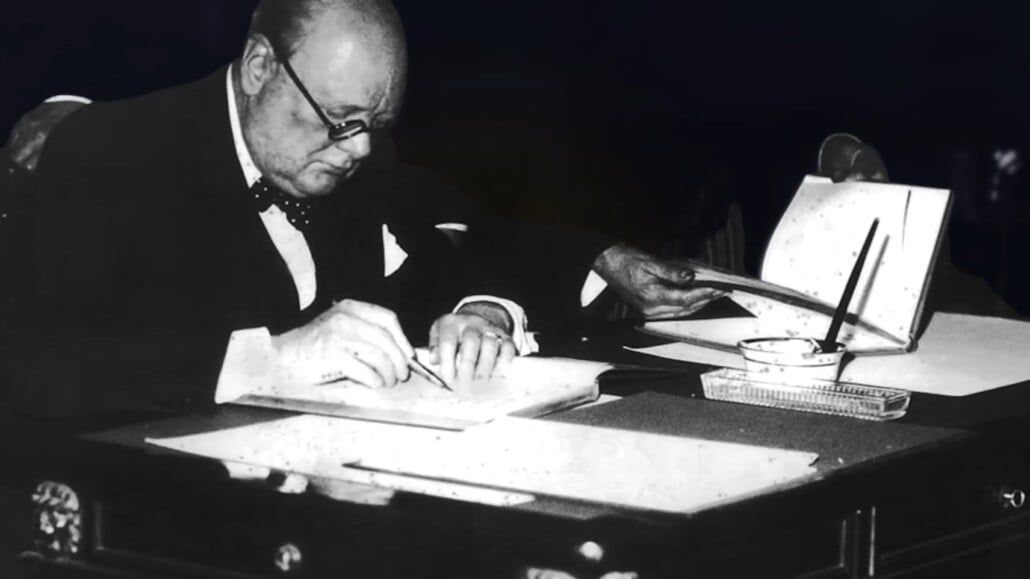
While celebrated primarily as a wartime prime minister and a formidable orator, Winston Churchill possessed an acute understanding that the pen was, in truth, mightier than the sword. His legacy extends beyond politics to a prolific literary career, which earned him the Nobel Prize in Literature in 1953, recognizing his mastery of historical and biographical narration as well as brilliant oratory. He was an author of numerous books and countless memos, and he firmly believed that the instrument for the job was as crucial as the thought itself. Naturally, he gravitated towards British-made fountain pens from storied manufacturers, championing domestic craftsmanship.
In his earlier years, he frequently employed pens from Mabie Todd, particularly their acclaimed "Swan" model. Later in his career, he favored instruments from Onoto and Conway Stewart. These pens, typically fitted with gold nibs, were far from disposable commodities. They were precise, weighted tools designed for longevity and optimal performance, feeling significant and authoritative in the hand. Churchill notably favored the Onoto plunger-filler mechanism for its generous ink capacity, allowing him to write lengthy manuscripts and speeches without the interruption of frequent refills—a practical consideration for a man whose thoughts flowed as ceaselessly as the ink from his pen. These pens were not merely writing implements; they were extensions of his intellect, enabling the articulation of the ideas that shaped a nation.
The Garments of Authority and Recognition
The Authoritative Homburg Hat: A Crown of Statesmanship
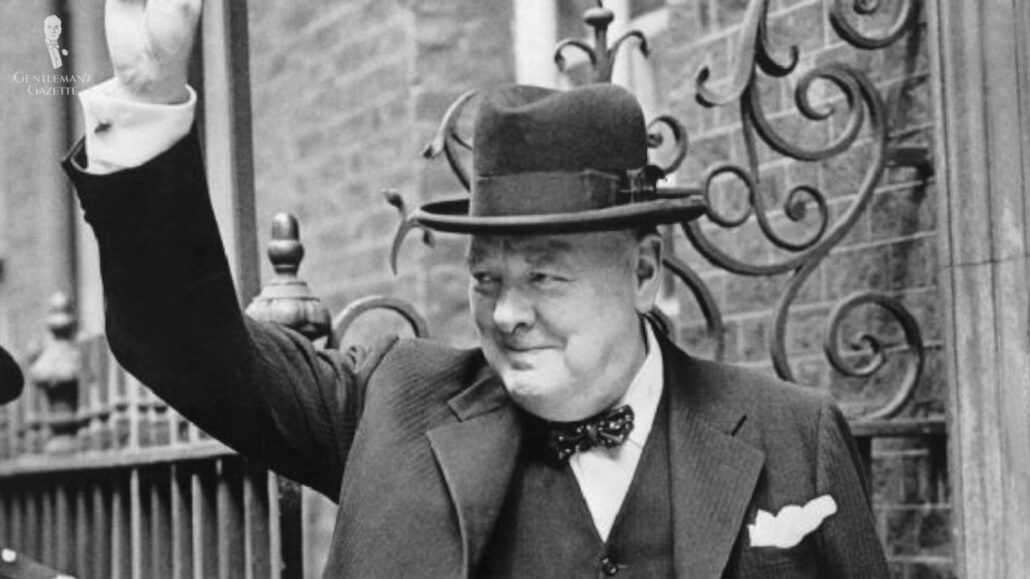
While many American gentlemen of the era might have opted for a fedora, and formal state occasions still demanded the solemnity of a top hat, Churchill cultivated a distinct and unwavering preference for the homburg. This hat style, characterized by a rigid, rolled brim and a single lengthwise crease in the crown, originated in the German town of Bad Homburg, near Frankfurt. However, it was two influential British figures who propelled its global popularity: first, King Edward VII, who adopted it after his vacations in Bad Homburg during the 1880s and 1890s, and subsequently, Churchill himself. His near-constant wearing of the homburg transformed it into an internationally recognized symbol of British statesmanship and dignified authority.
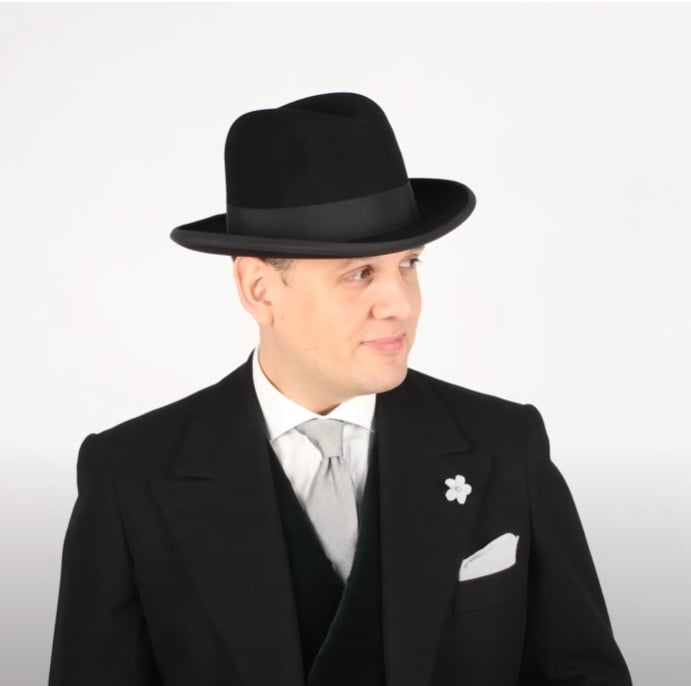
Churchill’s choice of the homburg was a deliberate sartorial strategy, rooted in his understanding of how attire influenced his public silhouette and perception. Unlike the fedora, with its pliable felt and often pinched front, which projected a more casual or accessible image, the homburg was stiff, structured, and inherently authoritative. It resisted slouching or losing its shape, commanding respect the moment it was seen. It occupied a perfect middle ground in formal headwear, conveying seriousness and dignity without the overt pomp and historical weight of a top hat. This made it an ideal accessory for a leader who needed to project gravitas and unwavering resolve in tumultuous times, allowing him to appear both accessible and unshakeably commanding.
The Unmistakable Navy Spotted Bow Tie: A Flair of Personality
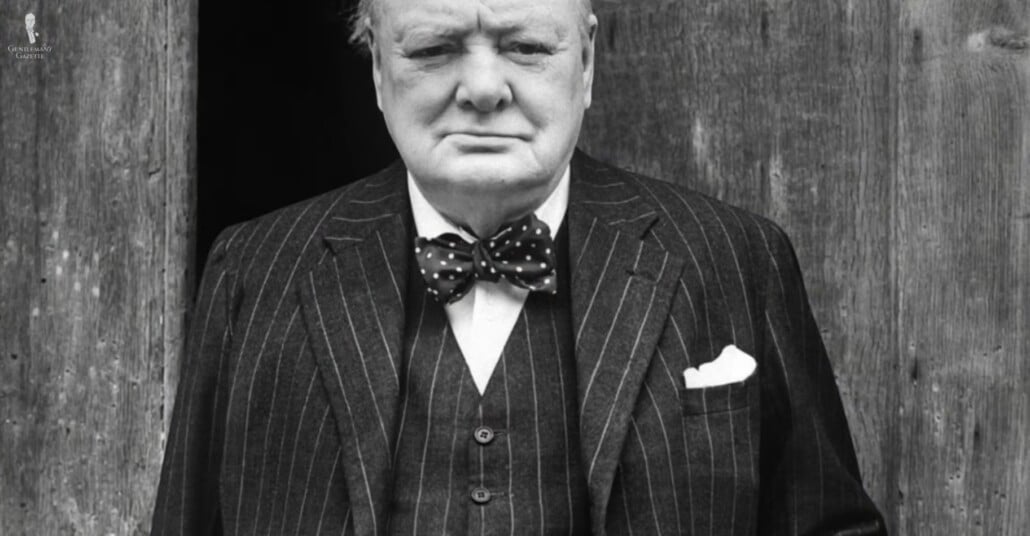
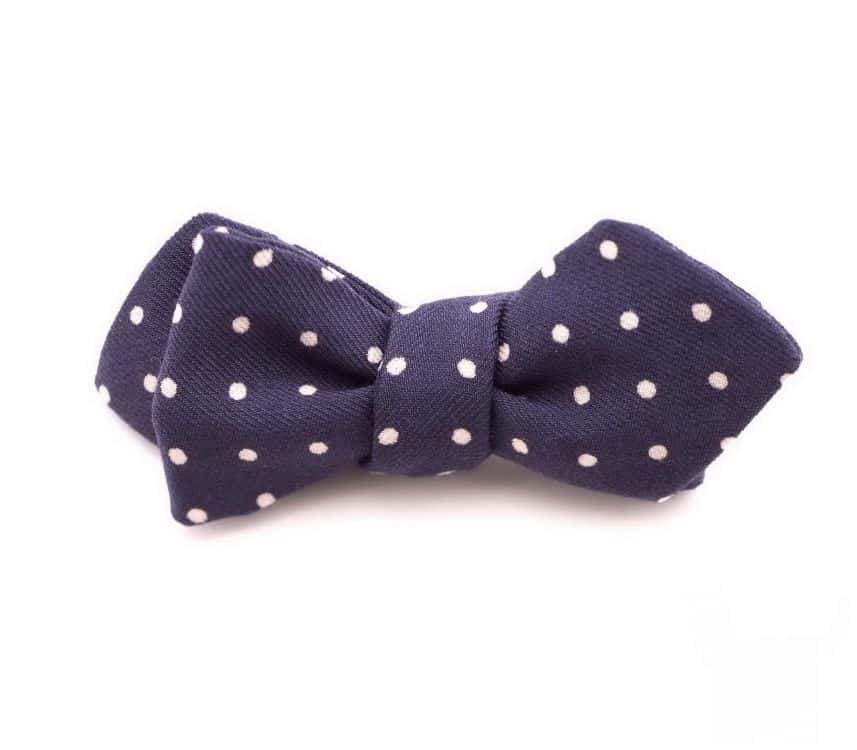
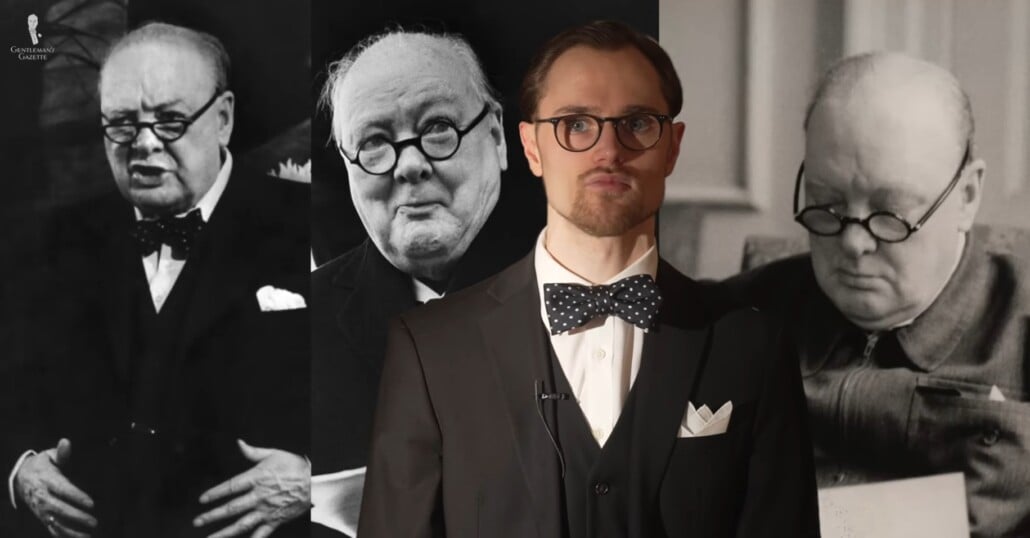
Few sartorial accessories are as uniquely and immediately associated with Winston Churchill as his distinctive spotted bow tie. Almost invariably, it featured the same pattern: a navy blue background adorned with white polka dots. This was a conscious and highly strategic choice on his part. Whether standing in the House of Commons, being captured by flashbulbs for newspaper photographs, or filmed for newsreels, the sharp color contrast and memorable pattern made him instantly identifiable to the public. In a sea of somber suits and plain ties, the bow tie acted as a crucial point of visual focus and a flourish of personality that loudly announced his presence.
The enduring association of this specific bow tie with Churchill was so strong that contemporary haberdashers would occasionally market it as the "Blenheim," a direct nod to his ancestral estate and further solidifying its iconic status. This choice demonstrates Churchill’s acute awareness of personal branding and the power of consistent visual cues in public life. The bow tie was not merely an aesthetic preference; it was a deliberate component of his public persona, a small but potent symbol of individuality and confidence that resonated with a nation seeking strong, recognizable leadership.
The Comforts of the Private Sphere
Specialized Tortoiseshell Spectacles: Precision for the Visionary
As Churchill aged, his already poor eyesight progressively worsened, rendering eyeglasses an absolute necessity. However, true to his meticulous nature, he did not settle for a single pair to serve every situation. He commissioned specific tortoiseshell frames, primarily from the distinguished firm of C.W. Dixey & Son, to suit his various daily tasks. Dixey & Son, with a legacy dating back to 1777 and known for crafting eyewear for royalty and notable figures, provided frames that were both functional and imbued with historical gravitas.
Churchill’s system for his spectacles was remarkably organized. To differentiate them quickly, he had the temple tips subtly marked with dots: one dot denoted his reading glasses, while two dots identified the pair specifically used for speechwriting. Other pairs were designated for activities like sketching, painting, or playing cards, each tailored to a specific focal length and purpose. While these were undeniably functional tools, he ensured the frames maintained a dignified, old-world style that perfectly complemented his facial structure and overall aesthetic. He afforded his eyewear the same level of consideration as any other element of his dress, understanding that his spectacles were a frequent and visible component of his appearance, even in candid moments.
Monogrammed Albert Slippers: Aristocratic Comfort at Rest
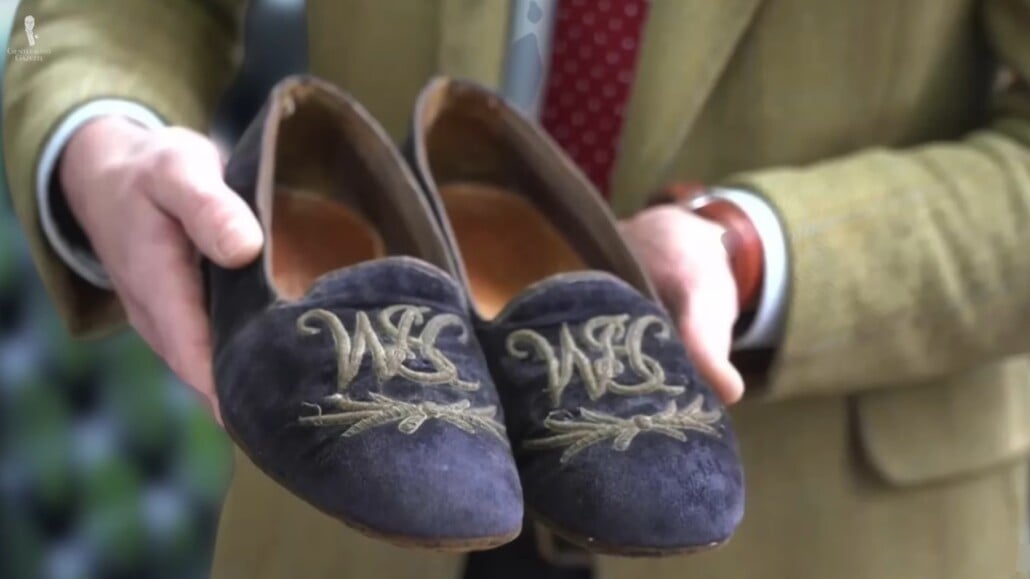
After enduring long days managing global crises and navigating the intricate demands of wartime leadership, Churchill would retreat to his beloved country home, Chartwell, to change into comfortable house shoes. His favored style was the Albert slipper. This traditional style of house shoe is typically crafted with black velvet uppers, a quilted lining for comfort, and a stiffer leather sole than other slipper types, making it akin to a soft dress shoe. Named in honor of Prince Albert, the husband and consort of Queen Victoria, who played a significant role in popularizing this elegant style in the mid to late 19th century, Albert slippers embodied aristocratic leisure.
Churchill’s preference leaned towards fairly conventional Albert slippers. His first known pair was a thoughtful gift from his friend, Lady Diana Cooper, rendered in black velvet with his monogram intricately embroidered in gold. He grew so fond of the style that he commissioned subsequent pairs, usually in rich deep blue or maroon velvet, similarly embroidered with his initials in either gold or white. While primarily designed for private wear within the confines of his home, photographs from the era occasionally capture him venturing out in public while still sporting his comfortable Albert slippers. This unusual sight, for a figure of such public stature, hinted at a certain aristocratic eccentricity or perhaps simply the confidence of a man utterly at ease with his personal choices, even when they defied conventional expectations of public dress.
Implementation & Payoff: Enduring Lessons from a Statesman’s Kit
Winston Churchill’s everyday carry items were far more than a collection of personal effects; they were carefully chosen extensions of his identity, tools that supported his monumental work, and symbols that reinforced his public persona. From the signet ring anchoring him to his illustrious past to the strategic polka-dot bow tie demanding public recognition, each item served a purpose beyond its utilitarian function.
His adherence to the pocket watch underscored his traditionalism and methodical approach, while his selection of British-made fountain pens highlighted his pride in national craftsmanship and his formidable literary output. Even his private comforts, like the specialized spectacles and monogrammed Albert slippers, reflected a meticulous attention to detail and a blend of practical necessity with aristocratic flair.
The collective impact of these items illustrates how a public figure can craft and maintain a consistent image through personal choices, turning everyday objects into iconic symbols. Churchill’s EDC served as a tangible "suit of armor," not for physical protection, but for projecting an unyielding image of strength, wisdom, and British resolve. For modern observers, these objects offer valuable insights into the power of ritual, the importance of quality, and the profound connection between one’s personal effects and one’s public identity. They demonstrate that thoughtful selection of even the smallest items can contribute significantly to one’s presence and legacy, making a statement that transcends fleeting trends and endures through history.
Frequently Asked Questions
What was the specific brand and model of Churchill’s pocket watch?
Churchill carried a Breguet reference number 765, which he affectionately nicknamed "the Turnip" due to its large, bulbous 18k gold case. This exquisite timepiece featured a complex minute-repeating complication, allowing him to audibly chime the exact time in the dark—a vital tool during the strategic blackouts and demands of the Blitz.
Why did Winston Churchill consistently wear a polka-dot bow tie?
His choice of a navy blue bow tie with white polka dots was a deliberate and strategic branding move. The sharp visual contrast ensured he was instantly recognizable in black-and-white newspaper photographs and newsreels, standing out amidst a sea of more conservative attire. It became so iconic that the pattern is still sometimes referred to by haberdashers as the "Blenheim" print, a nod to his ancestral home.
Did Churchill actually smoke every cigar he carried?
While he was famously depicted with a cigar almost constantly, he did not always smoke them fully. He reportedly went through eight to ten cigars a day, but he often chewed them into nubs or allowed them to go out while immersed in work. To maintain cleanliness while writing, he devised a simple paper wrap for his cigars, which he humorously called a "bellybando."
What was unique about the way Churchill wore his signet ring?
Unlike many who followed the continental style of wearing a signet ring on the pinky finger, Churchill wore his on the ring finger of his right hand. This particular ring bore the Spencer-Churchill family crest, serving as a constant and visible physical reminder of his profound ancestral heritage and the duties associated with his lineage.
What was the purpose of the "dots" on Churchill’s spectacles?
Churchill commissioned specialized tortoiseshell frames for different visual tasks. To quickly identify the correct pair, he had the temple tips marked with dots: one dot indicated his reading glasses, while two dots identified the pair specifically used for speechwriting, ensuring precision for each demanding activity.

What are "Albert Slippers," and did Churchill really wear them in public?
Albert slippers are elegant velvet house shoes characterized by a quilted lining and a sturdier leather sole, named after Prince Albert, who popularized them. Churchill’s pairs were typically made from navy or maroon velvet, often embroidered with his initials in gold or white. While primarily designed for home wear, he was indeed occasionally photographed wearing them during public appearances, showcasing a blend of aristocratic comfort and confident eccentricity.
What kind of fountain pen did Churchill use to write his speeches?
As a staunch supporter of British craftsmanship and a prolific writer, Churchill favored pens from esteemed British manufacturers. In his younger years, he used Mabie Todd (specifically the "Swan" model), and later in life, he preferred pens from Onoto and Conway Stewart. He particularly favored the Onoto plunger-filler for its substantial ink capacity, which allowed him to write lengthy manuscripts and speeches without frequent interruptions for refilling.