










Watch enthusiasts have long associated IWC Schaffhausen’s proprietary Ceratanium material primarily with its esteemed Pilot’s watch collection. For years, the stealthy, matte-black ceramic-titanium alloy has been the material of choice for robust and tactical timepieces, with nearly all previous references being pilot watches, with the notable exception of the brand’s inaugural Aquatimer model crafted from this innovative substance. The inherent qualities of Ceratanium – its remarkable lightness, exceptional durability, and undeniably cool aesthetic – made it a natural fit for sports watches. However, IWC is now challenging conventional perceptions by introducing the IWC Portugieser Chronograph Ceratanium, a timepiece that daringly integrates this modern material into the refined and classic Portugieser line for the first time. This release represents an unexpectedly contemporary interpretation, harmonizing the Portugieser’s inherent sophistication with the rugged, tactical character that Ceratanium imparts.

The Evolution of Ceratanium: From Pilot’s Watches to Dress Chronographs
Ceratanium, a material meticulously developed by IWC, is the result of a sophisticated heat-treatment process applied to a specialized titanium alloy. This high-temperature firing transforms the surface of the titanium into a dark, ceramic-like layer. The resulting material boasts superior scratch resistance, exceptional corrosion proofing, and retains the lightweight advantages of titanium. A critical technical achievement of Ceratanium is its ability to overcome the significant shrinkage issues often encountered with traditional ceramics during manufacturing. This crucial characteristic allows for the precise crafting of smaller, more intricate components, such as the chronograph pushers, crown, and the pin buckle found on the new IWC Portugieser Chronograph Ceratanium.
Historically, IWC has strategically deployed Ceratanium in its Pilot’s watches, a segment where its ruggedness and tactical appearance are highly valued. The material’s matte-black finish and inherent durability align perfectly with the functional demands and aesthetic of aviation-inspired timepieces. The previous nine IWC Ceratanium references predominantly fell into this category, underscoring the material’s established role. The singular deviation, the aforementioned Aquatimer, demonstrated the material’s versatility beyond pilot watches, hinting at broader potential applications. The introduction of the Portugieser Chronograph Ceratanium marks a significant expansion of this material’s narrative, venturing into a collection traditionally associated with more formal and classic horology.

A Stealthy Transformation: The All-Black Aesthetic
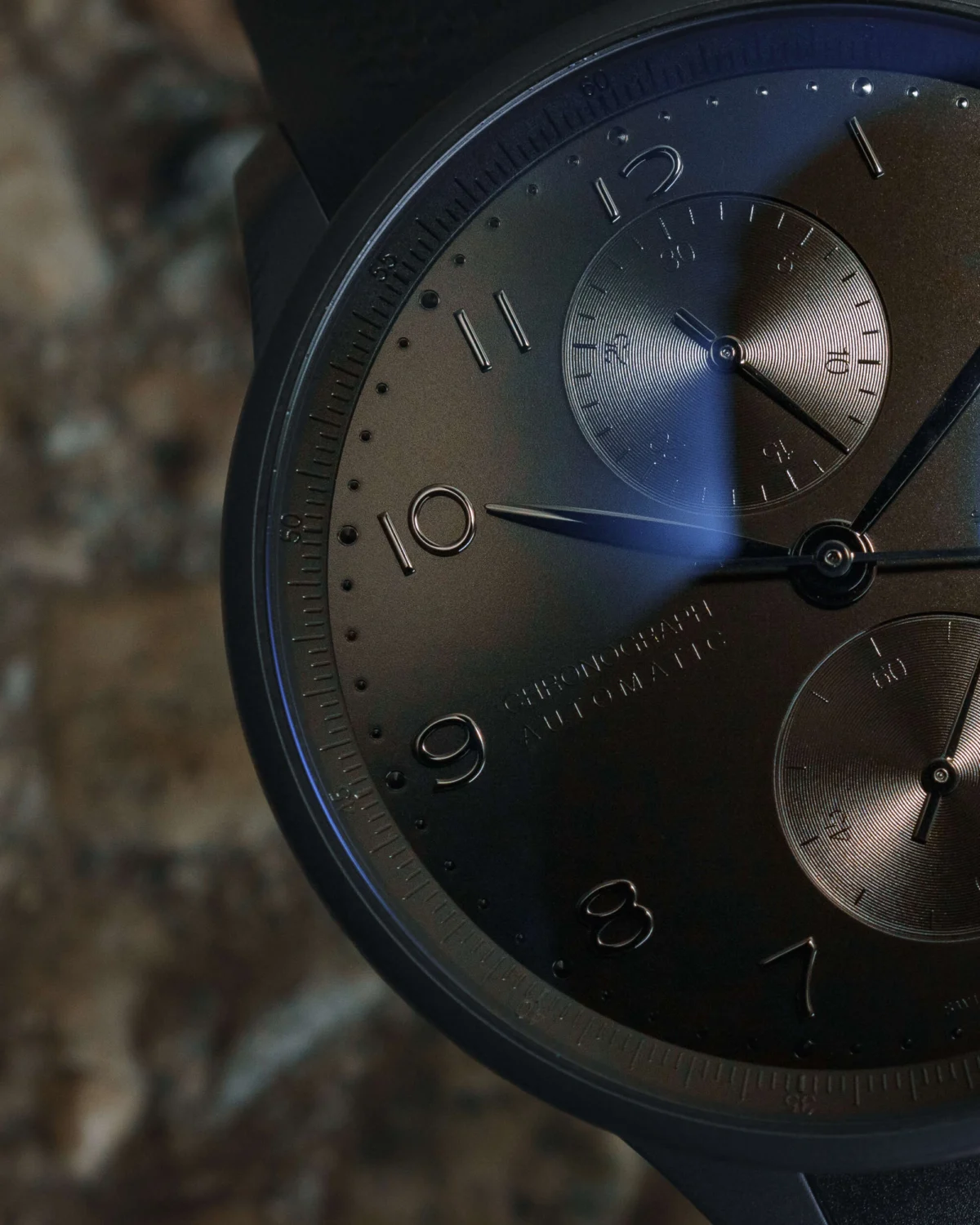
True to the dark and understated nature of Ceratanium, most of IWC’s previous watches crafted from this material have adhered to a muted, grayscale palette, often punctuated by subtle color accents. The IWC Portugieser Chronograph Ceratanium, however, embraces an all-encompassing "stealth mode" with a striking black-on-black execution. The watch’s surfaces are predominantly matte, creating a unified, tactical appearance. Subtle contrast is introduced through the semi-glossy finish of the leaf-shaped hands, the applied hour markers, the dial text, and the fine track for the running seconds. This deliberate design choice, while potentially impacting immediate legibility for some, significantly elevates the watch’s "cool factor" and its unique aesthetic appeal.
The author’s observation that "legibility is sacrificed at the altar of cool" encapsulates the intentional design philosophy behind this timepiece. While a traditional Portugieser might be likened to a crisp button-down shirt paired with a blue blazer, the Portugieser Chronograph Ceratanium projects a decidedly bolder, more rebellious image, akin to a black leather jacket layered with more black leather. This stylistic departure signifies IWC’s willingness to push the boundaries of its established collections and explore novel design directions through material innovation.

On-Wrist Presence and Proportions
The IWC Portugieser Chronograph Ceratanium measures 41mm in width, a common and popular size for chronographs. However, on the wrist, the watch presents a perception of wearing larger than its stated dimensions might suggest. This visual effect is largely attributed to the absence of a prominent bezel, a design characteristic that maximizes the dial’s surface area. In this regard, the on-wrist experience is comparable to other 41mm Portugieser chronographs within IWC’s catalog. The key differentiator, of course, is the low-contrast dial, which transforms the watch into a sleek, dark silhouette and, for many observers, amplifies the impression of its substantial presence.
With a thickness of 13mm, the Portugieser Chronograph Ceratanium remains sufficiently slim to comfortably slide under the cuff of a shirt, a crucial consideration for a watch that bridges the gap between sporty and dressy. The lug-to-lug measurement, approximately 48mm, further contributes to a well-balanced and wearable profile, ensuring it sits comfortably on a variety of wrist sizes. These dimensions, combined with the lightweight nature of Ceratanium, contribute to a highly wearable and comfortable experience, despite the watch’s robust material and tactical aesthetic.

The Heart of the Machine: Caliber 69355
Turning the watch over reveals an exhibition case back, featuring a smoked sapphire crystal that offers a tantalizing glimpse of the intricate mechanical movement within. At the core of the IWC Portugieser Chronograph Ceratanium lies the in-house Caliber 69355. This movement, introduced in 2020, represents a significant upgrade from the Valjoux-based calibers previously used in older Portugieser models. The Caliber 69355 is an automatic chronograph movement, distinguished by its robust column wheel chronograph mechanism, which ensures precise and crisp activation of the chronograph functions. It also incorporates a double-pawl winding system, contributing to efficient power delivery.
The movement operates at a beat rate of 28,800 vibrations per hour (bph) and offers a power reserve of 46 hours. While the aesthetic of the Portugieser Chronograph Ceratanium leans towards the sporty and modern, it is important to note that it shares the same 30 meters of water resistance as its 41mm Portugieser siblings. This level of water resistance is typical for dressier chronographs and is suitable for protection against splashes and light rain, but it does not position the watch for water-based activities, somewhat tempering the overtly sporty visual presentation.

A Strategic Expansion of Material Innovation
The integration of Ceratanium into the Portugieser collection signifies an exciting new chapter for IWC’s material innovation strategy. The brand has consistently explored and refined its use of advanced materials, and Ceratanium has emerged as a flagship component in its technological arsenal. The successful application of this material in a more classically oriented collection like the Portugieser demonstrates IWC’s confidence in its versatility and its ability to transcend specific watch categories.
The development and production of Ceratanium are complex and resource-intensive processes. This inherent difficulty and cost factor suggest that releases featuring this material are likely to remain limited editions, adding to their exclusivity and desirability. The IWC Portugieser Chronograph Ceratanium, with its limited production run of 1,500 pieces, exemplifies this approach. The pricing of $14,600 USD positions it as a premium offering within the Portugieser collection, reflecting the advanced materials and in-house movement.

Broader Implications and Future Outlook
The IWC Portugieser Chronograph Ceratanium is more than just a visually striking timepiece; it represents a thoughtful exploration of contrasting design elements. The juxtaposition of a traditional chronograph complication and a classically inspired case silhouette with IWC’s most modern and tactically oriented material creates a compelling narrative. This watch feels familiar in its lineage yet possesses a darker, cooler, and more contemporary attitude.
The success of this experiment suggests a potential for further innovation within IWC’s diverse product lines. While the allure of Ceratanium Pilot’s watches is undeniable, and future variations are anticipated (with enthusiasts perhaps dreaming of a Ceratanium Mark XX), the expansion into the Portugieser collection opens new avenues. It demonstrates that the boundaries between traditional dress watches and modern, high-performance materials can be blurred to create unique and highly desirable timepieces. This strategic move by IWC not only appeals to existing collectors seeking something novel but also has the potential to attract a new demographic of watch enthusiasts drawn to the intersection of classic design and cutting-edge material science. The IWC Portugieser Chronograph Ceratanium stands as a testament to the brand’s commitment to innovation while respecting its rich horological heritage.