





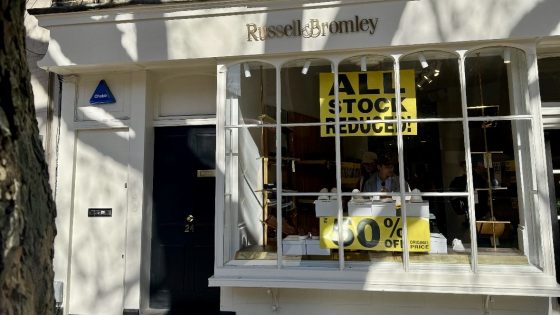
Russell & Bromley has initiated a significant escalation of its clearance sales, offering discounts of up to 50% in retail locations earmarked for closure following its recent acquisition by retail giant Next plc, Drapers understands. This strategic move signals an accelerated effort to liquidate inventory as part of the post-acquisition integration process, impacting a number of the premium footwear and handbag retailer’s physical stores across the UK.
The Context of the Acquisition: Next’s Expanding Empire
The deepening of discounts comes as a direct consequence of Next plc’s strategic acquisition of Russell & Bromley, a deal that solidified Next’s position as a dominant force in the UK retail landscape. Announced in late 2025 and finalized in early 2026, the acquisition saw Next add another heritage British brand to its growing portfolio, which already includes stakes in Reiss, Joules, Cath Kidston, FatFace, and Made.com. While the exact financial terms of the deal were not publicly disclosed, industry estimates placed the valuation of Russell & Bromley in the region of £100-£150 million, reflecting its strong brand equity and loyal customer base, despite facing increasing pressures on the high street.
Next’s acquisition strategy has been characterized by its innovative "Total Platform" model, offering brands a comprehensive e-commerce and logistics solution, allowing them to leverage Next’s established infrastructure and scale. The initial intent behind the Russell & Bromley acquisition was widely believed to be a dual approach: preserving the brand’s distinctive identity and premium positioning while simultaneously integrating its operational backend into Next’s highly efficient ecosystem. However, a critical aspect of such integrations often involves a comprehensive review of the acquired company’s physical retail footprint.
The Rationale Behind Store Closures
The decision to close certain Russell & Bromley stores, which has now led to these intensified discount campaigns, is a multi-faceted one, rooted in both economic realities and strategic optimization. Post-acquisition reviews typically scrutinize store performance, lease agreements, geographical redundancy, and alignment with the acquiring company’s broader retail strategy. For Next, which operates a vast network of its own stores and increasingly focuses on online sales complemented by strategically located physical outlets, the rationalization of Russell & Bromley’s estate likely targets underperforming stores or those in close proximity to existing Next or other Next-portfolio brand locations.
The UK high street has undergone a profound transformation over the past decade, exacerbated by changing consumer shopping habits and the accelerated shift to online retail, particularly since the pandemic. Many traditional retailers have grappled with high operational costs, declining footfall, and fierce competition. By consolidating its physical presence, Russell & Bromley, under Next’s stewardship, aims to enhance profitability, reduce overheads, and focus resources on its most successful or strategically important locations. This often involves exiting unprofitable leases and streamlining the overall store portfolio to align with modern retail demands.
Strategic Imperative of Deep Discounts
The immediate implementation of 50% discounts in closing stores is a standard, yet critical, maneuver in retail post-acquisition strategy. Its primary objectives are:
- Inventory Liquidation: To clear existing stock quickly and efficiently, preventing the need to transfer large volumes of merchandise to other locations or distribution centers, which can be costly and logistically complex.
- Cash Generation: To generate immediate cash flow from remaining inventory, minimizing potential write-downs or losses associated with unsold goods.
- Site Preparation: To empty the store premises swiftly, facilitating the handover process to landlords and minimizing ongoing operational costs such as utilities and staffing.
- Brand Perception (Controlled Exit): While discounts can dilute a premium brand’s image if not managed carefully, a targeted, time-limited clearance in closing stores is generally understood by consumers as a necessary step, distinct from a general brand devaluation. It allows the brand to exit locations gracefully while offering a final opportunity for customers.
The move from initial, perhaps more modest, clearance discounts to a deeper 50% cut suggests an urgency to complete these closures within a defined timeframe, likely before the end of Q1 or Q2 2026, aligning with typical retail reporting periods and lease termination schedules.
Russell & Bromley’s Legacy and Challenges
Russell & Bromley, a privately owned family business for generations, has been a venerable name in British luxury footwear since its inception in 1880. Renowned for its craftsmanship, quality materials, and classic designs, the brand cultivated a loyal following seeking premium shoes and handbags. Its distinct market position, offering high-quality products often seen as an investment, allowed it to maintain a presence on prime high street locations across the UK.
However, even established brands like Russell & Bromley have not been immune to the broader challenges facing the retail sector. Rising operational costs, increased competition from both luxury e-tailers and fast-fashion brands, and a fluctuating economic climate have all put pressure on traditional business models. The need for significant investment in digital infrastructure and omnichannel capabilities became paramount, areas where Next plc, with its robust Total Platform, offered a compelling solution. The acquisition was likely viewed by the Russell & Bromley family as a strategic move to secure the brand’s future amidst these evolving market dynamics.
Next’s Acquisition Strategy and "Total Platform"
Next plc, under the astute leadership of Lord Simon Wolfson, has demonstrated a highly successful and often contrarian acquisition strategy. Rather than purely absorbing brands, Next often acquires controlling stakes, allowing the acquired brands to retain their identity and management while integrating them onto Next’s "Total Platform." This platform provides a full suite of services, including warehousing, distribution, e-commerce operations, customer service, and marketing infrastructure, effectively modernizing and scaling brands that may lack the resources to do so independently.
For Russell & Bromley, the Total Platform integration means a significant overhaul of its back-end operations, likely leading to enhanced online capabilities, more efficient inventory management, and potentially a broader reach. The store closures, while an immediate impact, are part of a larger strategic vision to create a leaner, more efficient omnichannel business that can thrive in the current retail environment. This approach allows Next to leverage its operational expertise and economies of scale, generating synergies that benefit both the acquired brand and Next’s shareholders.
Timeline of Events (Inferred)
- Mid-2025: Speculation begins regarding Russell & Bromley’s strategic options amidst increasing high street pressures.
- Late 2025 (e.g., October/November): Next plc announces its intention to acquire Russell & Bromley. Initial reports emphasize maintaining brand integrity and leveraging Next’s Total Platform.
- Early 2026 (e.g., January): Acquisition formally completed following regulatory approvals. Integration planning commences, including a comprehensive review of Russell & Bromley’s store portfolio.
- February 2026: Internal decisions made regarding store closures. Staff in affected stores are informed, and initial discussions with landlords begin.
- Early March 2026: First wave of clearance discounts (e.g., 20-30%) introduced in stores slated for closure to begin inventory reduction.
- Mid-March 2026 (as per news): Discounts deepened to 50% in closing stores, signaling an accelerated timeline for liquidation and closure. This implies a nearing final closure date for these specific outlets.
- Q2 2026 (Expected): Formal closure of targeted Russell & Bromley stores. Focus shifts to optimizing remaining physical estate and fully integrating online operations into Next’s Total Platform.
Impact on Employees and Local Economies
The closure of any retail store inevitably carries implications for its employees and the local economy. For Russell & Bromley staff in affected stores, the news of closures and subsequent deep discounts would likely be met with uncertainty, despite potential redundancy packages or opportunities for relocation within the Next group. Next, known for its structured approach, would be expected to manage these transitions carefully, offering support where possible.

From a local economic perspective, the closure of a Russell & Bromley store, especially in smaller towns or secondary high street locations, can leave a noticeable void. While the overall number of closures might be a fraction of Russell & Bromley’s total estate, each individual closure contributes to the ongoing narrative of high street transformation, raising questions about future occupancy and the evolving retail mix in town centers.
Consumer Response and Brand Perception
For consumers, the deepening discounts present a dual perspective. On one hand, it’s an opportunity to acquire premium Russell & Bromley products at significantly reduced prices, potentially attracting new customers who might not typically shop at the brand. This can create a temporary surge in footfall and sales for the closing stores. On the other hand, for loyal customers, store closures can be a cause for disappointment, signifying the loss of a familiar shopping destination.
The perception of the Russell & Bromley brand under Next will be crucial. While clearance sales are a necessary operational step, Next will need to ensure that the core brand values of quality, style, and service are maintained in the remaining stores and, critically, through its enhanced online presence. The long-term success of the acquisition hinges on Next’s ability to modernize Russell & Bromley’s reach and efficiency without eroding its premium appeal.
Broader Industry Implications
This development underscores several broader trends in the UK retail sector:
- Continued Consolidation: The retail market continues to consolidate, with larger, financially robust players like Next acquiring struggling or strategically aligned brands. This trend is likely to continue as companies seek scale and synergies.
- High Street Rationalization: Physical store estates are being continuously reviewed and optimized. Unprofitable locations are being shed, and investment is focused on flagship stores, experiential retail, or click-and-collect hubs.
- Omnichannel Imperative: The blending of online and offline retail channels is no longer optional. Acquisitions like Russell & Bromley by Next highlight the need for traditional brands to possess strong digital capabilities, often best achieved through integration with advanced platforms.
- Value-Driven Consumerism: While premium brands retain their allure, consumers are increasingly value-conscious, making strategic discounts and efficient inventory management vital for retailers.
Looking Ahead: The Future of Russell & Bromley Under Next
The immediate future for Russell & Bromley will involve the completion of the store closure program and a full integration onto Next’s Total Platform. This will likely see significant investment in its e-commerce capabilities, digital marketing, and potentially a refreshed in-store experience for its remaining physical locations.
The long-term vision is for Russell & Bromley to thrive as a distinct, premium brand within the Next ecosystem, benefiting from operational efficiencies and a broader customer reach, particularly online. Next’s track record with other acquired brands suggests a strategic focus on enhancing profitability and market share while preserving the unique identity that makes Russell & Bromley a valued name in British retail. The current deep discounts, while marking an end for some physical locations, are a critical step in clearing the path for this new chapter.